

Quick Summary: Homemade and artisan sourdough bread is expensive because it takes far more time, skill, and care than mass-produced bread. The main reasons are quality ingredients (organic and specialty flours), long fermentation (about 2 to 3 days per loaf), daily starter maintenance, specialized equipment, energy for long preheats and bakes, small-batch production with no economies of scale, and years of trial and error to master.
A bakery or artisan sourdough loaf often costs $6 to $15, and some microbakeries sell for up to $20, compared with $2 to $6 for mass-produced store-bought bread.
It is more than just bread. Below, I break down each factor that goes into the cost of a real sourdough loaf, from the flour to the hours.

Sourdough bread price
Sourdough bread usually costs more than regular bread. Here is a look at typical prices:
| Type of sourdough | Typical price per loaf | Why |
| Mass-produced "sourdough" (store) | $2 to $6 | Often made with commercial yeast and additives; not always true sourdough |
| Homemade (ingredient cost only) | $1.20 to $4 | Lowest with basic flour; more with organic or specialty flours |
| Artisan or bakery sourdough | $6 to $15 (up to $20 at microbakeries) | Real fermentation, skilled labor, small batches, premium ingredients |
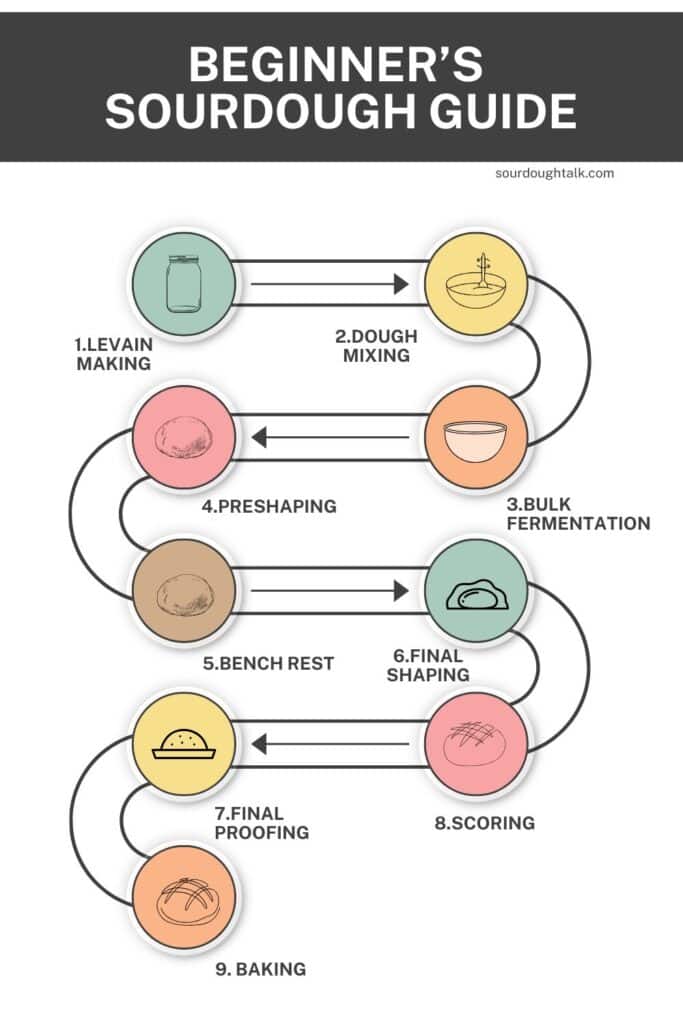
Your Beginner's Guide to Sourdough
This post is part of a series that walks you through every step, from feeding your starter to pulling the loaf from the oven.
Quality ingredients
True sourdough bread is made with just three ingredients: flour, water, and salt. Organic, whole-grain, and specialty flours can increase the cost, but they contribute significantly to the flavor and texture of the bread loaf.
Additionally, the salt and water quality (yes, even a special filtration system) affect the bread's outcome, so choosing the best increases the bread's price.
Time and patience
Sourdough requires time and patience. Unlike store-bought "sourdough" bread that uses commercial yeast to speed up the process, homemade sourdough bread relies on wild yeast and bacteria, which take time to slowly ferment and rise.
Bulk fermentation alone can last 4 to 12 hours or longer, depending on the recipe and environmental conditions. Then, there is the proofing time, which can take overnight or longer. The process is lengthy and requires careful attention, which increases overall costs when time is factored in.
Sourdough starter maintenance
A sourdough starter is the heart and soul of sourdough bread. If properly cared for, it can last indefinitely. However, maintaining the starter requires time, flour, and water.
The cost of flour and water is minimal, but feeding the starter twice a day takes time. Although the baker can store the starter in the fridge and feed it once a week, daily feedings are essential for the best baking results.
Specialized equipment
Although sourdough bread can be made without expensive tools, even by hand-mixing 100 loaves at a time, having the right sourdough equipment makes a big difference. Investing in a double oven or a specialized bread oven, which starts at around $9,000, adds to the overall cost.
Trial and error
Baking sourdough is a skill that takes time to master. Professional bakers might make it look easy, but behind every perfect loaf are years of practice.
For home bakers, the learning process can be challenging. Before selling sourdough bread, they often bake 200-500 loaves or more to refine their skills. It is not as simple as making a few loaves and starting a business.
Each sourdough loaf takes about 2-3 days to make, so even a tiny recipe change, such as adjusting an ingredient or baking time, requires waiting that long to see the results. Every tweak means another loaf must be baked, which requires more time, bread ingredients, and energy.
Although not every hour involves active work, the baker's schedule centers on the dough, with time dedicated to its development. Perfecting the loaf over time, through trial and error, is essential to the overall cost.
Energy costs
Baking sourdough takes energy, whether using an oven, a wood-fired oven, or another method. The process typically includes 1-2 hours of preheating, followed by 40-60 minutes of baking.
Energy costs can add up, especially for Cottage Food bakers. For example, baking 60 loaves of bread takes approximately 4-5 hours, excluding the preheating time.
Small batch production
Baking sourdough in a home kitchen means working in small batches, even when up to 100 loaves are in the oven at once.
Unlike large bakeries, home bakers don't benefit from economies of scale. The costs of ingredients, time, and equipment are spread across fewer loaves, making each loaf more expensive than mass-produced bread.
Still, baking your own is far cheaper than buying artisan loaves, and you can cut costs further. See my guide to making sourdough bread on a budget for practical ways to spend less on flour, equipment, and energy.
The magic of fermentation
Wild yeast and bacteria slowly ferment the dough, resulting in a rich, complex flavor that commercial yeast cannot replicate.
The slow fermentation gives sourdough its signature tangy taste and chewy texture, but requires close attention and patience from the baker. The skill and dedication involved in this process contribute to its higher cost.
FAQ
How much does a loaf of sourdough bread cost? A true artisan or bakery sourdough loaf usually runs $6 to $15, and some microbakeries charge up to $20, while mass-produced store "sourdough" is often $2 to $6. The difference reflects real fermentation, skilled labor, small-batch baking, and premium ingredients. Prices vary by region.
Why is sourdough more expensive than regular bread? Sourdough takes 2 to 3 days to make, relies on a maintained starter instead of fast commercial yeast, and is usually baked in small batches, so the time, skill, and ingredient quality per loaf are much higher than for factory bread.
Why is store-bought sourdough cheaper than bakery sourdough? Much cheap "sourdough" is mass-produced with commercial yeast and additives to speed things up, skipping the long natural fermentation. Real, slow-fermented sourdough costs more because it takes far more time and care.
Is it cheaper to make sourdough bread at home? In pure ingredient cost, yes, a homemade loaf can cost just a few dollars. But it is time-intensive, and the equipment, energy, and starter upkeep add up, so the savings come mostly from avoiding the cost of someone else's labor.
Let's talk sourdough
What is the most you have ever paid for a loaf of sourdough bread? Was it worth it? Share where you bought it and what made it special (or not).
What's next?
If you want to learn how to make sourdough bread, start with my Beginner's Sourdough Guide. Read through the posts, take it one step at a time, and keep practicing.