

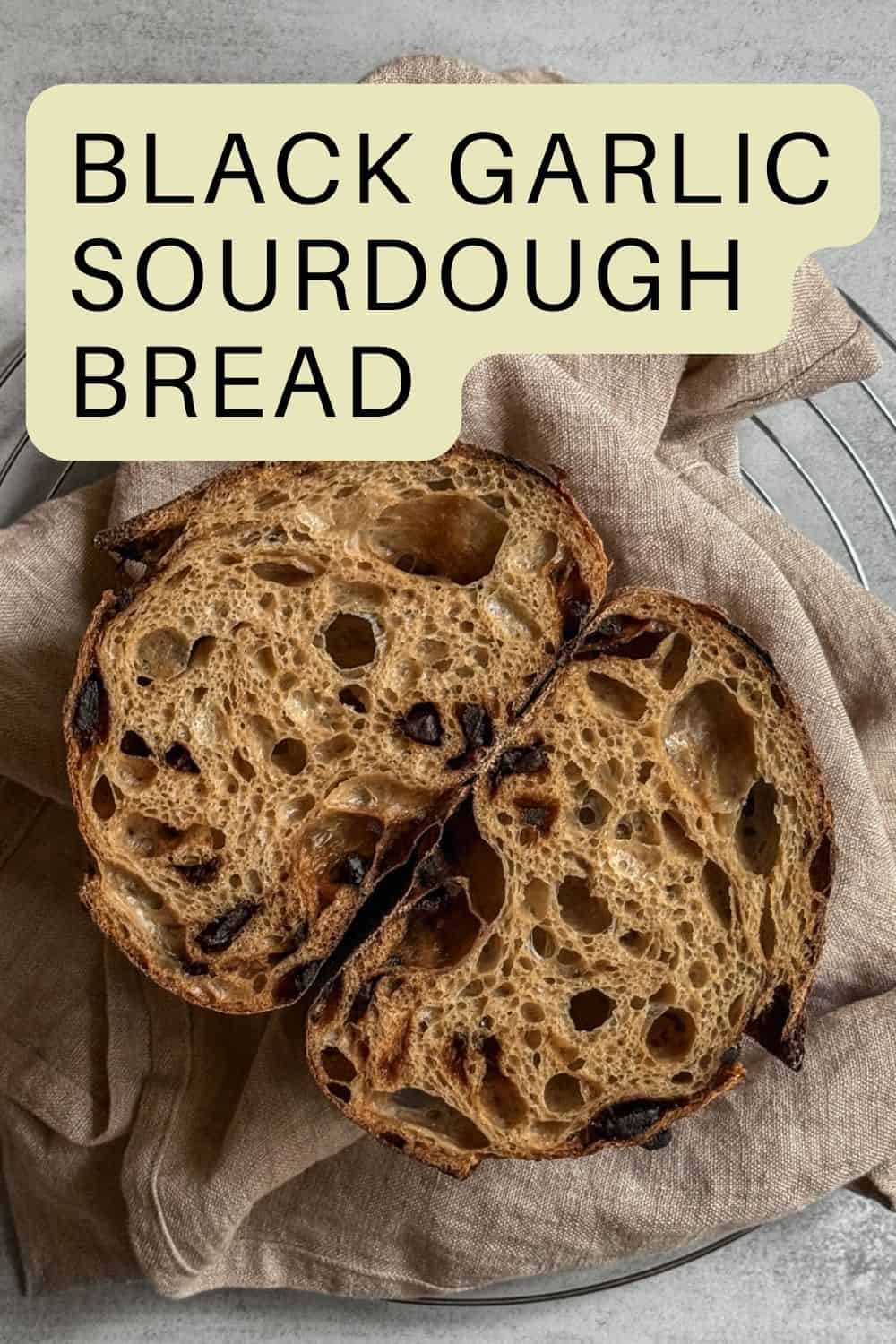
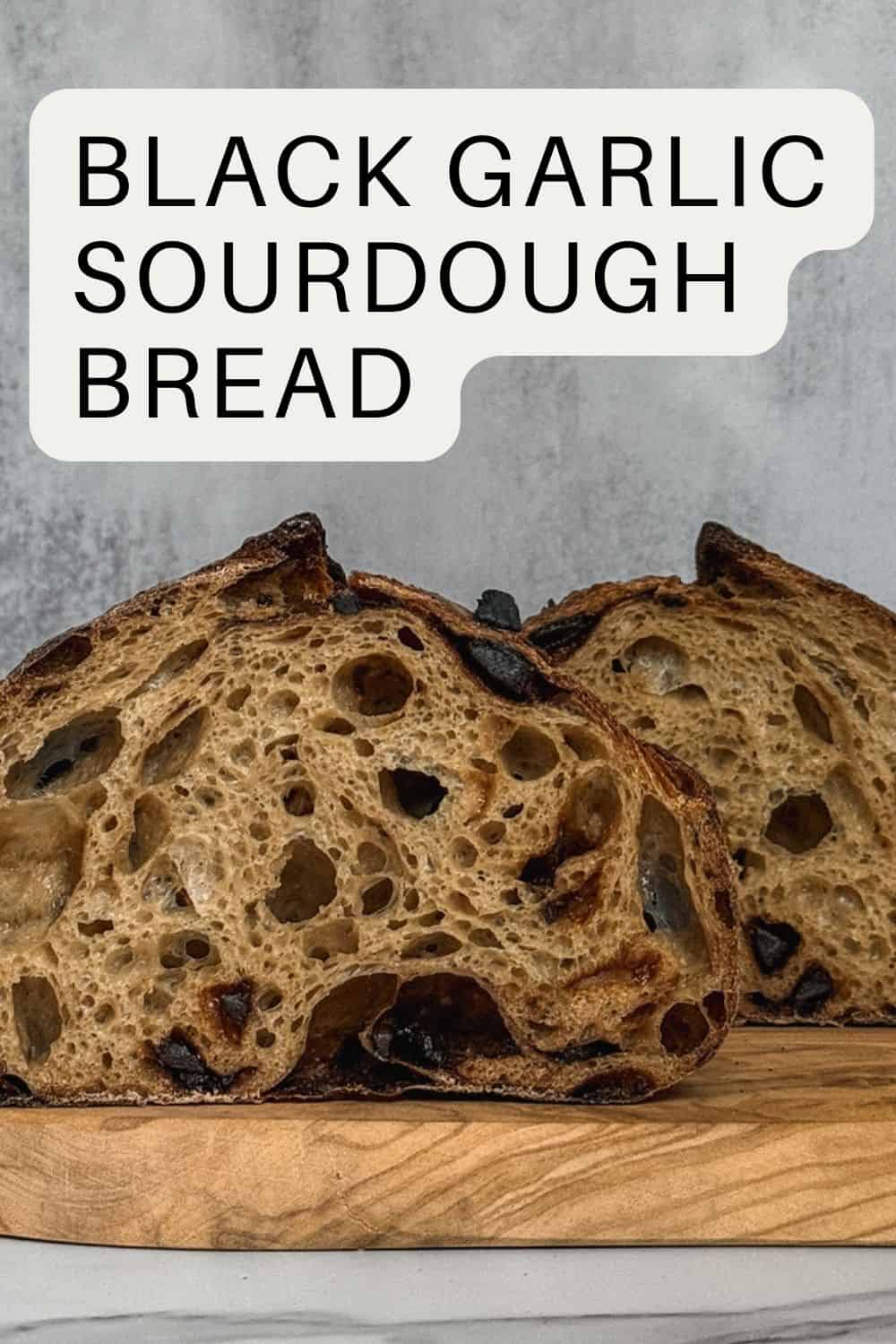
You will love this black garlic sourdough bread! The sweet black garlic, combined with coffee, makes a loaf full of flavor and aroma. A bit of honey and molasses adds a gentle sweetness, perfect for breakfast, a snack, or with cheese.
This recipe is quite advanced for beginners, as it uses a technique called sourdough lamination to incorporate black garlic. If you prefer, you can simply fold the black garlic in during your last set of stretch and folds instead.
If you are new to sourdough, I suggest starting with my Beginner's Sourdough Bread recipe. It will help you learn the basic techniques before moving on to inclusion loaves.
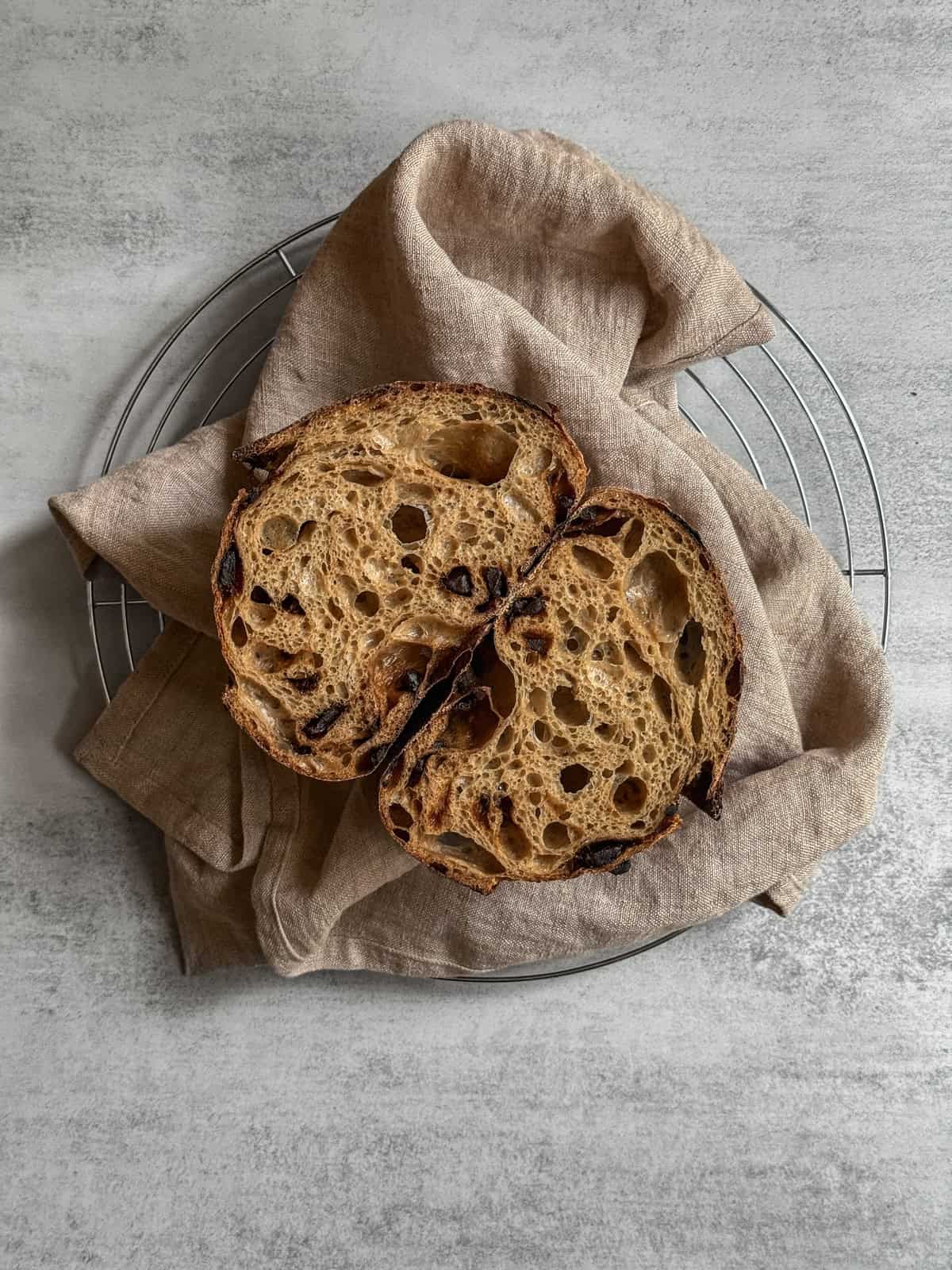
Black garlic sourdough bread recipe
I had never heard of black garlic until I saw a suggestion to add it to sourdough on Facebook. When I tried it, I was surprised by how much it changed the loaf. It turned a regular sourdough into our family's favorite.
Black garlic is made by slowly aging fresh garlic under warm, humid conditions, which turns it dark, soft, and naturally sweet. It adds a gentle sweetness and deep flavor to sourdough.
While you can make this bread with only bread flour, I like to add whole-grain flours for extra flavor, depth, and nutrition. I also added coffee for a subtle earthy note to pair with the black garlic.
Ingredients
- Flour: I'm using a mix of bread flour, rye flour, and whole wheat flour.
- Water: Use filtered or dechlorinated, high-quality water. Sourdough hydration here is 78%, giving a soft, slightly sticky dough that develops a lovely open crumb.
- Starter: Make sure your starter is active and bubbly. For this recipe, 20% (baker's percentage) is perfect, balancing fermentation speed and flavor development.
- Salt: It strengthens gluten and controls fermentation.
- Sweeteners: Honey and blackstrap molasses add subtle sweetness and feed the yeast, improving browning.
- Instant coffee: Finely ground (not coarse). It is added directly to the ingredients, without dissolving in water, so it incorporates evenly into the dough during mixing.
- Black garlic: It adds a rich, umami sweetness that permeates the bread without overpowering it. Use about 2-3 whole bulbs (not divided into individual cloves), which is roughly 45-54 g mashed.
Recipe variations & Substitutions
- Use only bread flour: You can make this loaf with 100% bread flour. The crumb will be slightly lighter and more open, with a milder overall flavor than with whole-grain flours.
- Combine roasted garlic and black garlic. Roasted garlic adds a savory, mellow flavor, while black garlic brings sweetness and umami.
- Skip the coffee: You can leave it out if you prefer a more classic garlic sourdough flavor. The bread will still be rich and aromatic, with the black garlic standing out more clearly.
- Make a marble loaf: Divide the recipe in two: prepare one plain white dough and one coffee-flavored dough. During lamination, spread the mashed black garlic between the layers and fold them together. This creates a beautiful marbled effect, with pockets of black garlic throughout, while keeping the flavors balanced and the crumb soft.
Final bread formula
| Ingredient | Baker's Percentage | Weight |
|---|---|---|
| Bread flour | 90% | 270g |
| Rye flour | 5% | 15g |
| Whole wheat flour | 5% | 15g |
| Water | 78% | 234g |
| Levain/Active starter, 100% hydration | 20% | 60g |
| Salt | 2% | 6g |
| Instant coffee | 0.8% | 2.4g |
| Honey | 3.5% | 10g |
| Blackstrap molasses | 3.5 % | 10g |
| Black garlic | 18% | 54g |
| Olive oil | 1.7% | 5g |
- Total dough weight is 676g. If you need to adjust the bread formula for your own loaf, use baker's percentages or my sourdough calculator.
- My kitchen temperature is 73°F (23°C) and the humidity is 40%.
- Bulk fermentation: 6 hours 15 minutes with a 35-40% increase in dough size.
- Proofing time: 14 hours cold-proof in the fridge
- Bake in a conventional oven at 450°F (232°C) with the lid on for 20 minutes; without the lid, 15-17 minutes.
Tools & Equipment
For all the tools and equipment I use, check out my Essential Sourdough Tools & Equipment guide. It covers everything you need to bake sourdough bread successfully.
How to make black garlic sourdough bread
1. Autolyse
Combine bread flour, rye flour, whole wheat flour, and water, and gently mix until no dry flour remains. Cover the bowl and let the dough rest for 30 minutes (see my blog post on sourdough autolyse).
2. Add levain and remaining ingredients
Add levain (active sourdough starter at peak), honey, molasses, and coffee. Mix until well incorporated. Once you add levain (active sourdough starter), bulk fermentation starts.
Add salt and knead using one of the bread dough mixing techniques. Cover the bowl and let the dough rise for 30 minutes.
3. Continue bulk fermentation
With wet hands, perform a series of stretch and folds and coil folds over the next 1.5 hours to strengthen gluten. Start with two sets of stretch and folds, followed by one set of coil folds, with a 30-minute rest between sets. After the last set of coil folds, cover the dough and let it rest for 30 minutes.
Mash the black garlic with a fork and mix in the olive oil. Gently laminate the dough, spreading the mashed black garlic evenly with your hand, then carefully fold the dough to incorporate it.
After lamination, place the dough into a bowl and continue bulk fermentation, monitoring its rise closely (see my guide to adding inclusions to sourdough).
Note: I allowed the dough to rise about 35% at 73°F (23°C). Your target rise will vary depending on your kitchen temperature. Warmer conditions will speed up bulk fermentation, while cooler environments will slow it down.
At the end of bulk fermentation, the dough should be airy, slightly domed, and with bubbles forming.
4. Preshape and shape
After bulk fermentation, turn the dough out onto a lightly floured surface. Pre-shape into a round, rest for 15-20 minutes, then perform the final shaping (see my guide to shaping bread dough). Place in a floured 8-inch banneton for final proofing.
5. Proof
Cover the banneton with a clean towel or a disposable plastic cap, or place it in a reusable plastic bag. Refrigerate overnight for a complex flavor.
6. Bake
Preheat the oven to 500°F (260°C) with a Dutch oven inside for 30 minutes. Gently transfer your proofed dough onto parchment paper. Score the top of the dough with a sharp blade to control expansion.
Transfer the scored dough into the hot Dutch oven, and cover. Reduce the oven temperature to 450°F (232°C) and bake covered for 20 minutes. 20 minutes covered, then 15-17 minutes uncovered until deep golden brown. Cool completely on a wire rack before slicing to allow the crumb to set.
If you want to bake using the open-bake method, read my blog post on baking sourdough without a Dutch oven.
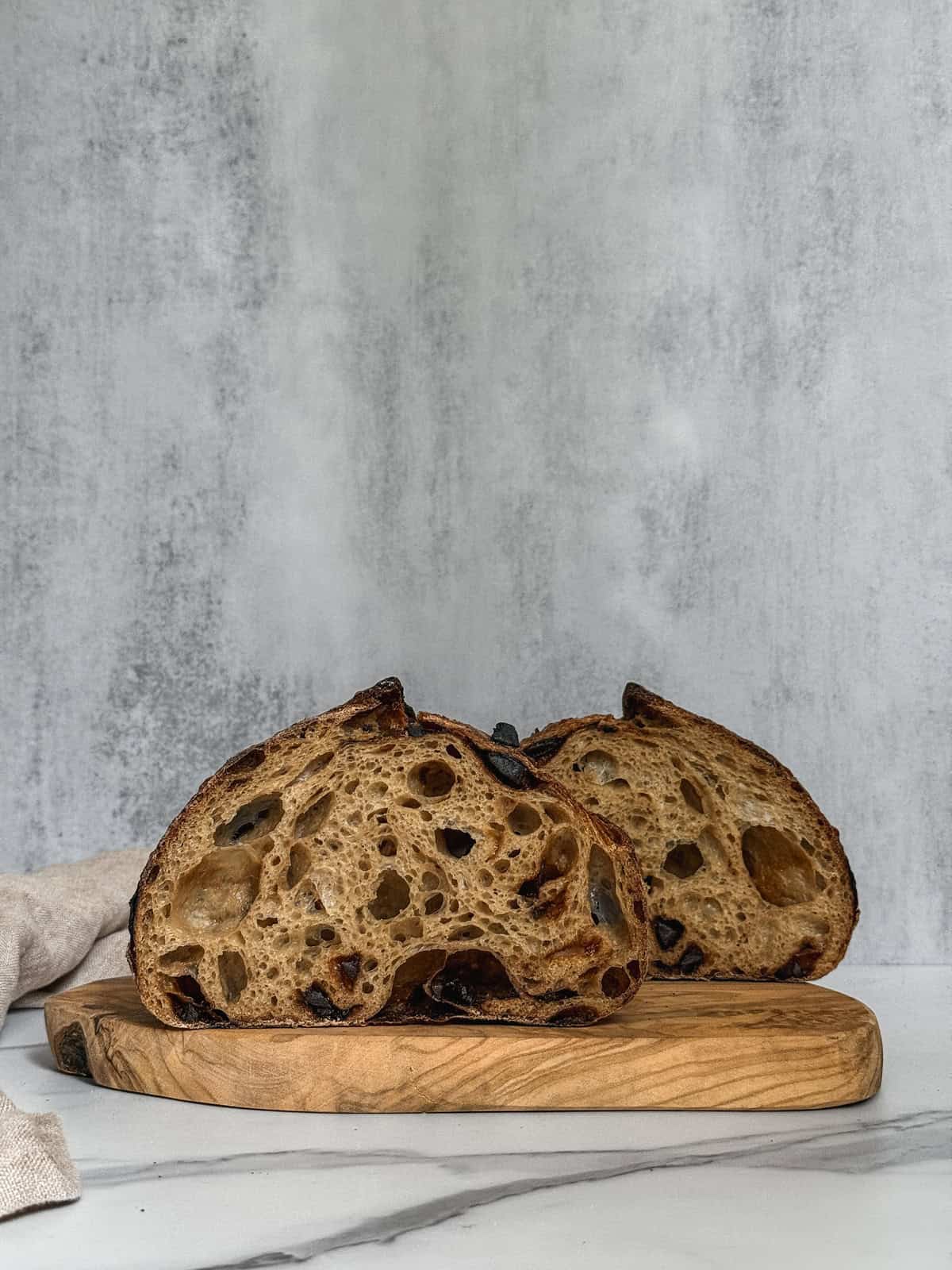
Bulk fermentation expectations
Using a blend of flours and adding coffee and black garlic to your sourdough dough changes its behavior compared to a plain 100% bread-flour loaf.
Whole wheat and rye flours contain more amylase, the enzyme that breaks down starch into sugars. This provides more "food" for the yeast and bacteria, which speeds up fermentation.
The earthy compounds in coffee, along with the sugars and amino acids in black garlic, honey, and molasses, provide additional simple sugars that boost yeast and bacterial activity. This also speeds up bulk fermentation, especially in the first stages.
Compared to a plain bread-flour sourdough, expect slightly faster fermentation for coffee-infused dough with black garlic, resulting in a softer, more extensible dough.
Don't rely solely on the dough's percentage rise. Look for visual cues like a lightly domed surface, small bubbles throughout, and a light, airy feel to determine when the dough is ready for shaping.
Expert Tips
- Adjust hydration: If your dough feels too sticky, reduce water slightly to fit your level of sourdough experience.
- Safety tip: Always use oven mitts or silicone gloves when handling hot pans or a Dutch oven.
- Check for doneness: Your bread is fully baked when the internal temperature reaches 205-210°F (96-99°C). I usually aim for 207°F (97°C) or higher. Use a digital probe thermometer for accuracy.
- Try the open-bake method: If you don't have a Dutch oven, you can still bake sourdough. Read my blog post on baking sourdough without a Dutch oven.
- Advanced notes: Track bulk fermentation using an aliquot jar method, checking the dough temperature after each fold and every 30-40 minutes. End fermentation once the dough reaches the target percentage rise.
More sourdough bread recipes to try
- Traditional Sourdough Bread
- Artisan Sourdough Bread
- Extra Sour Sourdough Bread
- Whole Wheat Sourdough Bread (coming soon)
Recipe
Black Garlic Sourdough Bread

This black garlic sourdough bread recipe combines sweet black garlic, a touch of honey and molasses, and a blend of flours to create a rich, aromatic loaf with a deep, savory-sweet flavor. Perfect for breakfast, snacks, or serving with cheese.
- Prep Time: 21 hours
- Cook Time: 40 minutes
- Total Time: 21 hours, 40 minutes
- Yield: 1 loaf 1x
- Category: Sourdough Recipes
- Method: Baking
- Cuisine: American
Ingredients
For the levain (an active starter):
- 22 g sourdough starter
- 22 g bread flour
- 22 g water
For the bread dough:
- 270 g bread flour (King Arthur organic bread flour)
- 15 g rye flour (Bob's Red Mill organic dark rye flour)
- 15 g whole wheat flour (King Arthur whole wheat flour)
- 234 g water (78% hydration)
- 60 g levain (active starter at peak)
- 6 g fine sea salt (Redmond ancient fine sea salt)
- 2.4 g instant coffee
- 10 g honey (Trader Joe's Mostly Mesquite Honey)
- 10 g blackstrap molasses
Add-ins:
- 54 g black garlic, mashed (about 3 whole bulbs)
- 5 g olive oil (about 1 teaspoon)
Instructions
- Autolyse: Combine bread flour, rye flour, whole wheat flour, and water, and gently mix until no dry flour remains. Cover the bowl and let the dough rest for 30 minutes.
- Add levain and remaining ingredients: Add levain (active sourdough starter at peak), honey, molasses, and coffee. Mix until well incorporated. Once you add levain (active sourdough starter), bulk fermentation starts. Add salt and knead using one of the bread dough mixing techniques. Cover the bowl and let the dough rise for 30 minutes.
- Fold the dough: With wet hands, perform a series of stretch and folds and coil folds over the next 1.5 hours to strengthen gluten. Start with two sets of stretch and folds, followed by one set of coil folds, with a 30-minute rest between sets. After the last set of coil folds, cover the dough and let it rest for 30 minutes.
- Laminate: Mash the black garlic with a fork and mix in the olive oil. Gently laminate the dough, spreading the mashed black garlic evenly with your hand, then carefully fold the dough to incorporate it.
- Continue bulk fermentation: After lamination, place the dough into a bowl and continue bulk fermentation, monitoring its rise closely (see my guide to adding inclusions to sourdough). At the end of bulk fermentation, the dough should be airy, slightly domed, and with bubbles forming.
- Preshape and shape: After bulk fermentation, turn the dough out onto a lightly floured surface. Pre-shape into a round, rest for 15-20 minutes, then perform the final shaping. Place in a floured 8-inch banneton for final proofing.
- Proof: Cover the banneton with a clean towel or a disposable plastic cap, or place it in a reusable plastic bag. Refrigerate overnight for a complex flavor.
- Bake: Preheat the oven to 500°F (260°C) with a Dutch oven inside for 30 minutes. Gently transfer your proofed dough onto parchment paper. Score the top of the dough with a sharp blade to control expansion. Transfer the scored dough into the hot Dutch oven, and cover. Reduce the oven temperature to 450°F (232°C) and bake covered for 20 minutes. 20 minutes covered, then 15-17 minutes uncovered until deep golden brown. Cool completely on a wire rack before slicing to allow the crumb to set.
Notes
- Adjust dough hydration: This recipe is 80% hydration, which makes the dough quite sticky. If you are new to sourdough, reduce the water slightly to make it easier to handle.
- Watch bulk fermentation: Don't rely only on dough rise. Look for a slightly domed surface, small bubbles throughout, and a lighter, airy feel.
- Safety tip: Always use oven mitts or silicone gloves when handling hot pans or a Dutch oven.
- Check for doneness: Your bread is fully baked when the internal temperature reaches 205-210°F (96-99°C). I usually aim for 207°F (97°C) or higher. Use a digital probe thermometer for accuracy.
- Try the open-bake method: If you don't have a Dutch oven, you can still bake sourdough. Read my blog post on baking sourdough without a Dutch oven.
- Want to create a custom formula for your loaf? Try my sourdough calculator.
- Need help getting started? Check out my beginner's sourdough bread guide to learn sourdough basics first.
- Note: Nutritional information does not include the white rice flour used for dusting.
Nutrition
- Calories: 1440
- Sugar: 33 g
- Sodium: 2350 mg
- Fat: 8.8 g
- Saturated Fat: 1.2 g
- Carbohydrates: 298.4 g
- Fiber: 16.3 g
- Protein: 38.9 g
- Cholesterol: 0mg