
If you struggle with inconsistent sourdough results, try combining Tom Cucuzza's dough temperature-rise chart with the aliquot jar method. Together, they offer a reliable way to track bulk fermentation and bake consistently great loaves.
Before you begin, I recommend checking out my complete guides on bulk fermentation and the aliquot jar method. I also suggest studying Tom Cucuzza's guide, "Measuring Dough Temperature and Percentage Rise."
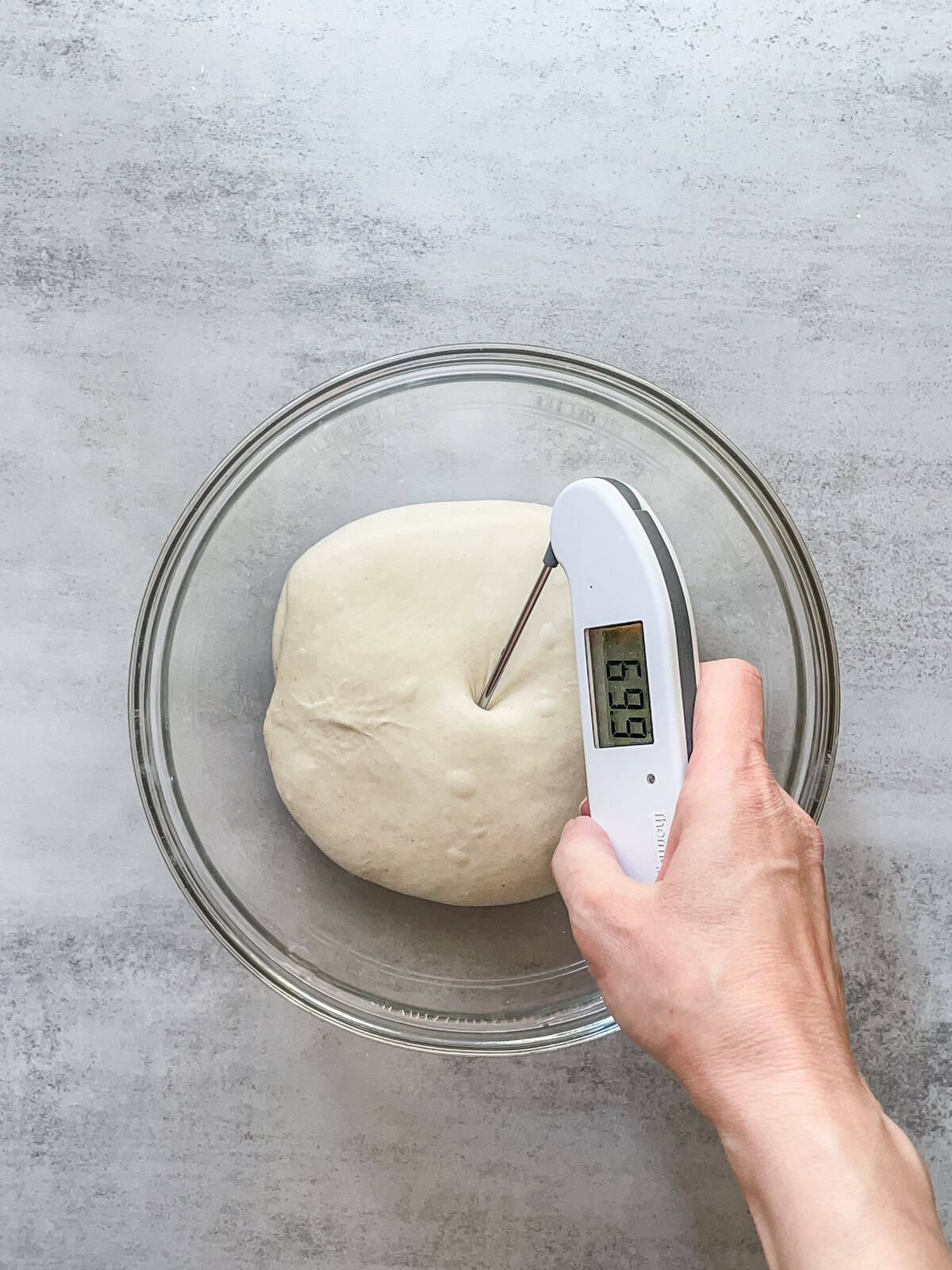
Why combine Tom Cucuzza's and aliquot jar methods?
- You can use any mixing bowl instead of a straight-sided container.
- You can perform stretch and folds or coil folds directly in the mixing bowl without transferring the dough back and forth between containers.
- Adding inclusions like seeds or nuts becomes easier with no need to adjust container marks.
- The aliquot jar provides an accurate, mess-free way to monitor bulk fermentation.
What is dough temperature, and how to measure it
Dough temperature is the internal temperature of your mixed dough. It is one of the key factors that determines how fast your dough ferments. The warmer the dough, the faster the fermentation.
The optimal dough temperature range for sourdough bulk fermentation is 75°F to 80°F (24°C to 27°C).
To measure dough temperature, use a digital probe thermometer to check the center of the dough. Avoid infrared thermometers, as they only measure the surface temperature, not the dough's core. Be sure to record the dough temperature in a baking log to help fine-tune your future bakes.
What is the percentage rise in sourdough?
The percentage rise measures how much your dough has expanded in volume during bulk fermentation. It provides a consistent and objective way to judge fermentation progress.
For example:
- If the dough in your jar started at 30 mL and rose to 60 mL, that's a 100% rise. It doubled in volume.
- If the dough started at 50 mL and rose to 75 mL, that's a 50% rise. It expanded by half of its original volume.
The target percentage rise refers to the specific amount of expansion or rise in the dough during bulk fermentation.
For example, a common target rise for sourdough is 30-50%, while some bakers aim for up to 75% and even higher.
The target percentage rise depends on your dough temperature. According to Mr. Cucuzza's temperature-based chart,
- At 80°F (27°C): aim for a 30% rise.
- At 75°F (25°C): target a 50% rise.
- At 70°F (23°C): aim for a 75% rise.
Refer to this chart for more temperature-specific guidance.
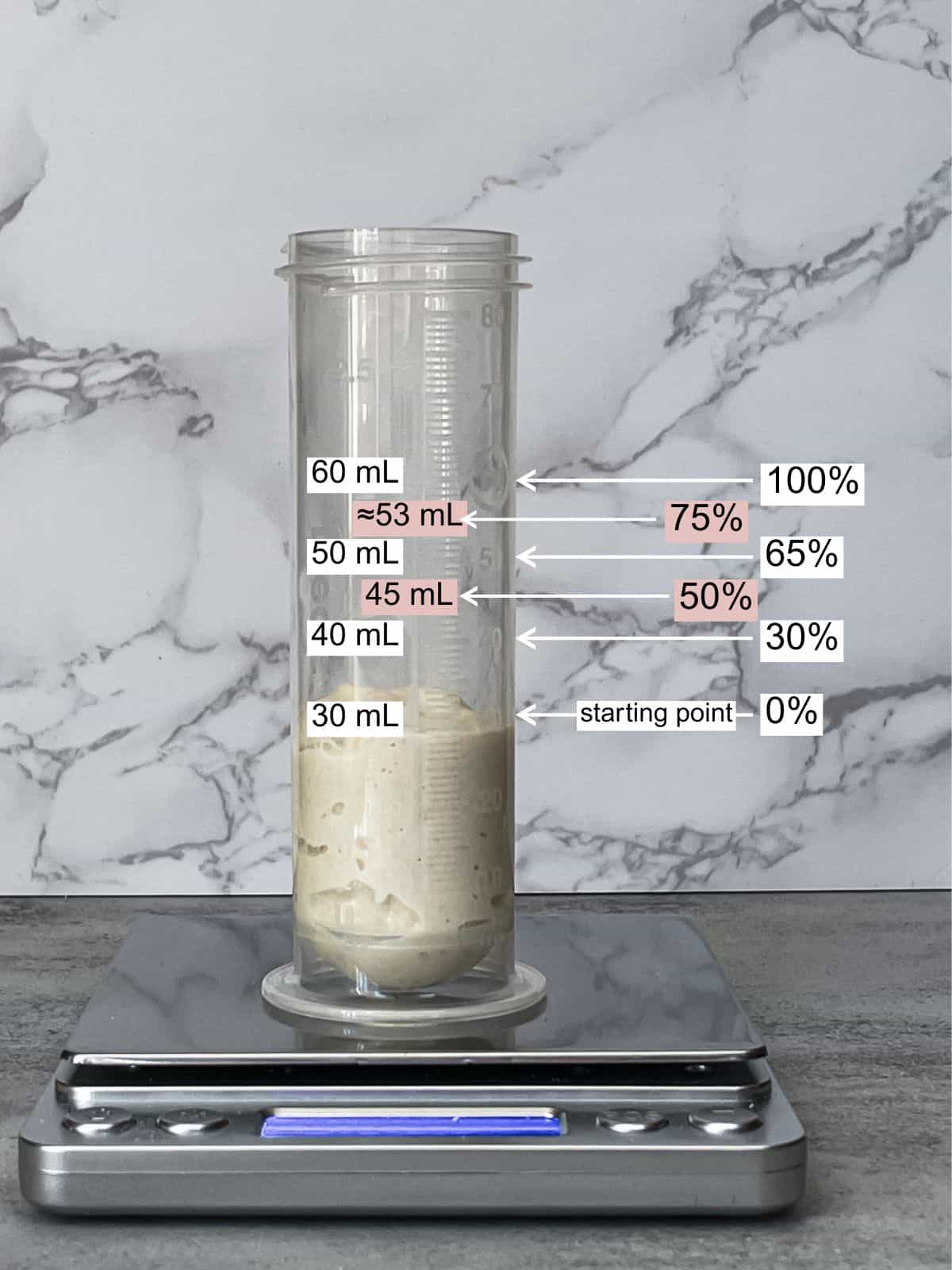
What is the aliquot jar method?
The aliquot jar is a small container that holds a sample of your dough, allowing you to track the bulk fermentation of the main dough. This method is beginner-friendly and ideal for use with bowls or containers that make visual tracking difficult.
By monitoring the sample dough rise in the jar, you can accurately track bulk fermentation. Be sure to read my article on the aliquot jar method.
How to track bulk fermentation step-by-step
To monitor bulk fermentation, using dough temperature, percentage rise, and an aliquot jar, you will need:
- 4-quart glass bowl
- Digital probe thermometer
- Kitchen scale (I use a pocket gram scale)
- An aliquot jar (I use a 2.7-oz plastic container with mL/oz markings)
- A sourdough baking log
1. Fermentolyse
Follow my Master Sourdough Bread recipe, made with 400g of flour. Combine the levain (an active starter), 95% of the water, and all the flour. Cover the bowl with a lid or a damp tea towel, and let the dough rest for 30 minutes.
2. Add salt and set up the aliquot jar
Add the salt and the remaining 5% of water, mix thoroughly, and record the start time in your baking log.
Then take a small piece of dough to serve as a starting point and place it in the jar. Adjust the dough amount based on your jar size. This sample will reflect the fermentation progress of your main dough.
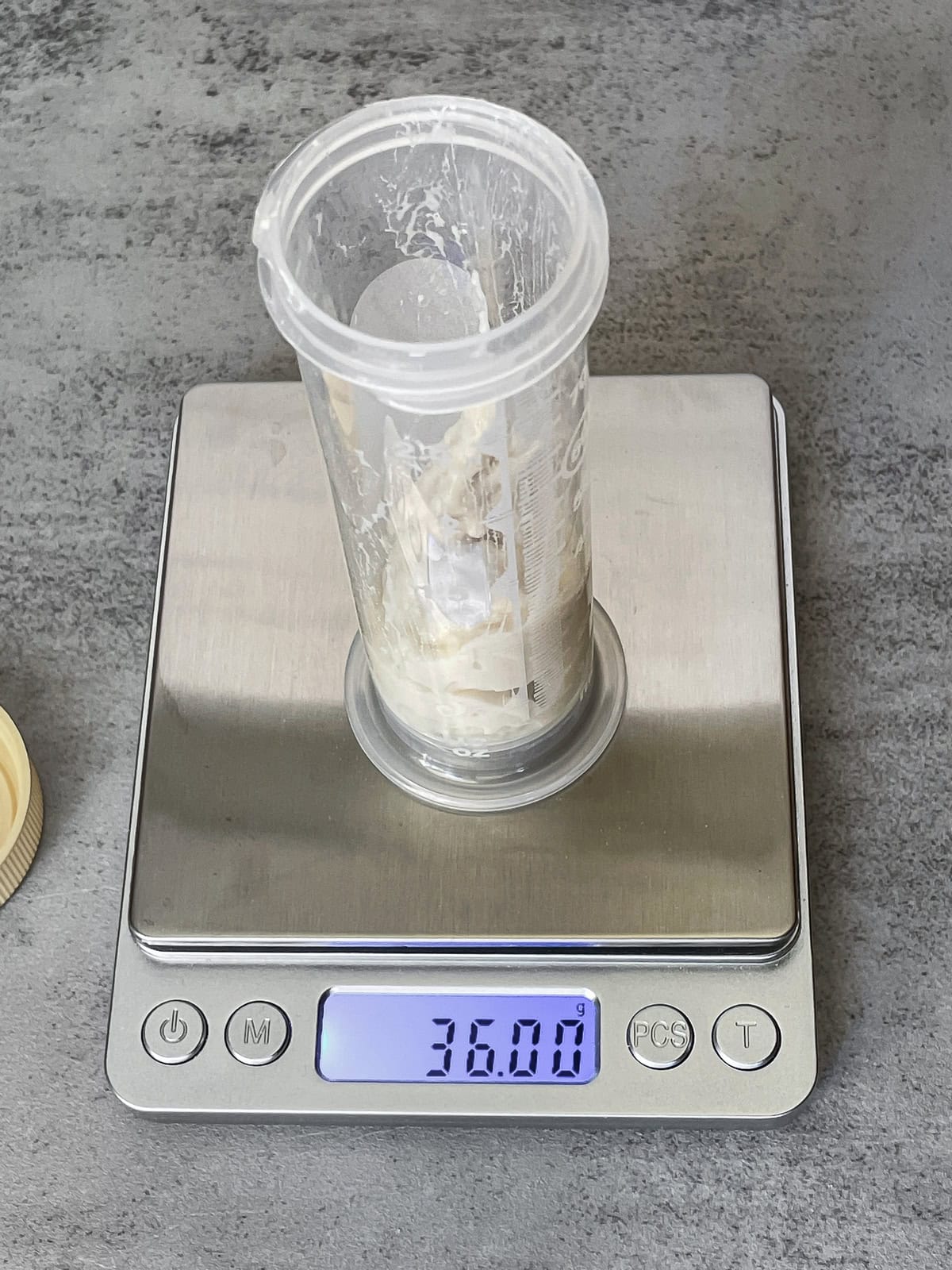
In my case, I place 36 grams of dough into a 2.7-ounce aliquot jar.
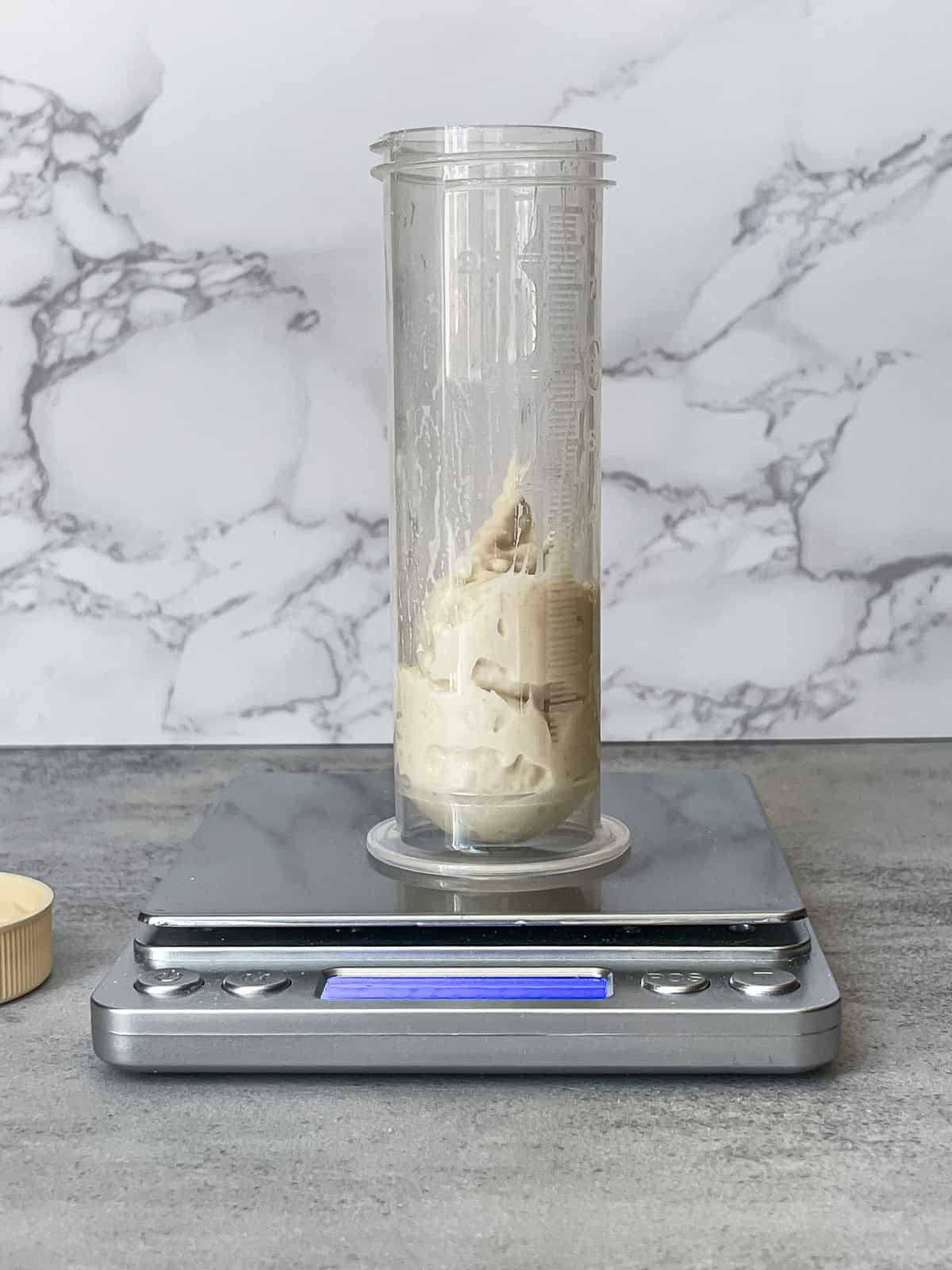
The dough sample fills the bottom of the aliquot jar.
Cover the bowl and let it rest for 30 minutes. Seal the jar with a lid and place it next to the mixing bowl to make sure they share the same environment. Do not touch the dough sample while you fold the main dough.
3. Perform stretch and folds
Do your first stretch and folds, then take a temperature reading from the center of the main dough and record it in your log. There is no need to check the dough temperature in the aliquot jar.
Use Tom Cucuzza's chart to find the target rise based on that temperature. Mark this level on the aliquot jar with a rubber band if desired. Let the dough rest for 30 minutes.
4. Repeat stretch and folds, coil folds, and temperature checks
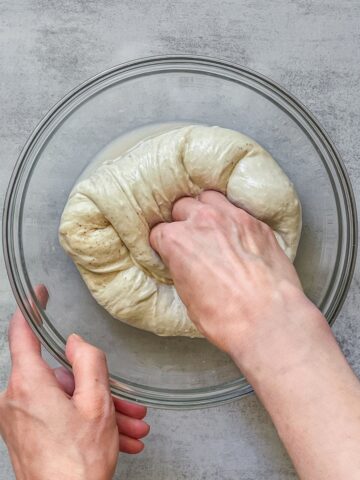
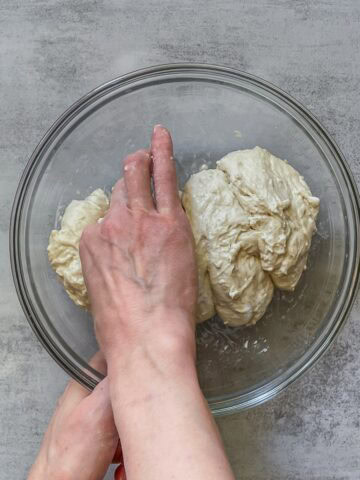
Repeat the set of stretch and folds, then let the dough rest for 30 minutes. Perform two sets of coil folds, spaced 30 minutes apart. After each fold, measure and log the dough temperature.
5. Monitor and adjust
Continue to check the dough temperature and document it every 30 minutes. If the dough temperature changes during bulk fermentation, adjust your target rise in the aliquot jar (using the rubber band) based on the "ending dough temperature."
According to Tom Cucuzza, the "ending dough temperature" is simply the last dough temperature measurement you record during bulk fermentation.
It is part of tracking fermentation using his chart, where you correlate dough temperature with percentage rise to determine when to end bulk.
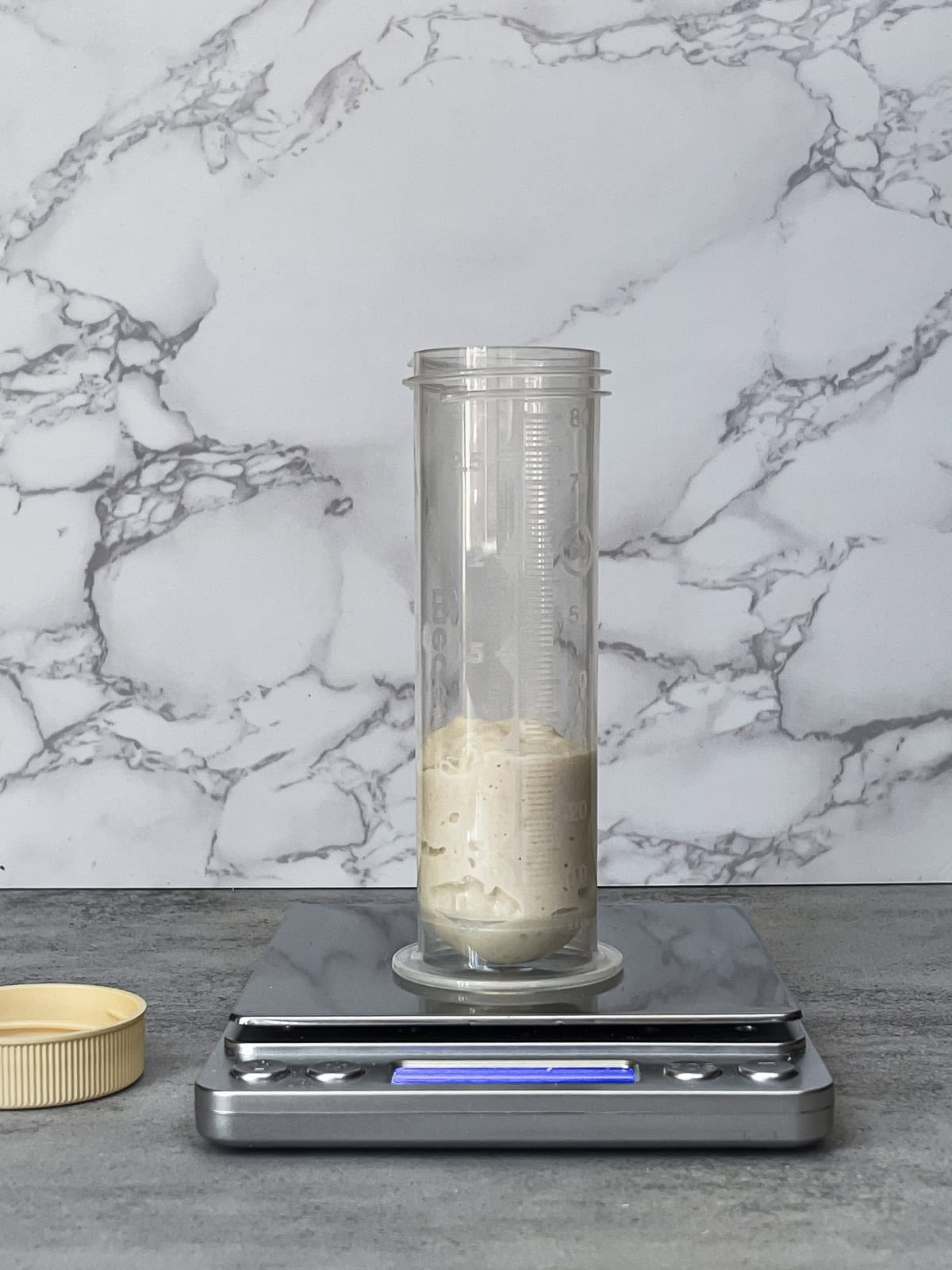
Example: This aliquot jar shows the dough sample at the starting point, marked at 30 mL in my case.
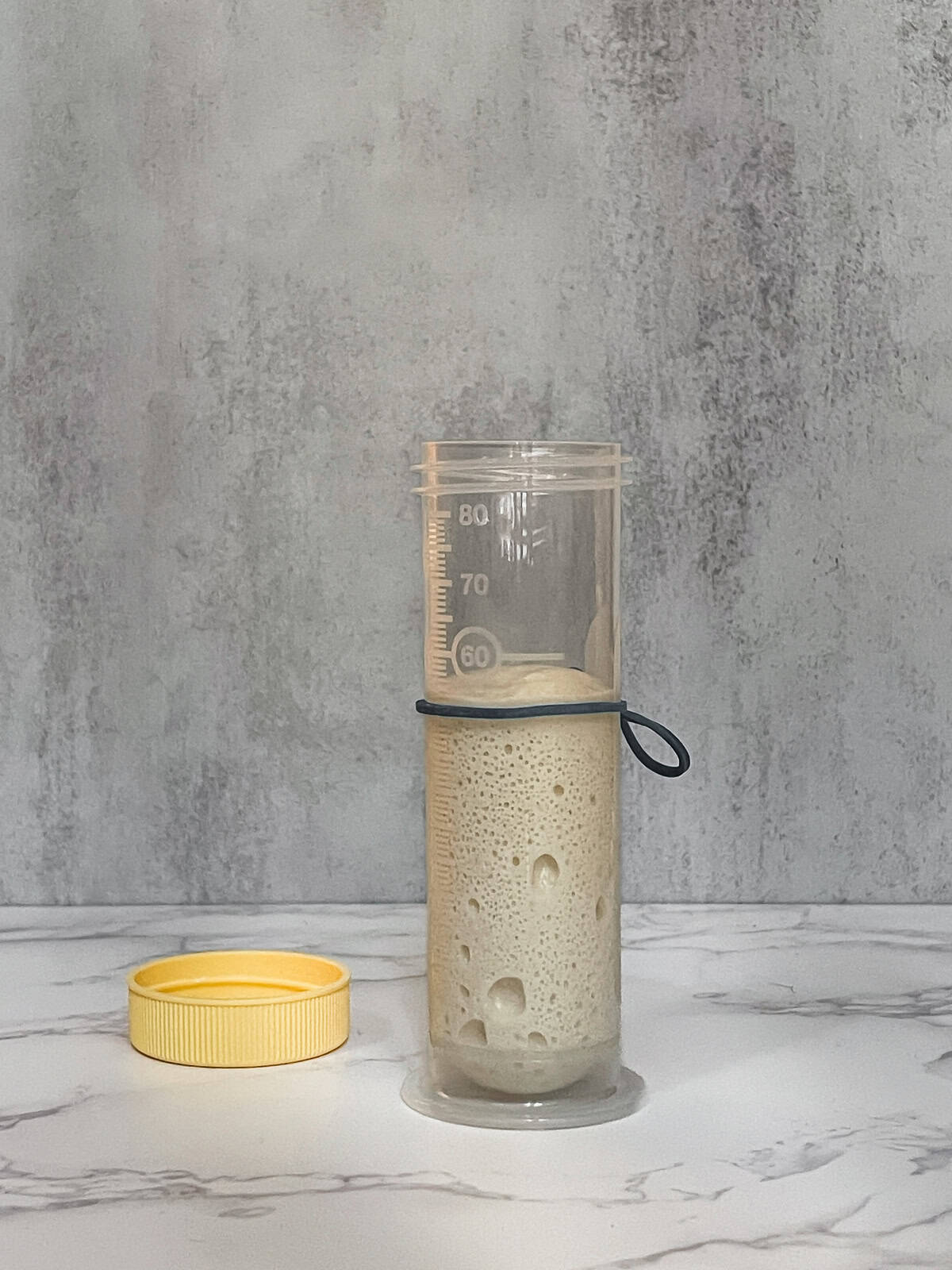
Example: This aliquot jar shows the dough reaching the target rise, marked at 55 mL in my case, which corresponds to an 80% rise.
6. Finish bulk fermentation
Once the sample dough reaches the target percentage rise in the aliquot jar, check the main dough to determine whether the bulk fermentation is complete.
Look for bubbles across the surface and along the sides of the bowl, a domed top on the dough, and a soft, wobbly jiggle when the container is shaken.
Pre-shape the dough, and let it rest on the counter for 15-30 minutes. Then, shape it for the final proof. Place the shaped dough in a banneton and refrigerate it for a cold proof.
Tip: If your dough temperature rises above 80°F (27°C), check the other 7 criteria in the Bulk-o-Matic Guide.
Troubleshooting tips
Issue: Dough smears on the inside of the jar make it hard to read the rise level.
Solution: Wipe the inside of the jar with a paper towel for clear visibility.
Issue: Jar markings are unclear or inconsistent.
Solution: Use a rubber band, a dry-erase marker, or sticky tape to mark the starting level and your target percentage rise clearly.
Issue: The dough in the aliquot jar rises faster than the main dough.
Solution: Make sure both are kept at the same temperature. Place them side by side.
Issue: The dough in the aliquot jar dries out on top.
Solution: Tighten the jar with a lid or use plastic wrap to prevent skin formation.
Let's talk sourdough
If you have tried this method or want to, I would love to hear about your experience. Are you tracking with a jar, a marked container, or something else? Do you tweak your timing based on dough temperature? Let me know in the comments.
Ready to keep learning?
Before mixing everything together, learn the difference between autolyse and fermentolyse and when to use each technique.