
Quick Summary: Autolyse, fermentolyse, and saltolyse are three resting techniques that develop gluten before mixing. Autolyse rests flour and water only; fermentolyse adds the starter, so fermentation begins right away; saltolyse adds salt to the flour and water.
Autolyse gives the most extensible dough, fermentolyse adds flavor, and saltolyse gives more control over long rests. All three are optional, and you can skip them with a strong, active starter.
Autolyse, fermentolyse, and saltolyse
Autolyse, fermentolyse, and saltolyse are resting techniques that develop gluten before you finish mixing.
The difference comes down to what you mix in and when: autolyse uses flour and water only, fermentolyse adds the starter/levain (so bulk fermentation begins), and saltolyse adds salt. Here is how the three compare at a glance.
| Autolyse | Fermentolyse | Saltolyse | |
| What's mixed | Flour + water | Flour + water + starter | Flour + water + salt |
| Bulk fermentation starts? | No | Yes, bulk begins | No |
| Typical rest | 30 min to 4 hours (up to overnight) | About 30 min or less | Overnight (in the fridge) |
| Gluten & windowpane test | Most extensible; stretches thin and translucent easily | Slightly tighter from the acids; may tear a little sooner | Firm at first, but strong and elastic after a long rest |
| Best for | High-protein and whole-wheat flour; extensibility | Flavor and texture; weaker or low-hydration flours | Control over long rests |
To check gluten development yourself, use the windowpane test: stretch a small piece of dough thin enough for light to pass through without tearing.
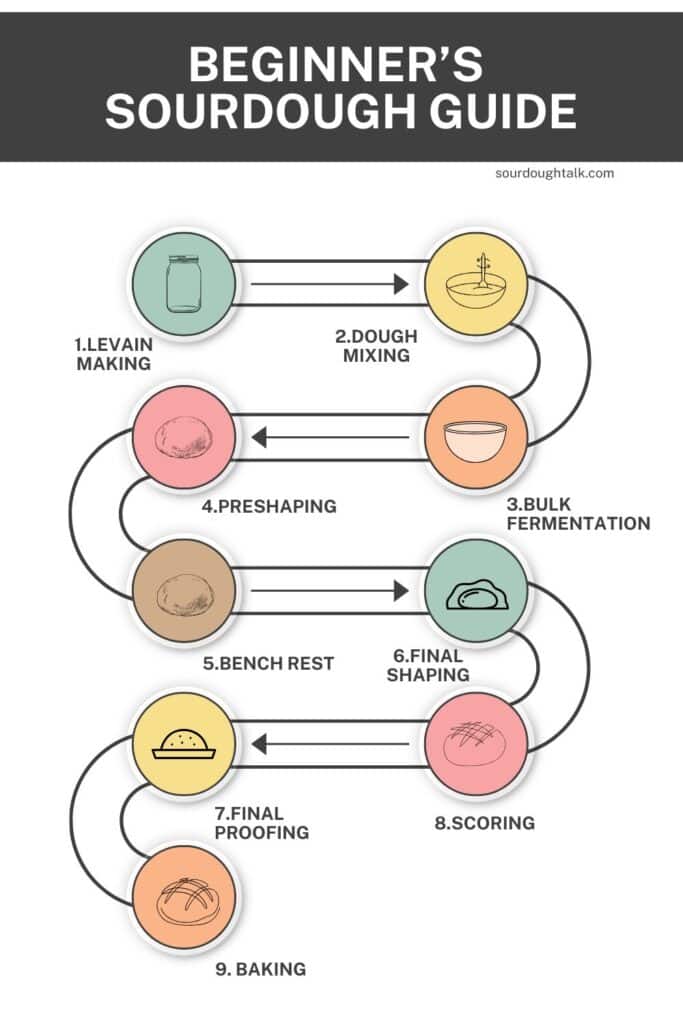
Your Beginner's Guide to Sourdough
This post is part of a series that walks you through every step, from feeding your starter to pulling the loaf from the oven.
What is autolyse?
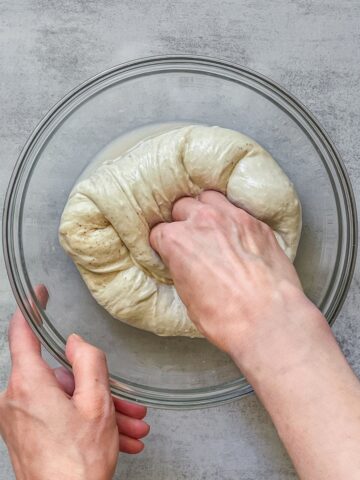
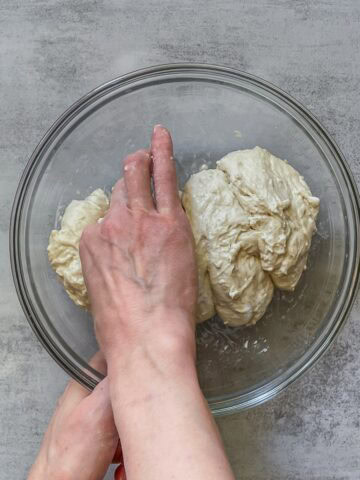
Autolyse is a resting step where you mix only flour and water and let the dough rest, with no starter or salt. During this rest, enzymes activate, and gluten begins to form on its own, giving you a smoother, more extensible dough.
It is most helpful with high-protein bread flour and whole wheat, and you can skip it with lower-protein all-purpose flour. For the full method, including exactly how long to rest by flour type and how to do an overnight autolyse, see my guide on how to autolyse sourdough.
What is fermentolyse?
Fermentolyse goes one step further than autolyse by including the sourdough starter with the flour and water at the beginning of the process. This marks the start of bulk fermentation.
The starter introduces wild yeast and lactic acid bacteria immediately, which start consuming sugars and producing CO₂ and acids. This early fermentation slightly lowers the dough's pH, which tightens the gluten structure a bit.
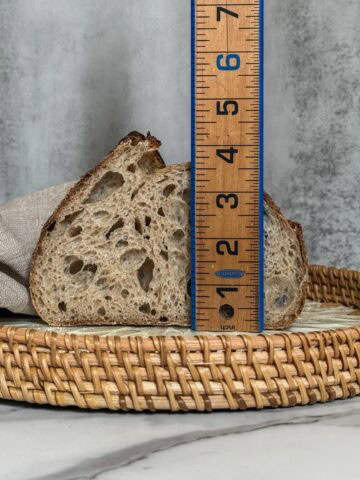
Fermentolyse also enhances the bread's flavor and improves its texture. It is especially helpful when working with weaker flours or lower-hydration doughs. Keep this step short, like around 30 minutes or less.
What is saltolyse?
Saltolyse is a newer term in bread baking. It is a variation of autolyse where salt is added to the flour and water mixture. Adding salt slows down enzymatic activity and takes longer than autolysis, typically overnight in the refrigerator.
Trevor Wilson, the author of Open Crumb Mastery, notes that while salt initially weakens gluten, extended autolyse enables the dough to recover and build strength. This method can be particularly useful when you want the benefits of autolyse but need more control over the process.
What technique should you use?
Each technique has its strengths and serves a slightly different purpose.
- Use autolyse to make your dough easier to handle, using the stretch and fold technique. It is a straightforward method that improves extensibility, making it ideal for high-protein or whole-wheat flour.
- Opt for fermentolyse if you want to focus on flavor and texture. This approach not only initiates gluten development but also begins bulk fermentation.
- Try saltolyse if you need more control over the autolyse process, especially when using long resting times.
Can you skip these steps?
Yes, autolyse, saltolyse, and fermentolyse are not always required. If your sourdough starter is very active and you are using a high inoculation percentage in your dough, you can mix all the ingredients at once and start bulk fermentation right away.
Don't feel overwhelmed by these techniques. Think of them as tools to help you create the kind of bread you love. The more you experiment, the better you will understand how each method affects your dough and the final loaf.
Bake three loaves using each technique, then compare the results. You will discover which method works best for your preferred bread style.
Autolyse, fermentolyse, and saltolyse are all ways to start your dough. Want to see how that first step fits into the whole sourdough process, from starter to finished loaf?
FAQ
What's the difference between autolyse and fermentolyse? Autolyse rests only flour and water; fermentolyse adds the sourdough starter from the start, so bulk fermentation begins immediately. Autolyse gives a more extensible dough; fermentolyse adds flavor.
Is saltolyse better than autolyse? Neither is better, they are for different goals. Saltolyse (flour, water, and salt) gives more control during long or overnight rests, while autolyse maximizes extensibility. Use saltolyse when you want autolyse's benefits with a longer, more controlled rest.
Can you skip autolyse, fermentolyse, and saltolyse? Yes. With a strong, active starter and a high inoculation, you can mix everything at once and start bulk fermentation right away. These steps are optional tools, not requirements.
Let's talk sourdough
If you are new to these methods, which one would you like to try first? And if you have baked sourdough before, do you have a favorite? I love hearing what works for other bakers. Everyone's process is a little different.
Ready to keep learning?
Finally, learn the windowpane test to test your dough's gluten development.