
The windowpane test is a simple method to check if bread dough has created sufficient gluten strength. Strong gluten allows the dough to rise properly, giving the bread its desired texture.
What is a windowpane test?
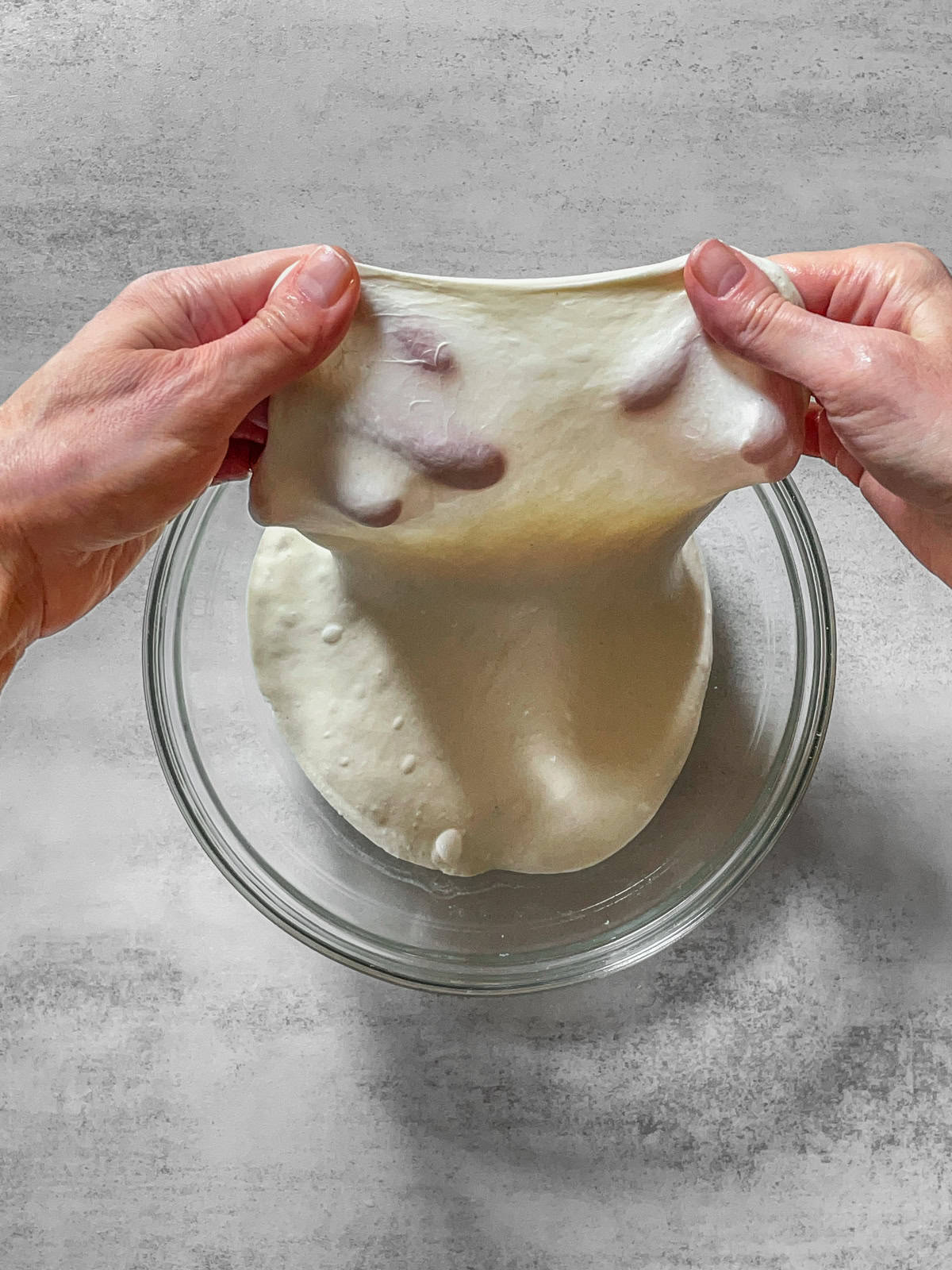
The windowpane test checks whether the dough has developed enough gluten by stretching a small piece until it forms a thin, translucent film without tearing.
The Oxford Languages Dictionary defines a windowpane as "a pane of glass in a window."
In baking, the term windowpane is used metaphorically because the dough, when stretched, forms a thin, transparent sheet that resembles the delicate transparency of glass. This visual similarity is why the test is named after it.
What happens to the dough?
When you perform the windowpane test, you check how well the gluten in the dough has developed.
Gluten is a protein that forms when flour is mixed with water. As you mix or fold the dough, gluten strands stretch and link together, creating a strong and elastic structure.
During the windowpane test, the gluten strands in the dough either stretch and hold together, indicating strong gluten development, or they break apart, revealing weak gluten that has not developed enough.
When to check for the windowpane test
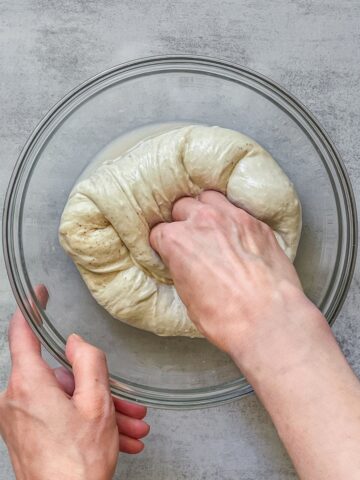
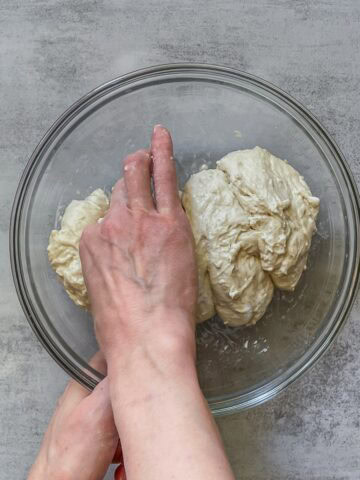
You should perform the windowpane test after you have completed an autolyse or fermentolyse process, after mixing bread dough using the Rubaud method, slap-and-fold, or after mixing the dough with a mixer.
It helps you see if the dough has developed enough gluten, so you can decide whether to stop mixing or keep going for a few more minutes.
Another good time to perform the test is at the end of bulk fermentation to determine whether the gluten remains strong or is starting to break down.
How to perform the windowpane test
- Wet your hands to prevent the dough from sticking.
- Gently stretch a small portion of the dough between your fingers while keeping it attached to the rest of the dough. You want to see if it forms a thin, translucent "window" without tearing.
- If the dough stretches easily and forms a smooth window, it has developed enough gluten. If it tears quickly or doesn't stretch far, it needs more kneading or folding.
If you have baked with yeasted bread before, you might be used to cutting off a small piece of dough, about the size of a golf ball, to check for the windowpane test.
With sourdough, there is no need to cut off a piece. Instead, gently stretch a section of the dough while keeping it attached to the rest.
How to read the test
Here is what to look for when performing the windowpane test:
- Passes the test or achieves windowpane: If the dough stretches thin enough to let light pass through without tearing, it has strong gluten development.
- Fails and needs more work: If the dough tears quickly and doesn't stretch far, it needs more mixing or additional dough folding.
- Over-fermented dough: If the dough stretches too easily, feels weak, or tears, the gluten may be breaking down, indicating that it has been fermented too long (over-fermented).
Remember that achieving a clear windowpane is more challenging with whole-wheat dough because the bran in whole-wheat flour tends to tear the dough.
Let's talk sourdough
What is the largest windowpane you have ever stretched? Could you get it to 5-6 inches (12-15 cm) across without tearing? I once read about this and am curious now.
Ready to keep learning?
With all the essential sourdough baking techniques in hand, it is time to put them to work and bake my Master Sourdough Bread recipe.