
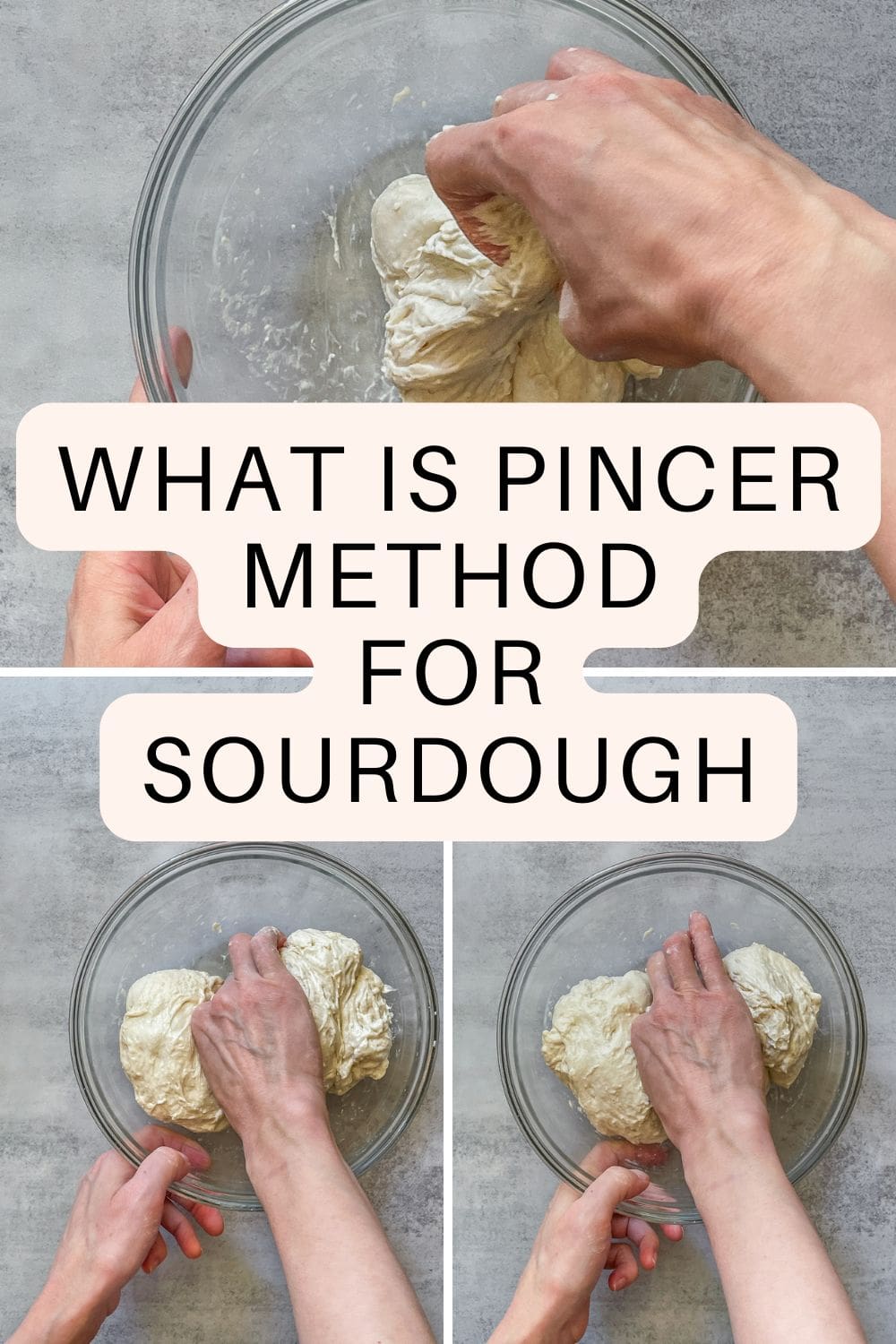
Quick Summary: The pincer method is a hand-mixing technique that uses your thumb and forefinger to pinch through the dough, cutting it into sections, then folding it back together.
It is the easiest way to evenly incorporate levain and salt into the dough after an autolyse, without deflating it or overworking it. You pinch, fold the dough in half, and repeat until everything is fully combined. It is especially handy for wet, sticky dough that is hard to work by hand without deflating it.
In this guide, you will learn what the pincer method is, when to use it, and exactly how to do it.
What is the pincer method?
The pincer method is a gentle hand-mixing technique that uses a pinching and folding motion to evenly distribute levain and salt throughout the dough. Instead of stirring, you use your thumb and forefinger to pinch down through the dough layers, then fold the dough in half and repeat.
It is popularized by Ken Forkish in his book Flour Water Salt Yeast, and it is most often used to combine the levain (active sourdough starter) and salt with the dough after an autolyse. You can watch a short video of the author demonstrating it.
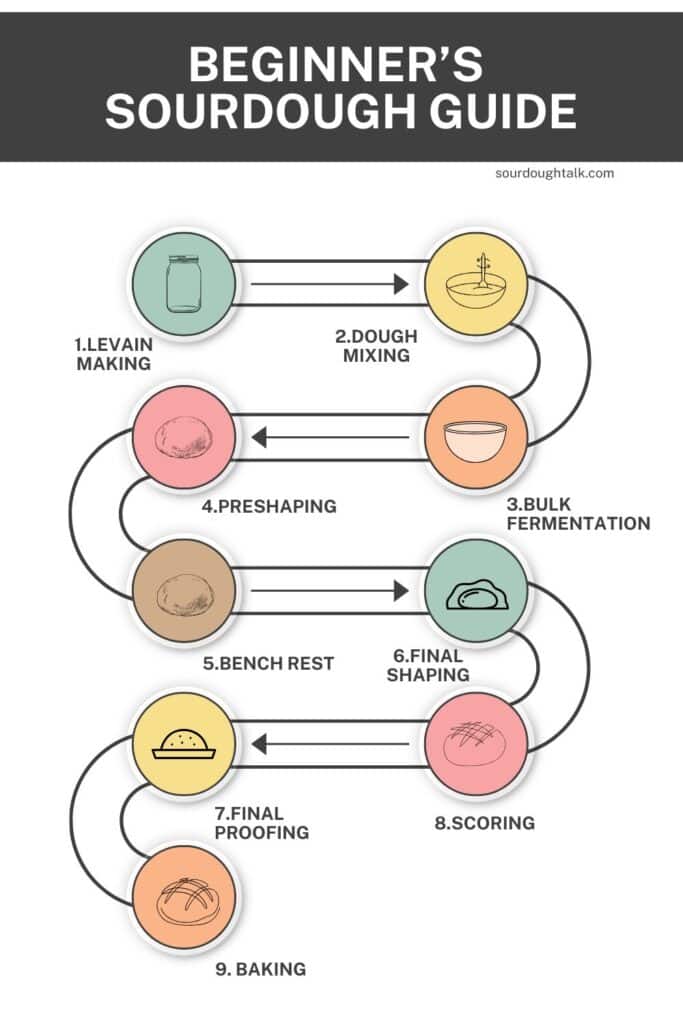
Your Beginner's Guide to Sourdough
This post is part of a series that walks you through every step, from feeding your starter to pulling the loaf from the oven.
Why use the pincer method?
Adding levain and salt to an already-mixed, resting dough can be tricky, especially with wet dough. Vigorous kneading deflates it and overworks the gluten at this stage, while squeezing alone doesn't distribute the salt evenly.
The pincer method solves this: pinching cuts cleanly through the dough to spread the ingredients, while folding brings it back together gently
It is gentle, fast, and works beautifully on high-hydration dough that is too sticky to mix any other way.
How to do the pincer method
1. Add the levain and salt
Prepare a small bowl of room-temperature water to wet your hands occasionally as you mix, but don't overdo it, as extra water can raise your hydration.
Add the levain at its peak and the salt to the rested dough. Begin by folding the dough a few times, or gently squeezing it between your fingers, to start working them in.
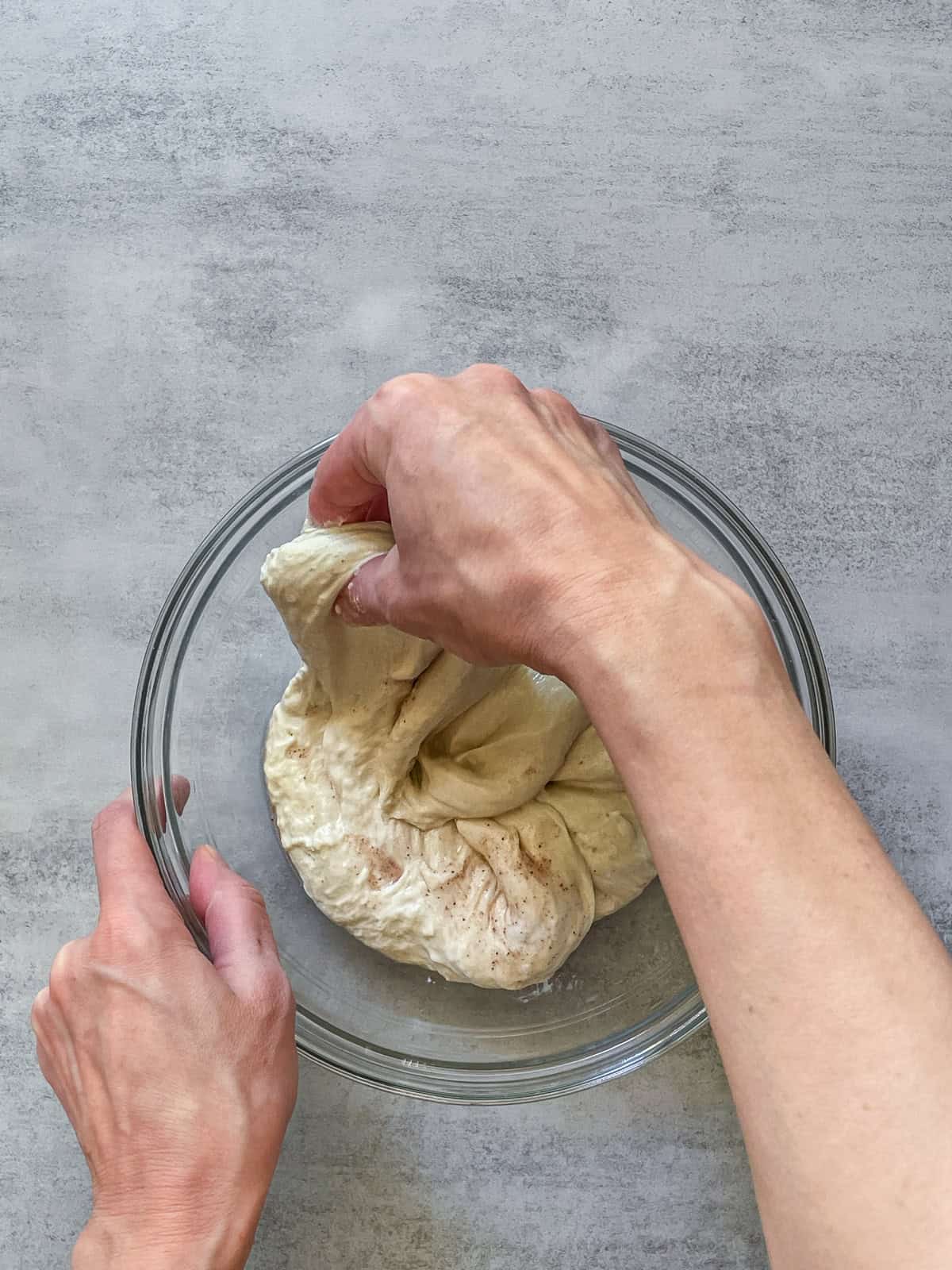
Mix the dough by folding it after adding salt.
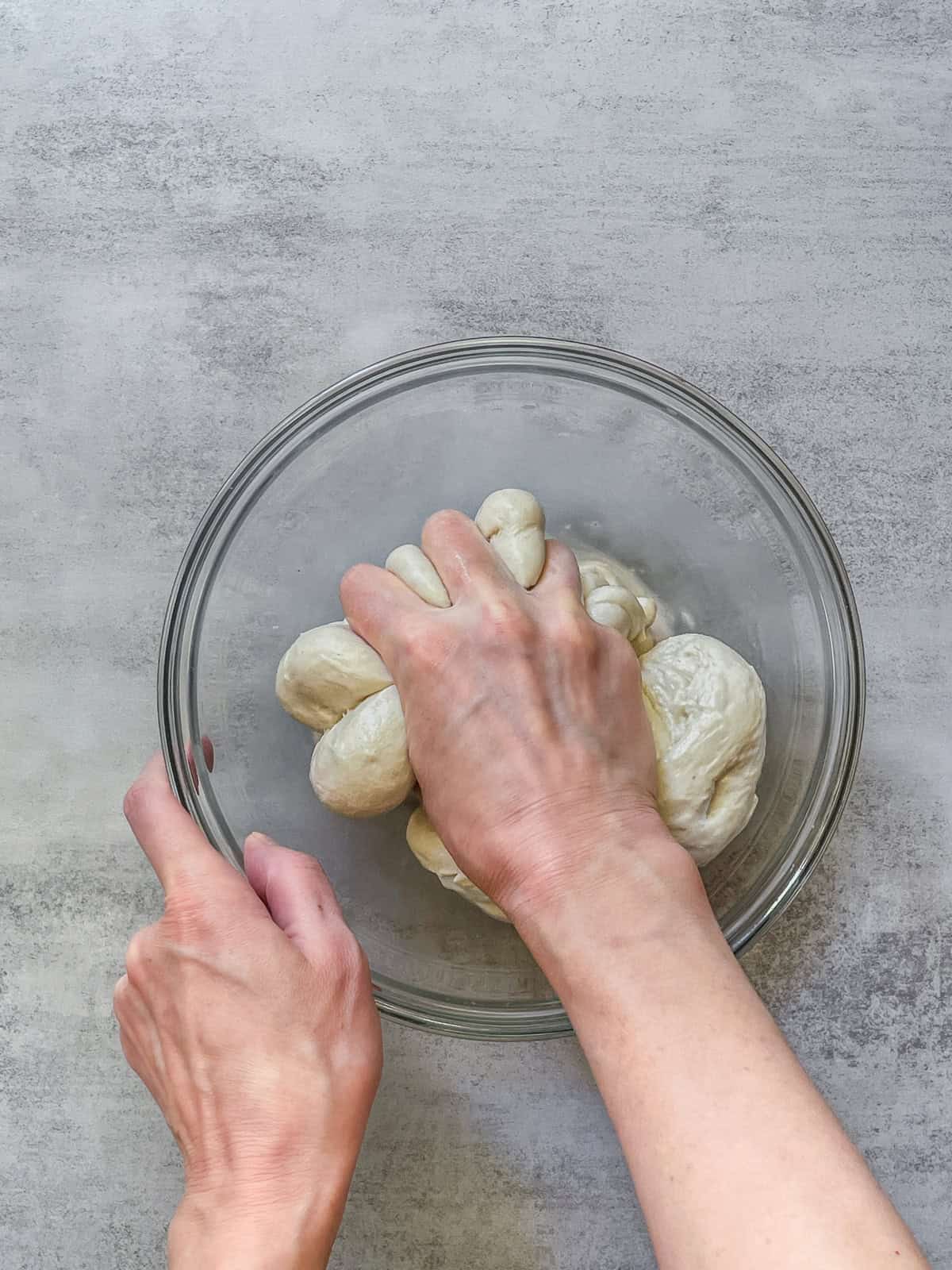
Mix the dough by squeezing it between your fingers after adding salt.
2. Pinch through the dough
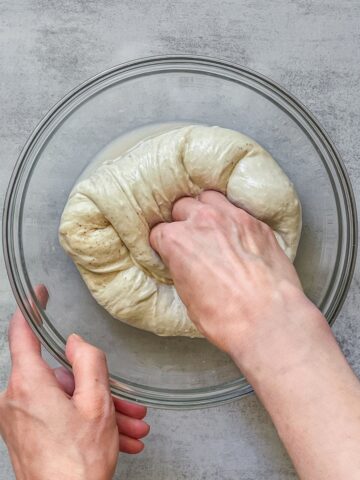
Use your thumb and forefinger to pinch down through the dough layers, cutting through it. Then fold the dough in half, pinch again, and repeat.
Then, use your thumb and forefinger to pinch through the dough layers. Fold the dough in half, pinch again, and repeat a few times until thoroughly mixed.
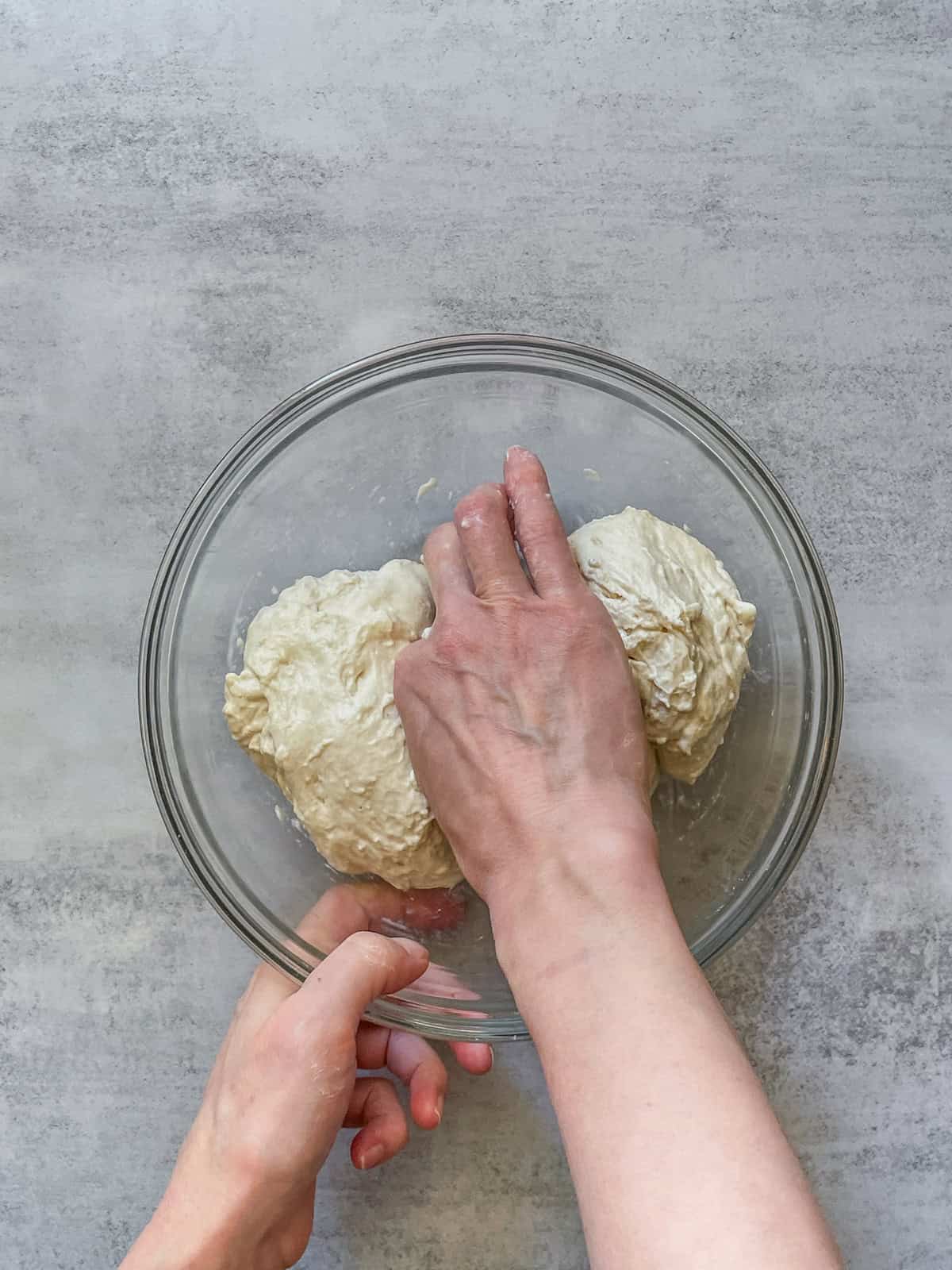
First round: The first pinch of the dough with the thumb and forefinger.
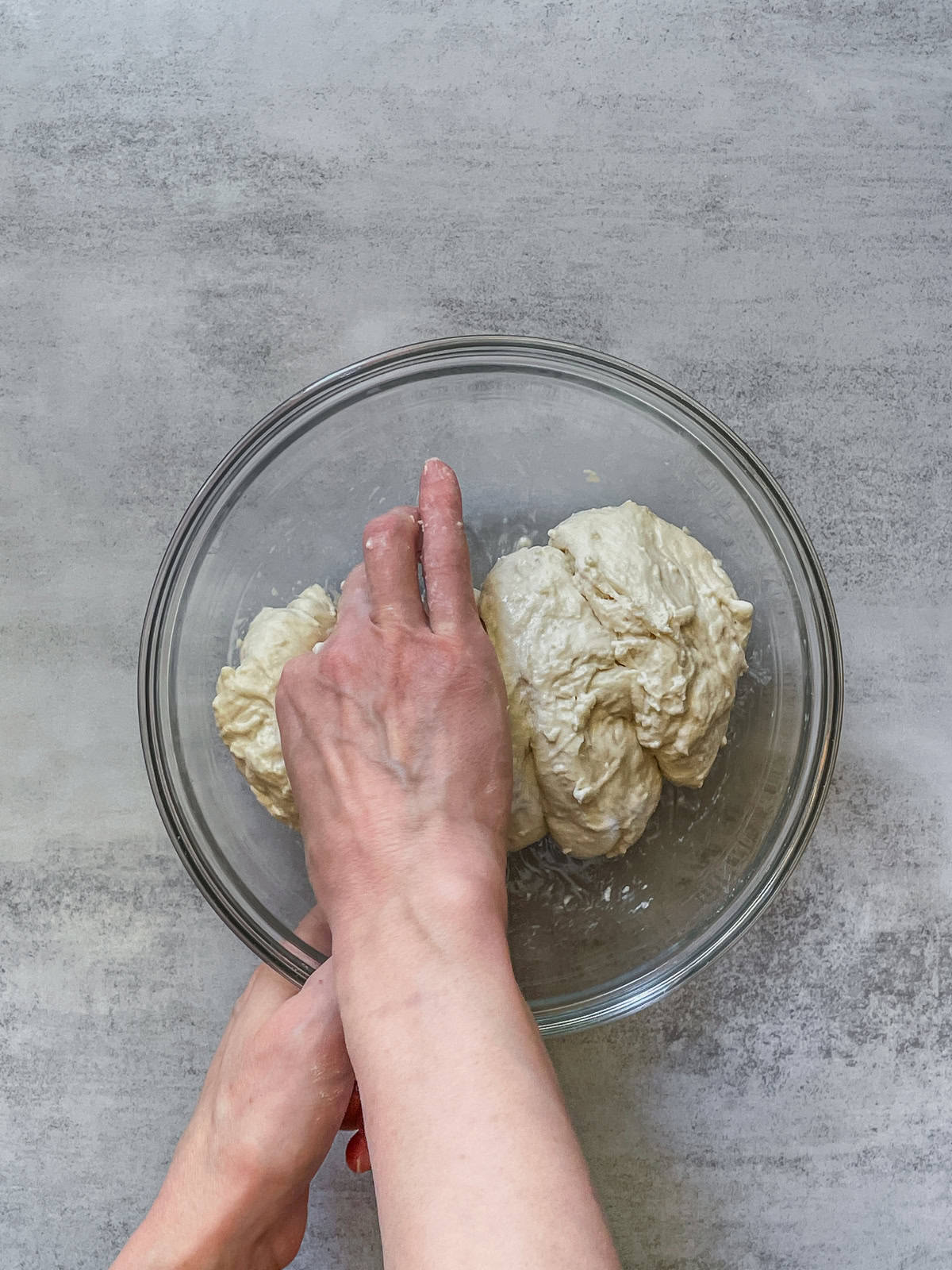
The following pinches of the dough with the thumb and forefinger.
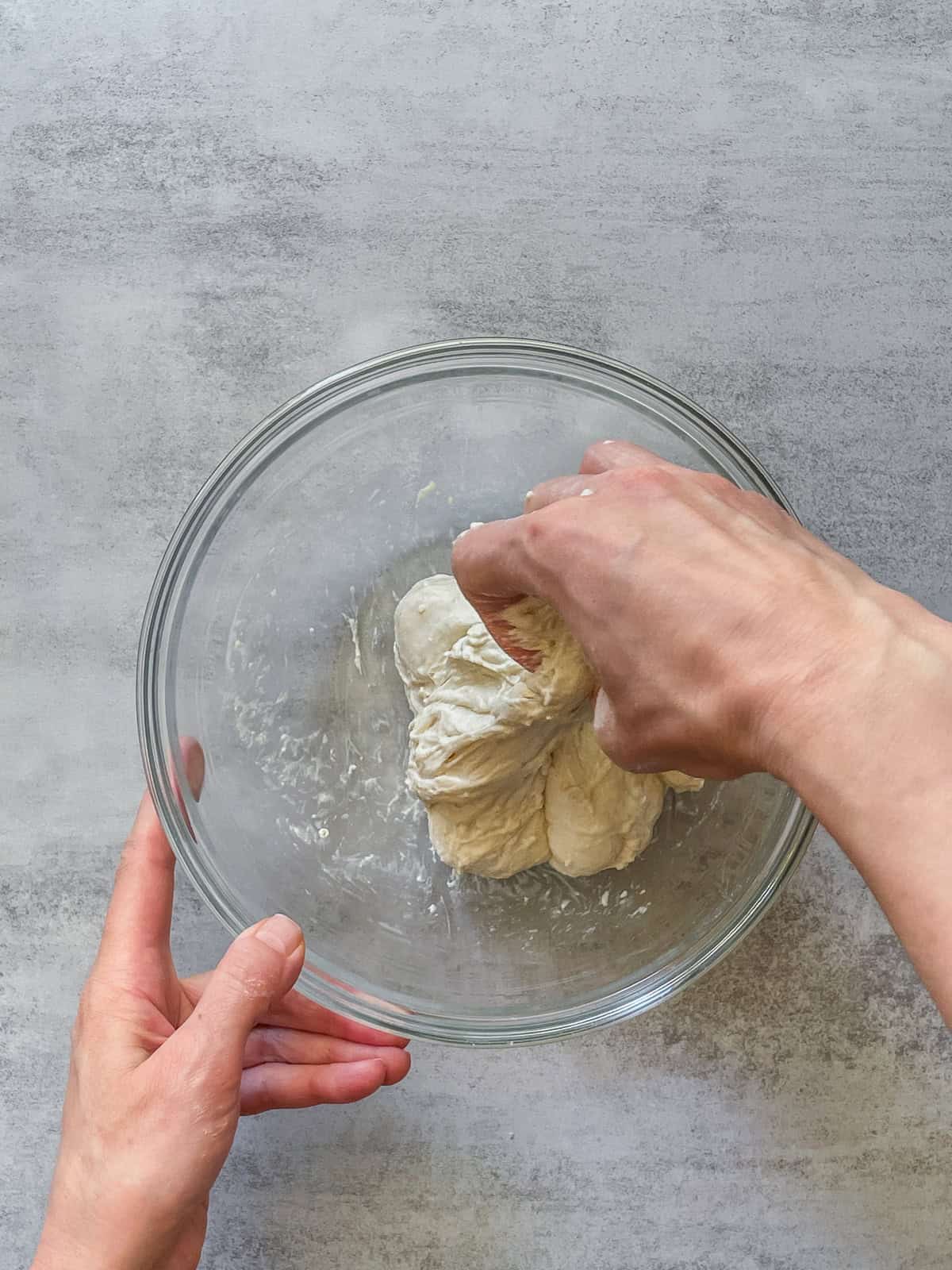
Folding the dough in half after the first set of pinches.
3. Fold and repeat
Fold the dough in half again and repeat the pinching across the surface. Each round distributes the salt and levain more evenly.
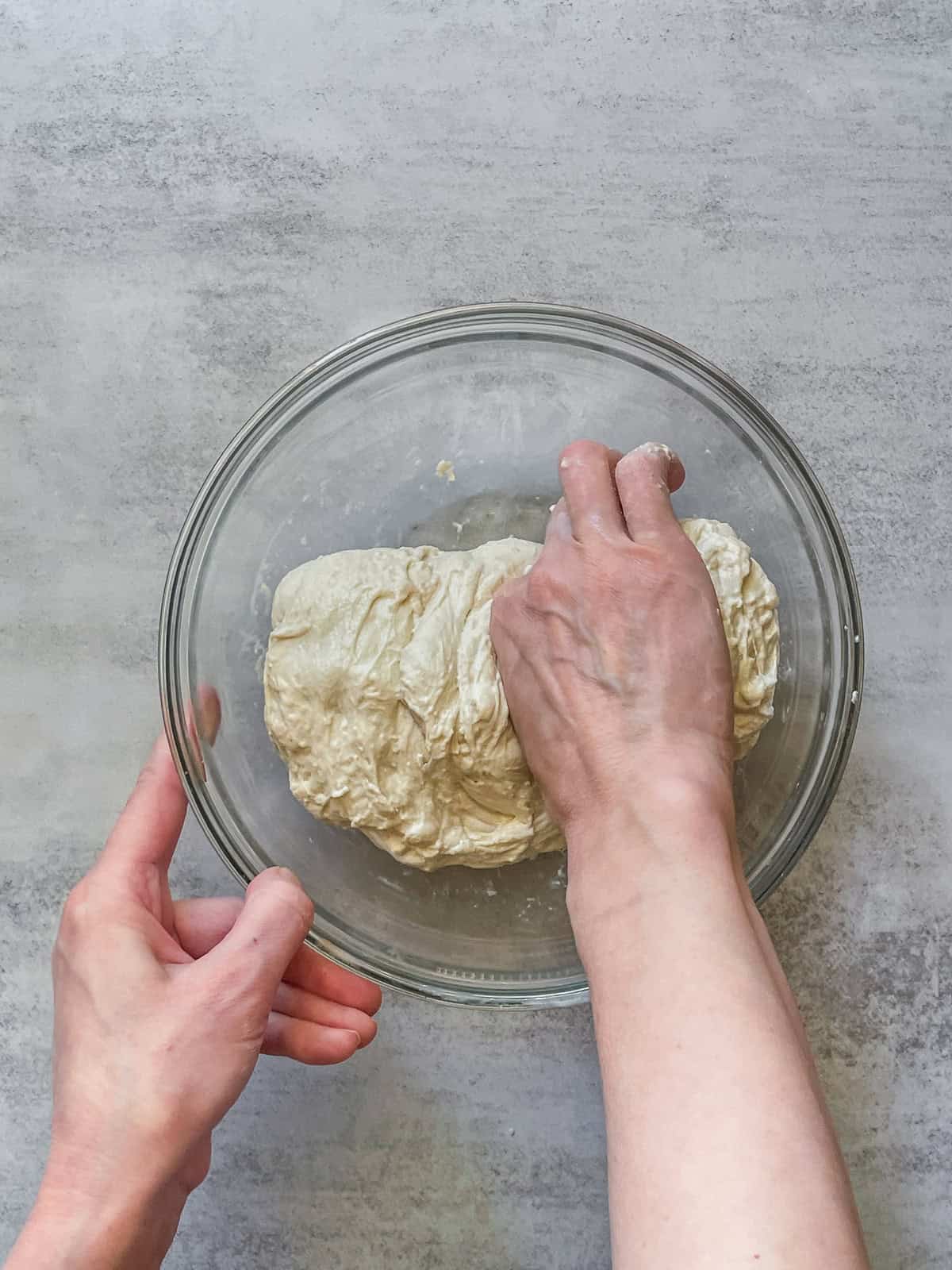
Second round: The first pinch of the dough with the thumb and forefinger.
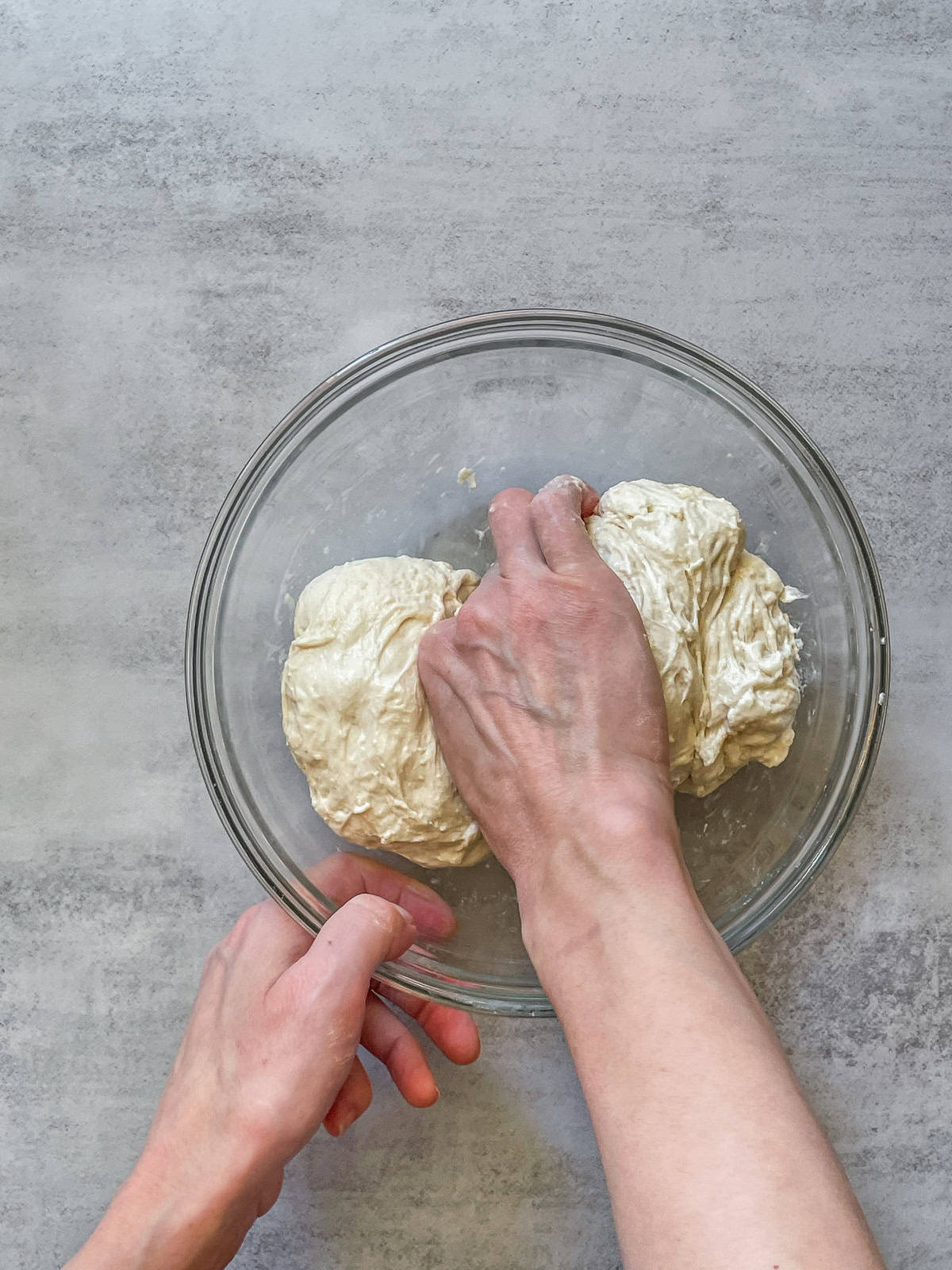
The following pinches of the dough with the thumb and forefinger.
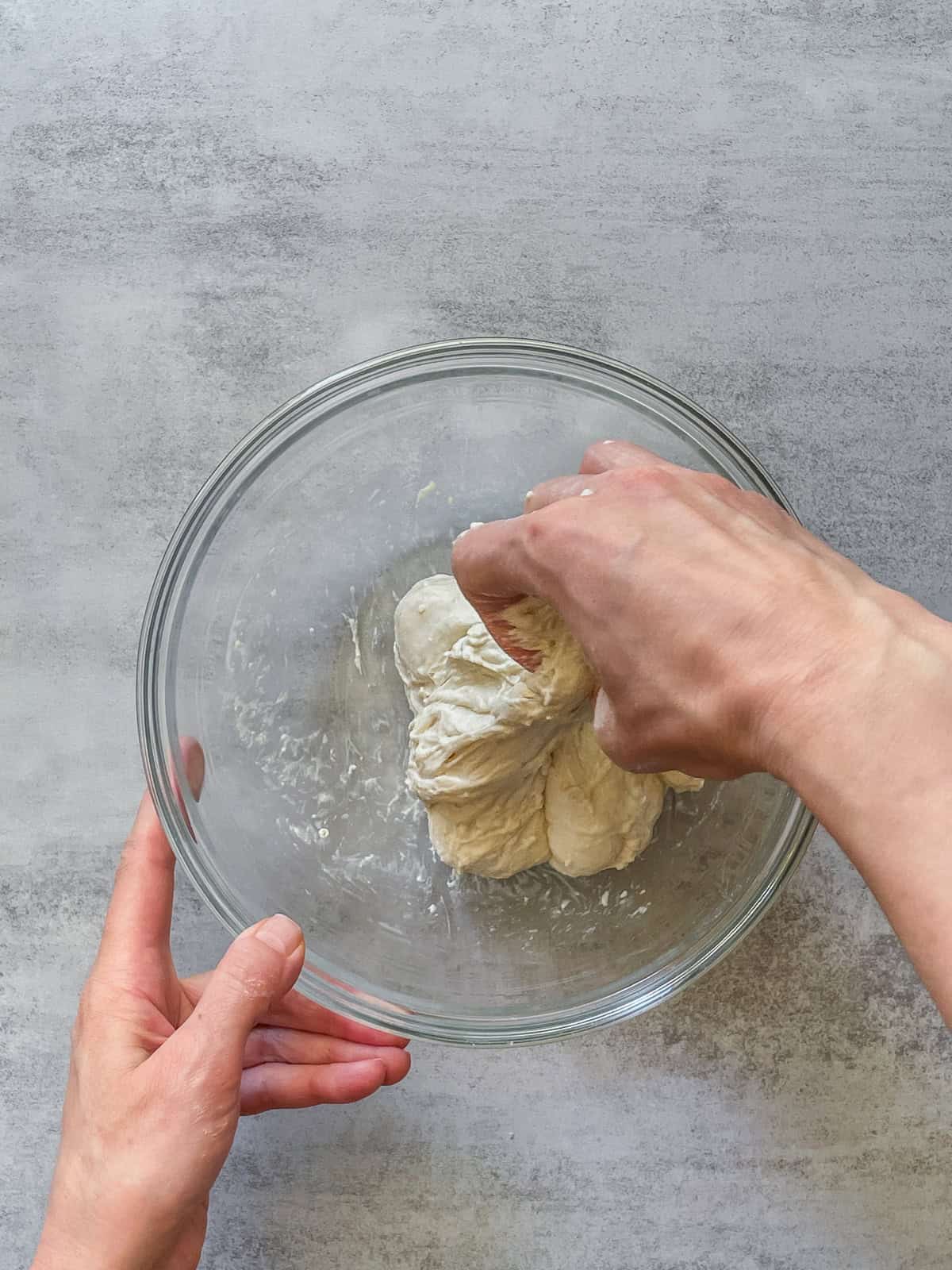
Folding the dough in half after the second set of pinches.
Continue pinching and folding until the levain and salt are thoroughly combined and the dough feels uniform.
Tips for the pincer method
- Use it after an autolyse: The pincer method is the cleanest way to work levain and salt into a dough that has already rested.
- Go easy on the water: Wet your hand only when the dough sticks badly, since extra water increases hydration.
- Don't rush: A few unhurried rounds distribute the salt more evenly than a single aggressive pass.
- Follow with a strengthening method: The pincer method incorporates ingredients but doesn't fully build strength. After it, use a method like the Rubaud method or slap and fold, and then your stretch and coil folds.
The pincer method is just one small step in the sourdough process. Want to see how it all fits together, from feeding your starter to pulling the loaf?
FAQ
When do you use the pincer method? Most often, right after an autolyse, to mix the levain and salt into the rested dough. It is the step that combines those ingredients before you start building strength.
Is the pincer method the same as pinch and fold? They are related but different. The pincer method cuts through the dough with thumb and forefinger to incorporate levain and salt after an autolyse. The pinch and fold method folds the dough toward the center to add salt and water after a fermentolyse.
Does the pincer method strengthen the dough? A little, but its main job is even incorporation, not strength. You will still want a strengthening technique afterward, plus your usual stretch and coil folds during bulk fermentation.
Can you use the pincer method on high-hydration dough? Yes. It is especially good for wet, sticky dough, where stirring would deflate it, and other methods are hard to control.
Who invented the pincer method? It was popularized by baker and author Ken Forkish in Flour Water Salt Yeast, and it is now a standard way to mix levain and salt into sourdough by hand.
Want to keep learning?
The pincer method is one of several ways to mix sourdough by hand. See how it fits into the full process in my guide to sourdough mixing techniques, then learn stretch and folds and coil folds to keep building strength.