

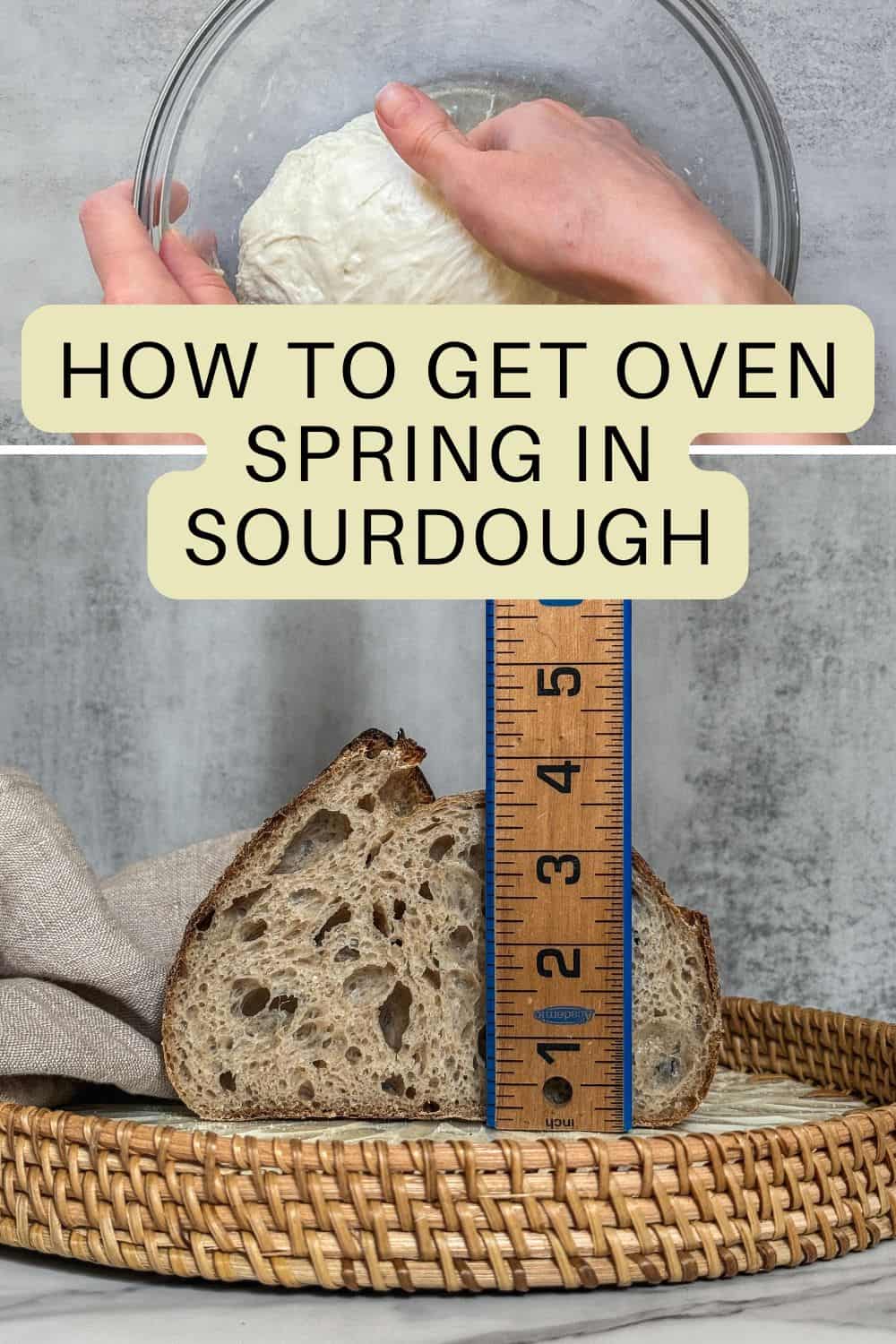
The sourdough oven spring is an all-want-to-achieve magical rise that gives sourdough bread an impressive height.
When you feel disappointed to take a flat loaf out of the oven, know that with a few tips and tricks, you can achieve great oven spring. Yes, it takes practice and patience, but you can do this!
Let's learn what makes the sourdough rise in the oven and how to get the perfect lift.

What is a sourdough oven spring?
Sourdough oven spring is the final rise that the sourdough bread dough undergoes in the first few minutes of baking. It happens due to a combination of proper gluten development, heat, gas expansion, and chemical reactions.
What makes sourdough rise
The gluten network, built through bread dough mixing and folding, traps carbon dioxide gas within the dough.
As the dough heats up, the gas starts to expand. The hotter the dough gets, the firmer the gluten becomes, and the more the gas expands. When the dough reaches around 140°F (60°C), the yeast activity peaks, producing a final burst of gas.
As the temperature rises, water in the dough turns into steam. This creates pressure inside the loaf that pushes it outward. A steamy environment keeps the crust soft at first, so the bread can expand before the crust fully sets.
At the same time, starches in the flour absorb water, forming a gel-like texture that helps the loaf retain its shape. Once the dough reaches 180°F (82°C), the starches and gluten are completely set, locking the bread into its final form. This is when sourdough gets its oven spring.
How to achieve a great oven spring
While you may read about many factors that can affect sourdough oven spring, from choosing the right flour to using proper bannetons, these seven secrets play the most significant role.
Of these, number 4 is often the most overlooked. You can blame a weak or overly acidic sourdough starter, under-proofing, or poor shaping for a lack of oven spring, but improper kneading (in this case, initial bread dough mixing) is often the hidden reason.
1. Use a strong starter
A healthy, vigorous sourdough starter is important for achieving a great oven spring. The starter's wild yeasts produce gas that makes the dough rise.
Feed your starter regularly with fresh flour and water to keep it at its best. The best feeding ratio and schedule depend on how often you bake, but a well-fed starter should double in size within 4-6 hours at 76-80°F (24-27°C).
If your kitchen is cold, use other methods to warm the starter.
2. Use an active starter at its peak
Even a strong starter won't perform well if it is used at the wrong time. For the best oven spring, your starter should be at or near peak activity when you mix your dough.
At peak, the starter is slightly flattened with wrinkles on top, and most capable of producing gas during fermentation (see my guide on sourdough starter peak). Using it too early or too late will reduce dough strength and limit rise.

3. Choose the right flour
Along with a strong starter, choosing the right flour is important. Bread flour with a high protein content (12-13%) helps develop the gluten needed for a light, airy crumb. The stronger the gluten network, the better the oven spring and the texture of your sourdough (see my guide on sourdough bread ingredients).
Even though whole wheat flour has a high protein content (11-14%), it doesn't create the best oven spring. That is because it contains all parts of the wheat kernel, including bran and germ.
Bran is rough and cuts through gluten strands, weakening the dough and making it less stretchy. Whole wheat flour also absorbs more water, making the dough stiffer and harder to work with.
4. Build strong gluten early and effectively
The gluten network is what traps the carbon dioxide produced by the yeast, helping the dough rise. However, the bread won't rise properly if the gluten isn't strong enough.
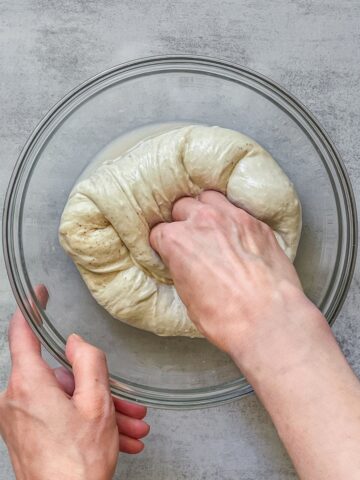
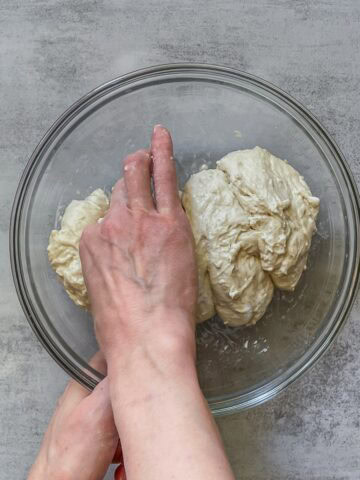
Gluten forms when flour mixes with water in a chemical reaction. To strengthen the gluten, you can use bread-dough mixing techniques, such as the Rubaud method or the slap and fold method. These methods, along with stretching and folding the dough during bulk fermentation, help build the gluten layers that give sourdough its height.
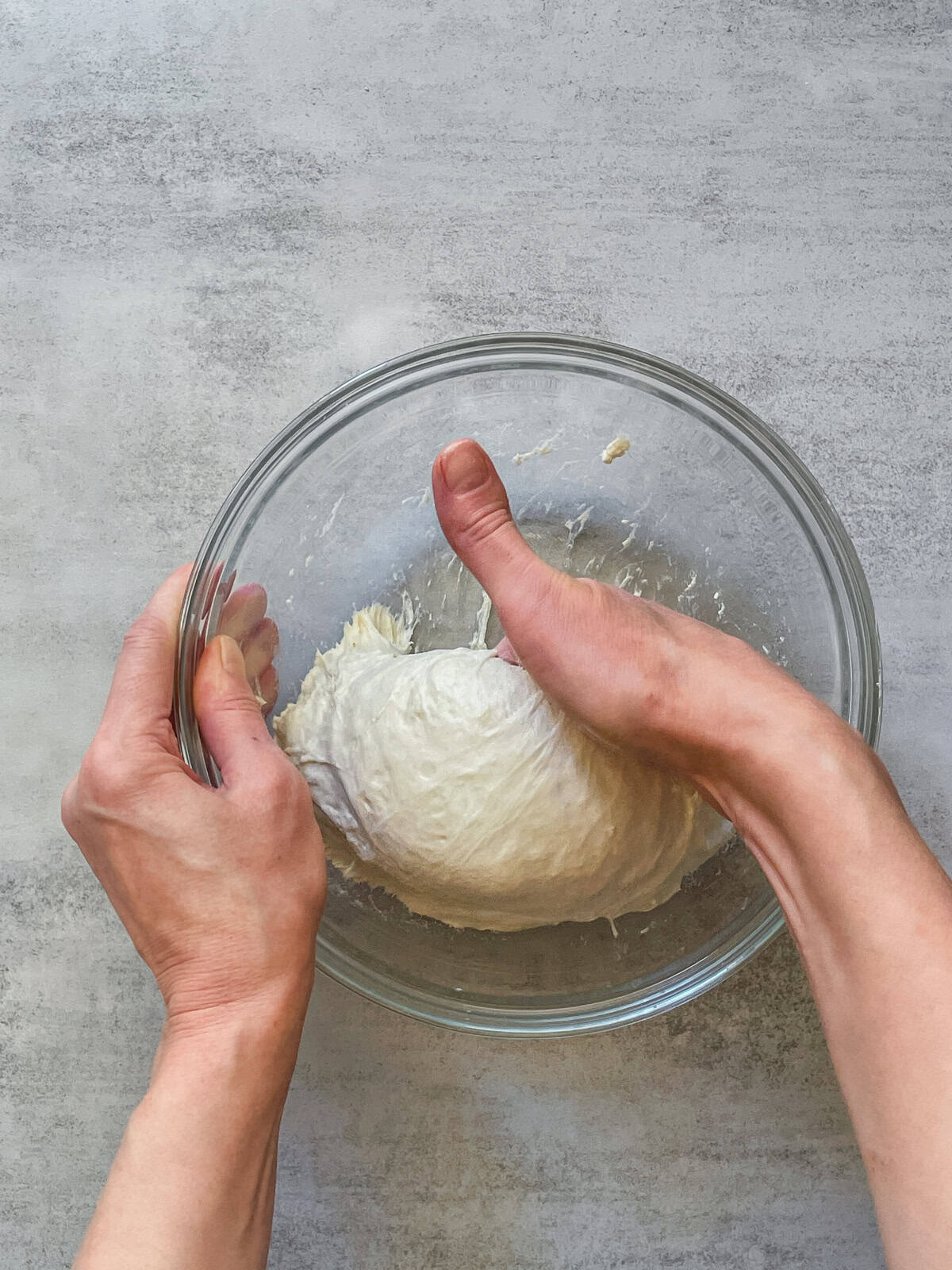
Many sourdough bakers today focus on proper hand mixing once all the ingredients are combined. This is often called "upfront gluten development," including methods such as Rubaud or slap and fold.
The timing of these techniques is essential, too. For example, 9 minutes of "upfront gluten development" makes a big difference compared to just 4 minutes of handling or no kneading at all. While you can make a no-knead sourdough bread, mixing the dough is key to achieving a great oven spring.
Check gluten development with the windowpane test after "upfront gluten development" when hand mixing, after using a mixer, or once folding is complete. When gluten is developed properly at the start of mixing, the dough should pass, or almost pass, the windowpane test.
5. Adjust bulk fermentation based on temperature
Bulk fermentation is highly temperature-dependent. A warmer environment speeds up fermentation, while a cooler temperature slows it down.
Rather than relying strictly on time, observe the dough. Look for signs like increased volume (see my guide on dough temperature and percentage rise), bubbles along the sides, and a smoother, more elastic texture.
Understanding temperature's effect helps you avoid both under- and over-fermentation, which directly impacts oven spring (see my guide on how to know when bulk fermentation is finished).
6. Avoid under- and over-proofing
Bulk fermentation and final proofing control the strength and gas your dough has before it enters the oven, making them essential for good oven spring.
Under-proofed dough is too tight, underfermented, or underdeveloped, leading to uneven rise in the oven. Over-proofed sourdough has lost strength and elasticity, leading it to spread and collapse rather than rise.
The goal is a balanced proof: the first rise (aka bulk fermentation) and the second rise (aka final proofing).
7. Use inclusions wisely
Add-ins like seeds, nuts, or dried fruit can affect gluten structure and oven spring if not handled carefully.
Heavy or early additions can interfere with gluten development during mixing. For best results, incorporate inclusions during the the first or second set of stretch and folds (see my guide on adding sourdough inclusions). During bulk fermentation, gentle folding helps preserve structure while evenly distributing add-ins.
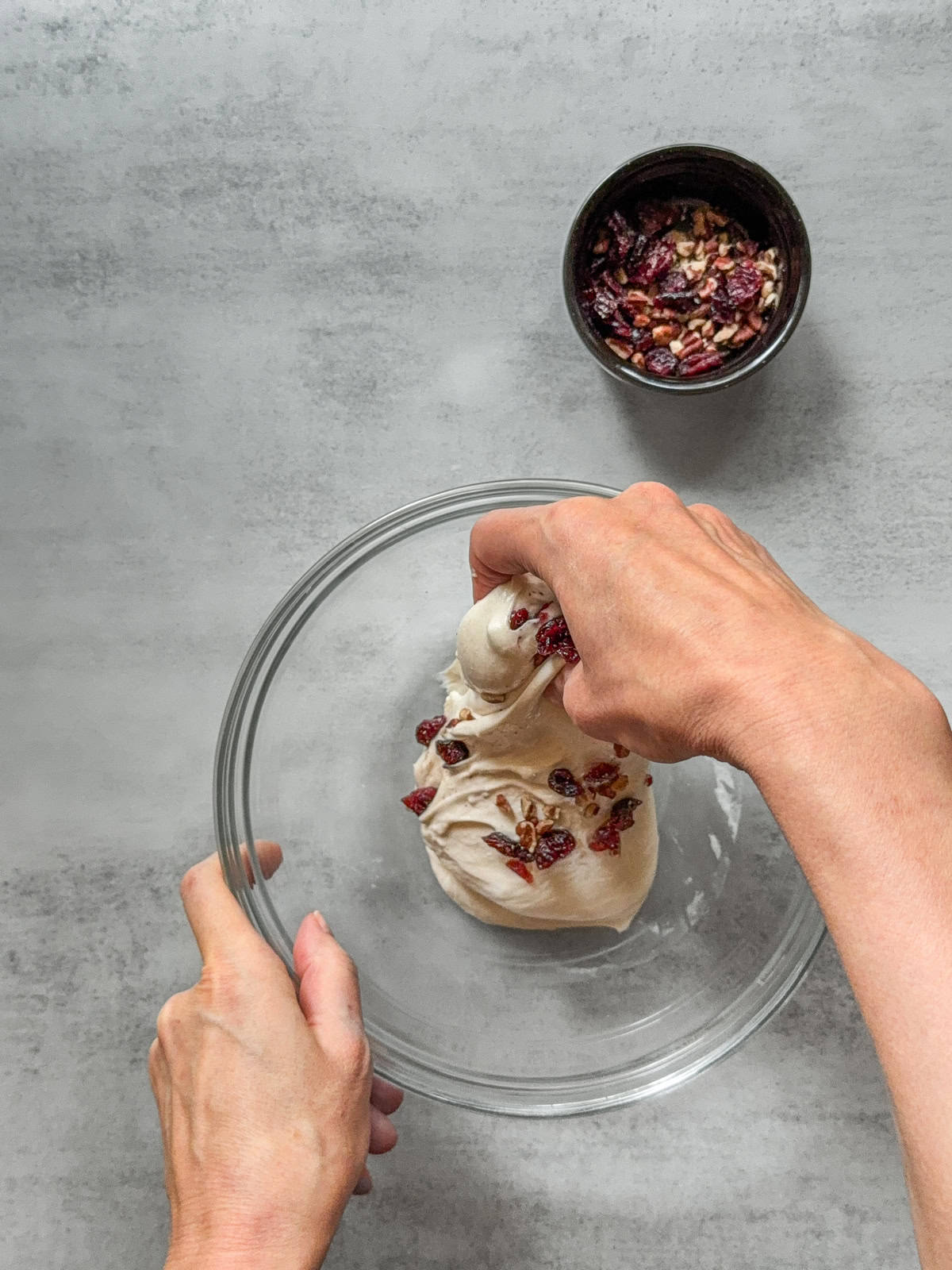
Also, keep in mind that certain ingredients, such as cinnamon, turmeric, garlic, or strong dried herbs, in larger amounts can slow down bulk fermentation and reduce fermentation activity.
8. Get the shaping right
Proper preshaping and shaping of bread dough is key to oven spring. When you preshape, you create a surface tension, which helps redistribute gases and sets the dough for better structure (see my guide to dividing and preshaping sourdough).
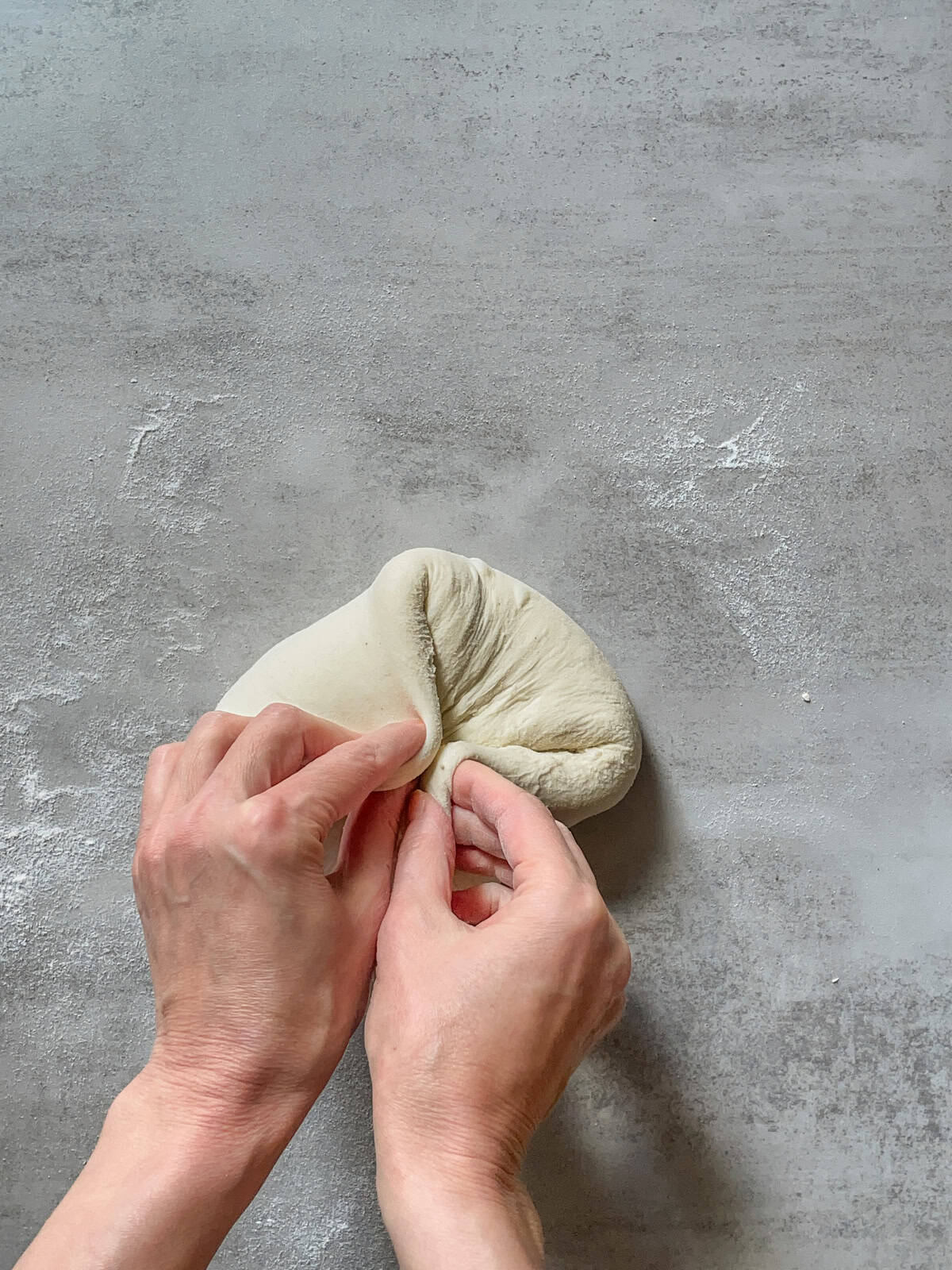
During final shaping, you give the dough the structure it needs to hold its shape as it rises (see my guide to shaping sourdough). A well-shaped loaf will expand beautifully in the oven.
9. Score your loaf properly
Proper scoring is important for an oven spring in sourdough (see my guide to scoring sourdough and choosing the right scoring pattern). The cuts on top of the dough let it expand properly in the oven without the crust tearing. This controlled release of steam helps the dough achieve its full oven spring.
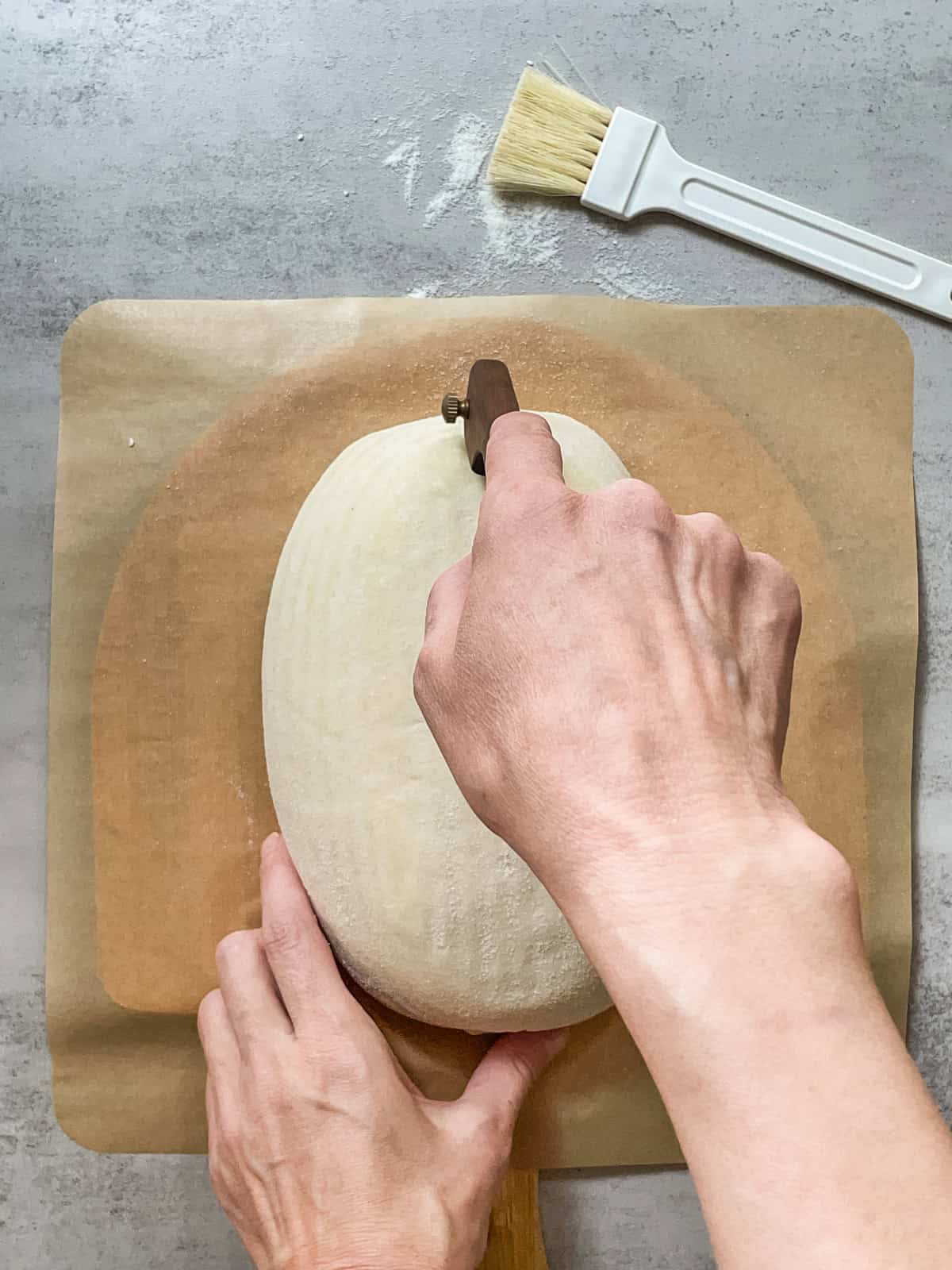
Scoring also creates the iconic sourdough ear, where the crust lifts and forms a distinct, crispy edge.
10. Preheat the oven
You need a hot surface to get the dough to rise quickly when it hits the oven. Use a cast-iron pan, a baking stone, or a pizza steel.
Make sure to preheat your Dutch oven, baking stone, or steel in the oven at 500°F (260°C) for at least 30 minutes before baking. This immediate heat will give your bread that jump-start rise, also known as oven spring.
If you use a Granite Ware roasting pan or a glass casserole dish without preheating the oven, the oven spring will be slightly reduced because the dough won't get that instant heat boost. However, cold baking sourdough still works well and is worth experimenting with yourself.
11. Create steam
When you put the dough in the oven, the heat causes it to expand. To get the best oven spring, you must create a steamy environment in the oven. This softens the crust at the start, allowing the bread to puff up before the crust sets.
You can do this by baking sourdough in a Dutch oven and its alternatives, adding water to a hot baking pan underneath the bread, or using a covered baking vessel. The steam will give your bread that beautiful oven spring.
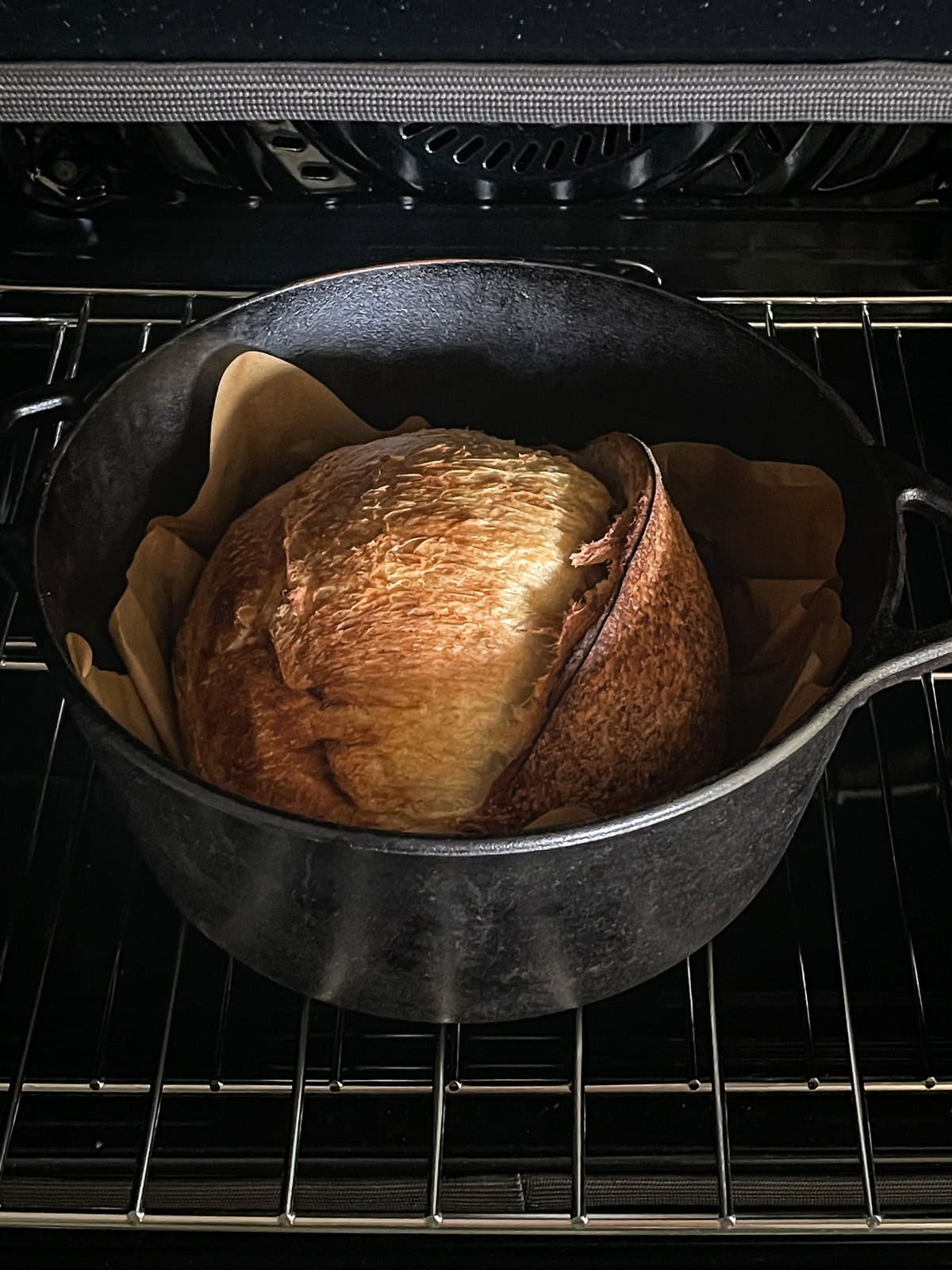
Using an enamel roaster or covered baker, such as a stockpot or a metal mixing bowl, may affect oven spring because steam can escape.
Let's talk sourdough
What do you think is the one factor holding back your perfect sourdough rise? Share your experience in the comments.