


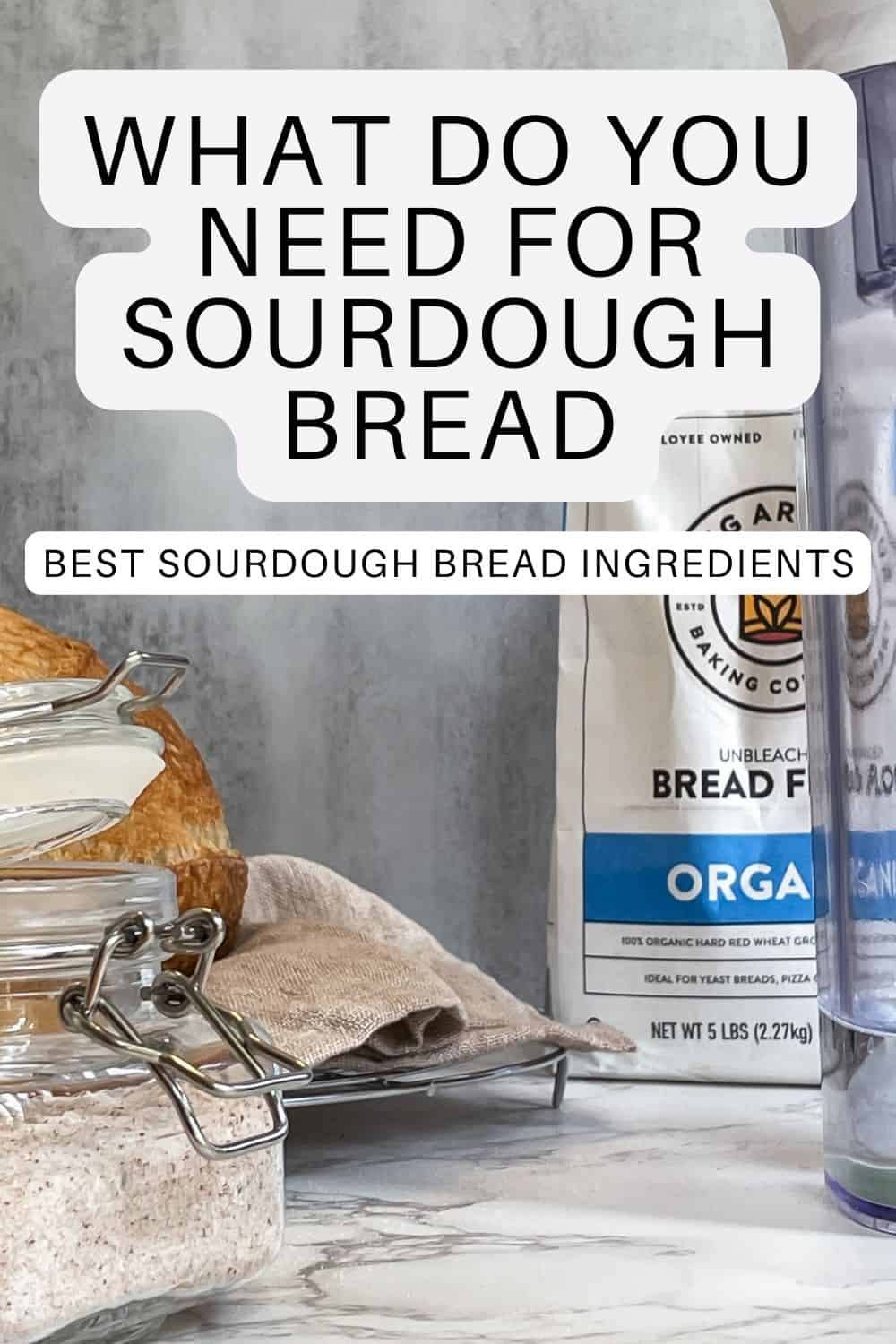
Quick Summary: The best flour for sourdough bread is unbleached, unbromated bread flour with 12.5-14% protein, which builds the strong gluten network sourdough needs for an airy crumb and good rise.
All-purpose flour (10-12% protein) works for softer loaves but absorbs less water. For flavor and nutrition, blend in 10-20% whole wheat or rye. Top beginner picks include King Arthur and Bob's Red Mill bread flour.
Even though the ingredients for your starter and bread are essentially the same, there is some science behind choosing the right flour and water.
This guide focuses on the ingredients for sourdough bread. If you are looking for advice on choosing the best flour and water for a sourdough starter, I have covered that in separate post.
Important Tip: Always use a digital kitchen scale to weigh your ingredients.
Jump to:
- What is the best flour for sourdough bread?
- What kind of flour can you use for sourdough?
- What to look for in sourdough flour
- Choosing the right type of flour
- What water should you use for sourdough bread?
- How much salt do you use in sourdough?
- Practical flour tips for your first loaves
- FAQ
- Let's talk sourdough
- Ready to keep learning?
- Comments
What is the best flour for sourdough bread?
The best flour for sourdough bread is unbleached, unbromated bread flour with a protein content of about 12.5-14%. That higher protein builds the strong gluten network sourdough needs to trap gas, rise well, and develop that signature open crumb.
The best flour also depends on the loaf you want. Choose bread flour for a chewy crumb, all-purpose flour for a softer texture, or blend in whole wheat or rye to add flavor, nutrition, and complexity.
What kind of flour can you use for sourdough?
Sourdough is quite flexible when it comes to flour. Different flours change the flavor, texture, and structure of your bread.
Bread flour
Bread flour is the best choice for classic sourdough and an excellent place for beginners to start. With 12.5-14% protein, it develops a strong gluten network that gives the dough better structure, oven spring, and a pleasantly chewy crumb.
If you are buying just one flour for baking sourdough bread, choose a high-quality unbleached bread flour. It is what I use in my Beginner's Sourdough Bread recipe.
For a softer crumb, look for bread flour with 12-13% protein. Flours above 13% create a stronger, chewier loaf, while those over 15% are best blended with a lower-protein flour to balance the dough.
My favorite U.S. bread flours include:
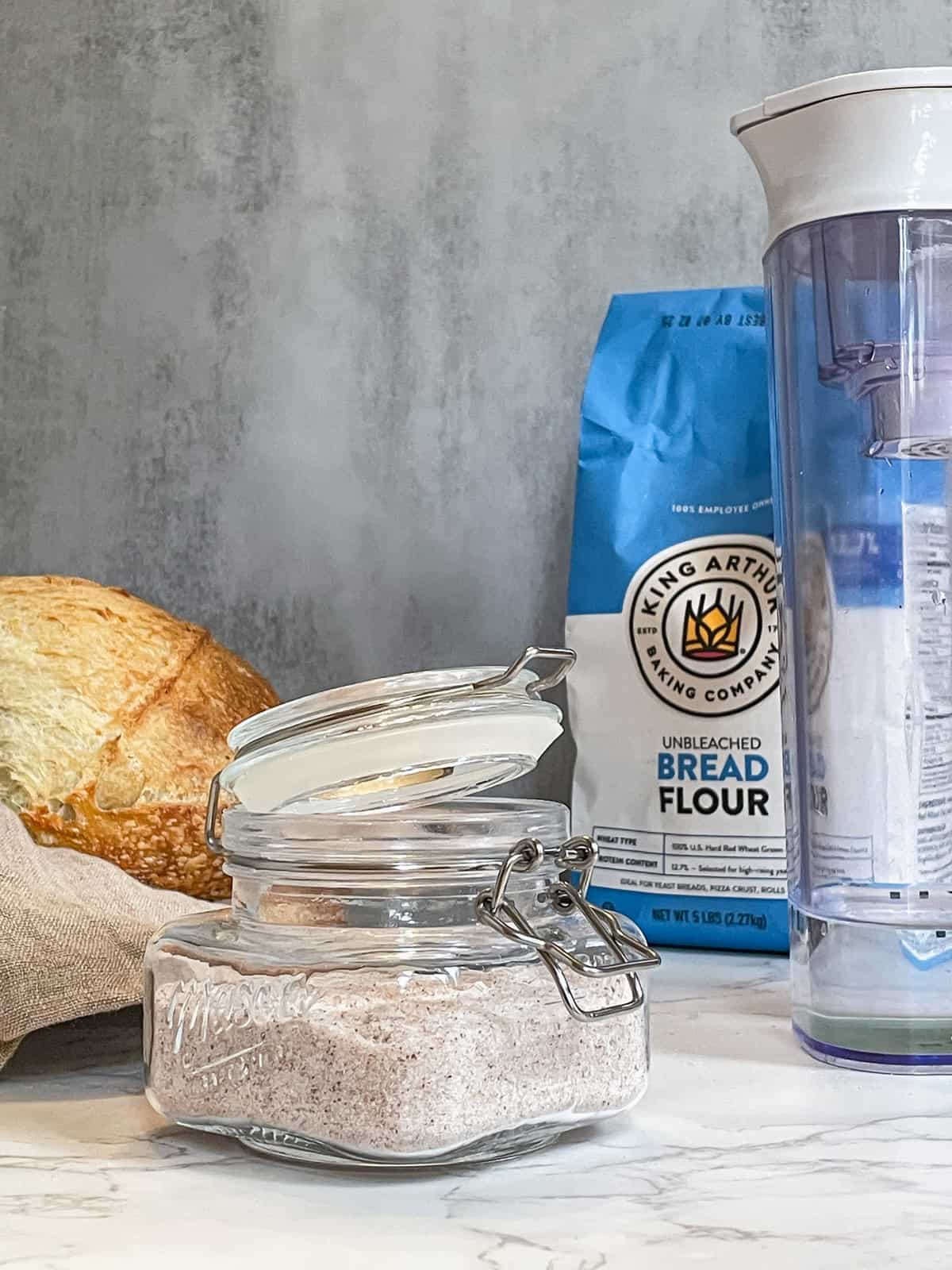
- King Arthur Baking Organic Unbleached Bread Flour (12.7%)
- Bob's Red Mill Unbleached Artisan Bread Flour (12.5-13.5%)
- Central Milling Organic Artisan Bread Flour (12.5%)
All-purpose flour
All-purpose flour is another good option. With 10-12% protein, it produces a softer, more tender crumb than bread flour. Because it absorbs less water, reduce the hydration slightly, for example, from 75% to about 70%, to make the dough easier to handle.
My favorite U.S. all-purpose flours include:
- Kirkland Signature Organic Unbleached All-Purpose Flour (11.5%)
- King Arthur Organic All-Purpose Flour (11.7%)
Whole wheat flour
Whole wheat flour (also called wholemeal flour) adds a rich, nutty flavor and extra nutrition to sourdough. Although it typically contains 13% or more protein, the bran and germ interfere with gluten development, so the dough won't rise as high or produce as open a crumb as white bread flour.
Whole wheat also absorbs more water, so you may need to increase the hydration slightly. For the best balance of flavor, texture, and oven spring, use it as 10-20% of the total flour and pair it with a strong white bread flour.
Rye flour
Rye flour adds a distinctive earthy, slightly tangy flavor to sourdough. Because it contains less gluten than wheat flour, it produces a denser, moister crumb. Many recipes use 20-40% rye flour blended with wheat flour, but even a small amount can make a noticeable difference.
In my Artisan Sourdough Bread recipe, I use just 5% rye flour and 5% whole wheat flour, and that small addition adds wonderful flavor without sacrificing the loaf's structure.
Other flours
Ancient grains like einkorn (14-15% protein), emmer (12-15%), and spelt (12-14%) add wonderful flavor but don't develop gluten as strongly as modern wheat. Used on their own, they tend to produce denser loaves, so they're best blended with bread flour for better structure and oven spring.
Flour blends
As you gain experience, try blending flours to create new flavors and textures. Adding 10-20% whole wheat or ancient grains gives sourdough a richer, nuttier flavor, while rye adds depth and complexity. Keep in mind that whole wheat and rye absorb more water, so you may need to adjust the hydration.
Here are a few blends to try:
- 250 g bread flour + 190 g whole wheat + 60 g rye
- 375 g bread flour + 125 g whole-grain spelt
- 250 g bread flour + 190 g whole wheat + 60 g buckwheat
- 375 g bread flour + 125 g semolina
As you experiment, keep notes on the flours you use and how the dough behaves. Write it all down in your Sourdough Baking Log, so you can figure out which blends work best for your taste and baking goals.
Whatever you choose, look for flour that is unbleached and unbromated. Bleaching and bromating are chemical treatments that can interfere with fermentation and aren't ideal for sourdough.
What to look for in sourdough flour
Beyond choosing a type of flour, a few measurable qualities tell you how a flour will actually behave in your dough. Here are the ones worth understanding. Some are printed on the bag, others matter more for comparing flours or troubleshooting.
Flour protein content
Protein content is one of the most important factors in sourdough baking because it determines how much gluten the flour can develop. Stronger gluten creates better structure, oven spring, and a chewier crumb.
You can find the protein content on the nutrition label. Simply look at the grams of protein per serving and convert it to a percentage. For example, 11.7 g of protein per 100 g of flour equals 11.7% protein.
If the serving size isn't 100 g, use this formula:
Protein content (%) = (Protein in grams ÷ Flour in grams) × 100
For example, if a flour contains 6 g of protein per 50 g serving:
(6 ÷ 50) × 100 = 12% protein
In general, higher-protein flours (12.5-14%), such as bread flour, produce a stronger, chewier dough that is ideal for sourdough. Lower-protein flours (10-12%), such as most all-purpose flours, create a softer, more tender loaf.
Ash percentage in flour
Ash percentage measures the amount of minerals left behind after flour is burned in a laboratory. In practical terms, it indicates how much of the grain made it into the flour.
Flours with a higher ash content are less refined and contain more bran and germ, giving sourdough a richer flavor, a darker crumb, and more nutrients. Lower-ash flours, such as white bread flour, are more refined and produce a lighter-colored loaf with a milder flavor.
As a general guide:
- White flour: about 0.4-0.6% ash
- Whole wheat or rye flour: about 1.2% or higher
While protein content has a greater impact on dough strength, ash content is useful for understanding a flour's flavor, color, and extraction level. It becomes especially helpful when comparing European flours or experimenting with different flour blends for sourdough.
W value
The W value measures flour strength and how well it can withstand long fermentation. It reflects the elasticity and strength of the gluten network, which is especially important for sourdough baking.
W values range widely depending on the type of flour, from around W 90 for cookies, biscuits, and pastries, up to W 250-350+ for strong bread flours suitable for sourdough. Higher W values indicate stronger flour that can trap more gas and hold structure during fermentation.
In general, flours in the W 250-350+ range are well suited for sourdough, while lower values are better for softer baked goods like pastries or biscuits.
Most US flour brands don't list W values. So bakers usually rely on protein percentage instead as a practical substitute.
Falling Number
The Falling Number is another flour quality measurement used in milling. It shows how active the natural enzymes (especially amylase) are in the flour. It is measured by timing how fast a starch paste breaks down and "falls" under heat.
A high Falling Number (250-400+) means lower enzyme activity and more stable dough performance, while a low Falling Number (below ~200) indicates high enzyme activity, which can lead to sticky or weak dough.
Most bread flours used for sourdough fall in a safe middle range ( about 250-350), which gives good fermentation control.
Choosing the right type of flour
Flour bags come with all kinds of labels, bromated, bleached, enriched, organic, and it is not always clear which matter for sourdough. Here is what each term means and which to choose for the best results.
Bromated flour vs. unbromated flour
Bromated flour contains potassium bromate, a chemical added to strengthen dough and improve rise and texture. It is banned or discouraged in many places, including Europe, Canada, and some U.S. states (such as California).
Other states considering similar bans include Illinois, New York, New Jersey, Missouri, Maryland, Washington, and Rhode Island. While the FDA has not issued a nationwide ban, the agency has voluntarily encouraged the baking industry to discontinue its use since the early 1990s.
Unbromated flour skips this additive and is a more traditional option for sourdough baking. Since the upfront bread dough mixing, stretch and folds, and coil folds during bulk fermentation strengthen gluten, there is no need for bromated flour.
Bleached flour vs. unbleached flour
Bleached flour is refined wheat flour that has been chemically treated (often with benzoyl peroxide or chlorine gas) to accelerate aging. These treatments make the flour whiter and finer in texture, but they also affect its protein structure and behavior.
Unbleached flour, on the other hand, is naturally aged. It has a slightly off-white color and a more robust structure, exactly what you want for sourdough. It develops gluten more effectively and better supports the long fermentation process than bleached flour.
Enriched flour vs unenriched flour
Enriched flour is refined flour with nutrients, such as iron and B vitamins (thiamin, riboflavin, niacin, and folic acid), added back after milling to replace some of what was lost during processing.
Unenriched flour, on the other hand, is natural but may lack those added nutrients unless they are naturally present in the grain.
Some people can't eat baked goods made with enriched flour (like white bread) in the U.S. and other countries with fortification programs. It is something to keep in mind if you sell sourdough bread.
Organic flour vs non-organic flour
Organic flour is milled from wheat grown without synthetic pesticides or fertilizers. Many bakers prefer it for its cleaner production methods and often more consistent fermentation behavior in sourdough.
Non-organic flour is also perfectly suitable for sourdough baking and can produce excellent results. The main differences usually come down to farming practices, grain quality, and brand consistency rather than performance in the dough itself.
For sourdough, what matters most is flour strength and quality, not whether it is organic or conventional. A good-quality bread flour from either category can give you great structure, rise, and flavor.
Freshly milled flour vs store-bought flour
Freshly milled flour is made by grinding whole grains just before baking, while store-bought flour is milled, sifted, and then stored for a period of time before use. This difference affects both flavor and dough behavior in sourdough baking.
Freshly milled flour tends to have a deeper, more complex flavor and higher nutrient content, since nothing has been removed or aged. However, it also behaves differently in dough. It absorbs more water, ferments faster, and can produce a denser loaf if used at 100%.
Store-bought flour is more consistent and predictable, which makes it easier to control fermentation and dough strength. Most sourdough bakers use a blend by adding a portion of freshly milled flour for flavor while keeping store-bought bread flour for structure.
What water should you use for sourdough bread?
Water helps proteins in the flour form gluten. It also supports yeast fermentation and reproduction, dissolves ingredients such as salt, and helps control dough temperature. The amount of water affects the crust and the size of a sourdough loaf.
Because water contains minerals, it also impacts the flavor of sourdough bread. Different minerals encourage different bacteria.
To bake sourdough bread, use unchlorinated water, like filtered or spring water. Make sure your water filter removes chlorine and chloramine.
Use room-temperature water or adjust the water temperature based on the Desired Dough Temperature (DDT). Use this water temperature calculator to calculate what temperature your mixing water needs.
How much salt do you use in sourdough?
Salt adds flavor, retards the dough (the more salt, the slower the fermentation), and helps prevent a sourdough loaf from going stale.
It also strengthens the dough by tightening the gluten. However, salt inhibits the formation of new gluten bonds, so it is added last to the dough.
Most sourdough recipes use about 2-2.2% salt by weight of flour. Good options for salt include artisanal varieties such as Celtic Sea Salt, Redmond Real Salt, Himalayan Pink Salt, or French grey salt.
Kosher salt can also work, but it doesn't dissolve quickly. It is better to use it with water, especially for dough with lower hydration.
Can you bake sourdough with regular table salt? Yes, it works as long as it is non-iodized. However, remember that refined salt lacks minerals, which is why artisanal salts are preferred.
Practical flour tips for your first loaves
If you are a beginner, start with good-quality ingredients and stick with them. Perfecting sourdough takes time, and constantly switching flours only adds variables that make it harder to learn what is working and what isn't.
Start with an unbleached, unbromated bread flour with at least 12.5% protein for your first loaf. Some of my personal favorites for beginners are:
- Bob's Red Mill Artisan Bread Flour
- King Arthur Bread Flour
Keep in mind that some flour brands don't own their own mills, they work with regional mills, which means the flour can vary slightly from batch to batch. So even if you follow a recipe to the letter, your results might look or feel a little different from the author's.
Flour also behaves differently depending on the season and its age. Freshly bought flour might handle 80% hydration beautifully, but the same flour after a year in the pantry could turn your dough into a soupy mess at that same hydration. When in doubt, hold back a little water and add it gradually.
Keep an eye on flour prices. If you spot a steep discount, like 50% off a normally premium brand such as King Arthur bread flour, check the expiration date and the condition of the packaging before buying.
Down the road, try different grains, experiment with locally sourced flour, or even mill your own. If you bake multiple sourdough loaves, buy flour in bulk at local restaurant supply stores or wholesalers.
One last thing worth knowing: if your bread has structure problems, it might not be the flour at all. It could be your starter.
FAQ
What flour is best for sourdough bread? Unbleached, unbromated bread flour with 12.5-14% protein is best for most sourdough. It builds a strong gluten network, resulting in a good rise and an airy crumb.
Do you need bread flour for sourdough? No, but it helps. Bread flour has a higher protein content, which builds stronger gluten for better structure and oven spring. All-purpose flour also works, but it produces a softer, less chewy loaf. If you are using all-purpose flour, reduce the hydration slightly since it absorbs less water than bread flour.
Is all-purpose or bread flour better for sourdough? Bread flour is better for a classic well-risen sourdough and is a good starting point for beginners. All-purpose is fine for a softer loaf. Many bakers use bread flour as their base and add whole wheat or rye for flavor.
What flour do you use for sourdough bread? Most sourdough bakers use unbleached bread flour as the base (often 80-90%), sometimes blended with whole wheat or rye for flavor. If you're in the U.S., start with King Arthur Baking Company, Bob's Red Mill, Central Milling, and Cairnspring Mills.
What ingredients are in sourdough bread? Traditional sourdough bread is made with just three ingredients: flour, water, and salt. There is no commercial yeast or additives.
Let's talk sourdough
I would love to hear what your go-to flour is for sourdough. Do you have a favorite brand or a special blend you like to use? Share your experience in the comments below.
Ready to keep learning?
Now that you know the key ingredients, it is time to put them to work. Try my Beginner Sourdough Bread recipe to bake your very first loaf at home.
You will also find my sourdough calculator useful for scaling and customizing your bread recipes.