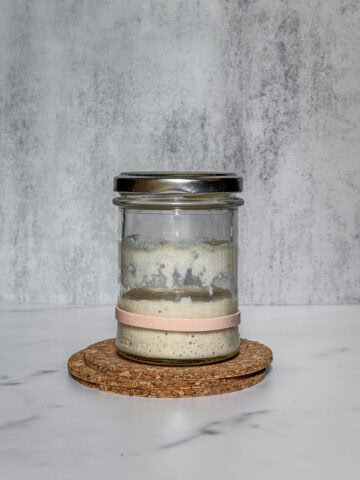

It is common enough when both novice and experienced bakers reach a point where they need to strengthen a sourdough starter. Yes, you starter may need a little boost to get back on track.
If you are dealing with a weak, acidic starter, read my post on acidic sourdough starter. If your starter has been sitting untouched for a long time, see my guide on how to revive an old sourdough starter.
And before considering a full reset, explore sourdough starter troubleshooting and 101 sourdough tips to pinpoint the real issue.
What is a weak sourdough starter?
A weak sourdough starter is one that isn't fermenting with its usual strength or consistency. Instead of rising predictably after a feeding, it feels sluggish, flat, or unresponsive. You might also notice changes in smell, texture, or timing.
Here are common signs of a weak starter:
- Slow or minimal rise after feeding (doesn't double within its usual time).
- Thin or runny sourdough starter instead of a light, bubbly structure.
- A strong acidic or vinegary smell, indicating an acidic sourdough starter.
- Hooch on top of the starter, indicating the starter is hungry.
- Poor performance in bread dough, such as dense crumb or lack of oven spring.
A starter becomes weak for many reasons, including irregular feeding, temperature stress, overly acidic conditions, using the wrong flour, or simply drifting out of balance over time.
When is your starter ready to bake?
A newly created sourdough starter is typically ready to use around day 10, though timing varies. It takes a few months of regular feedings for a starter to fully mature and develop the strength and consistency of an established one.
A ready-to-bake sourdough starter is bubbly, consistently doubles in volume, and smells tangy and pleasant.
A straightforward way to tell is if your starter doubles within 4 to 6 hours after feeding it at a 1:1:1 ratio (by weight) at 76-80°F (24-27°C). If it does, you are ready to bake. Please refer to my blog post about when the sourdough starter is ready for baking.
How to strengthen a sourdough starter
1. Stir your starter well
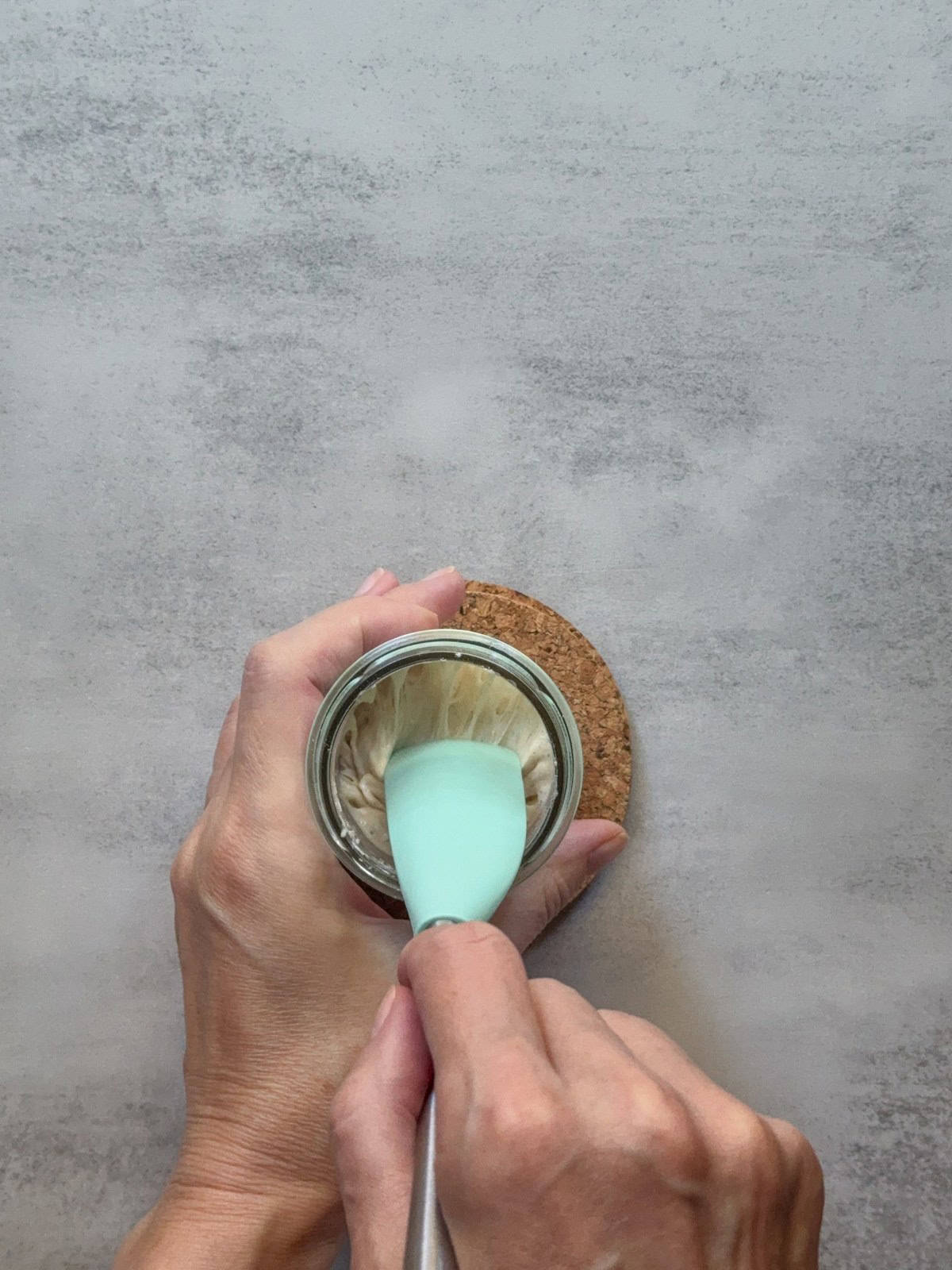
Stir your starter well after adding fresh flour and water. It sounds basic, but this small step affects how your starter ferments and strengthens.
During mixing, you evenly distribute the wild yeast and bacteria, while giving them full access to their new "food." At the same time, you balance the starter's acidity by fully mixing it with the neutral, fresh flour.
Each jar spatula movement introduces more oxygen to help the yeast begin its aerobic activity before switching to fermentation. Good stirring eliminates dry pockets of flour and improves gas production.
Some bakers like to give their starter a quick stir halfway through its rise (usually at the 2-3 hour mark) to add extra oxygen. This boosts the starter's activity, especially useful for a sluggish starter.
2. Switch to bread flour and filtered water
Together, these two simple changes can quickly boost a weak, sluggish sourdough starter.
Bread flour has more protein, which provides wild yeast and bacteria with extra nutrients and creates a stronger gluten network. This helps the sourdough starter trap gas better, rise higher, and become more predictable.
Filtered water removes chlorine, chloramine, and other elements that slow down microbial growth. Try to use filtered or spring water instead of tap water to support a healthier balance of yeast and bacteria and help fermentation stay steady.
3. Add rye or whole wheat flour
Adding rye or whole wheat flour is one of the fastest ways to boost a sourdough starter. These flours are richer in minerals, enzymes, and natural sugars than white flour. This gives wild yeast and bacteria more food to work with.
Rye flour, in particular, ferments quickly and encourages strong microbial activity. It often leads to a faster, bubblier rise and a more vigorous starter.
Start by adding 10-20% rye or whole wheat to a feeding to help wake up your culture. Once your starter doubles again, you can return to your regular routine. You can get a habit of boosting your starter with 10% rye flour at least once a month.
4. Create a cozy environment
Keep your starter warm, ideally between 75-78°F (24-25.5°C), some say up to 82°F (28°C). In this temperature range, your starter has the perfect balance for yeast and lactic acid bacteria to work harmoniously.
You can use one of many methods to keep the sourdough starter warm during the cold winter months, such as feeding it with warm water, using the oven with the light on or a microwave, using a seedling heat mat, or DIY methods.
Make sure everyone in your household knows when the starter is in the oven or microwave. Stick a note on the door as a reminder. I have heard of cases where starters were accidentally heated and "cooked."
Also, keep an eye on your oven. Some models get surprisingly hot just from the light. Try turning it off after 30-60 minutes and keeping the door closed. Aim for a temperature below 90°F (32°C).
If you want a more hands-off approach, consider a proofing box like the Brod & Taylor Sourdough Home, which maintains a steady temperature.
In summer, think the opposite. Your goal is to keep the starter comfortable in hot, humid conditions. Learn how to maintain a sourdough starter in summer.
5. Optimize feeding schedule and ratios
One of the best ways to strengthen a starter is the peak-to-peak feeding method.
Another option is to give your starter a large feed, a substantial one, for a couple of days, using ratios like 1:5:5 to 1:10:10, or even higher.
IMPORTANT: Always measure the sourdough starter ingredients by weight for accuracy using a digital kitchen scale (this pocket gram scale is my favorite). The weight of one cup of flour differs from that of one cup of water.
Here are recommended feeding ratios for established starters, but they are suggestions and not obligatory, as each starter is different, as well as room temperature and humidity:
- 1:1:1 ratio every 4 hours
- 1:2:2 ratio every 8 hours
- 1:3:3 ratio every 12 hours
- 1:4:4 ratio every 16 hours
- 1:5:5 ratio every 20 hours
6. Optimize your starter hydration levels
Adjust the water-to-flour ratio to help strengthen your starter. For example, switch to a stiff starter by using a 1:2:1 ratio (1 part starter, 2 parts flour, 1 part water). This gives your starter more food and encourages growth.
Test this ratio for one or two feedings to observe the outcome. If your starter is back on track, return to your usual feeding ratios.
Another method is dry feeding, where you mix a small amount of starter with just flour, without any additional water, to create a dough-like consistency.
Discard all but a small amount (10-20 g) of your starter, then mix it with an equal amount of fresh flour until a stiff dough forms. Let it sit for 24 hours, then resume regular feeding.
7. Show your sourdough starter some love
This may sound funny, but treat your starter with care and love. Give it a name (here are 260+ sourdough starter names), talk to it, and think of it like a little kitchen companion.
My husband once heard me speaking to my starter. He said, "I have never heard anyone speaking to a jar!"
What to do if your starter fails
I often question myself about how long I would wait before reconsidering what to do with a weak starter. Personally, I would give it about a week to revive and stabilize, but that is just me. You might feel more attached to your starter, and that is perfectly okay, too.
If your starter still refuses to cooperate, you can always create a new sourdough starter, use a dehydrated starter as a backup, ask a local bakery for some of their starter, or order fresh starter from King Arthur Baking Company.
FAQ
How long should you wait to feed the sluggish starter?
Wait for it to rise, even if it takes longer than usual. Feeding it too early (before it peaks) can weaken it.
Can you add sugar or honey to the starter?
It is not recommended, as it artificially boosts activity without actually strengthening the starter.
Should you add pineapple juice to your starter?
Try to avoid it. While an occasional pineapple-juice feeding lowers the starter's pH, repeated use can make the starter overly acidic.
Let's talk sourdough
Have you ever tried any of the starter-strengthening methods mentioned in this article? If so, please share your experience in the comments.
Ready to keep learning?
A strong starter loves the right environment. Learn how to keep sourdough starter warm to maintain consistent activity.