
Now is the time to answer some of the most frequently asked questions about sourdough starter. While this article doesn't address specific starter problems, it offers helpful answers to your most common (and burning!) questions.
If you run into specific issues with your starter, refer to the sourdough starter problems guide for more detailed help.
1. What does a healthy sourdough starter look like?
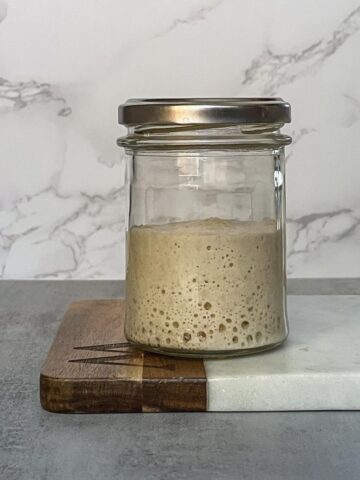
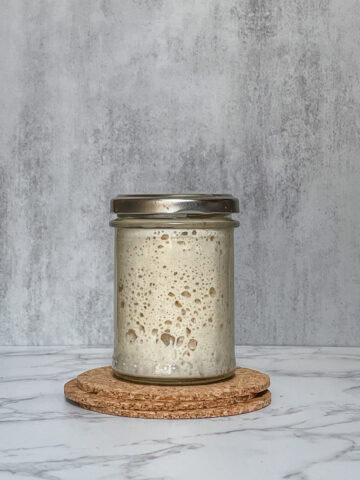
A healthy sourdough starter should be bubbly and lively, showing it is full of activity. It will have a pleasant, slightly tangy aroma and rise in volume after feeding.
The texture can range from pancake batter-like to thicker or thinner, depending on the type of flour and the amount of water used. A 100% hydration sourdough starter (made from equal parts water and flour by weight) should hold its shape without dripping off a spoon when lifted.
2. What should sourdough starter smell like?
A sourdough starter should smell mildly sour, with a hint of yeast and maybe a touch of fruitiness. If it smells strongly unpleasant, like rotten food, it may require extra care to revive it (if not moldy) or be discarded.
3. Should I buy a sourdough starter or make my own?
It depends. You can buy a sourdough starter or borrow one from a friend to begin baking right away. Alternatively, you can make a sourdough starter from scratch, but it will take at least a month to establish before you can bake good bread.
4. How can I make a sourdough starter from scratch?
This website offers a detailed guide called "How to Make Sourdough Starter in 10 Days," which includes step-by-step, photographed instructions.
5. What is the best water for a sourdough starter?
Use chlorine-free water, such as filtered or bottled spring water. If your tap water is of good quality, go for it; otherwise, let it sit overnight to allow the chlorine to evaporate.
Room-temperature water is best because it maintains a stable environment for your starter (see my guide to choosing sourdough starter ingredients).
6. What type of flour should I use to feed the sourdough starter?
Unbleached, unbromated flour is ideal. Bread flour is a great choice because its high protein helps the starter grow strong. Unbleached all-purpose flour works, too. Whole wheat or rye flour adds nutrients and flavor, giving your starter extra strength and a deeper taste.
7. Can I use whole wheat or rye flour for a sourdough starter?
Absolutely! Whole wheat flour has more natural nutrients and yeast, making it a great option. Rye flour is another excellent choice because it ferments quickly and boosts activity.
Feed your sourdough starter 10% whole wheat or rye flour. If your starter seems weak, adding some whole wheat or rye flour can help strengthen it (see my guide to strengthening sourdough starter).
8. Should I add pineapple juice to my starter?
While some suggest adding pineapple juice to jumpstart a starter, I prefer sticking to just flour and water. It feels more authentic to true sourdough and keeps things simple.
9. Does instant or active dry yeast help a sourdough starter?
Adding commercial yeast is unnecessary because it goes against the goal of developing a natural starter. A healthy, active starter has the leavening power to rise bread without relying on commercial yeast.
10. How often should I feed sourdough starter?
If your starter is stored on the counter, feed it once a day. Some bakers feed it twice daily, every 12 hours. If it is stored in the fridge, you only need to feed it once a week (see my guide to feeding sourdough starter).
11. What happens if I miss a feeding?
If you miss a feeding, return to your usual schedule, and it should bounce back.
12. Why does the sourdough starter rise and fall?
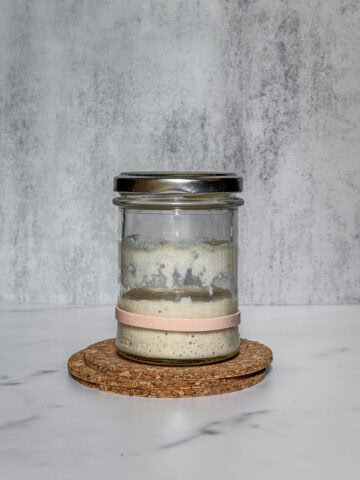
The rising and falling are natural parts of fermentation. When you feed the starter, the yeast and bacteria ferment the sugars in the flour, producing carbon dioxide gas that causes the starter to rise. Gas production slows once the food (flour) is used, and the starter falls again.
13. What's the best hydration for a sourdough starter?
A good hydration level for most sourdough starters is 100%, meaning you add equal amounts of water and flour when you feed it. This balance creates a starter that is not too thick or too runny, making it easy to work with.
Once you get comfortable with sourdough baking, try experimenting with different hydration levels to find what works best for your recipes (see my guide on liquid vs. stiff starter).
14. What's the best feeding ratio for a sourdough starter?
A typical feeding ratio is 1:3:3, meaning one part starter, two parts flour, and two parts water by weight, twice daily. If you want to feed less often, use a larger ratio, such as 1:5:5, in which you add more flour and water than the starter. This ratio allows you to feed just once a day.
Every starter is different, so you need to adjust your feeding schedule accordingly (see my guide on sourdough starter feeding ratios)
15. How do I switch from one flour to another for my starter?
If you want to switch to a new flour, do it gradually. Mix the old and new flour during feedings, adding more of the new flour over time. Some bakers switch flours at once and feed the starter regularly until it adjusts.
Avoid switching flours too often, as your starter develops a stable mix of bacteria and yeast based on its usual flour. To try new flours, take a small portion of your starter for experiments while keeping the original as a backup.
16. Do I need to use sterilized tools when working with a starter?
Using sterilized tools is unnecessary, but clean tools are essential. Washing them with soap and water is usually enough to prevent contamination of your starter. However, there are cases when the soap residue harms the live culture.
17. What is the best jar for a sourdough starter?
A glass jar with straight sides and a loose lid works best. The glass allows you to monitor the starter's activity, the straight sides make mixing easy, and the loose lid allows gases to escape.
Pick a jar that gives the starter room to grow. When storing the starter in the fridge, use an airtight jar (see my guide on the best sourdough starter jar).
18. Should I cover the sourdough starter jar?
Yes, keep the jar covered on the counter and in the fridge. Only uncover it when you are feeding the starter. The crusty layer can develop on top, but it won't happen while you are feeding it.
19. Why is there a semi-soft crust layer on top of the starter?
A crust forms on the starter when it dries out. This can happen when the starter is covered with a cloth or paper towel, allowing air to enter and dry out the surface, especially in warm weather.
20. What type of lid should I use?
A loose lid works best. Some bakers use a coffee filter, paper towel, or muslin fabric secured with a rubber band, but this is not ideal since it can cause a crusty layer to form on top of your starter.
21. Should I tighten the lid or leave it loose?
Leave the lid loose when storing the starter on the counter. This allows the gases created during fermentation to escape while keeping dust and other unwanted stuff out. If you store it in the fridge, be sure to tighten the lid.
22. How often should I clean the sourdough starter jar?
It depends on what works best for you. Some people clean the jar after every feeding, while others do it less often.
Cleaning it regularly helps prevent leftover bits of starter from building up inside the jar, which makes it more difficult to manage. Moreover, this is the best way to prevent moldy sourdough starter.
23. Do I have to discard the starter every time I feed it?
Yes, you must discard when feeding your starter. This step is important because it maintains your starter's balance and health. When you create a new starter, discarding helps the good bacteria grow stronger while removing the bad ones.
Later, discarding prevents your starter from growing too large and becoming difficult to manage. Think of resetting your starter with fresh flour and water to keep it thriving.
If you would rather save ingredients, learn how to maintain a sourdough starter with no discard.
24. Should I stir the starter before feeding or discarding it?
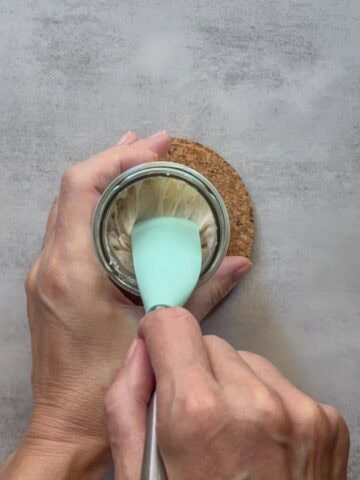
It is unnecessary, but some bakers stir the starter before discarding it if the jar stays the same. If you use a new jar, you can stir the starter in the old jar, then transfer the amount you need to the new jar.
25. When can I start using discard in recipes after beginning a new starter?
You can start using discard after day 10 (or even day 7, according to some bakers) in recipes for crepes, crackers, muffins, and pancakes.
26. Can I use my starter instead of levain?
Yes. The terms "active starter" and "levain" are often used interchangeably. Levain is an offshoot batch of the "mother" starter, but it is made with a higher feeding ratio (such as 1:6:6 or higher) than the regular starter.
27. How do I know when a sourdough starter is ready to use?
Your starter is ready for baking when it has bubbles, doubles (or triples) in size after feeding, and has a tangy smell. This usually takes 4-6 hours, depending on the room temperature. It might also pass the float test.
Use your sourdough starter at peak for the best results, but you can also use it slightly before or after. This will affect the bulk fermentation and the bread flavor.
28. Why doesn't a float test work?
The float test is a popular method for checking if the starter is ready. However, it is unreliable due to various factors. The hydration level, temperature, or type of flour in the starter can affect the result.
For example, a starter made with whole wheat or rye flour might be too dense to float, even when it is very active. That is why you should look at other signs, such as bubbles, size, and smell, to determine when your starter is ready.
29. Can I still bake bread if I have missed the peak of my starter?
If your starter is healthy, you don't need to worry if it is just one to two hours past its peak. If it has fallen substantially, refresh it by adding the same amount of flour and water, such as 30 g, without discarding any of the built starter. Then, let it rise again.
30. How can I delay the "peak" of my starter?
If you need to delay mixing the dough, put your starter in the fridge just before it peaks. You can also store a fully peaked starter in the fridge for up to a week, though its activity will be reduced. Use sourdough starter straight from the fridge without warming it up.
31. Should I wait for a new starter to establish before making bread?
Yes, it is best to wait until a new starter is at least 1 month old before making bread. You can bake with a starter that is only 2 weeks old, but the results won't be the same as with an established starter that is 3-4 months old.
32. How long can I keep the starter on the counter?
If you feed your starter daily, you can keep it on the counter forever. It can even be passed down to your children and grandchildren if you take good care of it and keep it healthy.
33. Should I store the starter on the counter or in the fridge?
If you bake often, keep your starter on the counter and feed it daily. If you only bake once or twice a week (or less), store it in the fridge and feed it once a week (see my guide to storing sourdough starter).
34. How should I store the starter for the long term?
The best long-term storage option for sourdough starter is refrigeration. This slows down its activity, so you only need to feed it once a week.
Another option is to dehydrate your starter, which allows you to store it for months or years as a backup. You can also try freezing your starter for up to 12 months.
You can travel with sourdough starter, or leave it behind, planning ahead (see my guide on how to maintain sourdough starter while on vacation).
35. Can I freeze a sourdough starter?
Yes, you can freeze sourdough starter to preserve it for an extended period. Ensure it is at least one month old, active, and well-fed before freezing.
36. Can I use the sourdough starter straight from the fridge?
If your starter has been in the fridge for less than a week, you can use it to make levain right away or feed it once or twice before using it. If it has been in the fridge for an extended period, you will need to feed it a few times to fully activate it again (see my guide on how to use sourdough starter from the fridge).
37. How can I tell if the sourdough starter is too acidic?
Your starter might be too acidic if it smells sharp, like vinegar, or has a liquid (hooch) on top. This happens if you have not been feeding it often enough or if it has been fermenting for too long.
38. Why does a sourdough starter smell like acetone or vinegar?
A sourdough starter can smell like acetone or vinegar when it is hungry or hasn't been fed enough. This happens when there is an imbalance between the wild yeast and bacteria, which produce acids (see my guide to dealing with an acidic sourdough starter).
39. How do I know if my sourdough starter is dead?
Your starter might be dead if it has stopped bubbling, smells off, or shows unusual discoloration (see my guide on recognizing a bad sourdough starter).
A healthy starter will always show some activity, even if it is slow. If your starter doesn't come back to life after several feedings, it is time to start fresh. If there are signs of mold, throw it away and start anew.
40. When should I toss out the starter?
If you notice mold developing on the starter, dispose of it and thoroughly clean the jar both inside and out before reusing it. If the jar isn't particularly valuable or hard to replace, it is safest to discard it as well. While mold may not always be visible on starters, if you notice pink or black, discard the starter and start anew.
41. What if I don't have enough starter for a recipe?
You can still bake if you are a little short on starter. For example, it will still work if you need 100 grams but only have 80-90 grams. You can also use less starter and give your dough more time for bulk fermentation. This is especially helpful in warm weather, when the dough ferments quickly (see my guide on how much sourdough starter to use).
42. What should you do if the starter overflows?
Though the overflow may seem excessive and messy, it indicates that your starter is highly active. Use a bigger jar to prevent it and keep only enough starter to fill about one-third. This gives it room to grow without spilling over.
Let's talk sourdough
Do you still have a sourdough starter question that wasn't answered in this post? Drop it in the comments.
Ready to keep learning?
Now that your starter knowledge is solid, it is time to experiment with baking itself. Learn how baking temperature and timing can change the crust, crumb, and overall bread quality.