

Choosing the right flour and water for your sourdough starter is one of the most important steps. The type of flour you choose and the quality of the water greatly affect how well the wild yeast grows and how strong your starter becomes.
If you don't have a starter yet, you can make a sourdough starter from scratch in just 10 days. Then, try my Beginner's Sourdough Bread recipe.
At a Glance
- Best for: Beginner sourdough bakers who want to choose the right flour and water for maintaining a healthy starter.
- What you'll learn: Which flours work best for sourdough starter, what kind of water to use, and how these choices affect fermentation and activity.
- Skill level: Beginner
- Time commitment: About 5-10 minutes to understand the guidelines, plus 5-10 minutes per feeding for ongoing starter care.
- Key techniques: Feeding a starter with different flours, adjusting hydration consistency, and using clean, chlorine-free water for better fermentation.
- Optional steps: Experiment with whole grain flours like rye or whole wheat to boost activity, or adjust water sources if your starter seems sluggish.
- Main takeaway: The best starter results usually come from using unbleached flour and clean, chlorine-free water that supports steady, predictable fermentation.
- Next step: Apply these choices in your next feeding and practice maintaining a strong starter using a Beginner's Guide to Feeding Sourdough Starter.
Jump to:
- At a Glance
- Best flour for sourdough starter
- All-purpose flour
- Bread flour
- Rye and whole wheat flour
- How to switch flours in your starter
- Why water quality is important
- How to choose the right water for your starter
- The best types of water for sourdough starter
- What water to avoid
- How to remove chlorine from tap water
- Is water temperature important?
- FAQ
- Let's talk sourdough
- Ready to keep learning?
- Comments
Best flour for sourdough starter
You can use one type of flour to feed your starter and another to bake, but the best flour for your starter is unbleached and unbromated flour.
Using unbleached, unbromated flour is important because it keeps the natural nutrients and enzymes that help fermentation.
Unbleached flour doesn't go through chemical bleaching, so it keeps important nutrients like vitamins and minerals. These nutrients feed the wild yeast and bacteria in your starter, helping it ferment properly.
Unbromated flour doesn't contain a chemical called potassium bromate, which is used to strengthen dough. It is banned in many countries because of health concerns. So, unbromated flour is a safer, more natural choice for your sourdough.
All-purpose flour
Unbleached all-purpose flour is a popular choice for beginners because it is affordable and easy to find.
However, starting a brand-new sourdough starter is not the best option. All-purpose flour has had the bran removed, which means it lacks the wild yeast that helps fermentation.
If you want to use all-purpose flour, combine it with whole wheat flour to speed up the process. A 50/50 mix of all-purpose and whole wheat flour works well and can help your starter become active in 10-14 days.
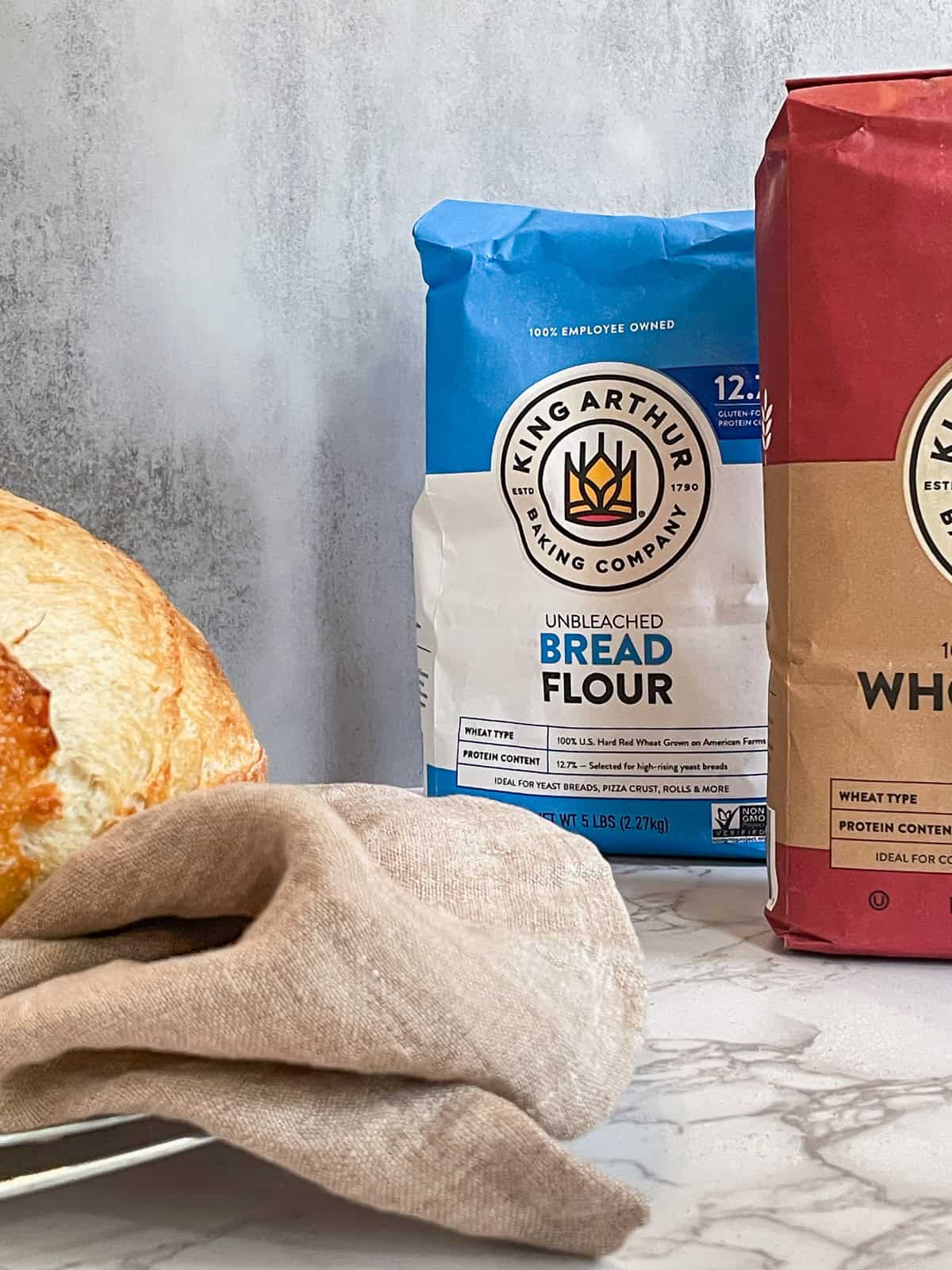
If you prefer organic ingredients, opt for brands like Kirkland Signature Organic Unbleached All-Purpose Flour and King Arthur Whole Wheat Flour.
Bread flour
Bread flour, a type of wheat flour, is another excellent choice for making and feeding your sourdough starter.
It has a higher protein content than all-purpose flour, which makes it ideal for developing gluten in sourdough bread. A 50/50 mix of bread and whole wheat flour is an excellent way to start a new sourdough starter.
Rye and whole wheat flour
To kick-start the fermentation process, choose rye and whole-wheat flours. These flours contain more nutrients and wild yeast, helping your starter grow stronger and improving the flavor and texture of your bread.
Using my Beginner Sourdough Starter recipe, designed for rye or whole wheat flour, will give you a reliable starter in just 10 days.
How to switch flours in your starter
Changing the type of flour you use to feed your starter can lead to small changes, but it is not a problem. Your starter may need time to adapt, so do not worry if its activity slows down for a day or two.
Adding whole wheat or rye flour (10-50% of the total) to your usual feeding can boost its activity and make it thicker, while switching to only all-purpose flour might make it slightly more liquid.
Switching to a different type of flour for your sourdough starter depends on the flour you used to start it.
If you started your sourdough starter with all-purpose or bread flour, you can easily switch between them when feeding your starter. They work similarly.
If you want to add whole wheat or rye flour to a starter made with all-purpose or bread flour, you can replace 10-50% of the flour with whole grains. This gradual change helps your starter adjust without losing its strength.
For mature starters, switching to all-purpose or bread flour can be trickier when made with whole wheat or rye flour.
Start slowly. First, replace 10% of the original flour with the new type you choose. Then increase the flour by 10-15% each day until you reach the desired amount.
Why water quality is important
Chlorine, hardness, and pH levels affect water quality. These factors can either help or harm the microorganisms in your starter.
For example, chlorine in tap water can weaken your starter by harming the yeast and bacteria essential for fermentation.
On the other hand, filtered or spring water, free from harmful chemicals, provides a better environment for these microbes to grow.
How to choose the right water for your starter
When picking water for your sourdough starter, keep two key factors in mind: hardness and chlorine content.
Ideally, your water's Total Dissolved Solids (TDS) should be between 100 and 150 parts per million (PPM). This range is not too soft or too hard, striking the right balance for your starter.
Another important factor is the pH level. Water with a pH slightly below 7 is ideal because it supports the fermentation process, which helps your starter grow strong and active.
The best types of water for sourdough starter
Here are some of the best options for water when making and feeding your starter:
- Filtered tap water: Removes harmful chlorine and other chemicals while keeping beneficial minerals.
- Spring bottled water: A great choice, as it is free from chlorine and rich in minerals.
What water to avoid
Some types of water can harm your starter. These include:
- Distilled and reverse osmosis water: These lack the minerals your starter needs to thrive.
- Chlorinated tap water: Chlorine can weaken your starter, making it less active.
- Hard water: Water with a TDS above 250 PPM can interfere with fermentation.
- Soft water: Water with a TDS below 70 PPM is deficient in minerals.
How to remove chlorine from tap water
If you only have access to chlorinated tap water, you can remove the chlorine by leaving it uncovered overnight or by boiling it and letting it cool.
Another excellent option is a water filter (e.g., a water pitcher, faucet filtration system, or house filter). However, pay attention to whether the filter removes chlorine or chloramine from the water.
One of the best jug filters on the market is the Filtered Water Pitcher from Clearly Filtered. In the lab tests, it removed over 99% of chlorine and chloramine.
If filters are not an option, consider using spring water in bottles. However, be sure to check the source of the water.
Is water temperature important?
The temperature of your water also plays a big role in feeding your starter. Lukewarm water at 75-78°F (24-26°C) is the best while creating a new sourdough starter.
Room-temperature water is a good overall option for feeding your starter, but cooler water during the summer months can help delay fermentation.
FAQ
Only filtered rainwater should be used to avoid contaminants.
Yes, but if your starter does not grow well, you might need to test the water for its mineral content and contaminants.
Let's talk sourdough
I am curious which flour and water you chose to use to create your first sourdough starter. I have a funny (though sad for my starter) story from when I used store-bought alkalized water, but that is a tale for another post.
Ready to keep learning?
With the right ingredients in hand, the next step is learning about hydration. Discover how a 100% hydration starter behaves and why it is the most common choice for bakers.