
In this guide, I will share the practical differences between liquid and stiff sourdough starters, how bakers commonly use these terms, and why most home recipes are written the way they are.
When reading recipes or browsing Facebook and Instagram, you will often come across liquid or stiff sourdough starter listed as ingredients, and often without much explanation.
At first, it seems simple: a liquid sourdough starter looks loose and bubbly, while a stiff starter feels thick and dough-like. But once you start reading recipes or baking forums, you will notice that bakers don't always mean the same thing when they say liquid sourdough starter.
What bakers mean by a liquid sourdough starter
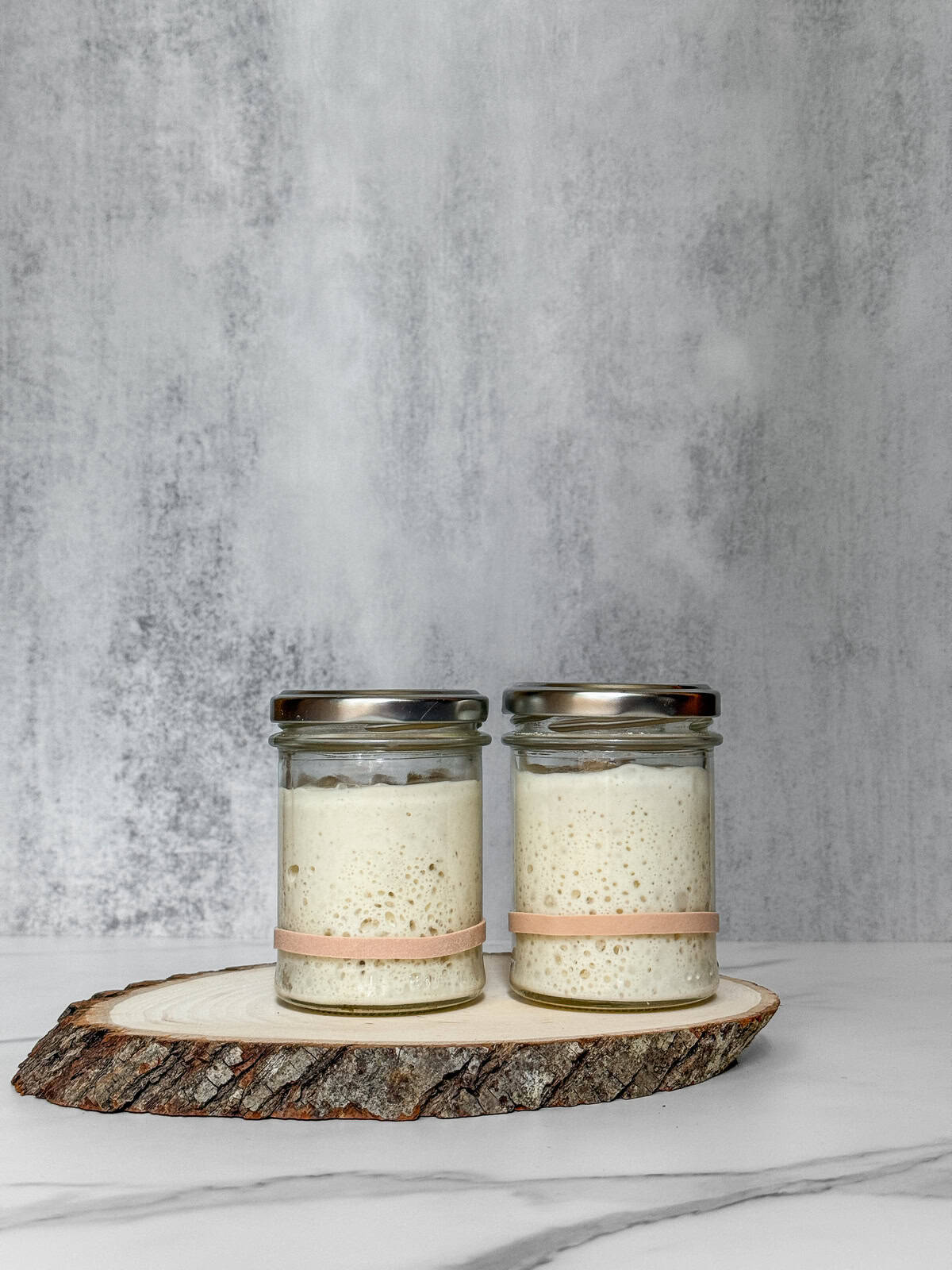
The term "liquid sourdough starter" is often confusing, as most bakers use it to refer to a 100% hydration sourdough starter, made with equal parts flour and water by weight. You may also hear this type of starter called a wet starter or one without any hydration mentioned.
In most bread recipes, when the type of starter isn't specified, it is generally assumed that the recipe is referring to a 100% hydration sourdough starter.
As a beginner, stick with a 100% hydration starter. After learning the basics of sourdough, start experimenting with different starter hydrations.
True liquid sourdough starter (above 100% hydration)
A true liquid sourdough starter contains more water than flour, with a hydration level above 100%. Because of the extra water, this type of starter is very loose, often pourable, and behaves quite differently from the starter most home bakers keep.
A true liquid starter is less common in everyday home baking. It is sometimes used in specific bread styles, regional traditions, or professional bakeries.
For most home bakers, especially beginners, there is no need to maintain a true liquid sourdough starter.
Differences between 100% hydration, liquid, and stiff sourdough starters
The main differences between these types of starters are their hydration levels, the type of flour used, how they ferment, how they mix into dough, how they are stored, and the flavors they impart to bread.
1. Starter hydration
The main difference among starters is their hydration, or the amount of water relative to the amount of flour in a starter, expressed as a baker's percentage.
- 100% hydration sourdough starter: It is made with equal parts water and flour (1:1). This starter gives the bread a pleasant, mild, tangy flavor.
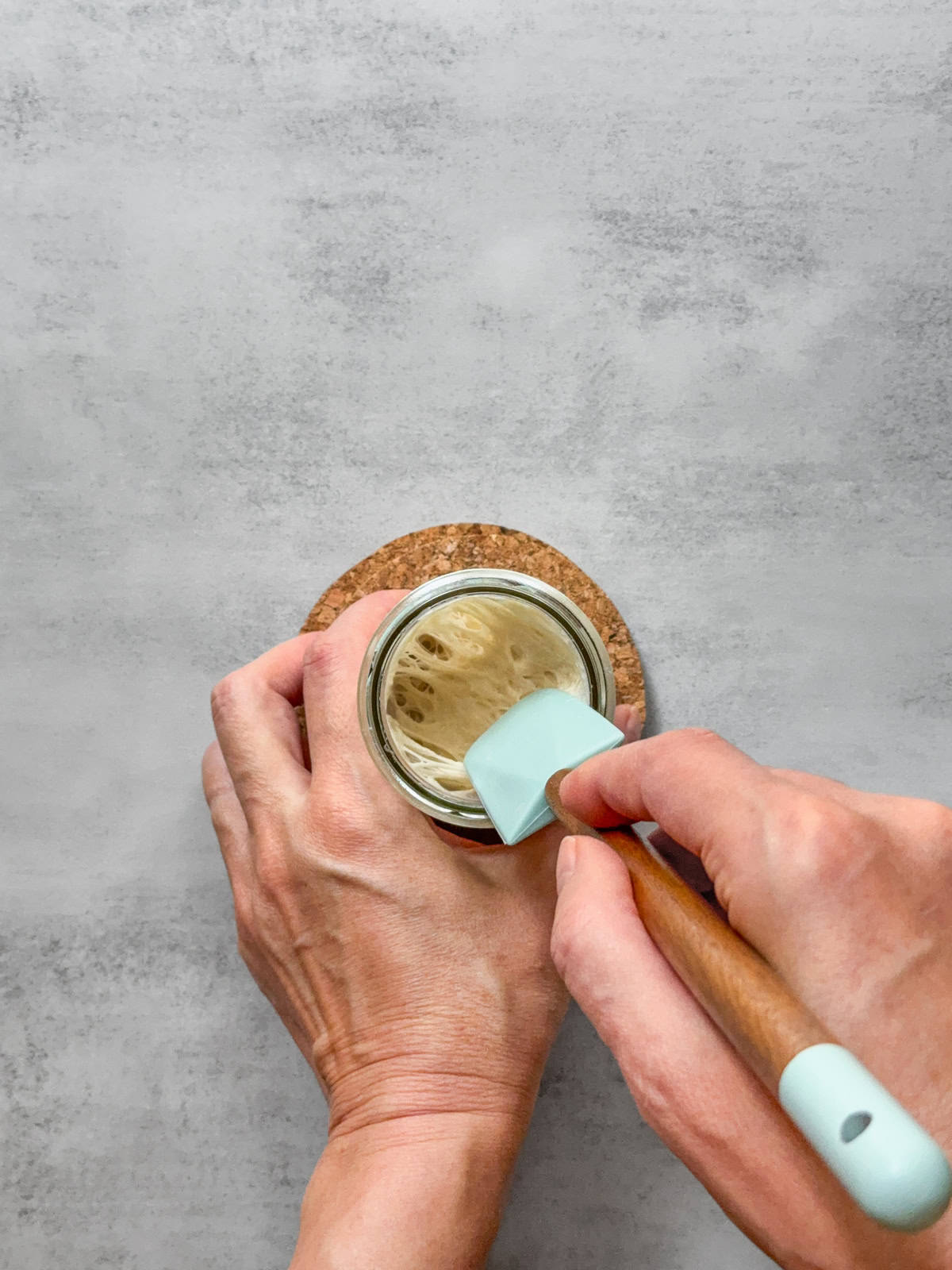
- Liquid sourdough starter: A liquid sourdough starter ranges widely in hydration, from slightly above 100% to very high hydrations such as 300-500%. This means it contains more water than flour. It is pourable, fast-fermenting, and often used for pancakes, waffles, or breads requiring high extensibility. It also gives bread a tangy aroma and a bold flavor.
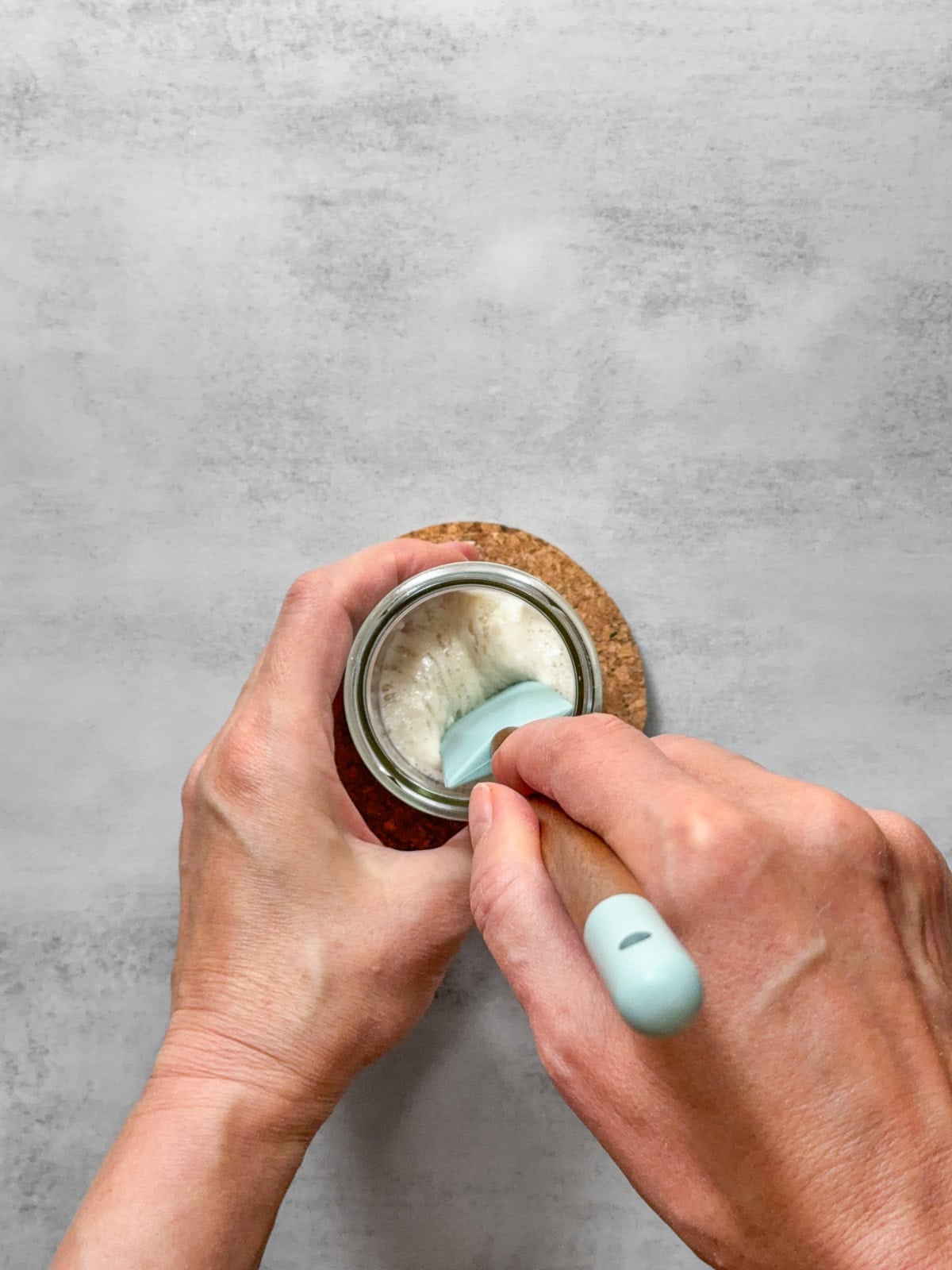
- Stiff sourdough starter: A stiff starter contains much less water, with a hydration level of 60% or less. It is firm, slow-fermenting, holds shape for dough development, and contributes a mild, dairy-like flavor to the bread.
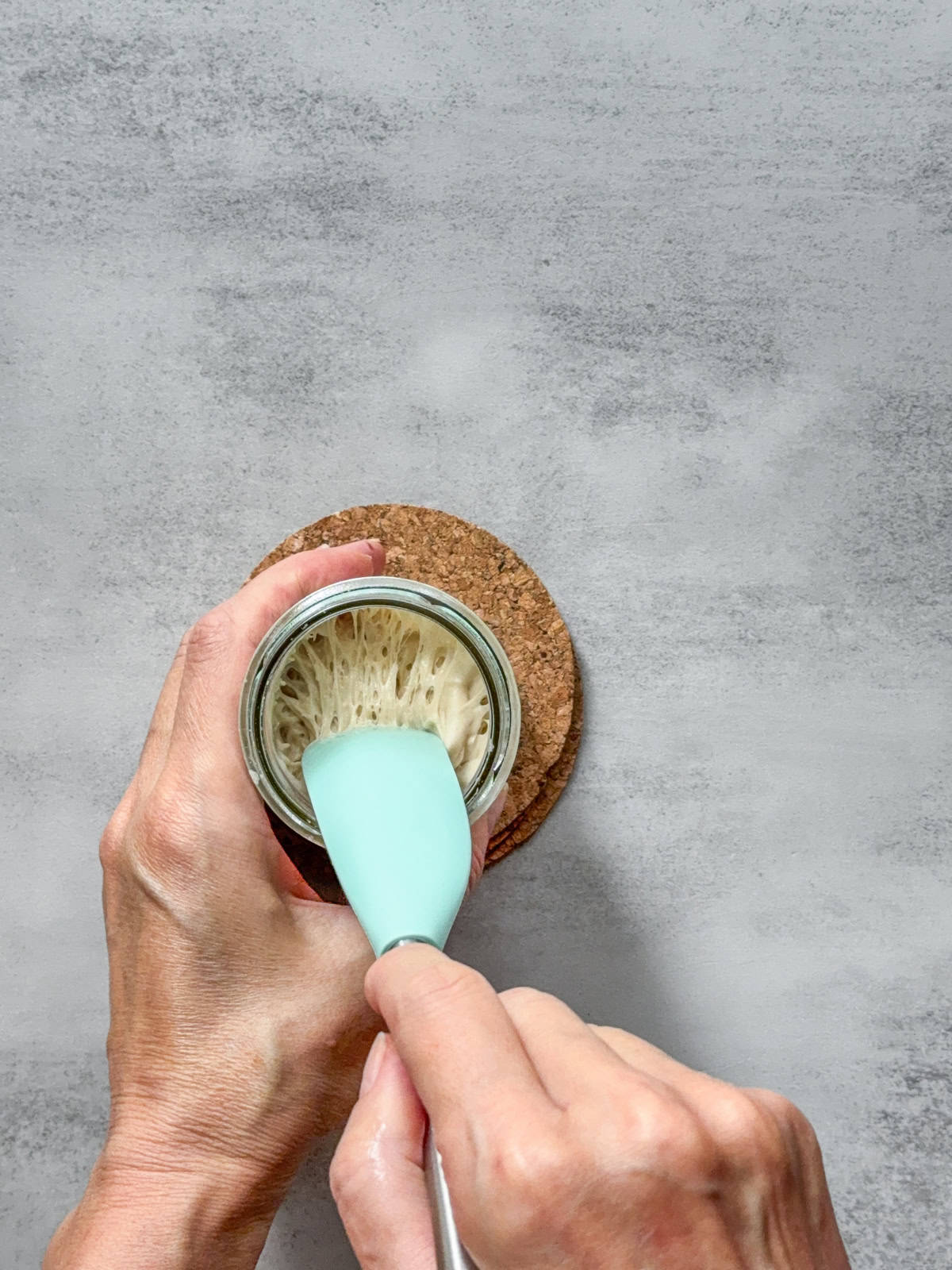
Here is a visual example of different types of starters:
| Ingredients | Liquid starter | 100% Hydration Starter | Stiff starter |
| Flour | 100g | 100g | 100g |
| Water | 500g | 100g | 50g |
Since a true liquid starter contains more water than flour, the liquid and flour can start to separate.
In contrast, a stiff starter has the consistency of pasta dough and is often shaped into a ball rather than stored in a jar. Pasta Madre, an Italian sourdough with about 45% hydration, is a great example of a stiff starter.
2. Creating the starter and calculations
Making a 100% hydration starter is simple because it involves equal parts flour and water. Liquid and stiff starters, however, require a bit more baker's math due to their different hydration levels.
Mixing is also different:
- 100% hydration and liquid starters: These have a loose texture and mix easily with a jar spatula.
- Stiff starter: It is firmer and needs kneading, which requires more work to mix it thoroughly.
3. Choosing the right flour
- A 100% hydration starter works well with strong wheat flour, rye, whole wheat, emmer, or einkorn flours.
- For a liquid starter, strong wheat flour is most important because it has increased bacterial activity and reduced yeast activity. Weak flour (with less protein) doesn't work well for liquid starters.
- A stiff starter works better with weaker flours, as yeast activity will dominate over bacterial activity.
Also, remember that different flours absorb water differently. A levain made with whole-grain flour will be thicker than one made with white bread flour using the same amount of water. You must add more water to achieve the same consistency as a whole-grain starter.
4. How fast does each starter ferment?
- 100% hydration starter: This starter has a moderate fermentation speed and forms a dome near its peak. Multiple bubbles on the side of the jar indicate that the sourdough starter is ready for baking.
- Liquid starter: This starter ferments faster than the standard starter (100%) but is less stable over time. Instead of forming a dome during fermentation, it shows its readiness by bubbles on the sides of the jar. It degrades quickly with a narrow window for optimal use.
- Stiff starter: This starter ferments more slowly but remains active for a longer period. It degrades more slowly after its peak, having a wider window of optimal use. As a sign of readiness, it forms a dome and air pockets on the sides of the jar.
5. Mixing the dough
Mixing an equal-parts starter (100%) or liquid starter into the dough is straightforward, whether by hand or with a mixer. A stiff starter, however, requires more effort and kneading.
With their high enzymatic activity, liquid starter makes the dough more stretchy, making it perfect for recipes like pizza. A stiff starter isn't ideal for such uses.
6. Storage and maintenance
- Store 100% hydration starter on the counter or in the fridge. If kept on the counter, it requires daily feeding. You can even dehydrate sourdough starter for long-term storage.
- Store liquid starter at room temperature or in the fridge. Before baking, feed it once (10g starter, 10g flour, 50g water) in the evening, then mix the dough the following morning. If stored in the fridge, feed it at least twice to wake it up for optimal baking results.
- You can store the stiff starter on the counter and feed it every few days or store it in a sealed jar in the fridge with less frequent feeding. This makes it great for occasional bakers or travelers.
7. Flavor profile
- 100% hydration starter: It has a balanced yeast-to-bacterial population and produces bread with a complex flavor profile. It's balanced acidity often features dairy and vinegary notes, with subtle sour aromas that aren't overpowering.
- Liquid starter: Due to the increased heterofermentative lactic bacteria population in a liquid starter, it tends to produce more lactic acid. This gives the bread a vinegary note and a tangier taste. Read more about how to make sourdough more sour.
- Stiff starter: It produces more acetic acid, which is tangier and gives the bread a noticeably sour flavor and a strong aroma. However, due to the increased yeast population in a stiff starter, the final bread will be milder in flavor than the one made with a liquid starter.
How to convert a 100% hydration starter into a stiff starter
If you need to convert a 100% hydration starter to a stiff one, remove a portion and feed it with more flour than water. Continue until it reaches a stiffer consistency over a few feeds.
However, I don't recommend using the same jar with the equal-weight starter (100%) to convert it into a liquid starter. Instead, transfer a portion of your starter to another clean jar. Always keep your "mother" starter as a backup.
Here is a simple method to convert a 100% hydration starter into a 50% hydration stiff one:
- Take 10g of your regular starter (assuming a 100% hydration starter contains 5g water and 5g flour).
- Mix in 23g of water, then add 50g of flour and mix well. Cover and let it ferment for 24 hours.
- The following day, discard 10g of the starter and add 23g of water and 50g of flour.
- Repeat this process for a few more days (2-3 days).
A stiff starter is ready for baking when it doubles (or triples) in volume and displays air pockets within the dough when the jar is inverted. A stiff starter reaches its peak longer than a fully hydrated starter (100%) or a liquid starter.
For a recipe that requires 500g of flour, use a 10% stiff starter (50g) in summer and a 20% stiff starter (100g) in winter.
To use a stiff starter in a homemade sourdough bread recipe, substitute 75% of the 100% hydration starter amount with the stiff starter and add 25% water based on the stiff starter's weight. For example, if the recipe calls for 100g of 100% hydration starter, you use 75g of stiff starter plus 25g of water.
A dry starter is a variation of the stiff starter. It is made by further reducing the hydration, roughly 1 part starter to 2 parts flour by weight, until the dough forms a firm texture. Dry starters are less common but are useful for long-term storage or shipping, and can be rehydrated later for baking.
How to convert a 100% hydration starter into a liquid starter
As a rule of thumb, if you want to convert a 100% hydration starter to a liquid one, remove a portion and feed it with more water than flour. Continue until the starter reaches a liquid consistency over a few feeds.
Again, I recommend transferring a portion of your regular starter (100%) to another clean jar. Always keep your "mother" starter as a backup.
Here is a simple method to convert a 100% hydration starter into a 150% hydration liquid one:
- Take 10g of your regular starter.
- Mix in 15g of water and 10g of flour. Stir well. Cover and let it ferment for 24 hours.
- The next day, tighten the jar with a lid, give it a shake, discard 10g of the starter, and add 15g of water and 10g of flour.
- Repeat for 2-3 more days.
A liquid starter is ready to use when it doubles in size and develops bubbles at the surface upon gentle shaking. Compared to a water-balanced starter (100%), it doesn't create a smooth top with visible wrinkles by its peak.
If a recipe requires 500g of flour, use a 5% liquid starter (25g) in summer and a 10% liquid starter (50g) in winter. Remember to subtract the liquid starter amount from the water amount in the recipe.
Which type of starter should you use?
If you are starting, stick with a regular 100% hydration starter. It is the easiest to manage and consistently produces delicious bread. Once you grow with sourdough baking, you can experiment with true liquid or stiff starters.
Remember, there is no need to change what already works. If your standard hydration starter (100%) gives you great results, stick with it.
But if you travel frequently or bake only occasionally, choose a stiff starter (50-60% hydration) or even a dry starter, since they don't require daily feedings.
And as always, keep a backup of your original starter when you experiment with different types. If you are wondering how to store sourdough starter, you have a couple of easy options: freeze your starter for long-term storage or dehydrate it for later use.
Let's talk sourdough
Have you ever tried a sourdough starter with a hydration other than 100%? Do you keep a stiff starter on hand for occasional baking? Let us know in the comments.
Ready to keep learning?
With starter types clear, you can compare yeast vs. sourdough starter and see how each affects fermentation, flavor, and texture.