
If you love the tangy, bold flavor of sourdough bread, learn how to make sourdough more sour. Try these 12 simple tips and techniques, and you will notice a big difference in taste and flavor.
Experiment to find the best tang for your sourdough bread. Start with one change and see how your bread transforms. If you have a pH meter, keep the dough's final pH below 3.7.
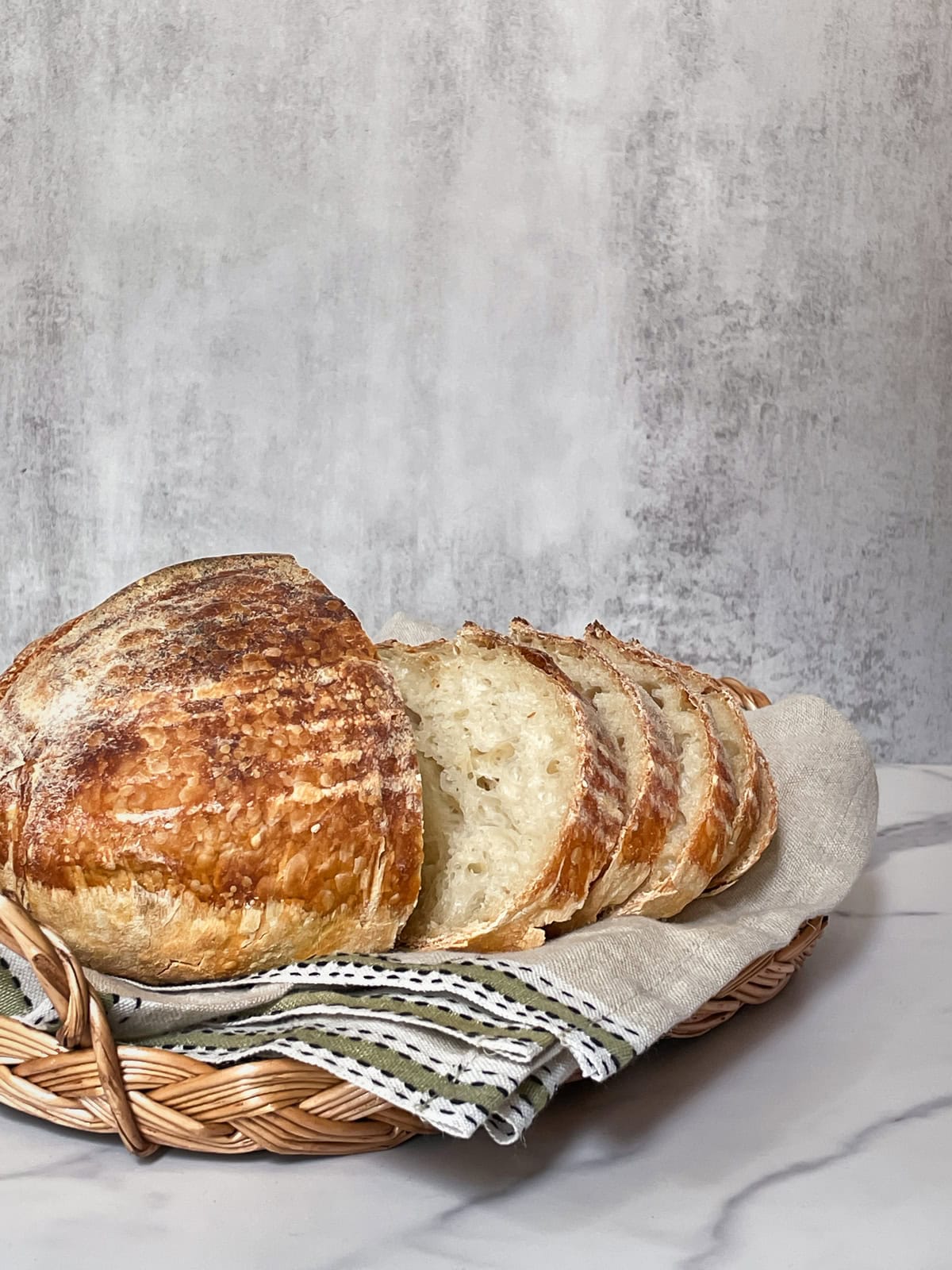
Why sourdough bread tastes sour
Sourdough bread gets its taste and flavor from tiny organisms called wild yeast and lactic acid bacteria. These amazing microbes work together to transform flour and water into delicious bread.
Wild yeast creates bubbles that help your bread rise, while lactic acid bacteria (LAB) produce acids that give sourdough its tangy taste.
There are two primary acids in sourdough: lactic acid and acetic acid. Lactic acid gives a mild yogurt-like flavor, while acetic acid is stronger and adds a sour vinegar-like flavor. Both are important in creating the sour flavor we love.
How to make sourdough more sour
Through trial and error, I have learned that even small changes to your starter, bulk fermentation, and cold proofing time can make a big difference in sourness.
1. Opt for an established starter
An established sourdough starter (one that has been around for at least 3-4 months) has a larger population of yeast and bacteria that produce more acids. Such a starter gives the bread a more pronounced sour flavor.
2. Use whole-grain flour
The flour type affects the sourdough flavor. Whole-grain flours, like rye or whole wheat, encourage the growth of bacteria that produce acetic acid, giving your bread a deeper, tangier flavor.
When feeding your starter, mix in 10-30% rye flour or blend bread flour with rye or whole wheat.
For the dough, try replacing 10-15% (or even 20-30%) white flour with whole-grain flour. Just remember that the more acid, the denser your bread might be, and it could affect the rise a bit.
3. Give your starter extra oxygen
Mix it thoroughly every time you feed your starter: before discarding it and after adding water and flour. This helps introduce oxygen, which supports the growth of bacteria that create acids.
4. Change your starter hydration
The starter's hydration impacts the bread's sourness. A thicker starter (less water) promotes acetic acid, while a more liquid starter (more water) increases lactic acid. Both methods increase overall acidity, just in slightly different ways.
5. Feed your starter less often
Feeding your starter less often increases its acidity. Try feeding it at a higher ratio every 48-72 hours instead of every 24 hours.
You can even refrigerate it for up to two weeks (or longer) until you notice a layer of liquid forming on top. This liquid, called hooch, is a sign of increased acidity. Stir it back into the starter to increase its acidity level.
For more experienced bakers, you may use an "unfed" starter (aged 2-4 days since feeding) directly from the fridge when mixing your dough.
6. Warm up your starter
Fermenting your starter at warmer temperatures (around 77-82°F or 25-28°C) encourages stronger acidity. Find a cozy spot in your kitchen to help your starter develop more tang.
7. Let the starter go "past peak"
Using your starter after it has peaked (when it has consumed all its food) results in higher acid levels and a tangier loaf.
8. Use a smaller amount of starter
Reduce the amount of starter in your dough to increase the sourness of your bread. Try using a 10% starter instead of the usual 20%.
For example, in a recipe with 500g of flour that typically uses 100g of starter (20%), adjust the starter amount to 50g, equivalent to 10% of the total flour weight.
9. Use warm water to mix the dough
Mix the dough with warm water (about 90°F or 32°C). This helps increase the dough temperature, which in turn increases the sourness.
Some people also suggest using buttermilk instead of water for an extra sourness, but I have not tried this myself yet.
10. Bulk ferment at lower temperatures
Bulk fermentation at a low temperature helps extend the fermentation time, giving the final loaf a more pronounced sour flavor.
11. Cold-proof the dough longer
Allowing your dough to cold-proof slowly in the refrigerator can deepen its sour flavor. Start with 24-36 hours and gradually increase the time to find your ideal sourness.
Some bakers even try cold-proofing for 4-6 days, getting the dough to the point of almost overproofing. It is definitely worth trying if you want a more pronounced sour flavor.
12. Add tangy ingredients
You can try adding acidic ingredients, like yogurt, apple cider vinegar, or balsamic vinegar, to your dough. This will give your bread a different type of sour flavor than traditional sourdough methods.
Some bakers also suggest adding small amounts of citric acid (⅛ to ¼ teaspoon), malic acid, or even a tablespoon or two of balsamic vinegar. I have not tried these methods, but they could be fun to try.
Another idea I have come across is adding 50 grams of dehydrated starter to the flour mix. If you try this, reduce the flour by 50g to keep the recipe balanced.
Let's talk sourdough
Have you ever tried making your sourdough more sour? What methods have worked for you? Feel free to share your experience in the comments below.
Ready to keep learning?
If you prefer a milder loaf instead, finish by learning how to make sourdough less sour, giving you full control over flavor based on your taste and baking goals.