
If you do not love the strong sour flavor and bold taste that makes sourdough bread unique, there are ways to adjust it. Learn how to make sourdough less sour and enjoy its gentle, mild flavor.
Some people prefer a softer, less tangy taste, which is completely okay. Everyone has different tastes, and it is important to find what works best for you.
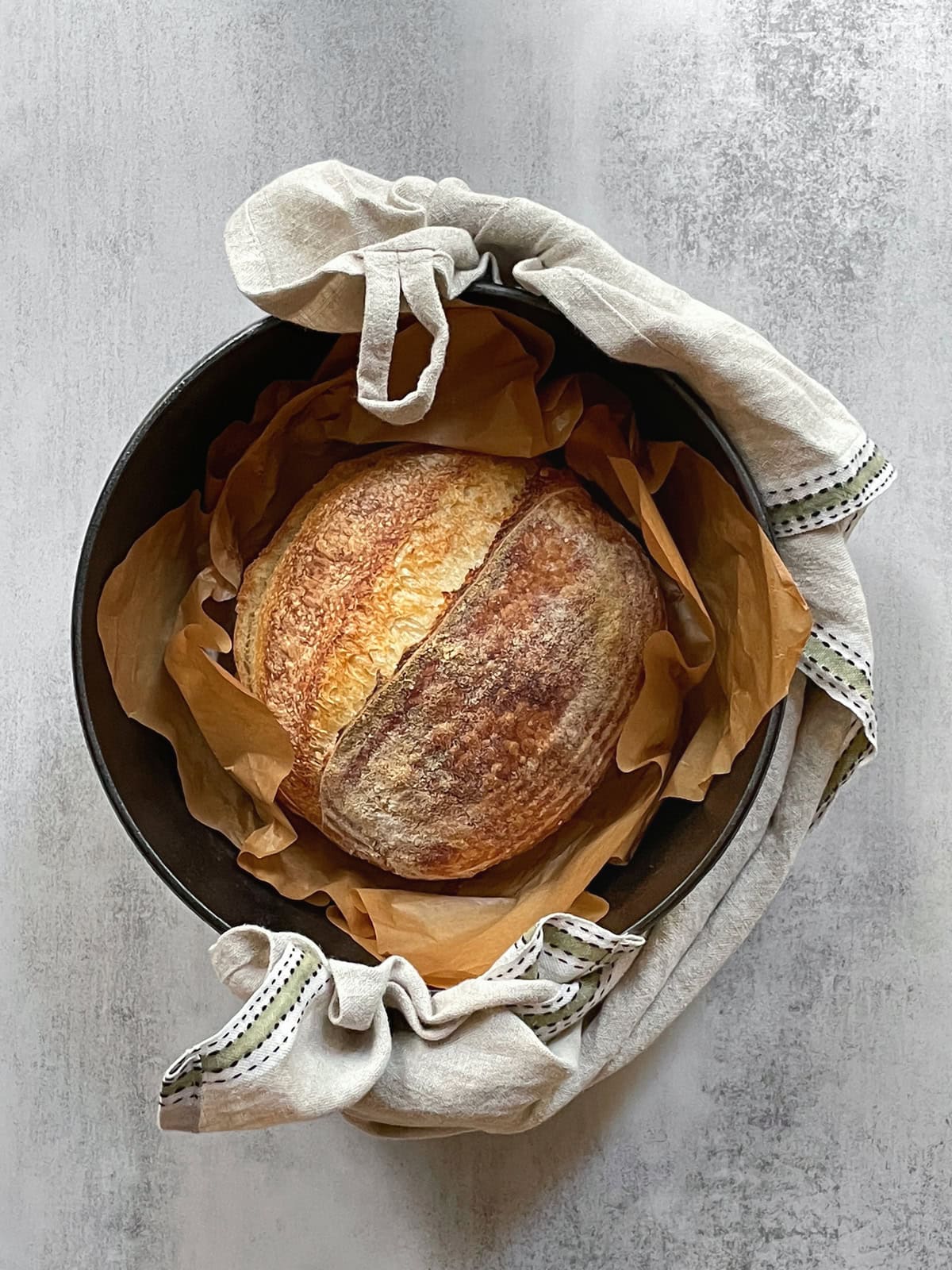
Tips to make sourdough less sour
To make sourdough bread less sour, you can adjust how you maintain your starter, control the bulk fermentation, or even change the room temperature. Let's start.
1. Choose the right ingredients
The type of flour you use matters a lot. If you want less sour bread, use unbleached all-purpose flour for both your starter and dough. This type of flour creates a milder flavor.
Avoid high-protein bread flour because it absorbs more water, making the starter stiffer. This encourages acetic acid production, which contributes to the sourness of bread.
Also, avoid adding whole-grain flours like rye or whole wheat. These encourage the growth of lactic acid bacteria, which create acids that make the bread taste sour.
2. Try a stiff starter
A stiff starter has less water, which means its hydration level is lower, usually around 50-60%. While it creates more acetic acid, it does not make the bread much sourer.
King Arthur Baking Company states, "The increase in acetic acid will subtly alter our perception of the bread's flavor." Lactic acid is the real culprit for stronger sourness, so using a stiff starter can help tone it down.
3. Adjust the starter feeding schedule
Adjusting the feeding schedule of your sourdough starter can change its acidity. Feeding it at a lower ratio (for example, 1:2:2) twice a day decreases the starter's acidity and, consequently, the bread's sourness.
4. Keep the starter cool
A cooler environment for your starter helps make its flavor milder. If possible, keep your starter in a cooler place between 65°F and 75°F (18-24°C).
5. Use levain before its peak
Using the levain before it reaches its peak, when it is still early in the ripening process, helps control the growth of lactic acid bacteria (LAB). Waiting until the starter is "before peak" or "just peaked" but not yet deflating can make the bread less sour.
6. Mix the dough with cold water
Cool water lowers the dough temperature, slows fermentation, and makes the flavor milder.
7. Add more levain
Using a more levain or active ripe starter (over 20% of the total flour weight in your recipe) speeds up fermentation. Faster fermentation leads to less tangy bread because it limits the time for sour acids to develop.
For example, in a recipe with 500g of flour that typically uses 100g of starter (20%), adjust the starter amount to 125g, equivalent to 25% of the total flour content.
8. Bulk ferment at warm temperatures
Fermenting your dough in a warm spot, around 80°F (26-27°C), helps create milder bread. A shorter fermentation time at this temperature reduces the sourness.
9. Try two-stage bulk fermentation
First, mix your dough and let it rise at a warm temperature (80°F or 26-27°C) for 2-3 hours. Then, place it in the fridge overnight for a cold bulk fermentation, which has less impact on sourness than cold proofing.
The next morning, let the dough come to room temperature, shape it, and proof it on the counter before baking.
10. Skip or shorten cold-proof
The longer you cold-proof sourdough, the more tangy sourdough bread becomes. If you prefer a milder flavor, skip this step or limit the cold proofing to just a few hours. Alternatively, let the shaped dough rise at room temperature until doubled before baking.
11. Try alcaline additions
Some bakers suggest adding baking soda to sourdough dough because it reduces acidity. While I have not tried this, it might be worth experimenting with.
Let's talk sourdough
Have you tried any of these tips? Which one made the biggest difference for you? Share your experience or thoughts in the comments.
Ready to keep learning?
Now that flavor is under control, it is time to focus on your starter's health. Learn how to fix a runny sourdough starter so that it is of the right consistency, active, and ready for baking.