Sourdough Bread Troubleshooting
Welcome to Sourdough Bread Troubleshooting! Even experienced bakers run into sourdough problems: a dense crumb, a flat loaf, a missing ear, or a starter that won't cooperate. Almost every issue can be traced back to one of three things: your starter, your fermentation, or your bake.
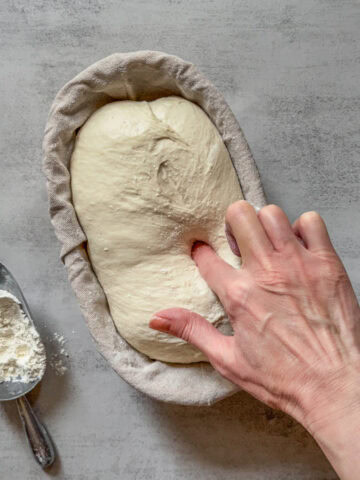
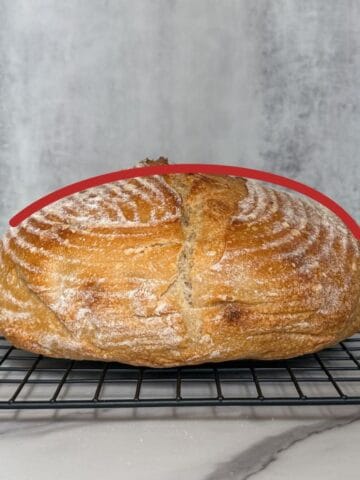
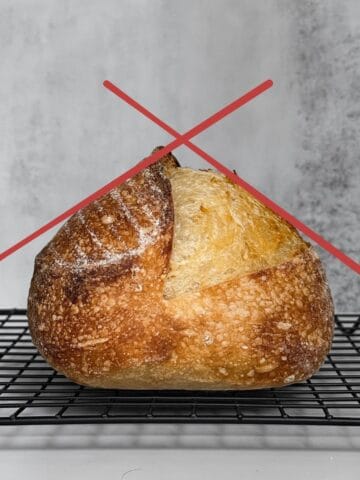
The two most common culprits are underproofing (dense, gummy loaves) and overproofing (flat loaves that spread). Both come down to getting bulk fermentation right and using your starter at peak.
Diagnose your loaf by symptom
- Flat loaf that spreads: usually overproofing. Start with the overproofed guide.
- Dense or gummy crumb: almost always under-fermentation. See the underproofed guide.
- Loaf stays flat in the oven: weak oven spring. See the oven spring guide.
- Burnt or bitter bottom: a heat problem, not a dough problem. Fix it with the burnt bottom guide.
- No ear or ragged scoring: tension and blade angle. See the sourdough ears guide.
- Dough tears or sticks coming out of the basket: see banneton troubleshooting.
- Bread will not rise, and the starter seems off: begin with starter problems and strengthening your starter.
When more than one symptom shows up at once, my free Troubleshooting Cheat Sheet puts every sign, cause, and fix on one page you can keep in the kitchen. Grab it now.
Browse the guides below for the specific problem you're facing. Each explains how to recognize the issue and exactly how to fix it.
-
How to Tell If Dough Is Proofed: Countertop vs Cold Proofing
-
Overproofed Sourdough Bread: How to Recognize and Fix It
-
Underproofed Sourdough Bread: How to Recognize and Fix It
-
14 Tips to Prevent the Bottom of Bread From Burning
-
How to Proof Bread Dough in a Cold Kitchen: 17 Easy Ways
-
Should You Cover Dough When Proofing?
-
Sourdough Oven Spring: 11 Secrets for Perfectly Risen Loaves
-
30 Sourdough Bulk Fermentation FAQs (With Clear Answers)
-
101 Sourdough Tips and Tricks Every Baker Needs
-
How to Make Sourdough Less Sour: 11 Simple Tips
-
How to Make Sourdough More Sour: 12 Effective Tips
-
20 Sourdough Bread Proofing FAQs (Answered)