
Quick Summary: Most banneton problems come down to sticking, moisture, or mold. To prevent dough from sticking, dust generously with white rice flour (never bread or all-purpose), reduce your hydration slightly, and avoid overproofing. To prevent mold, always dry your banneton thoroughly in a well-ventilated area and never store it in a plastic bag. If mold appears, replace the banneton.
Jump to:
- Why does my dough stick to the banneton?
- What causes dark spots on my banneton, and how do I deal with them?
- What should I do if mold is growing on my banneton?
- Why does my banneton smell musty or sour?
- How can I fix a banneton that has an odor?
- Why does my dough taste like the banneton?
- How do I handle a damp banneton?
- Why is the pattern from the banneton not imprinting well on my dough?
- Why does my banneton leave marks, but the dough still sticks in patches?
- Why is my dough spreading flat when I turn it out of the banneton?
- How should I handle overproofed dough in the banneton?
- Why do I have trouble releasing the dough cleanly from the banneton?
- What can cause a banneton to become damaged quickly?
- Why is my banneton shedding or splintering?
- Why did my banneton warp or lose its shape?
- How do I know it is time to replace a banneton?
- Ready to keep learning?
- Comments
Why does my dough stick to the banneton?
Why does my dough stick to the banneton?
Sticking usually comes from using wheat flour instead of rice flour, overproofing, high hydration, or weak shaping. Dust generously with rice flour, and make sure your dough is well fermented. For the full process from flouring to turning out your dough, see how to use a banneton.
Banneton sticking often starts with a basket that does not match your dough weight. My free Banneton Size Chart lets you rule that out first.
What causes dark spots on my banneton, and how do I deal with them?
Dark spots on a banneton are often caused by excess moisture. Start by letting the banneton dry completely in a warm, well-ventilated area.
If the spots remain after drying, they may be mold, and it is best to replace the banneton to keep your dough clean and your bread safe. Keep in mind that different types of bannetons, such as cane, rattan, and wood pulp, absorb and release moisture differently.
What should I do if mold is growing on my banneton?
If you find mold on your banneton, throw it away. Some people suggest cleaning it with a water-and-vinegar solution, but I advise against this practice, whether you bake for your family or operate as a Cottage Food baker.
Dry out and store your bannetons in a dry environment to prevent mold recurrence. While you wait for a new basket, a simple banneton replacement like a towel-lined bowl will keep you baking.
Why does my banneton smell musty or sour?
A musty or sour smell means moisture and old flour or dough residue have built up in the banneton, allowing bacteria or mold to develop. It is most common when a basket is stored damp or in a closed, airless spot.
To fix it, first tap out all the flour, then let the banneton dry fully in a well-ventilated area. For a mild smell, air-drying in a sunny, breezy spot for a day often clears it.
For a stronger odor, you can place the dry banneton in a low oven (around 200°F) for a short time to drive out moisture and freshen it, then let it cool completely.
Going forward, always dry your banneton thoroughly after each use and store it somewhere that allows airflow. If the smell won't go away, replace the basket. A persistently musty banneton will transfer that smell to your bread.
How can I fix a banneton that has an odor?
If your banneton smells, check for mold first. If you notice any mold, discard the banneton.
If there is only an odor, not mold, try washing the banneton with cool tap water and letting it dry in a well-ventilated area. Avoid using soap to clean it, but you can use a soap-free wash to help with the smell.
If the odor persists despite cleaning efforts, it might be time to replace the banneton. Make sure to dry it thoroughly after each use to prevent future odors.
Why does my dough taste like the banneton?
If your baked bread has a musty, stale, or "off" taste, the culprit is almost always a banneton that wasn't cleaned or dried properly. When flour and dough residue stay trapped in the coils and the basket doesn't dry fully between uses, it can grow mold or develop a stale, musty smell, and that odor transfers into the dough during proofing.
To fix it, tap out all loose flour after every use, let the banneton air-dry completely before storing (never put it away damp), and store it somewhere with good airflow.
How do I handle a damp banneton?
If your banneton is damp, dry it completely before using it to avoid sticking and mold. Place it in a well-ventilated area and let it dry fully. To prevent moisture buildup, avoid stacking your bannetons or storing them in humid areas.
Why is the pattern from the banneton not imprinting well on my dough?
The pattern from the banneton may not show up on your dough because there isn't enough rice flour in the basket, the dough is sticky to release properly, or the dough is underproofed.
To improve this, make sure you coat the banneton with plenty of rice flour, work on mastering bulk fermentation and shaping techniques. This helps the pattern transfer more clearly.
Why does my banneton leave marks, but the dough still sticks in patches?
This usually means the banneton is working well, but the flour wasn't applied evenly. The grooves often need more flour than the ridges, and wheat flour can absorb into the dough, leaving sticky spots.
A slightly wet or overproofed dough can also stick more easily. Dust the entire banneton generously with rice flour, making sure to coat the grooves, and avoid overproofing for the cleanest release.
Why is my dough spreading flat when I turn it out of the banneton?
Dough can flatten after being taken out of the banneton for a few reasons:
- Overproofing, when the dough ferments too long and loses structure, is a common cause.
- Improper shaping can also leave the dough without enough surface tension, so it spreads out instead of holding its shape.
- Rough handling during transfer can make this even worse.
To prevent flattening, make sure your sourdough starter is strong, prevent the dough from overproofing, shape it to create surface tension, and handle it gently when transferring to the baking surface.
How should I handle overproofed dough in the banneton?
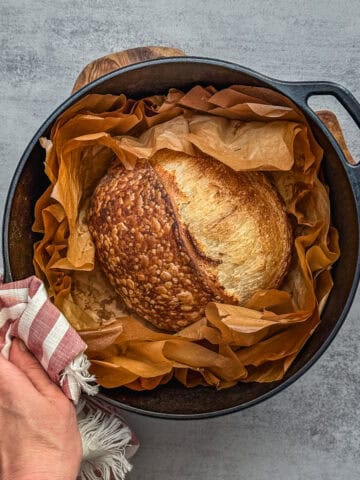
If your dough is overproofed, handle it gently to prevent further deflation. Carefully transfer it to parchment paper for baking. If it is too delicate to shape, you can bake it in a loaf pan lined with parchment paper or greased with oil. This will still let you bake the bread even if it is overproofed.
Why do I have trouble releasing the dough cleanly from the banneton?
Trouble releasing dough from the banneton happens if there isn't enough flour in the basket, the wrong type of flour is used, the dough is too wet, or the bulk fermentation wasn't done correctly.
To fix this, dust the banneton generously with white rice flour, not bread or all-purpose flour. Reduce the dough hydration slightly. Focus on shaping the dough properly to create surface tension and avoid overproofing during fermentation.
You can also chill the dough in the freezer for a few minutes before transferring it to parchment paper. This makes the dough firmer and easier to release after proofing. Using the right size basket also helps (see my banneton size guide to match your dough weight).
What can cause a banneton to become damaged quickly?
A banneton can be damaged quickly by excessive moisture and improper storage. Moisture can lead to mold and weaken the basket.
To avoid this, always dry the banneton completely in a well-ventilated area and store it in a dry place. Brush off extra flour after each use and allow it to air out. If you have more than one banneton, alternating their use can help them last longer.
Why is my banneton shedding or splintering?
If you are finding little bits of cane or fiber on your dough, or the rim is starting to splinter, the banneton is showing wear. This happens most often with cane and rattan baskets, especially if they have been scrubbed with abrasive brushes, soaked in water, or handled roughly.
Some minor shedding on a new cane banneton is normal at first and settles down with use. But ongoing splintering means the basket is wearing out or has been damaged by moisture.
To extend its life, never soak it, clean it gently (tap out flour, brush lightly only when needed), and let it dry fully. If it is actively splintering into your dough, it is time to replace it. You don't want cane fibers baked into your bread. A wood pulp banneton is a more durable, splinter-free alternative if this keeps happening.
Why did my banneton warp or lose its shape?
A warped banneton, one that is gone lopsided or no longer holds a clean round or oval, is almost always caused by improper drying or storage. If a banneton is put away damp, dried near direct heat, or stored under something heavy, the natural fibers can bend and set out of shape as they dry.
To prevent it, after each use, let the banneton air-dry completely at room temperature (not in a hot oven or direct sun, which can warp it), and store it sitting upright in its natural shape, not squashed under other items.
A mildly warped banneton may still work, but a badly misshapen one will give your loaves an uneven shape. At that point, it is best to replace it. Store it right, and a good banneton will hold its shape for years.
How do I know it is time to replace a banneton?
You should replace your banneton if you notice mold, significant cracks, or splinters that compromise its shape. If the banneton gives your dough a strange smell or taste, even after washing and drying, it is a good sign that it is time for a new one.
Ready to keep learning?
For problems with the bread itself, see my full sourdough troubleshooting guide. Have a banneton issue I didn't cover? Let me know in the comments.