
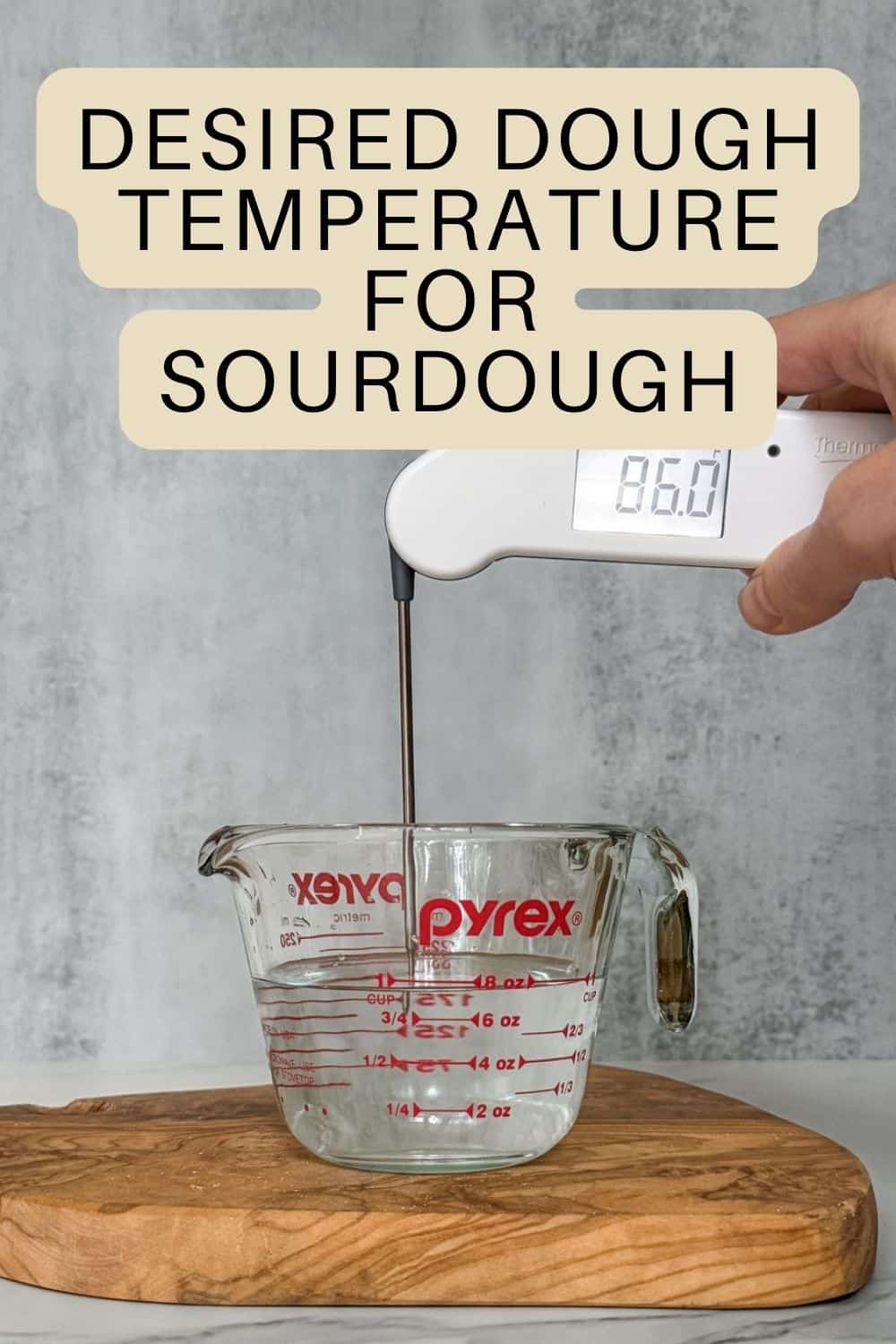
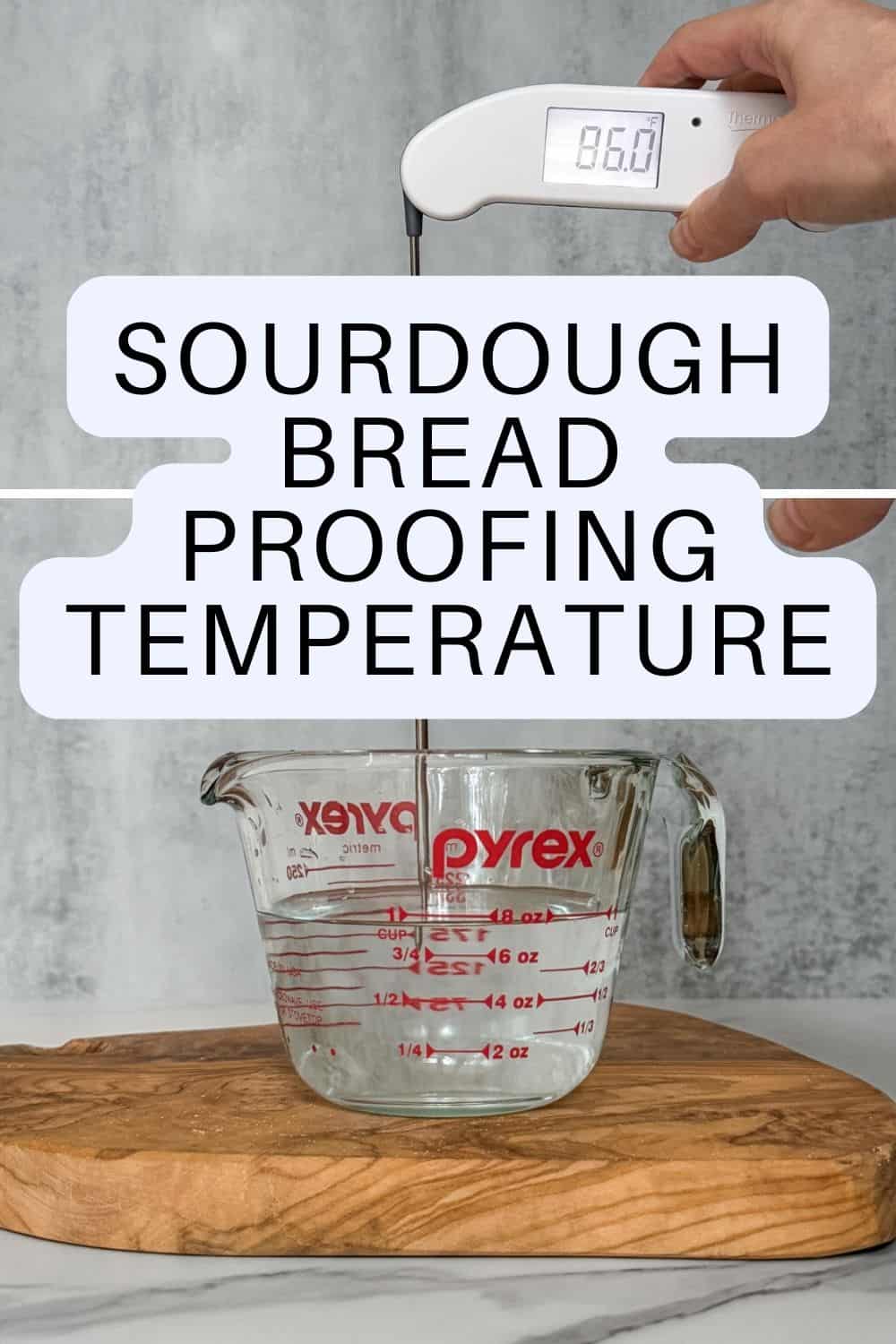
If you have tried the same sourdough recipe over and over and still cannot figure out why your bread is not turning out right, let me share a baker's secret: understanding the Desired Dough Temperature (DDT).
And to make things easy, I have also included my water temperature calculator to help you get there.
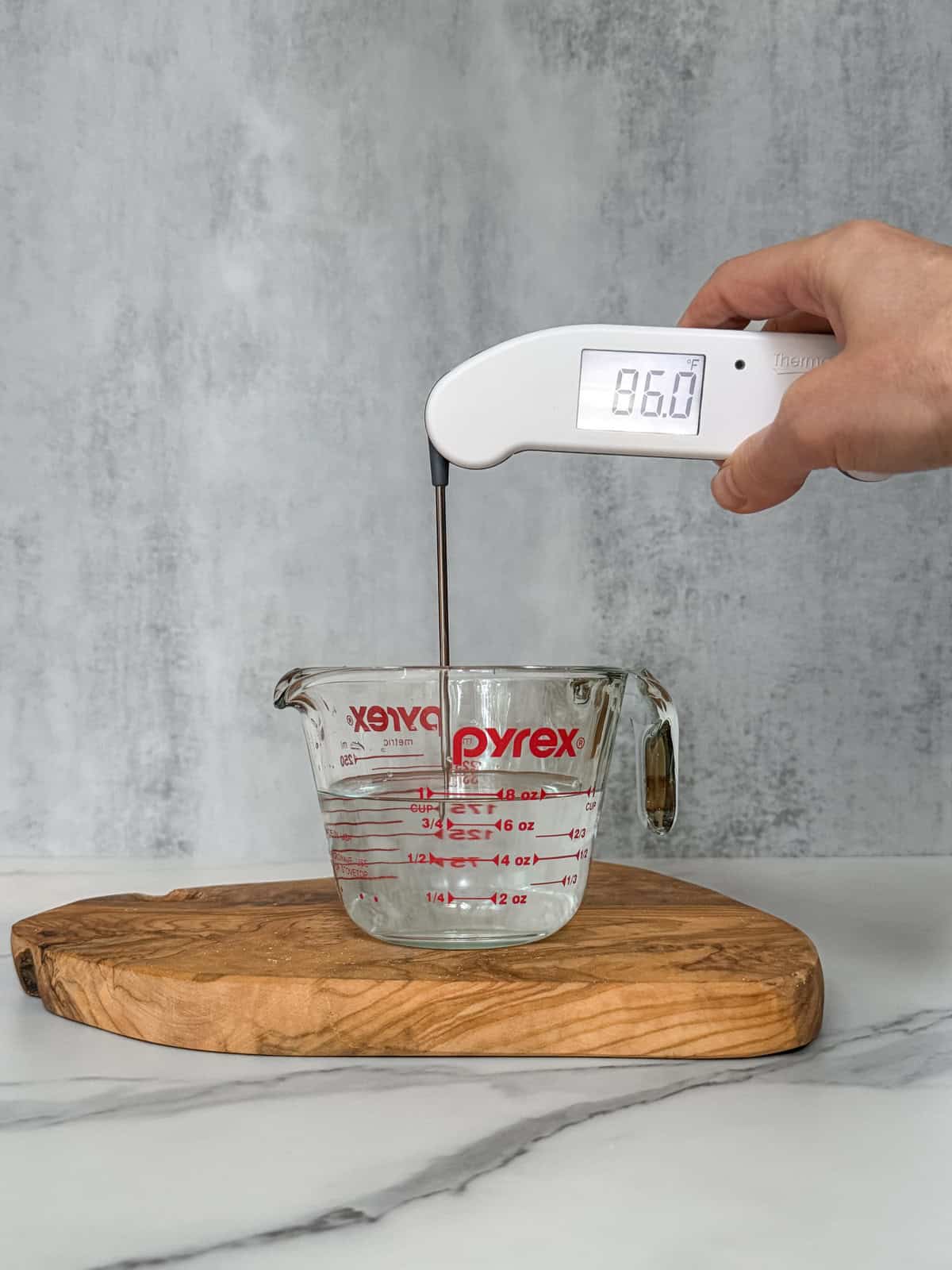
What is the desired dough temperature?
The desired dough temperature is the optimal temperature your dough should reach after mixing. It is more than just a number. It is your best tool for achieving consistent, delicious sourdough bread. But don't confuse it with another term, final dough temperature (FDT)
DDT vs. FDT: What's the difference?
Desired Dough Temperature (DDT) is the temperature you want your dough to reach at the end of mixing. It is a target number that helps with consistent bulk fermentation and predictable results in your sourdough baking.
Final Dough Temperature (FDT) is the actual temperature of the dough after mixing. This is the number you measure with a probe thermometer once the dough is fully mixed.
In short, DDT is the goal, and FDT is the result.
Bakers use DDT to calculate the water temperature so that the final dough falls within the ideal temperature range.
If your FDT is too warm or too cool compared to your DDT, fermentation will happen too quickly or too slowly.
Once you understand the relationship between DDT and FDT, you will gain better control over your sourdough process and be able to troubleshoot issues more easily, especially when baking in summer.
Water temperature calculator
Here is a handy water temperature calculator to help you calculate the right water temperature to mix into your dough to achieve the DDT. You can switch between Fahrenheit and Celsius.
Required Water Temperature --
Why DDT is important in sourdough baking
The wild yeast and lactic acid bacteria in your sourdough starter thrive at certain temperatures. If the dough gets too cold, microbial activity slows down, whereas if it gets too hot, it speeds up. This affects the bread's rise and flavor.
Professional bakers focus on DDT to make sure that their bread turns out right every day. Since your kitchen temperature changes daily (at least mine has fluctuations), it is important to control your dough temperature for reliable results.
Without controlling it, your dough might be 80°F (27°C) one day and 72°F (22°C) the next. That difference has a big impact on your bread.
Unfortunately, most sourdough bread recipes don't specify the temperature your ingredients should be at, so you have to figure it out on your own.
What is the ideal DDT in sourdough baking?
The ideal desired dough temperature for sourdough is usually around 75-78°F (24-26°C).
This temperature helps balance the bulk fermentation process. Warmer dough ferments faster and tastes more sour. Cooler dough ferments more slowly and has a milder flavor (see my guide on how temperature affects sourdough).
While the best DDT can vary with your kitchen and recipe, 75-78°F (24-26°C) works well for most home bakers.
How to calculate DDT step-by-step
To reach your DDT, consider several factors: the temperature of your kitchen, your flour, your starter or levain, the heat generated during mixing (called the friction factor), and the temperature of the water you use.
Here is a detailed guide to calculating the required water temperature. While you can use the DDT calculator above, you may want to know how it works.
Example:
Let's say you want your dough to reach 75°F.
- Room temperature: 73°F
- Flour temperature: 73°F
- Starter temperature: 73°F
- Friction factor (heat from light hand mixing): 0
The formula is:
Water Temperature = (DDT x 4) - room temp - flour temp - starter temp
Here is what the parts of the formula mean:
- The number 4 represents the four factors that affect your dough temperature: room temperature, flour temperature, starter (levain) temperature, and friction from mixing.
- DDT x 4 is called the Total Temperature Factor (TTF).
Now, let's do the math:
First, multiply the DDT by 4: 75 x 4 = 300°F.
Then subtract the room temperature, flour temperature, and starter temperature:
300 - 73 - 73 - 73 = 81°F.
So, you need water at 81°F to hit a DDT of 75°F.
According to Tom Cucuzza, with a dough temperature of 75°F, you should aim for a 30% rise as the minimum target. You can always adjust bulk fermentation later.
To calculate DDT in Celsius, use the same formula.
How to calculate the friction factor
The friction factor (abbreviated as FF) measures the amount of heat generated during mixing your dough.
Chef Matthew James Duffy says that if you mix gently by hand, the FF is usually 0. King Arthur Baking Company suggests that hand mixing might create an FF of 6-8°F (3-4°C), while using a mixer can raise the FF to about 22-24°F (12-13°C).
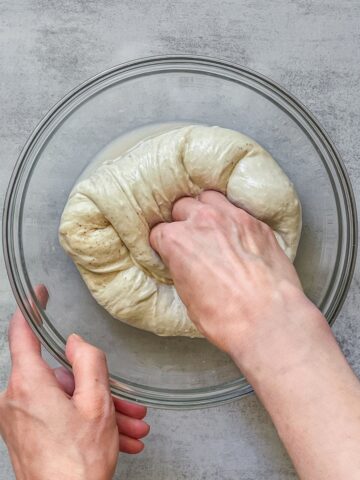
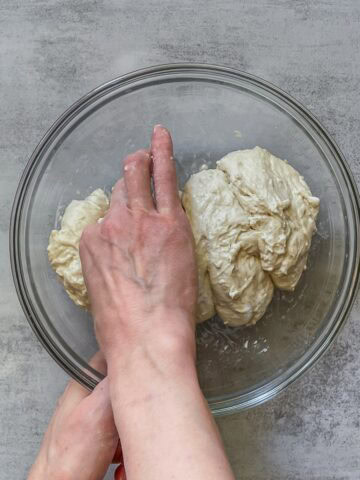
But how do you know how much heat your mixing creates? It depends on how you mix bread dough. Is it gentle stirring, or are you using "slap and fold" or the Rubaud method to build the dough's strength?
To calculate the FF, you will need to do a test. First, measure the temperatures of these things:
- Your flour
- Your water
- Your starter (levain)
- The room you are working in
Next, mix your dough by hand or with a mixer, and check its final temperature when you are done. Then, use this formula:
FF = Td x 4 - Tf - Ta - Tw - Ts
Here is what the letters mean:
- Td = the final dough temperature (after mixing)
- Tf = the flour temperature
- Ta = the air (room) temperature
- Tw = the water temperature
- Ts = the starter temperature
Example:
Let's say your final dough temperature (Td) is 75°F.
- Flour temperature (Tf): 72°F
- Room temperature (Ta): 73°F
- Water temperature (Tw): 76°F
- Starter temperature (Ts): 73°F
Plug these numbers into the formula:
FF = 75 x 4 - 72 - 73 - 76 - 73
First, multiply the dough temperature by 4: 75 x 4 = 300°F.
Then subtract the other temperatures: 300 - 72 - 73 - 76 - 73 = 6°F.
So, the friction factor is 6°F.
A quick shortcut:
To find the FF more easily, just measure the dough's temperature before you start mixing and again after you finish. The difference between these two numbers is your friction factor.
How to master DDT
To master DDT, keep your ingredients at the right temperature (it differs for each of us).
Start by keeping your flour at room temperature to make your dough temperature more predictable. If you store your flour in the basement or fridge, move it to the counter the day before baking.
When using water, make sure it is warm enough to help reach the desired DDT. If you find that a certain water temperature works well, stick with it, but adjust if your kitchen temperature changes.
Use a digital probe thermometer (not an infrared thermometer) to check the temperature of your ingredients and dough. Always keep notes about your baking process. Write down the temperatures and any changes you make in your sourdough baking log.
Let's talk sourdough
What DDT do you typically aim for when baking sourdough, and how does it affect your results? Share your experience in the comments.
Ready to keep learning?
Once you have mastered dough temperature, you can confidently scale up sourdough starter amounts to bake larger batches without compromising activity.