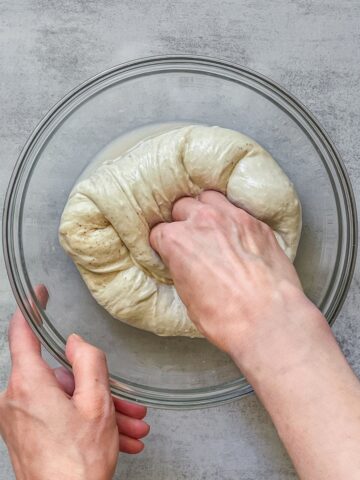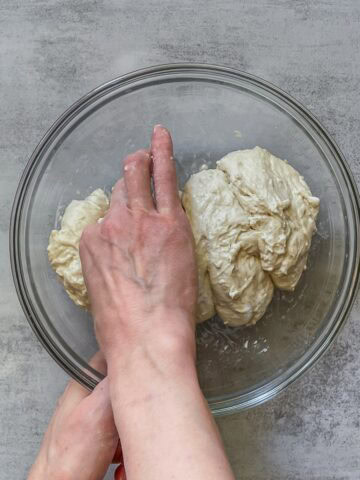



Learning how to laminate sourdough bread dough may sound complicated. It is indeed an advanced technique for strengthening the dough and adding your favorite inclusions.
Still, if you are a beginner sourdough baker, this step-by-step guide will make it easy to start laminating your dough.
Most of my flavored sourdough breads with inclusions are made using this lamination method. Check out this cranberry walnut sourdough, rosemary sourdough bread, garlic sourdough bread, or Taylor Swift's blueberry lemon sourdough bread for inspiration.
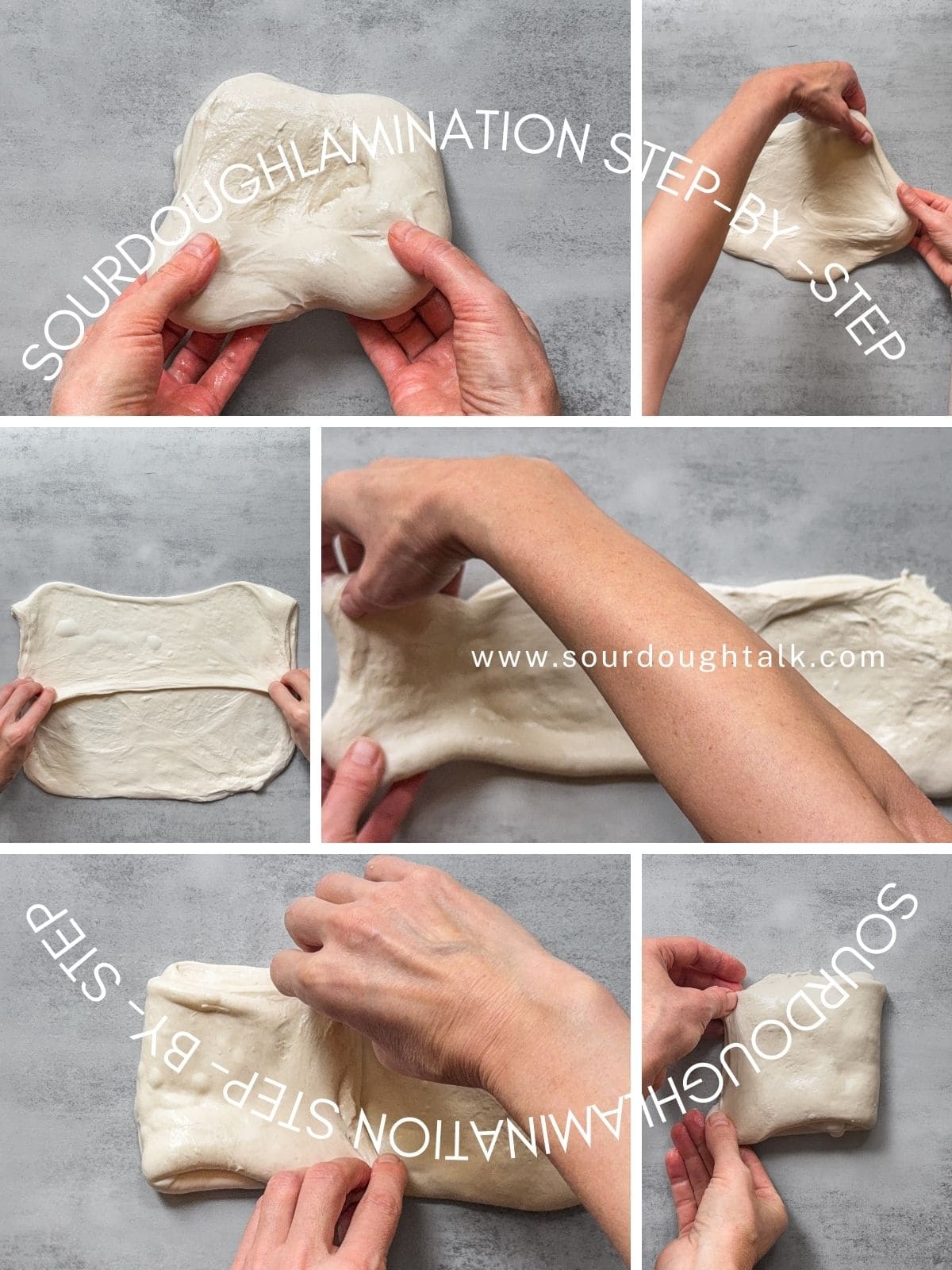
What is sourdough lamination?
Lamination is an advanced method for stretching and folding dough to create a thin layer and then folding it multiple times.
The term lamination sounds familiar from the pastry-making process used to make croissants. In sourdough baking, this technique helps develop the dough's structure and create layers.
Why laminate sourdough bread dough?
Laminating sourdough bread dough has several benefits. First, it helps strengthen the dough by stretching and folding it at different angles.
Lamination is also a great way to incorporate inclusions like seeds, nuts, fruit, or cheese without vigorous mixing. This method helps distribute ingredients evenly throughout the dough.
Adding ingredients like ground cinnamon or roasted garlic during dough lamination helps prevent the fermentation process from being messed up, as these ingredients inhibit bulk fermentation. But still, the later you add these inclusions, the better.
When should you laminate sourdough?
Sourdough lamination is usually done once during bulk fermentation and is combined with other folding techniques, such as stretch and folds and coil folds.
Some bakers laminate the dough early in the process to strengthen it. For example, Chiew See from @autumn.kitchen laminates the dough after a 15-30 minute rest, once the salt has been added.
A common approach is: 1 set of stretch-and-folds >> 1 lamination >> 2-3 coil folds, with 30-45 minute rests in between.
Some bakers swap the last coil fold for lamination, which is especially useful when adding sourdough inclusions. For instance, in a four-step folding process, you could do 2 stretch-and-folds, 1 coil fold, and 1 lamination, with 30-minute breaks.
To decide whether to laminate early or late in the process, try an experiment with two doughs. Laminate one dough early in the bulk fermentation and the other later, keeping everything else the same. Then, compare the results to see what works best for you.
How to laminate sourdough bread dough
Here is how to perform sourdough lamination step by step. Watch the video after the photos.
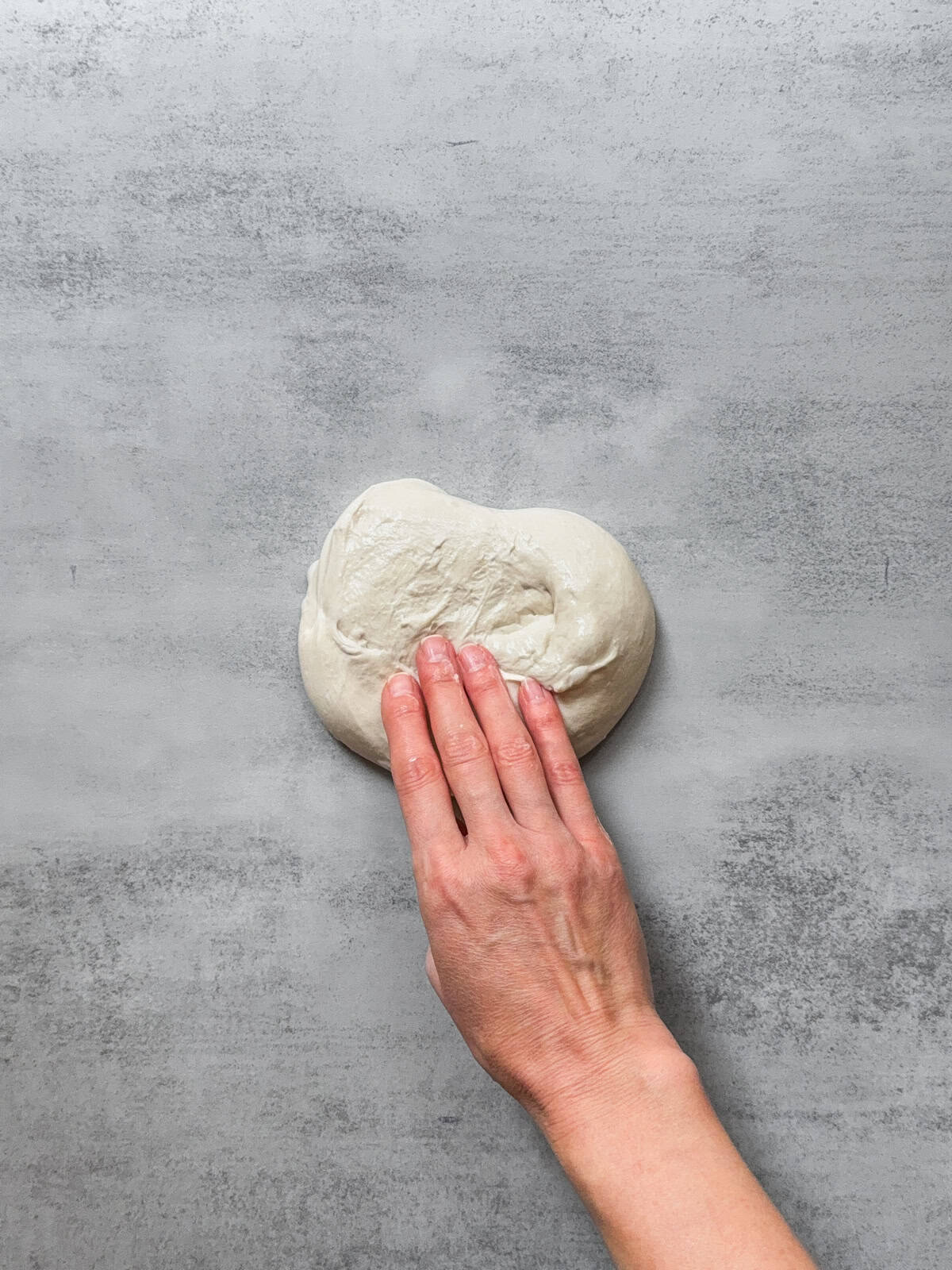
- Spritz a large work surface with water. Remove the dough from the bowl and place it on a wet surface, sticky side up (bottom side up).
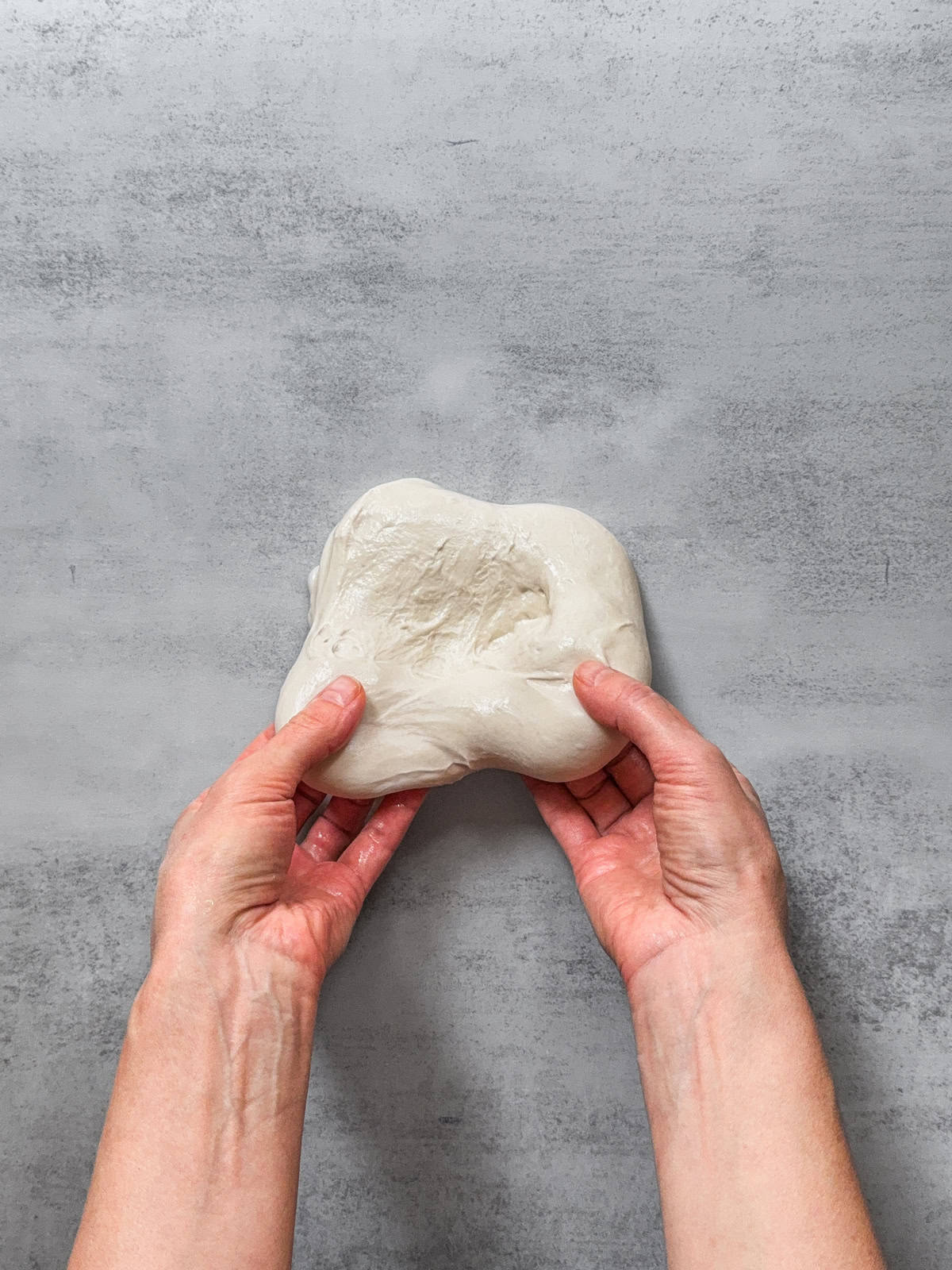
2. Using both hands, gently pull one side of the dough away from the center.
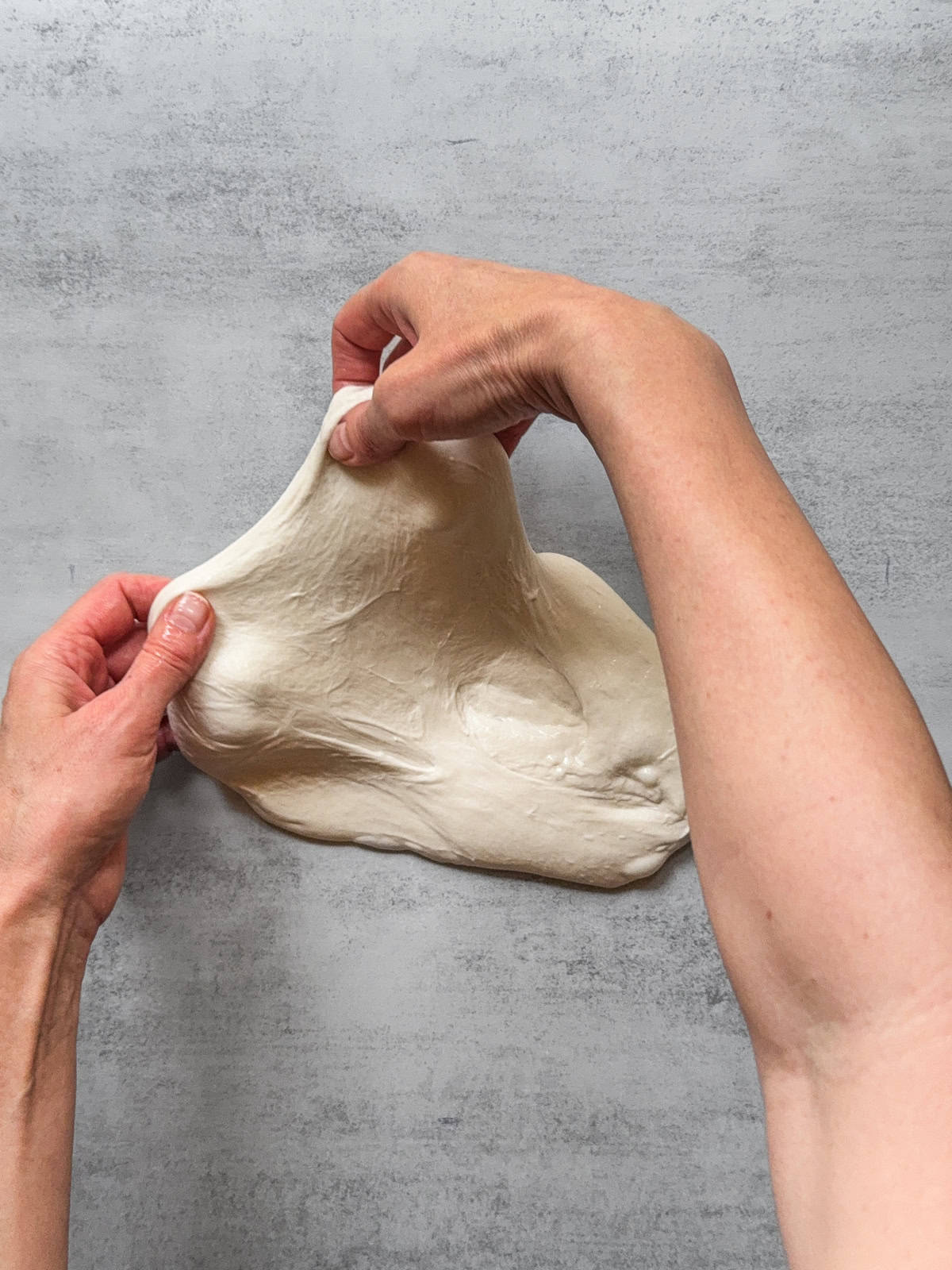
3. Take the opposite side of the dough and gently pull it away from the center.
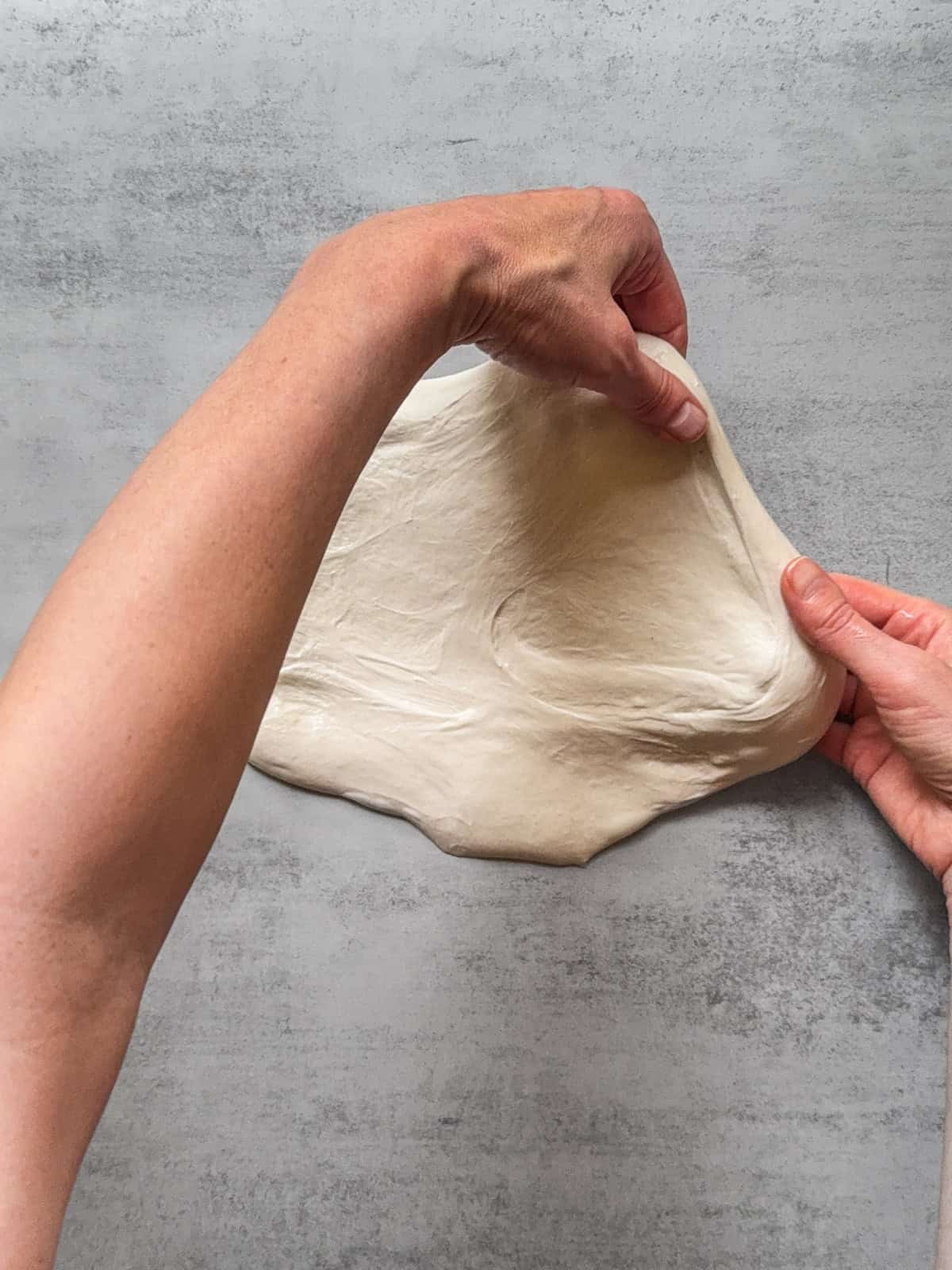
4. Take another corner and stretch it as far as it will go without tearing.
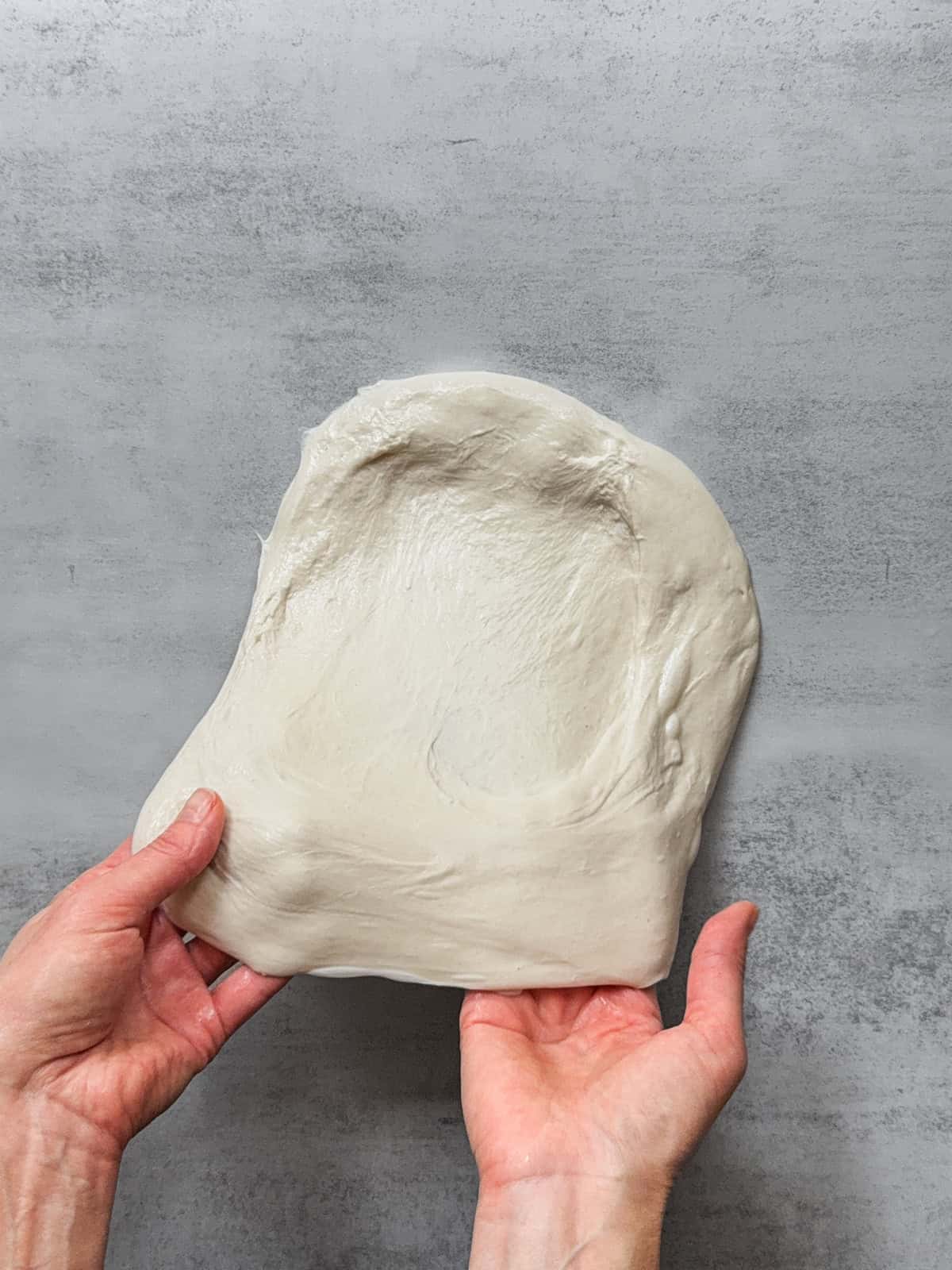
5. Continue with each corner of the dough, stretching it gently.
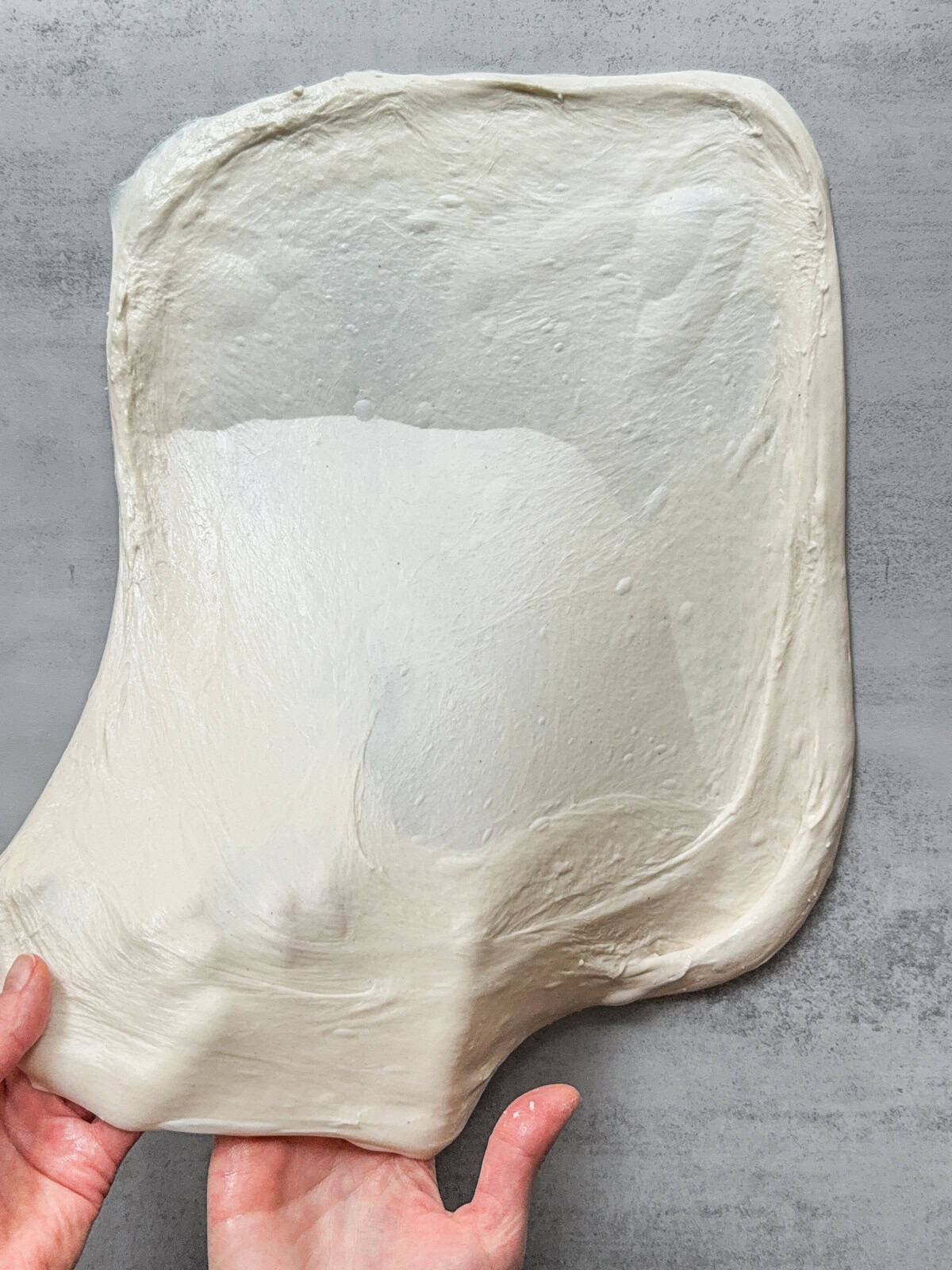
6. Finish stretching the dough, aiming for a square or rectangular shape.
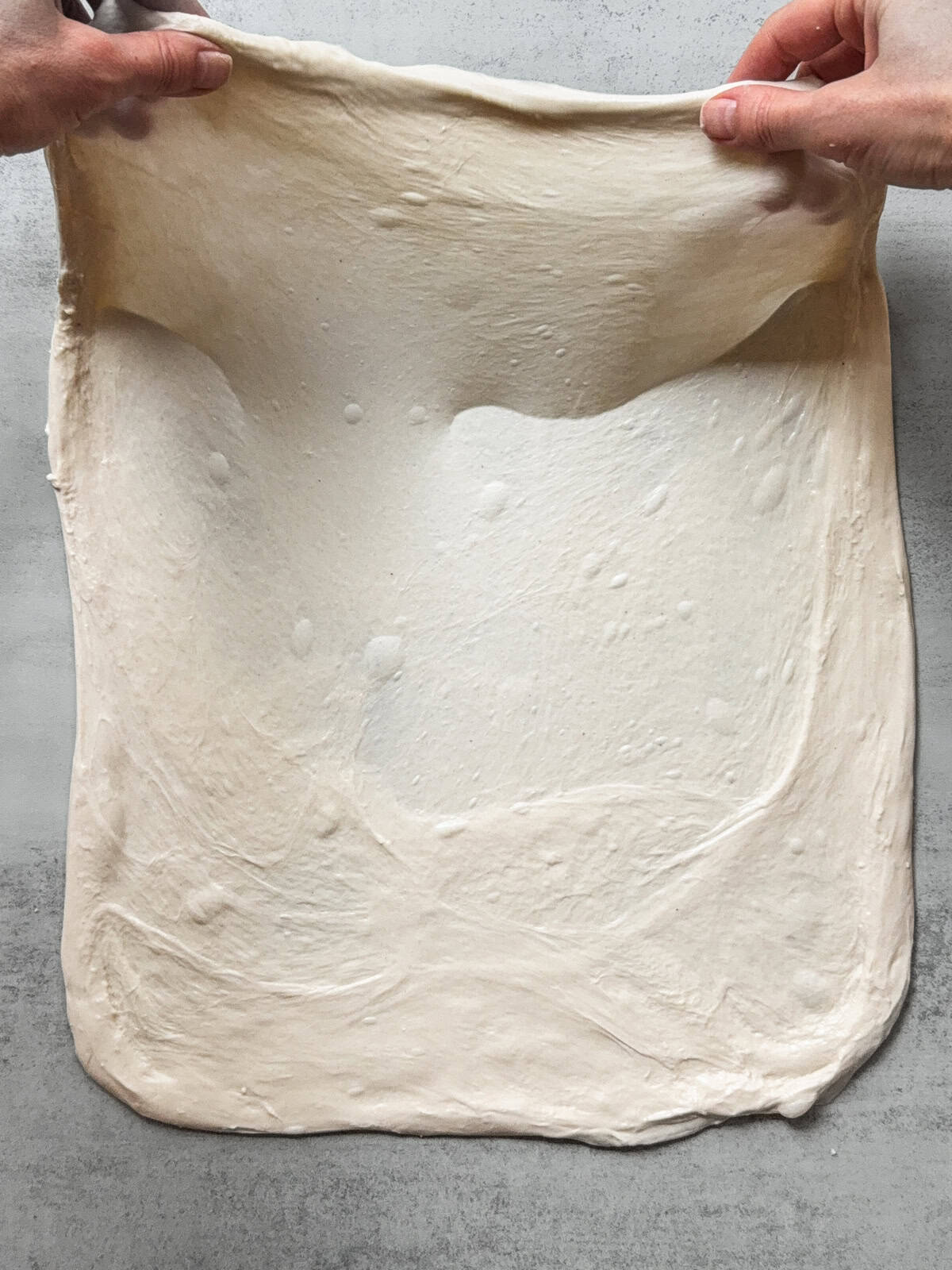
7. Once the dough is stretched into a thin sheet, fold it over itself using the classic four-part fold. Take the upper third of the dough and fold it over the center.
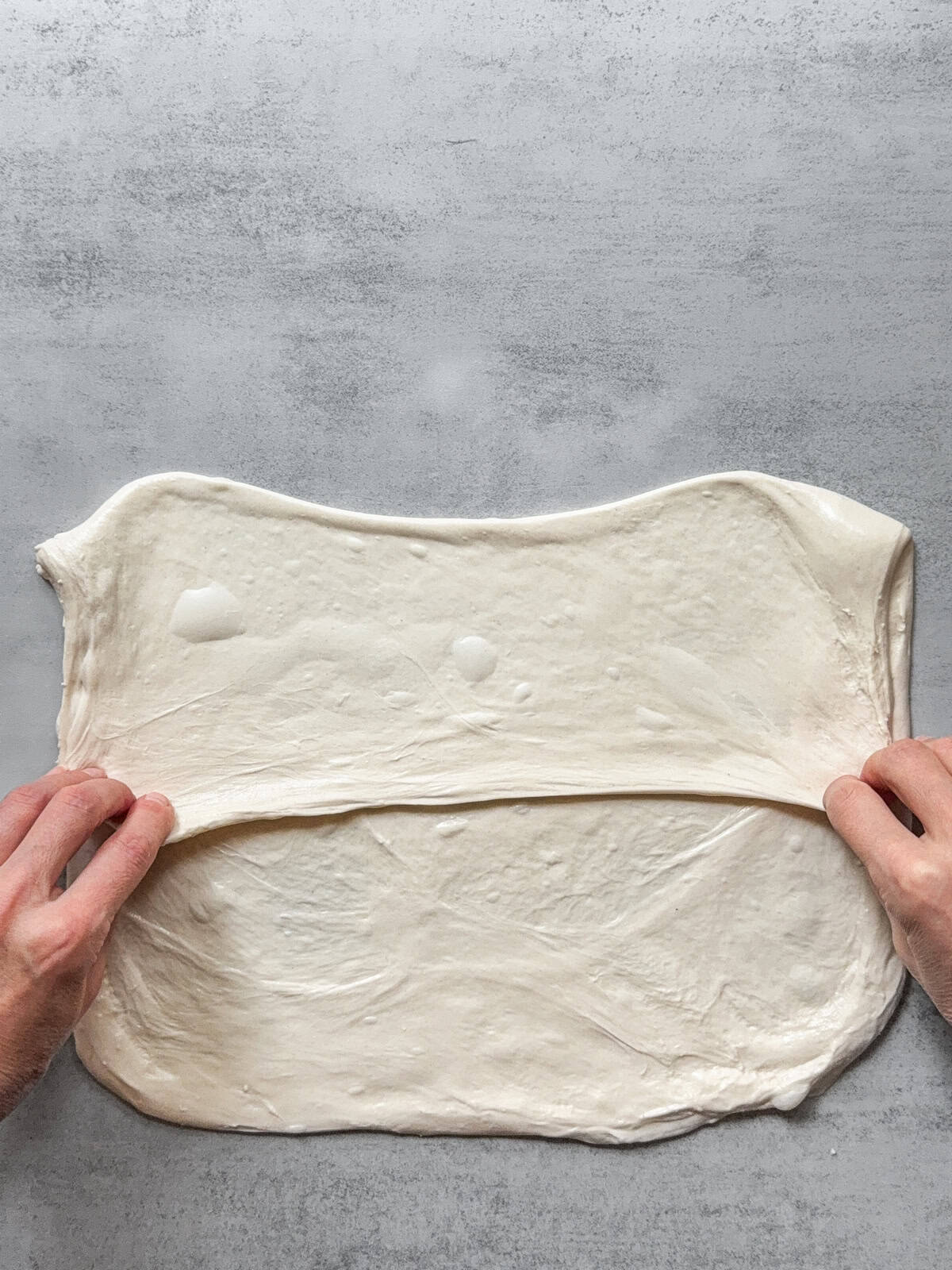
8. Fold the upper third of the dough over the center.
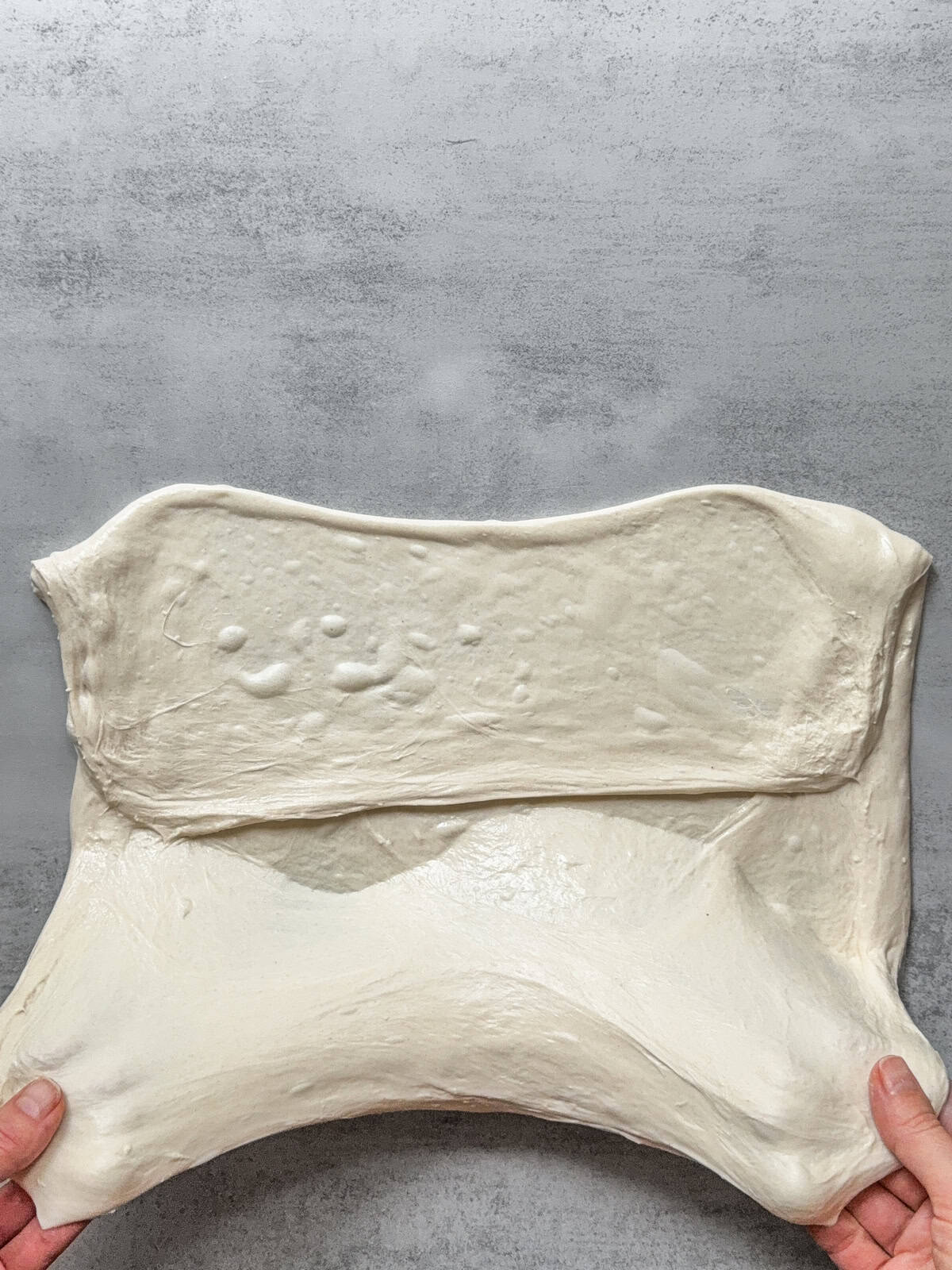
9. Take the bottom third and start folding it up.
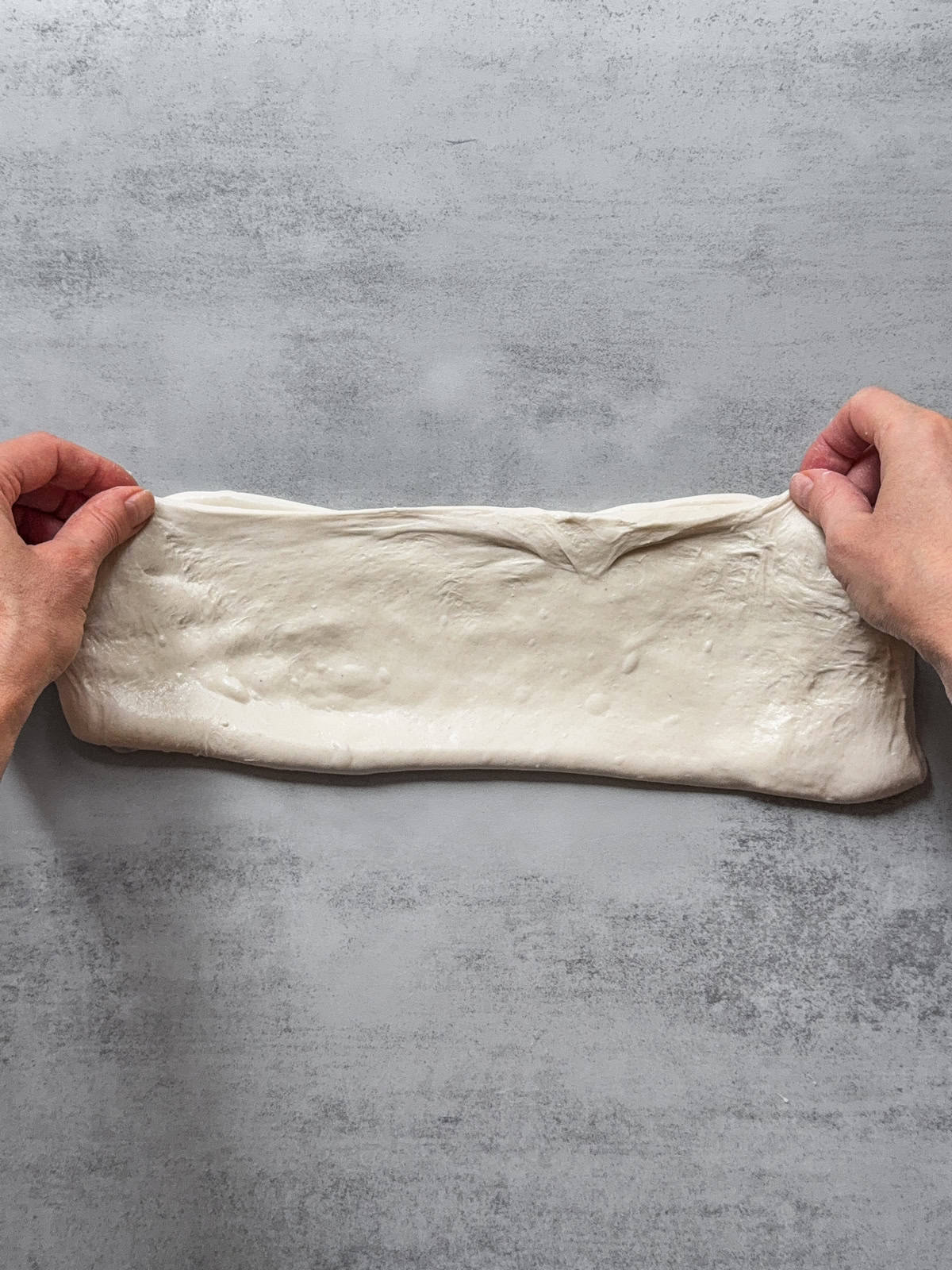
10. Fold the bottom third over the upper third, covering the first fold.
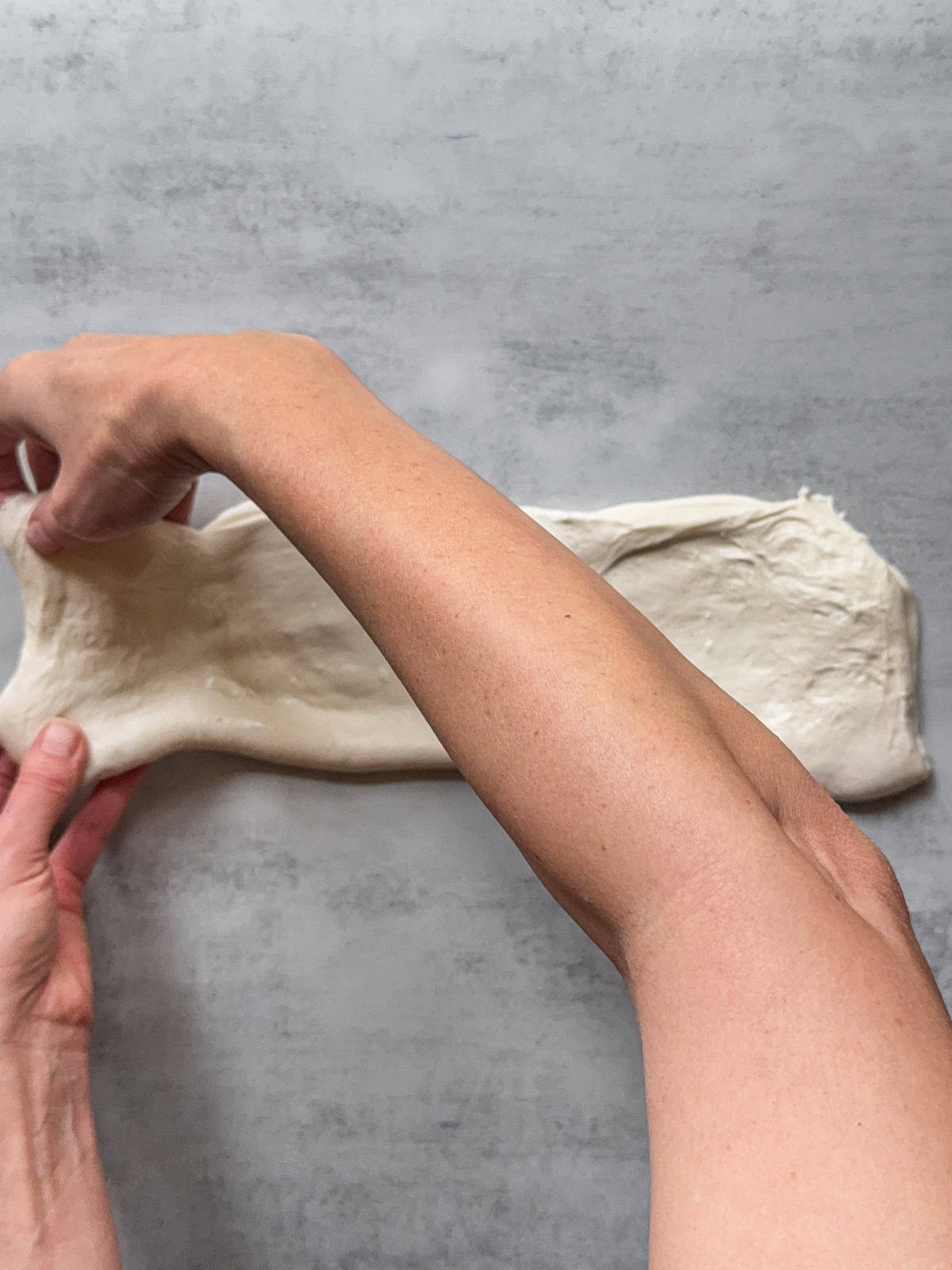
11. Take the left third and start folding it over the center.
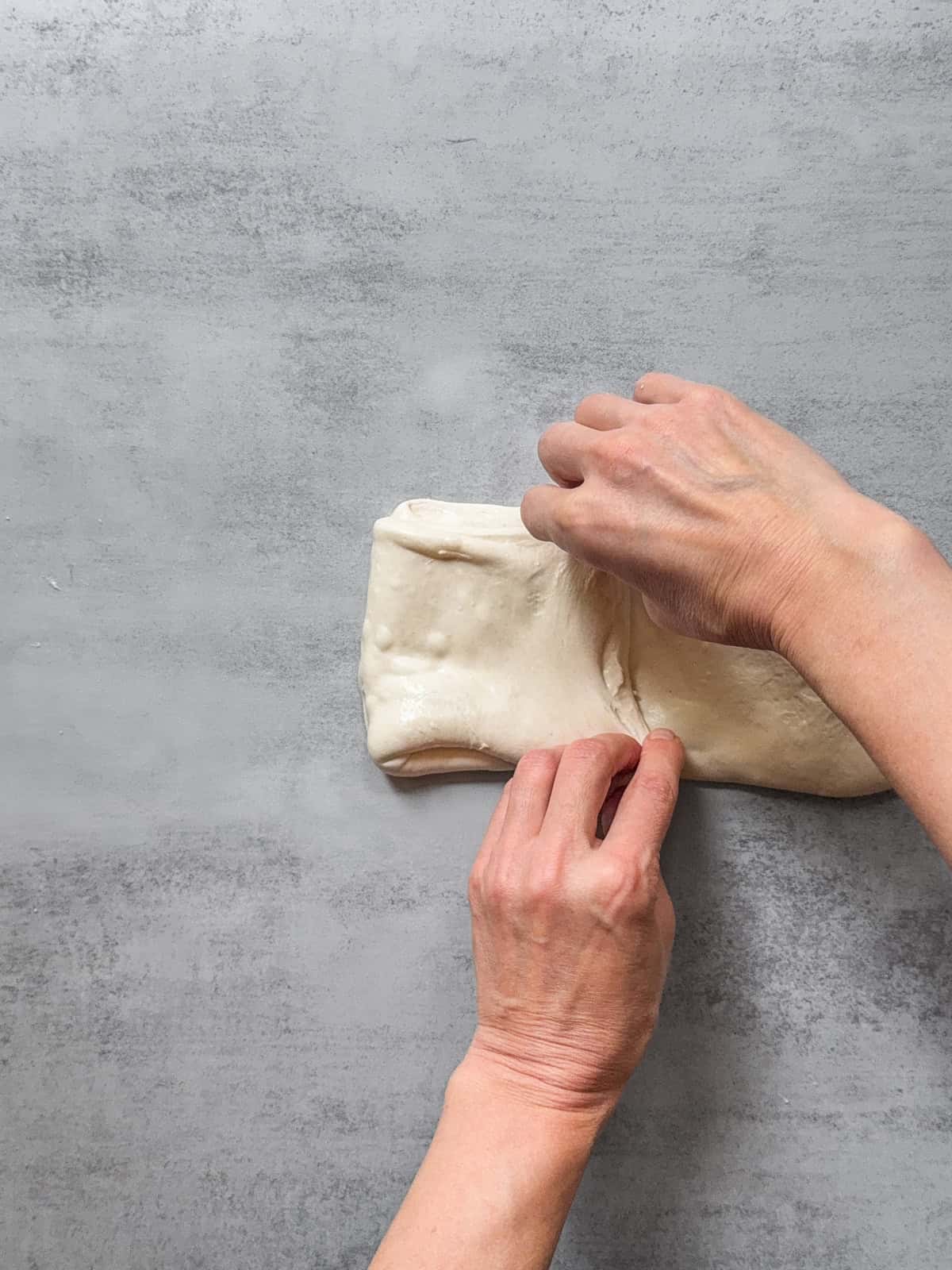
12. Fold the left third up over the layers.
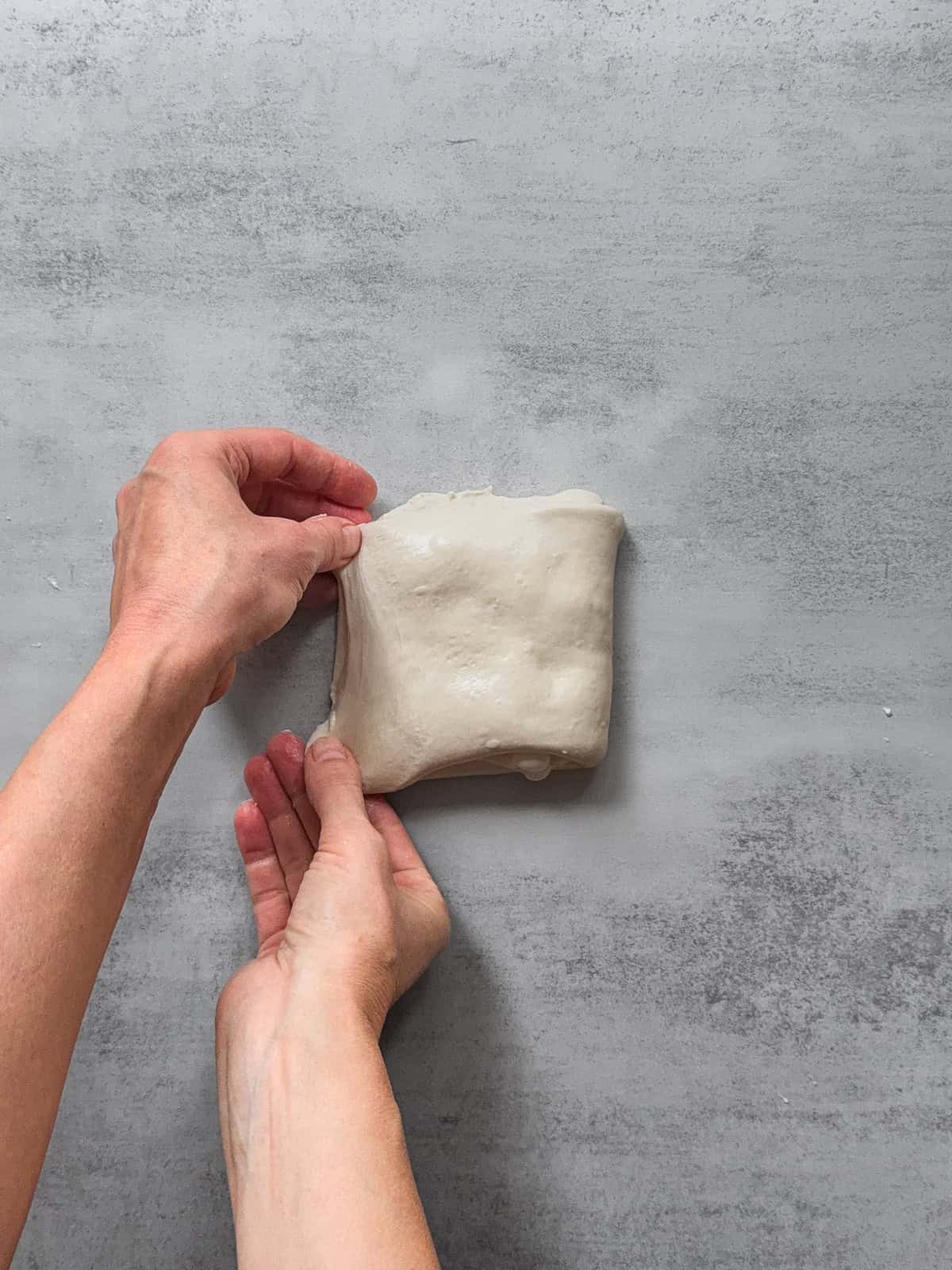
13. Fold the right third to complete the fold.
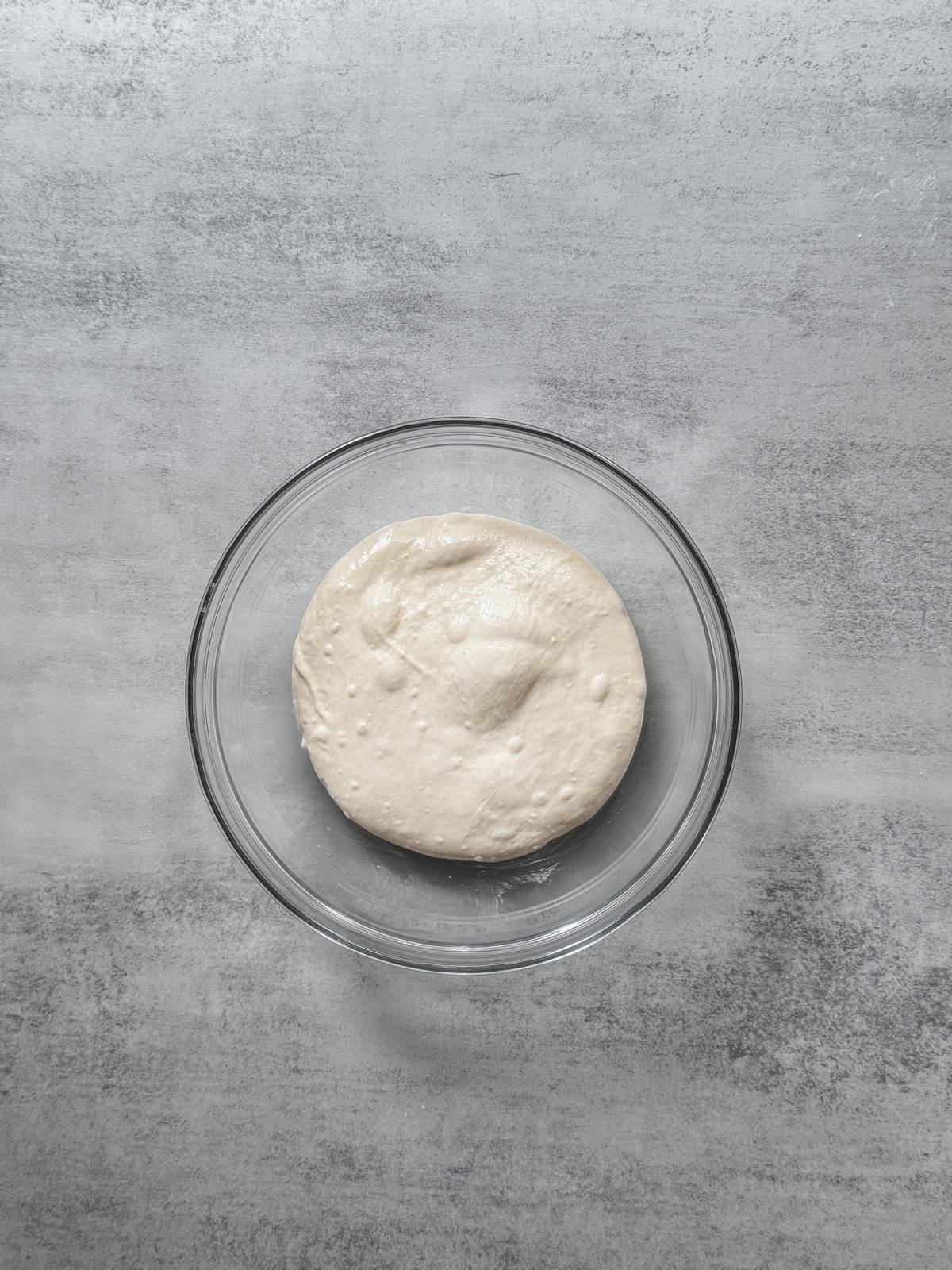
14. Gently transfer the laminated dough to a bowl, cover it with a damp kitchen towel, and let it rest for 30 minutes before performing the next coil folds, if needed.
Note: In the pictures, I performed the dough folding from the upper third (to make sure the steps were clearly visible on my iPhone camera).
You can fold the dough in any order you like. For example, start with the left third, then the right third, followed by the bottom, and finally the top. The choice is up to you.
Now, watch the video on how to laminate sourdough by @elleciously.
Top tips for sourdough lamination
- Use a well-hydrated dough: A slightly higher hydration (75-80%) makes the dough more extensible and easier to laminate without tearing.
- Stretch gently: Handle the dough with care when stretching to prevent tearing.
- Fold consistently: Use consistent folds (like letter folds or book folds) to create even layers.
- Release large air bubbles: Press out any big air bubbles as you go to prevent large pockets from forming in the dough.
What NOT to do during sourdough lamination
- Using low-hydration dough: Laminating requires a soft, extensible dough. Dough with hydration below 65-68% is usually too stiff to stretch and fold properly. Trying to laminate low-hydration dough results in the dough tearing.
- Over-handling the dough: Excessive stretching or folding can deflate the dough, destroying the air pockets you are trying to preserve.
- Not wetting your surface properly: Dough can stick to the work surface or your hands if the surface isn't lightly misted with water, making lamination messy and uneven.
- Rushing the process: Lamination is meant to be gentle and gradual. Pulling the dough too aggressively or too quickly can cause it to tear or collapse.
- Folding incorrectly: Folding in the wrong order or unevenly can trap air in the wrong places, affecting your crumb. While the exact folding order is flexible, aim for consistent, even folds each time.
Is lamination necessary for sourdough?
Lamination isn't a necessary technique for making classic sourdough bread. Techniques like stretch and folds, and coil folds are enough to strengthen the dough and create layers.
However, if you are an experienced baker, you can choose to add lamination to your routine. Many bakers include lamination to strengthen the dough, striving for an open crumb.
Most inclusions can be added to sourdough during the folding process. But some, like cinnamon sugar, which creates a swirl effect, are helpful when added during lamination.
FAQ
Once per bulk fermentation, but a second lamination can be done for very high-hydration dough or dough with inclusions.
No, a perfectly square or rectangular shape isn't required. The goal is to stretch the dough evenly so the layers form correctly, but the exact shape is flexible.
It is possible, but not mandatory. Laminating helps distribute inclusions evenly, but you can add most of the inclusions during stretch and folds.
Let's talk sourdough
Have you ever tried laminating sourdough bread dough before? How did it go? Share your experience in the comments.