

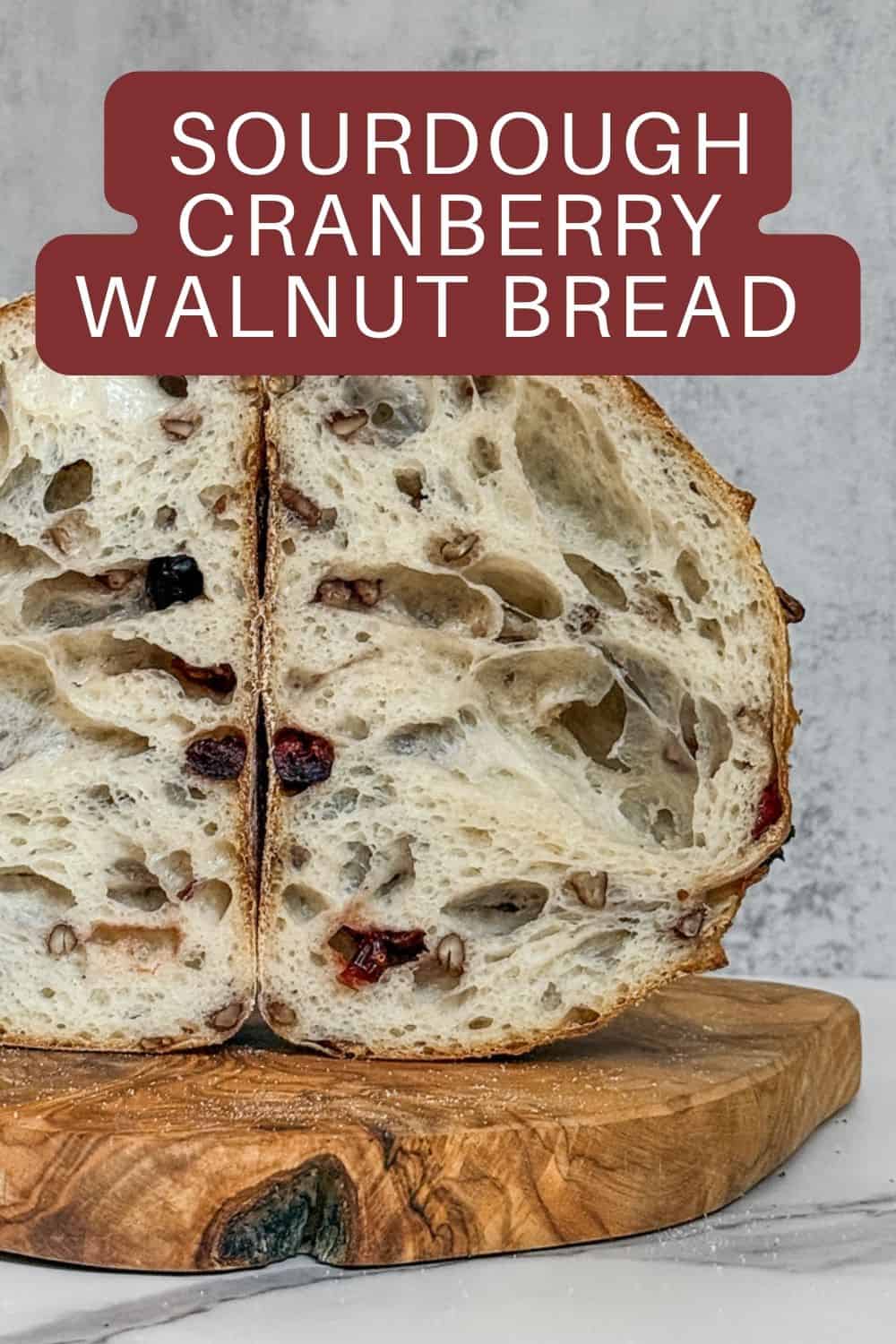
Cranberry walnut sourdough bread is a delicious twist on classic sourdough, loaded with tangy cranberries and crunchy walnuts. With its warm, festive flavors, it is perfect for holiday breakfasts, seasonal snacks, or sharing with friends and family.
If this is your first sourdough loaf, I recommend starting with my Beginner's Sourdough Guide, then trying my Beginner's Sourdough Bread recipe to learn the basics before diving into this festive loaf.
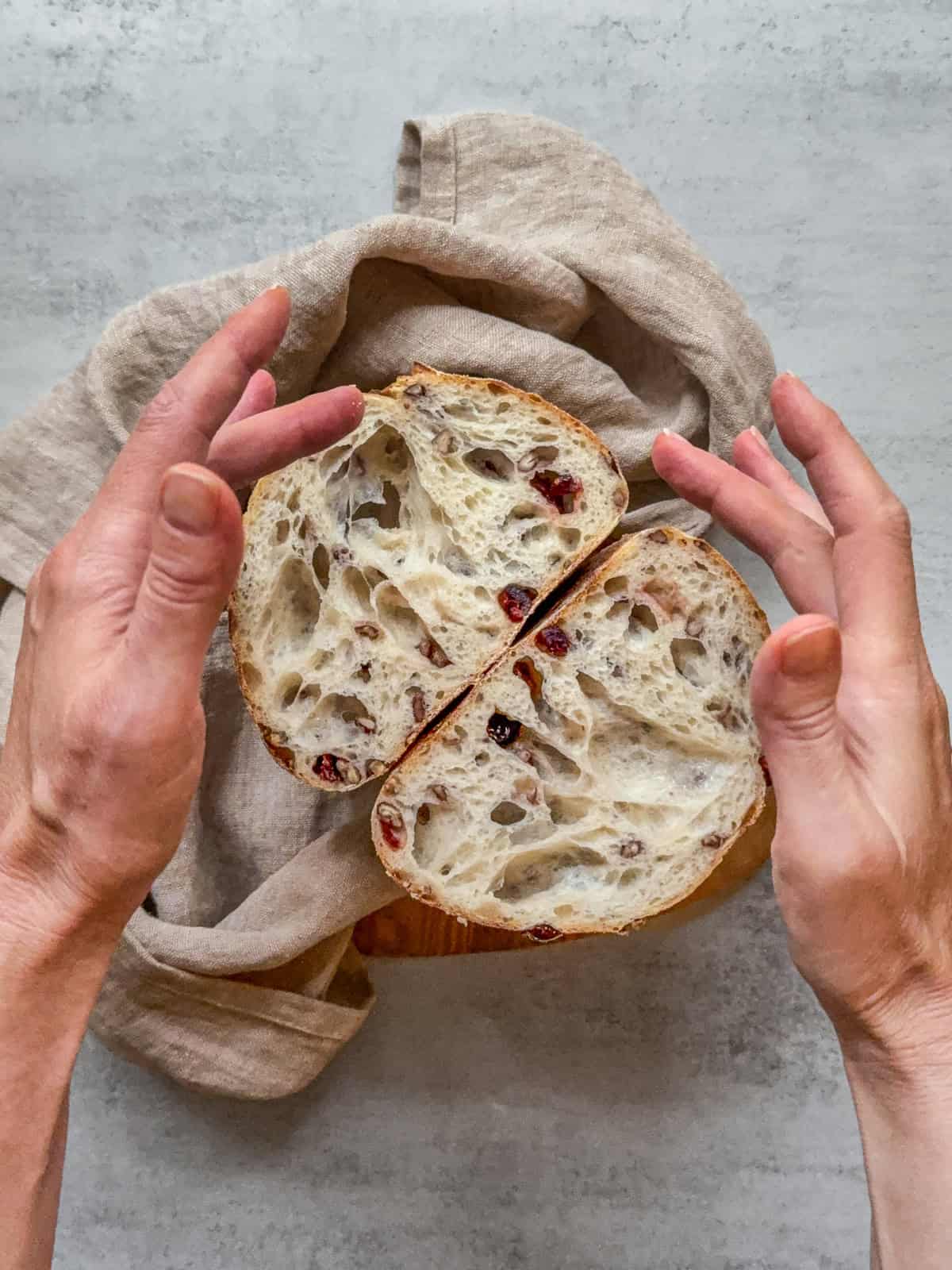
Why you will love making this loaf
This cranberry walnut sourdough bread is perfect for Christmas and Thanksgiving. It pairs beautifully with Thanksgiving turkey, adding a touch of sweetness to the meal, and makes a wonderful accompaniment for Christmas dinners or holiday spreads.
It is also easy for beginners. Adding cranberries and walnuts doesn't affect how the dough ferments, so that you can follow your usual sourdough steps. It is a great first "inclusion loaf" to try and still get a beautiful, well-risen sourdough.
Ingredients
- Bread flour or a flour blend (bread plus all-purpose, or bread plus whole wheat).
- Water: Use filtered, bottled spring, or good-quality tap water.
- Salt: Use fine sea salt. Avoid iodized table salt.
- Levain (active starter at peak): Use 100% hydration sourdough starter to build levain. To make your own starter, follow my Beginner's Sourdough Starter recipe.
- Salt: Use fine sea salt. Avoid iodized table salt.
- Walnuts: Opt for store-bought shelled, chopped, and toasted walnuts. Alternatively, toast them yourself on a cast-iron skillet for a few minutes.
- Cranberries: Use dried cranberries, sweetened or sugar-free.
Substitutions & Variations
- Play with inclusions: For your first cranberry and walnut bread, use a bit more walnuts than cranberries for better balance. Equal parts walnuts and cranberries give a slightly sweeter, breakfast-style loaf, but I wouldn't exceed 20% total inclusions based on the flour weight.
- Change the flavor: Swap walnuts for pecans or almonds, and cranberries for dried cherries, blueberries, or apricots. You can even add a pinch of cinnamon, nutmeg, or ginger (in such small amounts, they don't affect the bulk fermentation).
- Make it sweeter: Add a tablespoon of honey or maple syrup to the dough for a softer, slightly sweeter loaf. This small amount doesn't noticeably affect bulk fermentation.
Final bread formula for walnut and cranberry bread
| Ingredient | Baker's Percentage | Weight |
|---|---|---|
| Bread flour | 100% | 300g |
| Water | 75% | 225g |
| Levain/Active starter, 100% hydration | 20% | 60g |
| Salt | 2% | 6g |
| Walnuts | 12% | 36g |
| Cranberries | 8% | 24g |
- Total dough weight is 651g. If you need to adjust the bread formula for your own loaf, use baker's percentages or my sourdough calculator.
- My kitchen temperature is 73°F (23°C), with a humidity level of 40%
- Bulk fermentation: 6 hours 30 minutes to 7 hours with a 75% increase in dough size.
- Proofing time: 14 hours cold-proof in the fridge
- Bake in a conventional oven at 450°F (232°C) with the lid on for 20 minutes; without the lid, 17-20 minutes.
Tools & Equipment
For all the tools and equipment I use, check out my Essential Sourdough Tools & Equipment guide. It covers everything you need to bake sourdough bread successfully.
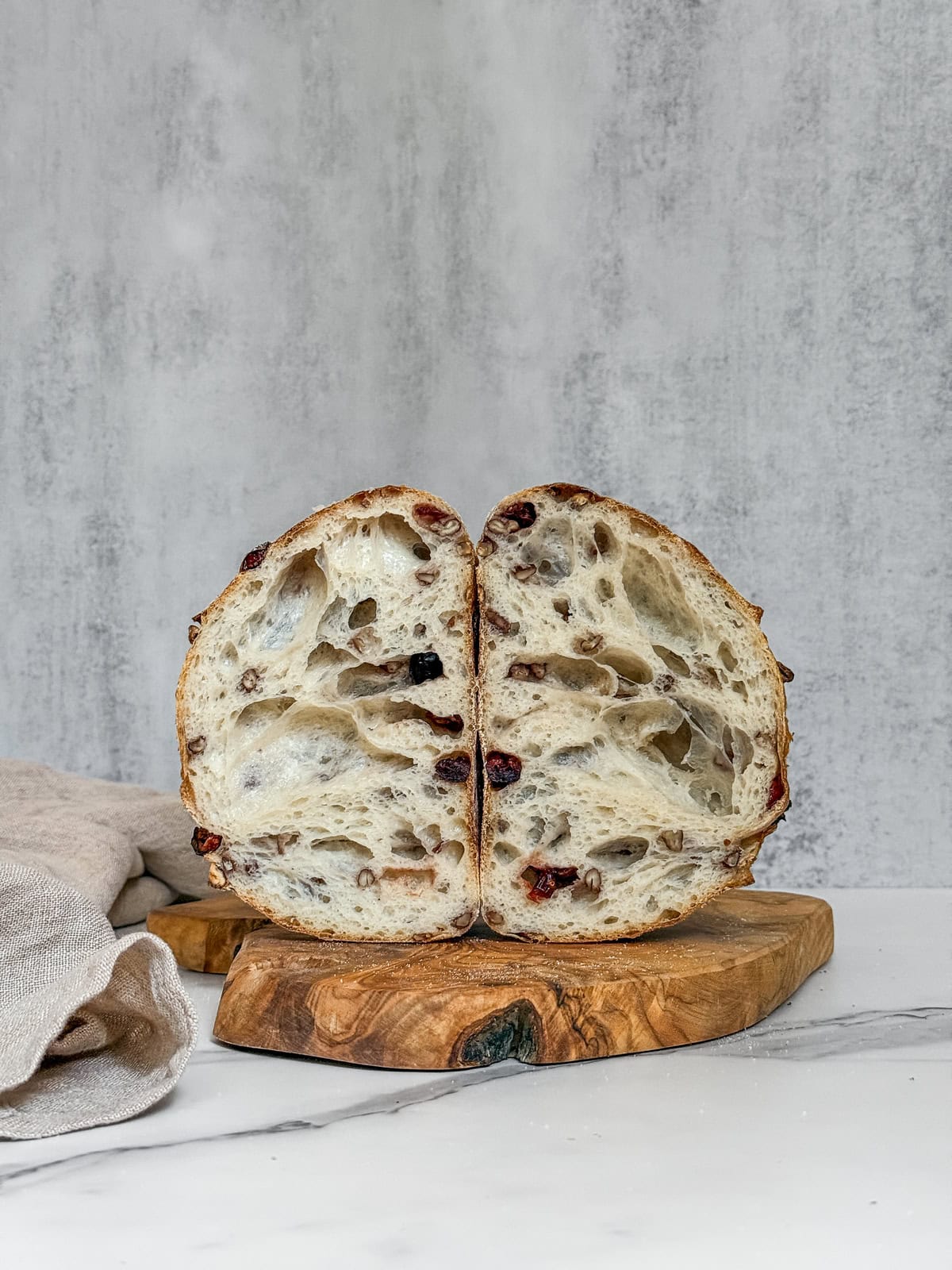
How to make cranberry and walnut sourdough bread
1. Make levain
To build levain, mix 22 g of sourdough starter with 22 g of flour and 22 g of water in a clean sourdough jar.
Cover it loosely with a lid and place it in a warm spot (between 75-80ºF / 24-27°C) for 4-6 hours to ferment. It should at least double in size and peak during this time (see my post on how to recognize sourdough starter peak).
2. Autolyse
Pour water into a large mixing bowl. Add flour and mix until a shaggy dough forms. Cover the bowl with a clean kitchen towel or plastic wrap and let the dough rest for 30 minutes (see my guide to sourdough autolyse).
3. Incorporate levain and salt
Add levain and mix. Then add the salt and continue mixing for 3-10 minutes until the dough passes the windowpane test.
Cover the dough with a damp kitchen towel or plastic wrap and let it rest for 30 minutes. Once you add levain (active sourdough starter), bulk fermentation starts.
4. Bulk fermentation
Complete one round of stretch and folds, then cover the dough and let it rest for 30 minutes.
During the second round of stretch and folds, add the chopped, toasted walnuts and cranberries. Divide the inclusions evenly and add about one-quarter with each fold. Cover the dough and let it rest for another 30 minutes.
Next, perform two sets of coil folds, allowing the dough to rest for 30 minutes between each set. During all resting periods, keep the bowl covered with a damp kitchen towel or plastic wrap.
Note: The type and number of folds depend on dough strength. If the dough feels strong after mixing, a few sets of coil folds may be enough. If it feels slack or lacks structure, begin with stretch and folds and add extra coil folds as needed.
If you are comfortable with lamination, you can add the inclusions during lamination instead, which replaces one set of coil folds.
After the final fold, let the dough continue bulk fermentation and watch its rise closely. Bulk fermentation is complete when bubbles appear on the surface and along the sides, the edges look slightly domed, and the dough gently wobbles when you shake the bowl.
5. Preshape and shape
Sprinkle your work surface with white rice flour. Preshape the dough into a round and let it rest for 10-15 minutes (you can skip this step if making a single loaf).
Shape the dough into a battard, then place it in a prepared 8-inch oval banneton (see my guide to shaping bread dough).
6. Proof
Cover the banneton with a clean towel, a disposable plastic cap, or place it in a reusable plastic bag (even a plastic grocery bag works), then refrigerate overnight (8-14 hours).
7. Bake
Once ready to bake, preheat the oven to 500°F (260°C) with a Dutch oven for 30 minutes. Remove the dough from the fridge, transfer it to parchment paper, score the top (see my sourdough scoring guide), place it in the Dutch oven, and cover with the lid.
Return the Dutch oven to the oven, reduce the oven temperature to 450°F (232°C), and bake for 20 minutes. Then take the lid off and bake for another 17-20 minutes, until browned.
The bread is fully baked when its internal temperature reaches 205-210°F (96-99°C).
Remove the bread from the Dutch oven and let it cool on a wire rack for at least 2 hours before slicing.
Bulk fermentation expectations
Adding cranberries and walnuts doesn't significantly affect bulk fermentation so that you can follow your usual schedule for a plain dough with the same hydration.
Expert tips
- Prepare the walnuts: Lightly toast them and let them cool completely before adding them to the dough. Also, chop them into smaller pieces to avoid damaging gluten.
- Prepare cranberries: If desired, soak cranberries in warm water or orange juice for 10-15 minutes, then drain well to prevent them from drawing moisture from the dough. If the cranberries are very wet after soaking, hold back 5-10 g of water from the base dough.
- When and how to fold in add-ins: Incorporate the walnuts and cranberries after the dough has developed gluten, during the second stretch-and-fold or lamination step (if you are familiar with it), to avoid tearing the dough.
- Storage: Store your sourdough at room temperature for 3-5 days. Freeze individual slices for 1-2 weeks or a whole loaf for 1-2 months.
- Safety tip: Always use oven mitts or silicone gloves when handling hot pans.
- Advanced tip: Track bulk fermentation with an aliquot jar method. Check the dough temperature after each fold and every 30-40 minutes. End fermentation once the dough reaches the target rise percentage.
Recipe
Cranberry Walnut Sourdough Bread

This cranberry walnut sourdough bread is a festive twist on classic sourdough, filled with tangy cranberries and crunchy walnuts. It is perfect for breakfasts, snacks, or sharing with friends and family, and easy enough for beginner bakers to make.
- Prep Time: 21 hours
- Cook Time: 40 minutes
- Total Time: 21 hours, 40 minutes
- Yield: 1 loaf 1x
- Method: Baking
- Cuisine: American
Ingredients
For the levain (an active starter):
- 22 g sourdough starter
- 22 g bread flour
- 22 g water
For sourdough bread:
- 300 g bread flour (I use King Arthur organic bread flour)
- 225 g water (75% hydration)
- 60 g levain (active starter at peak)
- 6 g fine sea salt (I use Redmond ancient fine sea salt)
- 36 g walnuts
- 24 g dried cranberries (sweetened)
10 g white rice flour (for dusting)
Instructions
- Make levain: Mix 22 g of sourdough starter with 22 g of flour and 22 g of water in a clean sourdough jar. Cover it loosely with a lid and place it in a warm spot (between 75-80ºF) for 4-6 hours to ferment. It should at least double in size and peak during this time.
- Autolyse: Pour water into a large mixing bowl. Add flour and mix until a shaggy dough forms. Cover the bowl with a clean kitchen towel or plastic wrap and let the dough rest for 30 minutes.
- Add levain and salt: Add levain and mix. Then add the salt and continue mixing for 3-10 minutes. Cover the dough with a damp kitchen towel or plastic wrap and let it rest for 30 minutes. Once you add levain (active sourdough starter), bulk fermentation starts.
- Bulk fermentation: Complete one round of stretch and folds, then cover the dough and let it rest for 30 minutes. During the second round of stretch and folds, add the chopped toasted walnuts and cranberries, dividing the inclusions evenly and adding about one-quarter with each fold. Cover the dough and let it rest for another 30 minutes. Next, perform two sets of coil folds, allowing the dough to rest for 30 minutes between each set. During all resting periods, keep the bowl covered with a damp kitchen towel or plastic wrap. After the final fold, let the dough continue bulk fermentation and watch its rise closely. Bulk fermentation is complete when bubbles appear on the surface and along the sides, the edges look slightly domed, and the dough gently wobbles when you shake the bowl.
- Preshape and shape: Sprinkle your work surface with white rice flour. Preshape the dough into a round and let it rest for 10-15 minutes (you can skip this step if making a single loaf). Shape the dough into a battard, then place it in a prepared 8-inch oval banneton.
- Proof: Cover the banneton with a clean towel, a disposable plastic cap, or place it in a reusable plastic bag, then refrigerate overnight (8-14 hours).
- Bake: Once ready to bake, preheat the oven to 500°F (260°C) with a Dutch oven for 30 minutes. Remove the dough from the fridge, transfer it to parchment paper, score the top, place it in the Dutch oven, and cover with the lid. Return the Dutch oven to the oven, reduce the oven temperature to 450°F (232°C), and bake for 20 minutes. Then take the lid off and bake for another 17-20 minutes, until browned. Remove the bread from the Dutch oven and let it cool on a wire rack for at least 2 hours before slicing.
Notes
- Decide on the types and number of folds: If the dough feels strong after mixing, a few sets of coil folds may be enough. If it feels slack or lacks structure, begin with stretch and folds and add extra coil folds as needed.
- Prepare the walnuts: Lightly toast them and let them cool completely before adding them to the dough. Also, chop them into smaller pieces to avoid damaging gluten.
- Prepare cranberries: If desired, soak cranberries in warm water or orange juice for 10-15 minutes, then drain well to prevent them from drawing moisture from the dough. If the cranberries are very wet after soaking, hold back 5-10 g of water from the base dough.
- When and how to fold in add-ins: Incorporate the walnuts and cranberries after the dough has developed gluten, during the second stretch-and-fold or lamination step (if you are familiar with it), to avoid tearing the dough.
- Safety tip: Always use oven mitts or silicone gloves when handling hot pans.
- Check for doneness: Your bread is fully baked when the internal temperature reaches 205-210°F (96-99°C). I usually aim for 207°F (97°C) or higher. Use a digital probe thermometer to check.
- Storage and freezing: Store sourdough bread at room temperature for 3-5 days. Freeze for up to 3 months. Thaw at room temperature. Freeze individual slices for up to 1-2 weeks, a whole loaf for 1-2 months.
- Want to create a custom formula for your loaf? Try my sourdough calculator.
- Need help getting started? Check out my beginner's sourdough bread guide to learn sourdough basics first.
- Note: Nutritional information does not include the white rice flour used for dusting.
Nutrition
- Calories: 1497
- Sugar: 18.8g
- Sodium: 2340mg
- Fat: 24.5g
- Saturated Fat: 1.7g
- Carbohydrates: 274.6g
- Fiber: 12.5g
- Protein: 42.8g
- Cholesterol: 0mg