
If you want to learn how to score sourdough bread, you are in the right place. Scoring is a very important part of baking sourdough, and I will explain why, when, and how to do it.
You will discover basic slashing and scoring techniques, like using a single slash for a batard and a cross or square pattern for a boule.
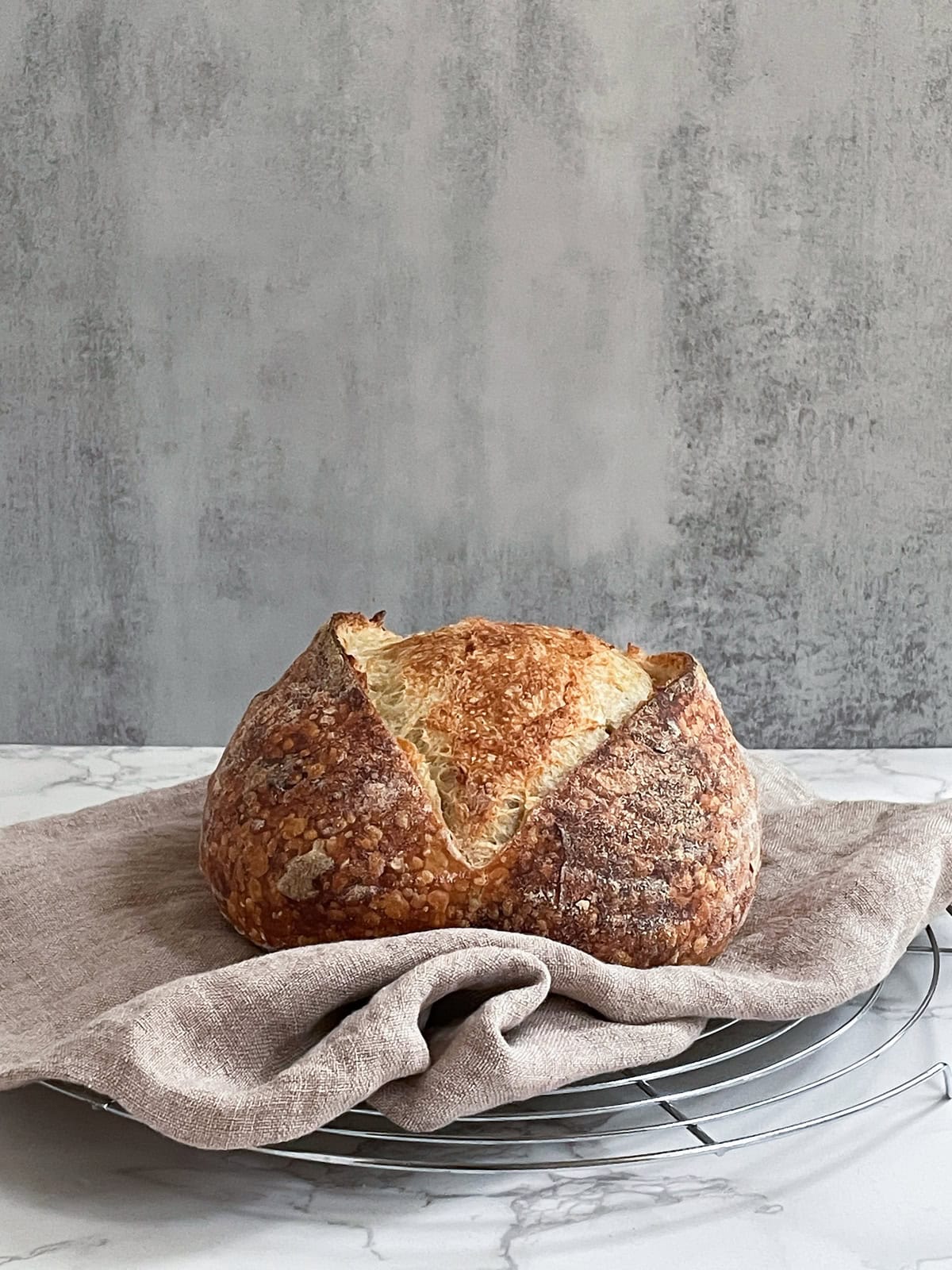
What is sourdough scoring?
Sourdough scoring is an important baking technique that involves making deep or shallow cuts in the dough before baking.
It helps control gas buildup and releases pressure, preventing the dough from bursting or splitting unexpectedly. It also creates a beautiful crust and adds a lovely touch to the bread.
Bread scoring types
There is more than one way to score sourdough bread, and each method serves a different purpose.
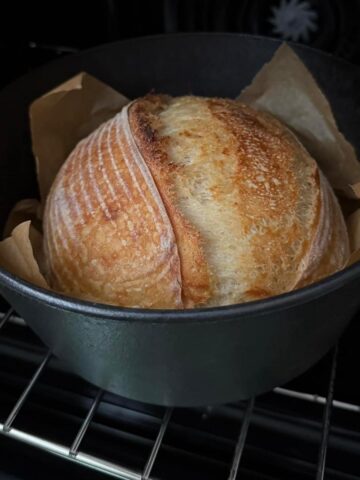
One common technique is expansion scoring, also known as slashing. It refers to deep cuts that control the expansion and rise of bread dough in the oven during baking. This prevents the dough from bursting.
Expansion scoring includes a single slash for a classic, bold look, perfect for scoring a batard. It allows for an excellent oven spring and creates a nice crust.
Another popular pattern is the classic cross or square scoring, which works well for a boule (round loaf). This helps the bread expand evenly, giving it a professional artisan look.
If you like, you can also experiment with artistic or decorative scoring to create pretty bread patterns. These designs are more for decoration than for controlling expansion.
Essential tools for sourdough scoring
Here are the primary tools you will need to score your sourdough bread:
- Bread lame (a professional tool for scoring bread) or a razor blade
- Flour duster (to dust flour on the dough)
- Pizza peel (optional, helps move the dough into the oven)
For intricate designs, you will need a sewing thread, or simply get a spool of cotton thread.
A bread lame or razor blade is necessary for making clean and precise cuts. While you can use a regular razor blade, I don't recommend it due to the risk of injury. For safety, use a handled bread lame.
There are many kinds of bread lames, from simple ones like the Ergo Grignette to fun designs like the UFO bread lame. Some have straight or curved blades, like the Goose and Arc lames from Wire Monkey.
After trying out a few, I found that a handcrafted wooden bread lame works really well. Its straightforward design allows for easy blade rotation, so you can use all edges, making it ideal for simple slashes or expansion cuts.
It is really important to use a sharp razor blade. A dull blade can drag through the dough, mess up your cuts, and affect the quality of your bake. A sharp blade will make scoring easy and smooth. Be sure to replace the blade after about five or six loaves.
If you are not ready to buy a special tool, use a sharp knife or kitchen scissors.
How to score sourdough bread step-by-step
1. Pick your scoring type
Decide what kind of score you want to make. If you are a beginner, start with a single bold slash (for a batard) or cross- or square pattern (for a boule) to control bread expansion before experimenting with intricate designs.
If you feel creative, try a leaf or wheat pattern for a decorative touch or designs like hearts or spirals once you get more comfortable.
2. Prepare the dough
Before scoring, make sure the dough is properly proofed (or risen) and ready to bake. The dough should feel firm enough on the parchment paper to keep its shape. If the dough flattens or collapses when you flip it, it might be over-proofed.
Start by taking the banneton basket (where the dough has been proofing) from the fridge to the counter.
Carefully flip the dough onto a parchment baking sheet. A quick, confident flip will help it keep its shape.
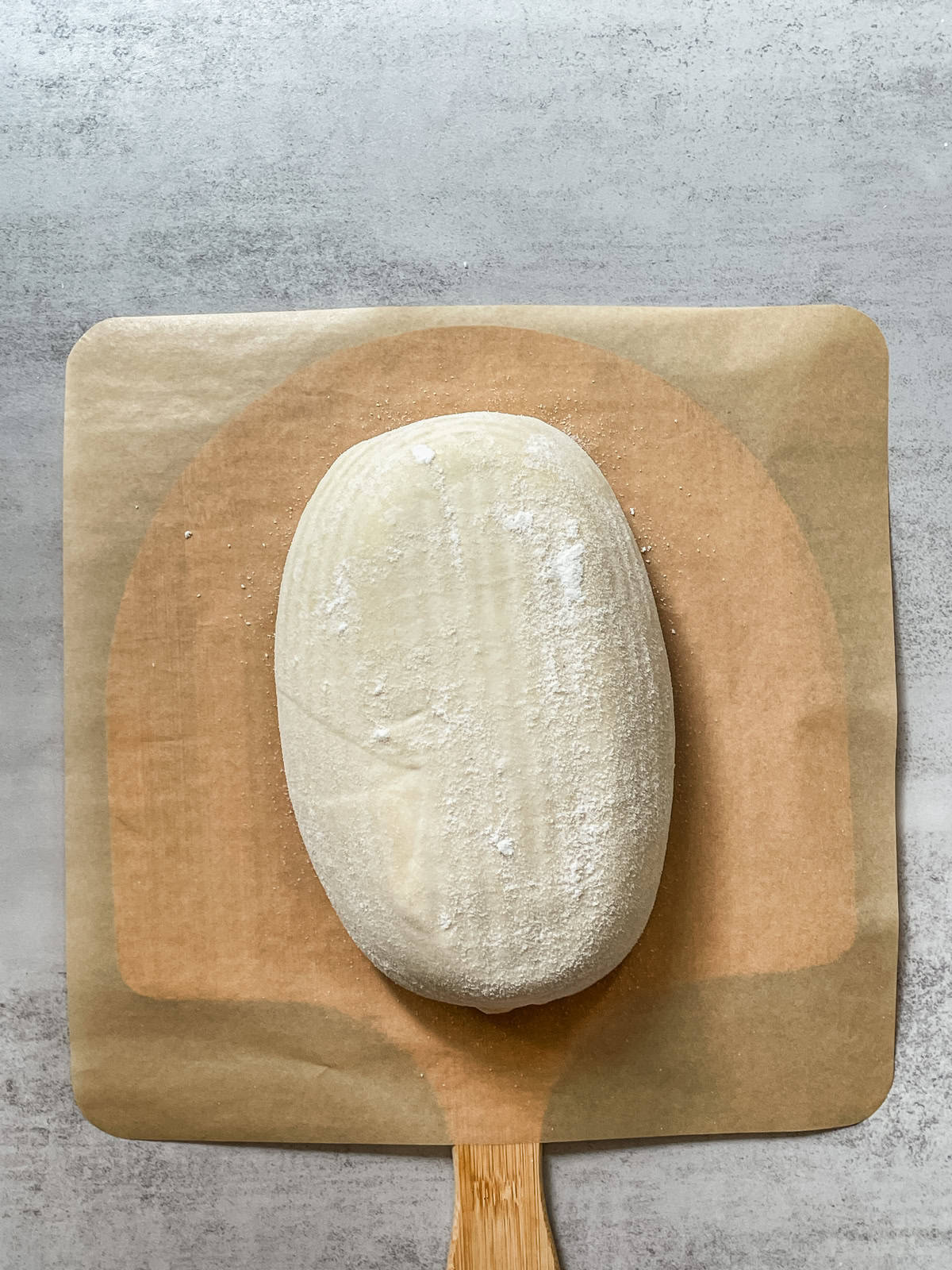
Position the dough so it works best for you, either lengthwise or sideways.
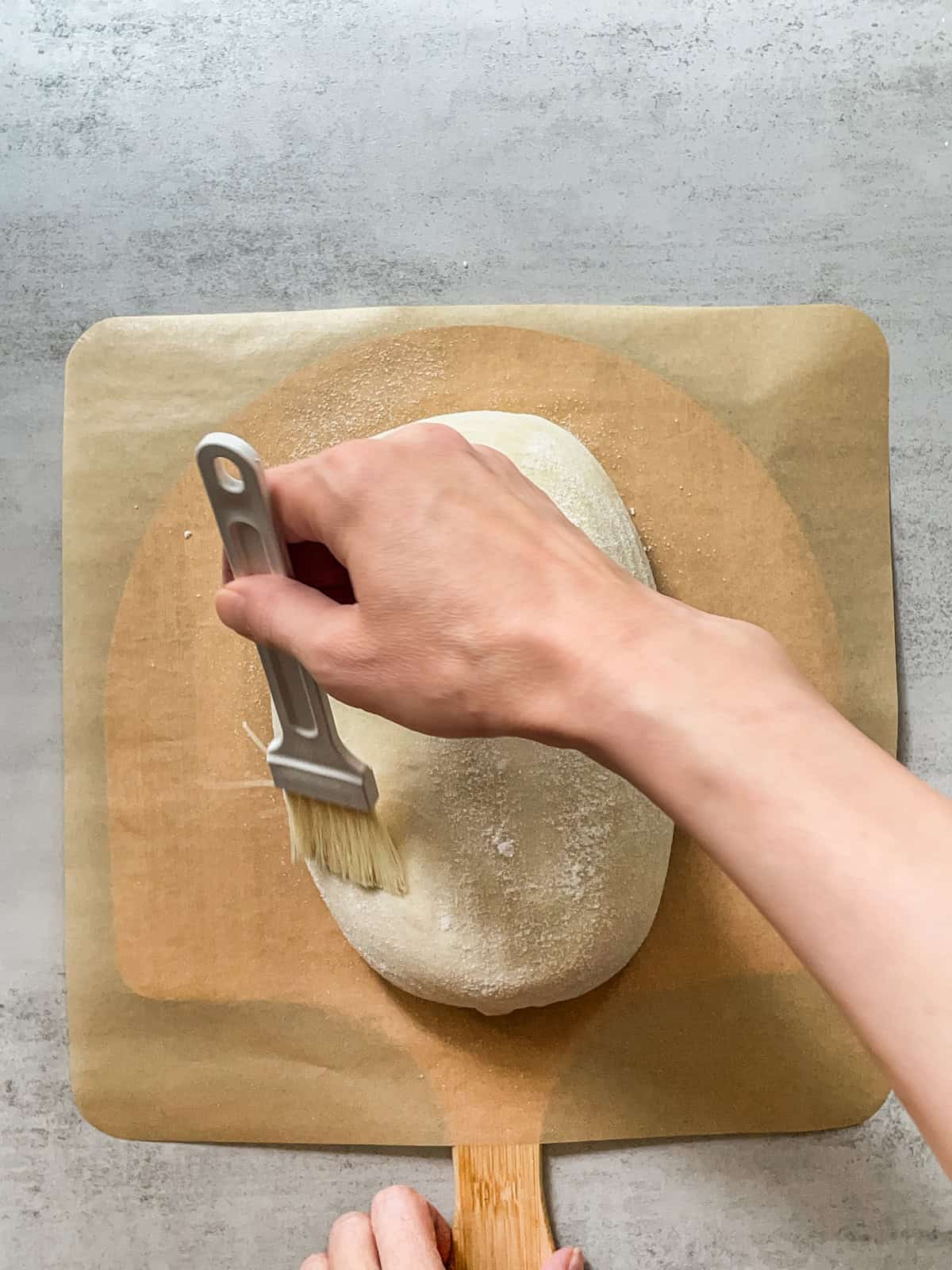
Use a pastry brush to gently remove any extra flour from the top of the dough.
To make your scoring design stand out, lightly dust the top of the dough with white flour (bread flour or all-purpose flour) or rice flour using a flour sifter or fine sieve. Use your hand to spread the flour evenly over the dough.
Then, use a pastry brush to gently remove any extra flour from the parchment paper around the loaf.
3. Position the blade
For a bâtard (oval loaf), make a single straight cut at a 90-degree angle along the center. This method helps create a double ear.
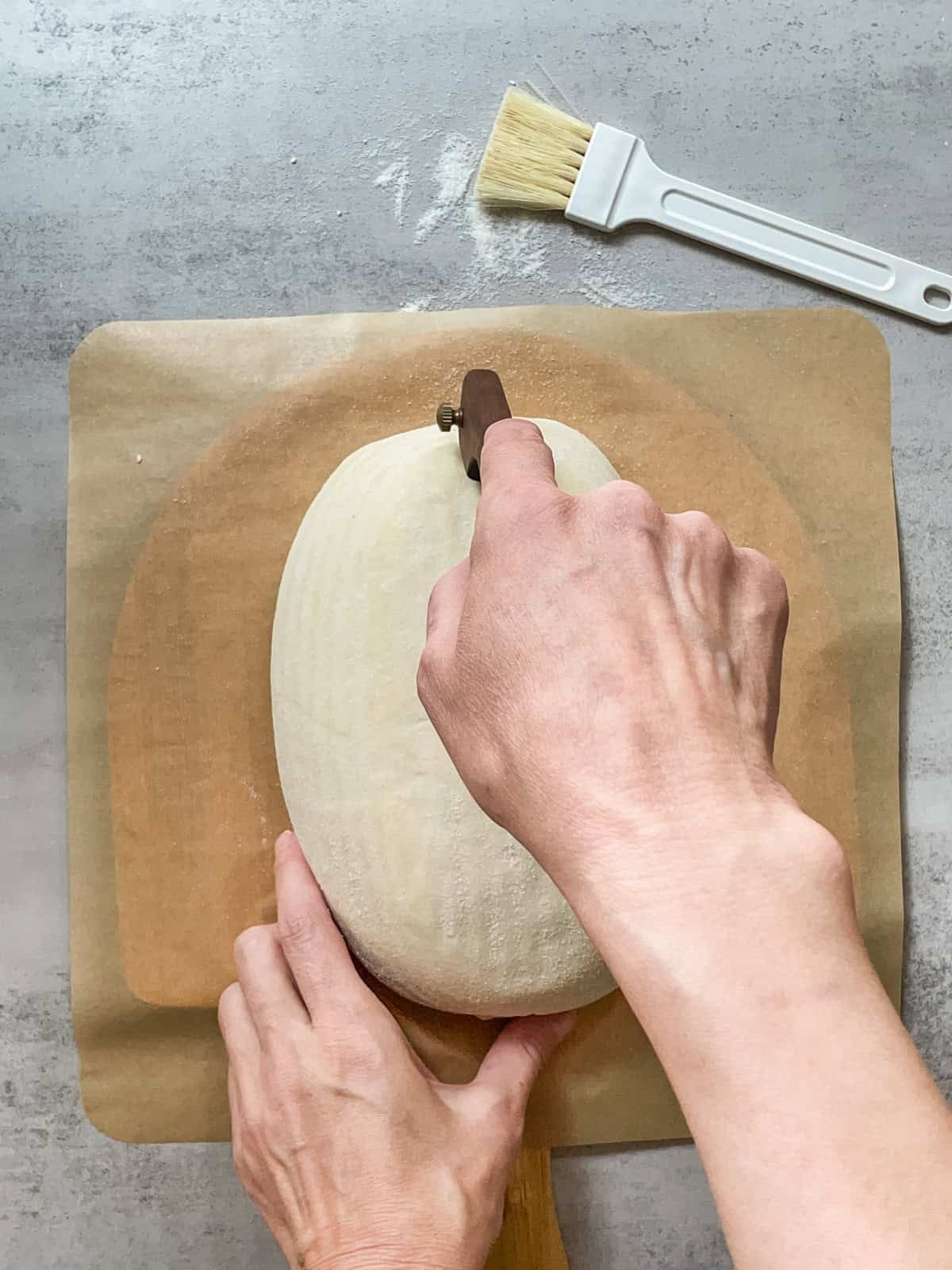
Hold the bread lame, razor blade, or sharp knife (not a serrated knife) at a 90-degree angle to the dough's surface.
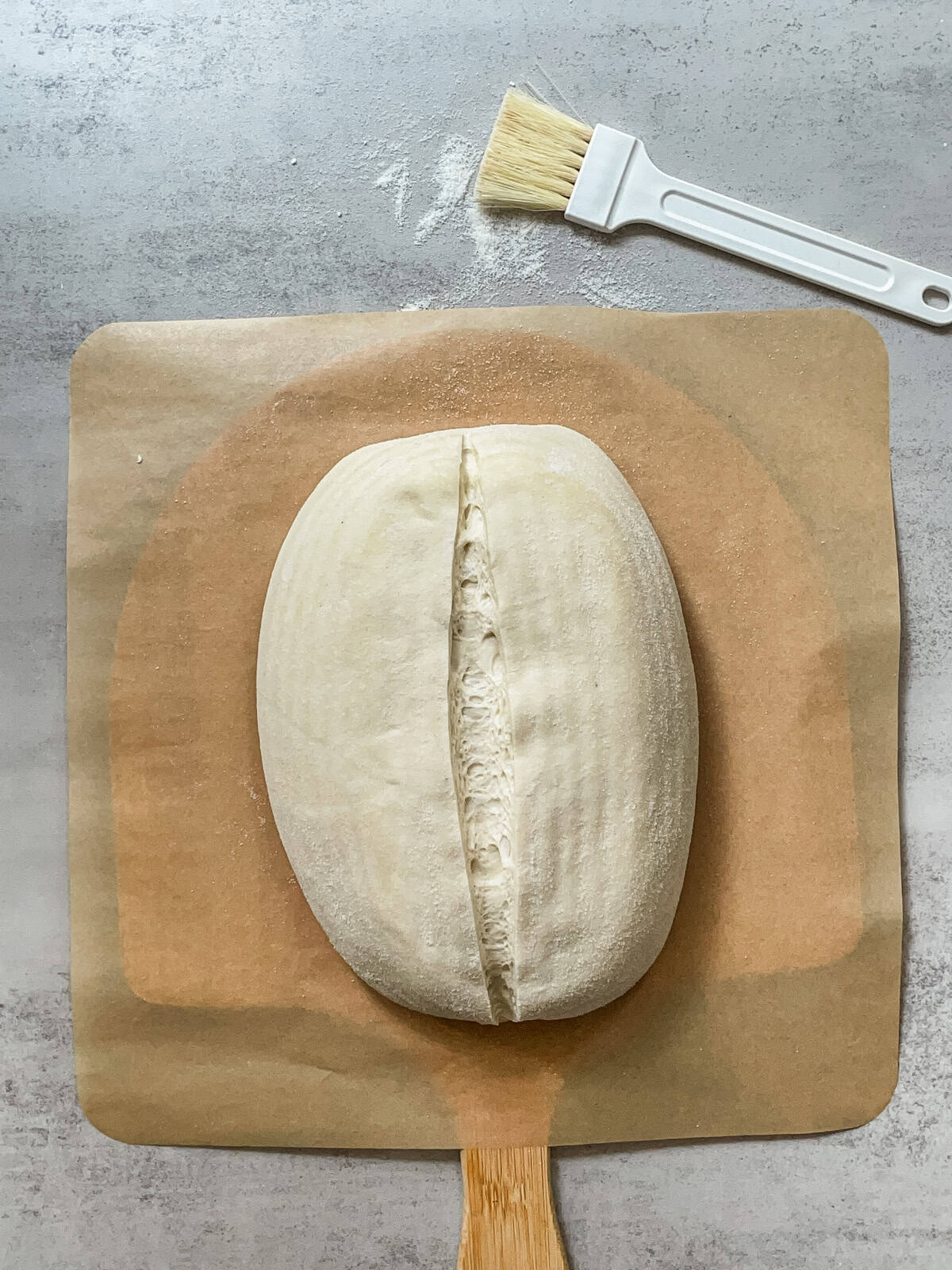
With a firm but gentle motion, score the dough in a smooth, continuous movement.
Alternatively, make a single long curved cut, starting at one edge and extending to the other. If the loaf is placed lengthwise, start the cut at the far edge and finish at the closest one. If placed widthwise, make the cut from left to right.
Hold the bread lame, razor blade, or sharp knife (not a serrated knife) at a 45-degree angle to the dough's surface. This angle is essential for a clean expansion (sourdough belly) and a well-formed ear.
To score a boule (round loaf), hold the lame at a 90-degree angle to the dough and create a cross or X pattern.
To create a square pattern, make four straight cuts at 90-degree angles to form the corners of an imaginary square. Make sure the cuts meet at the corners to complete the shape.
4. Score with confidence
When you score, be quick and steady. You want to make clean cuts without hesitating, which can deflate the dough. The cuts should only go about ¼ to ½ inch deep into the dough.
You may want to try to spray or wet your blade beforehand to reduce sticking to the dough.
5. Bake immediately
Once you have scored the dough, it is time to bake. Transfer the dough to a preheated oven or a baking vessel (such as a Dutch oven). Do not wait too long to put the pan in the oven. This may cause the cuts to close up as the dough relaxes.
How to score sourdough with kitchen scissors
If you do not have a razor blade or lame, or if you are dealing with a super-hydration dough, kitchen scissors or shears can work. Follow these steps to score your sourdough:
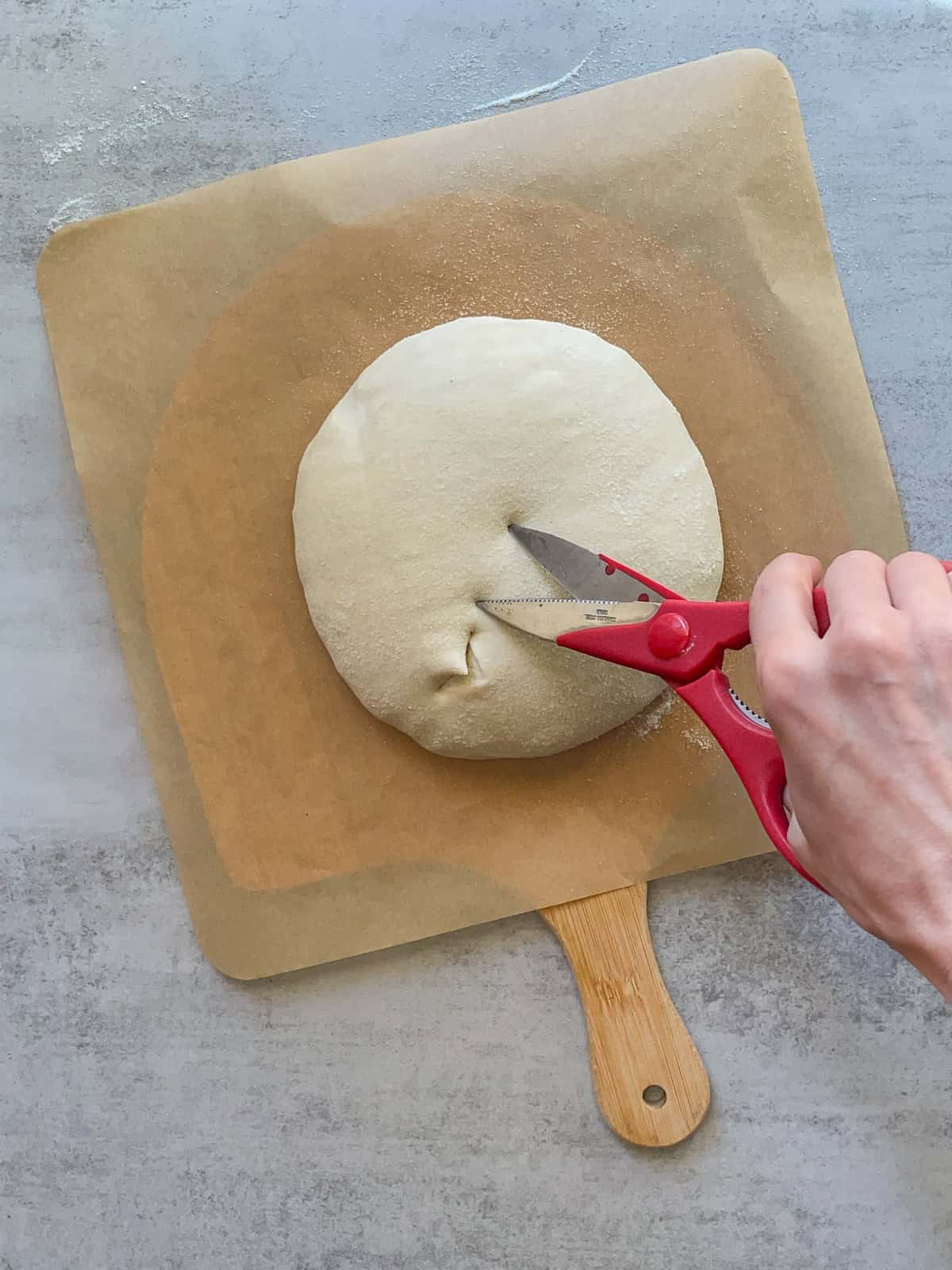
Hold the kitchen scissors at a 45-degree angle to the dough. Pinch the dough gently with the scissors, making small, sharp snips all over the dough surface.
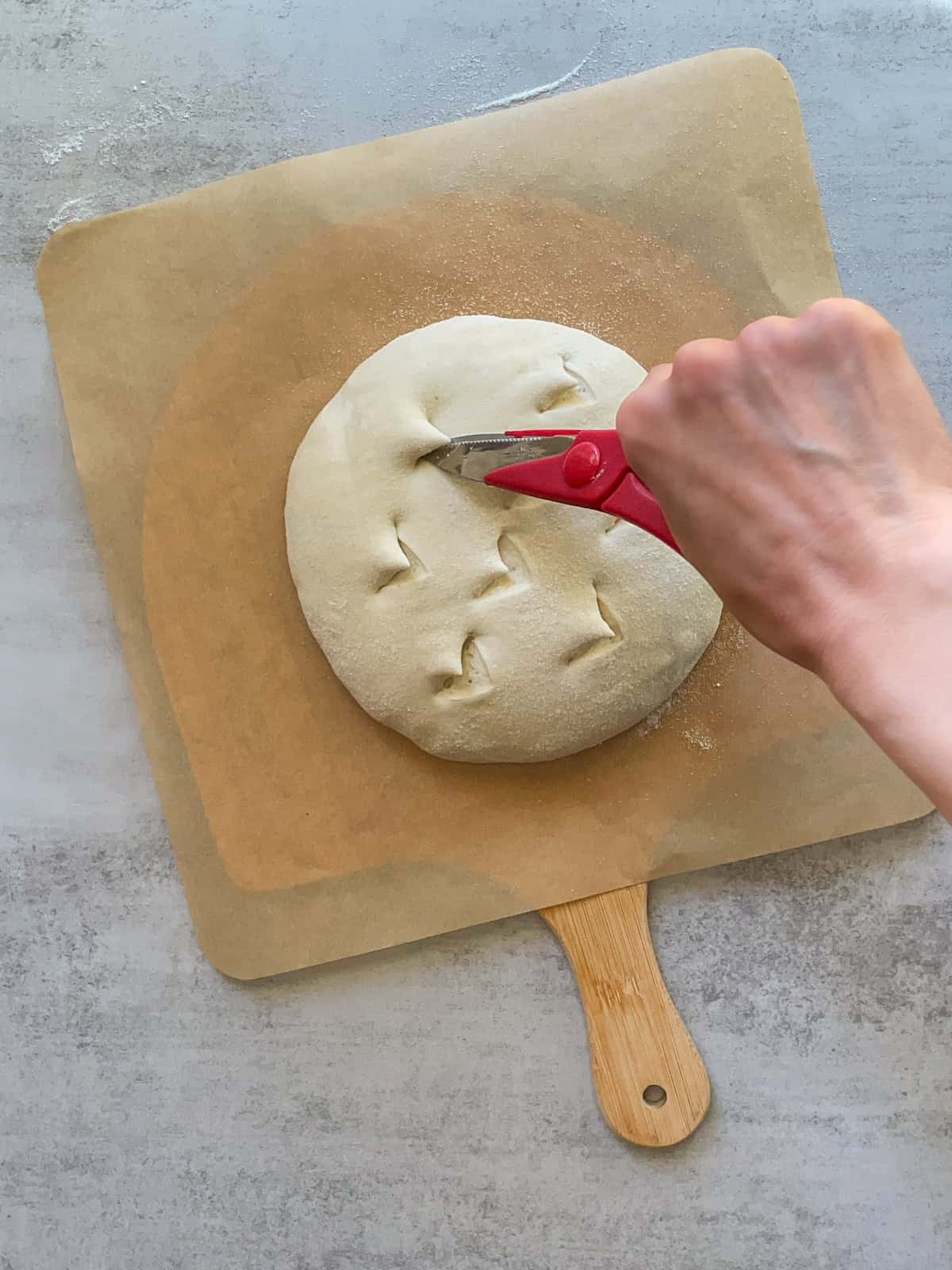
Change the angle if desired. Make sure the scissors are clean, and move carefully to avoid tearing the dough.
Can you double-cut to make the scoring deeper?
Before baking, you can score the dough a second time to make the cut a little deeper. For a batard, you can go over the central straight cut at a 90-degree angle.
If you want, you can change the razor blade to a 70-degree angle and make cuts just under both edges. This will help the dough expand more during baking, showing more of the loaf's belly and creating a more noticeable double ear.
If you made a curved slash at a 45-degree angle, you can turn the blade to about 70-80 degrees and cut beneath the edge closer to the center of the loaf.
If you want to learn about second scoring or re-scoring 5-7 minutes into baking, read about double scoring.
Expert tips
- Refresh the dough's surface: After cold proofing, gently remove any excess flour. Dust the dough with fresh flour and smooth the surface before scoring. You can use rice flour, which tends to create the best contrast, but regular or bread flour works well too.
- Choose the right tool: Use a very sharp blade or a lame, as a dull blade will drag through the dough and ruin the scoring. Replace blades frequently (ideally, every 5 loaves or so), as even minor dulling can affect results.
- Make sure the dough is properly fermented: The dough's fermentation significantly affects scoring. Underproofed dough benefits from a deep, even cut, while overproofed dough requires a shallow score or a single slash 5-7 minutes into baking.
- Work with chilled dough: Scoring cold dough is easier because it holds its shape. Refrigerate the dough for at least 8 hours or overnight for cold proofing. Overproofed dough and dough for intricate patterns benefit from a 20-30 minute freeze before scoring to prevent deflation. Also, if proofing at room temperature, chill the dough in the freezer for 20 minutes.
- Master the scoring technique: Be gentle but decisive, making clean, swift slashes without pressing down. Some bakers dip the blade in water or lightly oil the tip to prevent dragging. Use shallow cuts for intricate patterns and deeper cuts for simpler designs to allow proper expansion. Clean the blade frequently to keep it sharp and avoid dragging.
- Match patterns to bread shapes: Not every design works for every shape. For example, patterns suitable for a boule (round loaf) don't translate well to a batard (oval loaf), and vice versa.
- Consider flour type and hydration: High-hydration dough (85% and more) is softer, making fine scoring more challenging. Flour choice also affects dough elasticity. For example, rye flour has lower gluten content, which limits expansion and affects how the bread rises in the oven.
- Optional: Skip Scoring: Scoring is optional, but if skipped, expect the loaf to rupture unpredictably during baking.
What to avoid when scoring sourdough
- Don't let the dough's surface dry out. Dry skin will resist expansion and tear or crack unpredictably during baking. Keep the dough slightly moist for clean, even scores.
- Don't saw back and forth through the dough. Scoring should be a single, confident motion. Sawing drags the dough, creating rough edges and ruining the pattern.
- Don't cut too deep. Scores should generally be shallow, around ¼ to ½ inch deep. Cutting too deeply can cause the loaf to collapse or lose its shape.
- Don't overproof. Overproofed dough can collapse or tear unpredictably when scored.
- Don't give up. Scoring takes practice. You can make mistakes, but each loaf is a chance to learn and improve.
Watch these videos to learn more
You can watch videos on Instagram and YouTube to learn more. Here are a few suggestions to get you started:
- A single curved slash for a batard from @howtomakesourdough
- A single straight slash for a batard from @nick_bennett_sourdough
- A single slash with a wheat stalk from @danlarn
- A cross pattern for a boule from @iamsourdough (add or omit wheat stalk design)
- A square pattern from a boule from @stretchfold
- A simple scoring with scissors from @eds_bred
Final thoughts
With the variety of scoring tools available today, I recommend choosing one that fits your budget and comfort level. Finding the right tool often requires some experimentation to determine what works best for you. There is no shortcut to this process.
Start with simple cuts and gradually experiment with more creative designs. But don't rush into intricate patterns until you perfect your bread-making skills.
Most importantly, don't worry about perfection. Bread baking is about learning and having fun, so enjoy the process.
Let's talk sourdough
Do you have a scoring trick that changed your sourdough bread? Share your tips in the comments to help fellow bakers.
Ready to keep learning?
With your dough scored and ready, it's finally time to bake. Learn how to bake sourdough bread using various steam setups.