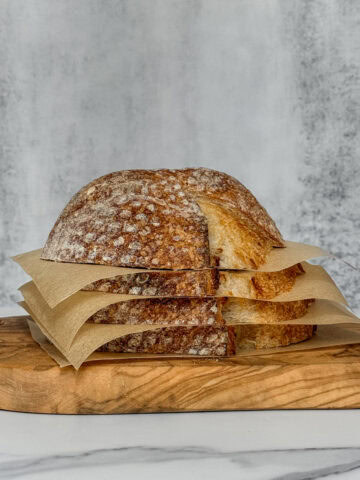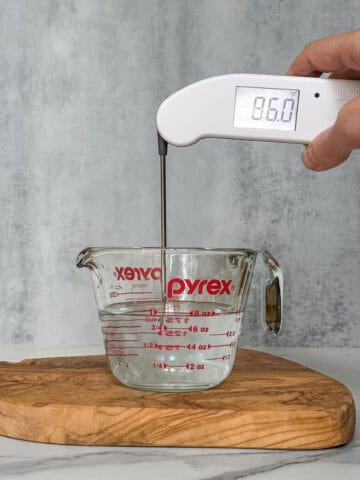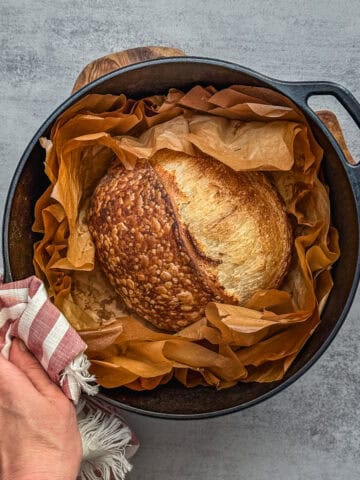

A Dutch oven for sourdough bread helps keep the heat and steam needed to bake the perfect loaf. Learn about the different types of Dutch ovens and how to choose and use them to make artisan sourdough bread.
The best Dutch oven for baking sourdough bread is considered a 5- to 6-quart cast iron Dutch oven that provides excellent airflow around the dough during baking. It withstands high temperatures without risk of damage.
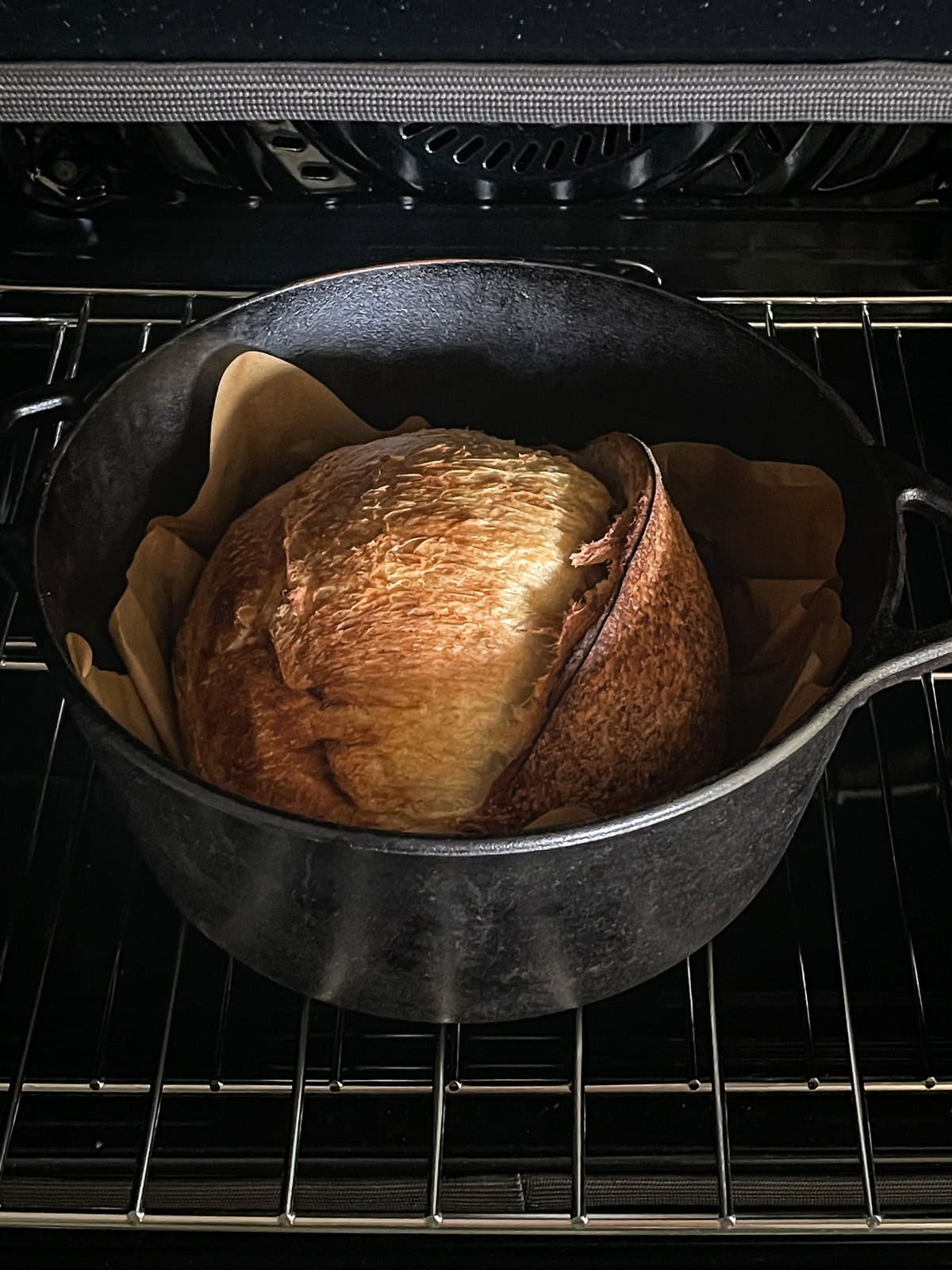
What is a Dutch oven?
A Dutch oven is a heavy, lidded pot, usually made of cast iron, that retains heat and moisture effectively. It is ideal for cooking on the stovetop and in the oven, and baking sourdough bread.
Why use a Dutch oven for sourdough
A Dutch oven is an important tool for baking sourdough bread. It is known for its excellent heat and steam retention, making it a reliable method for achieving artisan-quality bread with a crisp, golden crust. The tight-fitting lid helps maintain a steady baking temperature, which is important for sourdough baking.
The steam trapped inside the sealed Dutch oven allows the bread to rise, giving it a great oven spring. It helps develop a beautifully crisp exterior while keeping the crumb light and airy.
Types of Dutch ovens to choose from
There are different types of Dutch ovens. Each type has its benefits, so choosing the right one depends on your preference.
- Cast-iron Dutch ovens are known for their durability and excellent heat retention, making them the classic choice for sourdough bread. Opt for a traditional cast-iron Dutch oven, a double Dutch oven (such as the Lodge Combo Cooker), or a cast-iron bread pan (like the Challenger Bread Pan).
- Enameled cast-iron Dutch ovens feature a smooth porcelain coating, which makes them easier to clean and prevents food from sticking. While they are often used for baking sourdough bread, they can crack if preheated empty, especially at high temperatures.
- Ceramic-coated Dutch ovens have a non-stick ceramic layer and are great for slow cooking. While they handle oven temperatures up to 550°F (288°C), they are not ideal for sourdough due to their lower heat retention and the risk of cracking when preheated empty.
- Aluminum Dutch ovens are lightweight and heat up quickly, but are not ideal for sourdough baking. Although they are oven-safe up to 450°F (232°C), they lack the heat retention and thermal mass necessary to create proper steam and oven spring.
- Stainless steel Dutch ovens are durable and rust-resistant. Although they withstand oven temperatures of up to 500°F (260°C), they don't retain heat as well as cast iron, making them less suitable for sourdough baking.
What to look for when choosing a Dutch oven
- Material: Choose one made entirely of cast iron, including handles, for superior heat retention. Raw cast iron with a black interior is an excellent option.
- Size: A 5-6 quart Dutch oven is ideal. It should be large enough to allow the dough to rise freely without touching the sides.
- Shape: Round Dutch ovens work best for boule-style loaves, while oval ones are better for bâtards shapes.
- Lid fit: A tight-fitting lid is essential for trapping steam, helping develop a crisp, golden crust.
- Oven safety: Make sure the entire pot, including the lid and knob, is oven-safe at high temperatures (450-500°F / 232-260°C).
Dutch oven size for sourdough baking
The best and most versatile Dutch oven size is 5-6 quarts. This size helps maintain airflow around the bread, keeping the dough from touching the sides and baking perfectly.
If your Dutch oven is different, here is an easy guide showing how much dough to use for each pan size.
| Dough Weight Range | Dutch Oven Size |
| 250-350g | 0.75 qt. |
| 700g | 3-3.5 qt. |
| 850-950g | 4.3-4.5 qt. |
| 1000g | 5-6 qt. |
Remember that a larger Dutch oven is better than a smaller one. It provides the dough plenty of space to expand and allows for better airflow around the loaf.
If the Dutch oven is too small, the bread won't rise properly and will end up with indentations from the parchment paper pressed against it.
Depending on the shape of the bread you want to bake, choose a round or oval Dutch oven. A Challenger bread pan works great for both oval and round bread.
When baking multiple loaves, consider selecting a Dutch oven size that matches the weight of your dough. You will want to fit as many pans as possible in your home oven. To maximize space, consider using Dutch oven alternatives or try the double loaf pan method.
How to preheat a Dutch oven
Preheating the Dutch oven is an important step when baking bread. To do this, place the empty Dutch oven with the lid aside inside your oven, set the temperature to 500°F (260°C), and let it heat for 30-60 minutes.
However, not all Dutch ovens can be heated while empty at high temperatures. Only Dutch ovens made entirely of cast iron, including the knob and handles, are safe to preheat to 450-500°F (232-260°C) without risk.
Dutch ovens with an enamel and ceramic coating on the inside can crack if they are preheated empty at high temperatures. Also, adding ice cubes while baking can cause thermal shock, which may damage the pot.
Many sourdough bakers still use enamel-coated Dutch ovens, but if you are looking for a safer alternative, consider a Lodge double-cast-iron Dutch oven or a Challenger bread pan, which work great for sourdough.
If you are unsure whether your Dutch oven can handle high heat for an hour, check the manufacturer's instructions before preheating.
What temperature to bake sourdough in a Dutch oven
When baking sourdough in a Dutch oven, the typical temperature range is around 450°F to 500°F (232°C to 260°C). Here is a general guideline:
- Preheat the Dutch oven: Place it in the oven at 500°F (260°C) for 30-60 minutes while it preheats. This makes sure the pot is hot enough to trap steam when you add the dough.
- Initial baking: Lower the temperature to 450°F (230°C) and bake the sourdough with the lid on for 20 minutes.
- Final baking: Remove the lid and continue baking for an additional 17-20 minutes, or until the crust reaches your desired level of browning.
Depending on your specific recipe or oven, you may need to adjust the baking time and temperature. However, this method usually works well for sourdough bread.
Some bakers also use a "cold-start" method, in which they place the dough in a cold Dutch oven and then transfer it to a cold oven to bake (see my guide to cold bake sourdough bread).
Also, check out my blog post where I have gathered different baking temperatures and times for sourdough bread in a Dutch oven. Try a few and see which one you like best.
How to handle a hot Dutch oven
Learn how to handle a hot Dutch oven safely to avoid burns and accidents. Here are some tips:
- Use heat-resistant gloves: Always wear thick, heat-proof gloves or mitts to protect your hands when touching a hot Dutch oven.
- Use a trivet: Place the hot Dutch oven on a trivet or heat-resistant surface to protect your countertops or table.
- Lift with care: When lifting the Dutch oven, use both hands to get a secure grip and keep your balance.
- Be careful with the lid: It is just as hot as the pot, so use a mitt or a holder to remove it. Be careful of steam when lifting the lid.
- Avoid sudden temperature changes: Do not place a hot Dutch oven on a cold surface or submerge it in cold water, as this can cause the pot to crack.
- Keep handles clear: Make sure nothing is blocking the handles so you can grip them safely.
Let's talk sourdough
Do you have any tips for choosing the perfect Dutch oven? Share your insights in the comments.
What's next?
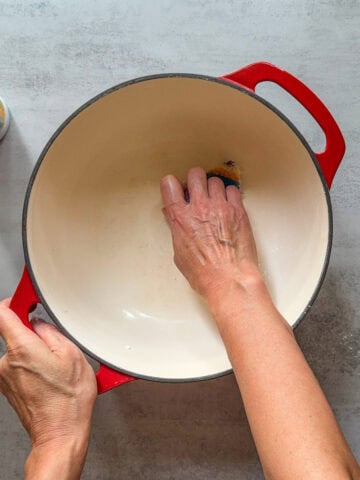
After baking a few loaves, you will want to know how to properly care for your Dutch oven. Learn how to clean a Dutch oven without damaging it.