
Quick Summary: The best parchment paper for sourdough is food-grade, unbleached or PFAS-free, and rated for at least 450°F (232°C), the temperature most sourdough bakes reach.
Two reliable picks: King Arthur Parchment (heavy-duty, oven-safe to 450°F) for heat resistance, and If You Care (unbleached, compostable, to 428°F) for an eco-friendly option. Just know that no parchment is proven safe above 450°F, so trim the edges, keep it off heating elements, and don't reuse it after a sourdough bake.
If you are like me, obsessed with sourdough, you have probably struggled with parchment paper more than once. The truth is, finding a parchment that can actually survive a hot sourdough bake is harder than it should be.
High-heat sourdough baking pushes parchment to its limits. One of my biggest frustrations is parchment that claims to be "oven safe," yet still browns, becomes brittle, or scorches at around 450°F (232°C). And remember, most of us preheat the oven to 500°F (260°C) before baking!
Here is everything I have learned on my journey: the science, the trade‑offs, the best brands, and how to use parchment safely (and smartly).
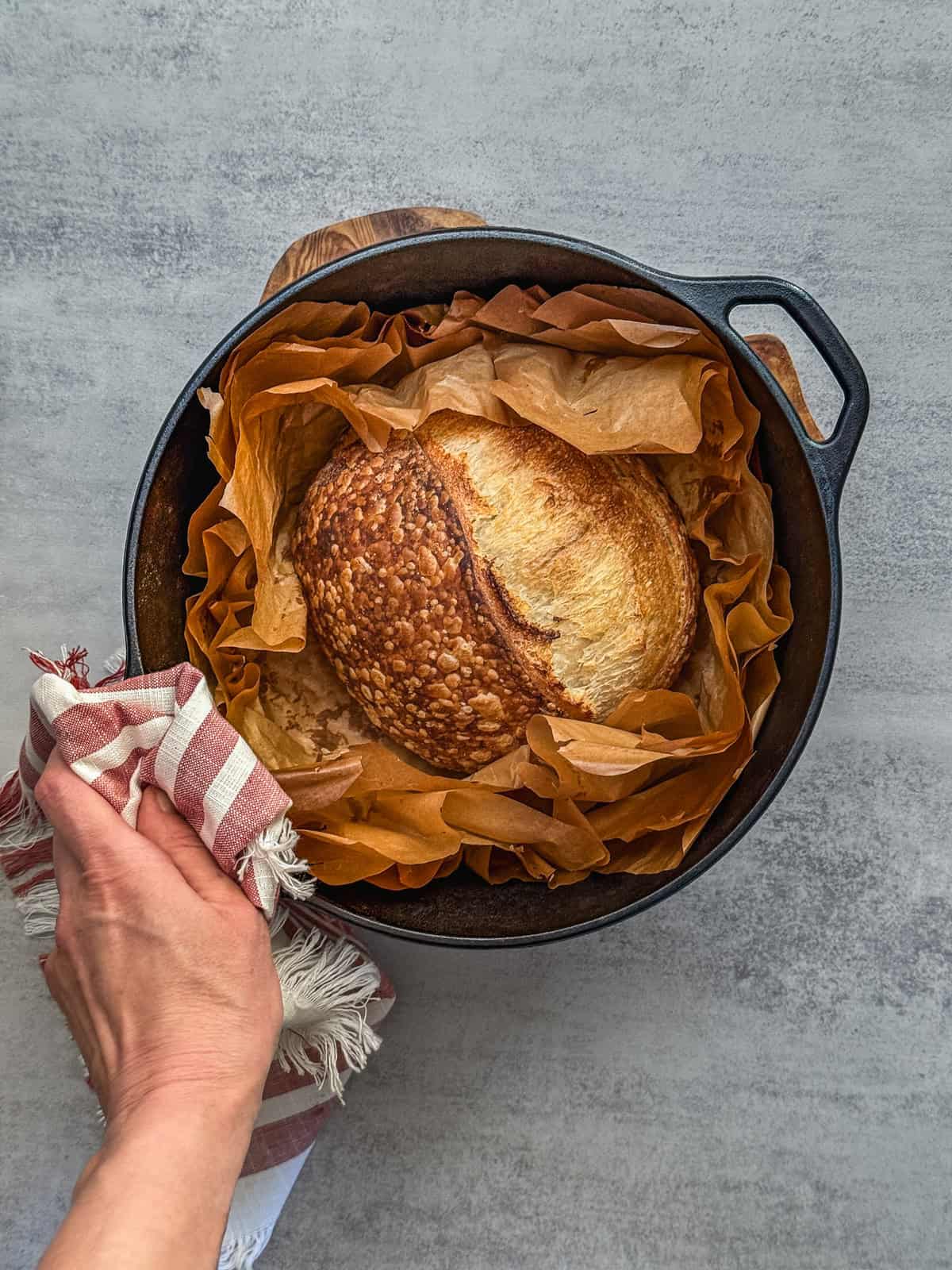
Why does parchment paper have a maximum heat limit?
Not all parchment paper is created equal. Parchment paper is usually made from wood pulp or cotton fibers and coated with silicone to give it a non-stick surface.
Some parchment papers used to contain PFAS (per- and polyfluoroalkyl substances), also known as "forever chemicals," for their non-stick properties, but PFAS have not been used in the USA since 2024.
While this coating allows it to withstand some heat, every parchment paper has a maximum temperature limit, usually around 420-450°F (215-232°C). Going beyond that limit makes it unsafe to use.
What happens when parchment paper exceeds its temperature limit?
- The paper fibers can burn or even catch fire, especially if the edges touch heating elements or the broiler.
- Silicone can degrade, producing smoke, off-odors, or potentially harmful compounds. Overheating also makes the paper brittle, tear, or sticky.
- Thin or folded parchment heats faster at the edges, so even if the center looks fine, exposed edges can burn first.
- Heating parchment above 428°F (220°C) may release harmful chemicals into the air.
Is parchment paper safe for sourdough?
Parchment paper is generally safe to use for sourdough baking within the specified temperature range, depending on the brand.
Food-grade silicone used in quality parchment paper is not toxic and safe to use. This means it is stable and unlikely to leach harmful chemicals into your bread when used correctly.
However, using parchment beyond its recommended temperature can slightly increase the risk of trace chemical migration into the food.
What to look for in parchment for sourdough
- Quality: Use only food-grade parchment paper.
- Temperature rating: Always check the box. If it says "safe to 420°F," don't assume it is okay to use at 450°F.
- Coating type: Most parchment is silicone-coated. For a more eco-friendly option, choose unbleached wood-pulp parchment with a silicone coating. Look for labels like "PFAS-free."
- Printing pattern: Opt for plain parchment paper rather than colored or printed paper to avoid potentially harmful dyes or chemicals.
- Weight/thickness (gsm): Medium-weight parchment resists browning and tearing. Very thick, stiff parchment is harder to lower neatly into a Dutch oven or any Dutch oven alternative, so a medium weight is the sweet spot.
- Sheet vs. roll: It is a personal preference.
- Compostable: The safest parchment paper is labeled compostable. Look for BPI Compostable certification to make sure the paper composts safely without toxic residue.
Parchment papers and their safety profile
Here are some parchment paper options (usable in the U.S.) with different coatings or safety credentials:
| Brand | Oven-safe to | Coating | Notable | Best for |
| King Arthur Parchment Paper | 450°F (232°C) | Silicone | Heavy-duty, reusable a few times | Highest heat resistance |
| King Arthur Natural Parchment Sheets | 425°F (218°C) | Light silicone | Unbleached, pre-cut | Pre-cut convenience |
| If You Care | 428°F (220°C) | Silicone | Unbleached, FSC-certified, compostable | Eco-friendly baking |
| Reynolds Unbleached Parchment Roll | 425°F (218°C) | Silicone | Affordable, widely available | Budget |
All four are solid, food-grade choices. The right one comes down to what you care about most.
If high heat is your priority, the King Arthur Parchment Paper edges out the rest at 450°F. If you would rather bake greener, If You Care is the only compostable, FSC-certified option here, trading a little heat tolerance for eco-credentials.
Top tips for using parchment safely
- Avoid scratching or damaging the silicone-coated parchment to prevent silicone from releasing into the bread while baking.
- Don't exceed the brand's recommended temperature limits.
- Trim the parchment so it doesn't hang over the sides of your baking vessel and risk charring.
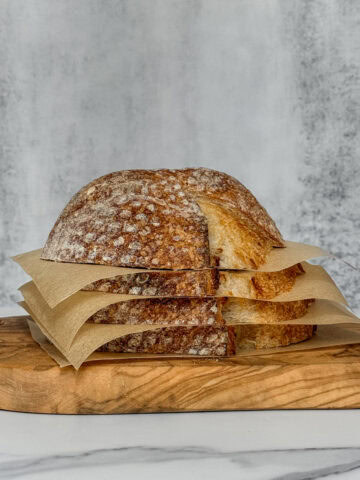
- Place the parchment just under the dough. In that way, the direct heat is shielded by the bread when the lid is off.
- Avoid contact of parchment paper with heating elements.
- Don't reuse parchment paper after baking sourdough.
- Store parchment paper in a cool, dry place away from moisture and humidity.
Can you reuse parchment paper for sourdough?
The short answer is probably not.
Most parchment paper is rated for 420-450°F (216-232°C), but sourdough baking often pushes it beyond that limit. This happens when you preheat your oven to 500°F (260°C), the parchment touches a hot cast-iron surface, steam builds inside a Dutch oven, or the paper sits close to the heating element.
Even if the oven temperature seems safe, the surface of a Dutch oven can easily exceed the parchment's limit by 50-100°F. That is why it often browns, becomes brittle, or even scorches after just one bake.
According to Parchment Paper Manufacturer and Pressbooks, parchment should only be used once.
The FDA Food Code 2022 (section 4‑502.13) also interprets parchment as a "single-use article" because it cannot be effectively cleaned and sanitized between uses.
That doesn't mean every parchment brand explicitly says to discard it after one bake, but it does reflect public-health guidelines.
In commercial kitchens, parchment is treated like other disposable materials, such as paper or plastic wrap, when it comes to reuse.
Which parchment paper is safe for baking at 500°F?
None that I have found is scientifically proven safe above 450°F (232°C). Most parchment is rated to 420-450°F, while many sourdough bakers preheat to 500°F (260°C), which exceeds that limit, especially where the paper comes into contact with hot cast iron.
In practice, a single bake is usually fine because you lower the dough straight onto the paper, the oven temperature drops the moment you open the door, and the dough itself shields most of the paper from direct heat.
To stay on the safe side: let a preheated vessel settle for a minute before the paper goes in, trim the edges so nothing overhangs onto hot metal, keep parchment clear of heating elements, and never reuse it. If you routinely bake above 450°F, a BreadMat™ silicone bread sling is the more heat-stable choice.
The truth about parchment paper
I haven't found parchment paper that is so thin and delicate yet scientifically proven safe at temperatures above 450°F (232°C). Most parchment paper is silicone-coated, and its heat resistance varies widely.
According to multiple sources, most parchment paper can safely handle 420-450°F. Anything higher isn't recommended, especially if the paper could come into contact with a heating element.
When it comes to reuse, the common advice that "parchment paper is single-use" makes sense from a food-safety and regulatory perspective.
The FDA doesn't explicitly forbid reuse, but its guidance, along with the "single-use article" classification in food-code settings, leans in that direction, particularly for commercial or repeated use.
Personally, I avoid pushing parchment too far. Even if a brand claims high heat safety, repeated use at very high temperatures can cause degradation over time.
I am still on the hunt for the perfect parchment paper that can safely handle over 450°F (232°C).
FAQ
Bleached or unbleached parchment paper, which is better? Unbleached (natural brown) parchment is eco-friendly and chlorine-free, making it the safer choice. Bleached parchment works too if you don't mind the white color, but some types can produce dioxins (a type of environmental toxin) during manufacturing.
What about alternatives if parchment fails? You can use a high-quality silicone baking sling.
Can you use wax paper instead of parchment for sourdough baking? No, you shouldn't use wax paper for sourdough baking. Wax paper is coated with paraffin wax, and it isn't heat-resistant. At high temperatures, the wax will melt, leaving a sticky residue on your bread. It can even partially fuse with the crust, making it hard to peel off.
What is the best parchment paper for sourdough? For heat resistance, choose King Arthur Parchment, which is oven-safe up to 450°F (232°C). If you prefer an eco-friendly option, If You Care parchment is unbleached, compostable, and heat-resistant up to 428°F (220°C). Regardless of the brand, look for food-grade parchment that is unbleached or PFAS-free and rated for the temperatures you bake at (ideally 450°F or higher).
Can parchment paper catch fire in a hot oven? Yes, if it exceeds its temperature limit or comes into contact with a heating element or the broiler, it can scorch, smoke, or ignite at the edges. Keep it trimmed so nothing overhangs, stay within the brand's rated temperature, and keep it away from direct heat sources.
Let's talk sourdough
Have you ever thought about choosing the "right" parchment paper for sourdough? How did you choose the one you have been using? Please share your experience in the comments.
Ready to keep learning?
If you want a reusable alternative to parchment paper, learn about silicone bread slings. Their quality makes a real difference here.
Want more honest, tested advice on sourdough tools and techniques? Join the free email series and bake with fewer surprises.