
Quick Summary: Yes, food-grade silicone bread slings are safe for baking sourdough. High-quality (LFGB or FDA-approved) silicone is heat-resistant, typically up to 425-450°F, non-toxic, and won't leach chemicals at normal baking temperatures.
To use one, place your proofed dough on the sling, score it, and lift it straight into your Dutch oven or onto a baking surface. Always check your specific sling's maximum temperature rating before baking.
Silicone baking has become increasingly popular, and many sourdough bakers are curious about using silicone bread slings. Some people also use silicone trivets to prevent the bottoms of the bread from burning.
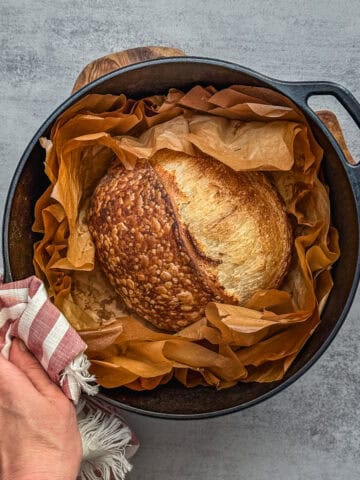
Are these the best choices for sourdough? It depends on your baking style: decide whether to use or avoid silicone bakeware. Some bakers carefully inspect the quality of the silicone, while others skip silicone altogether. Instead, they rely on parchment paper and choose it with the same care.
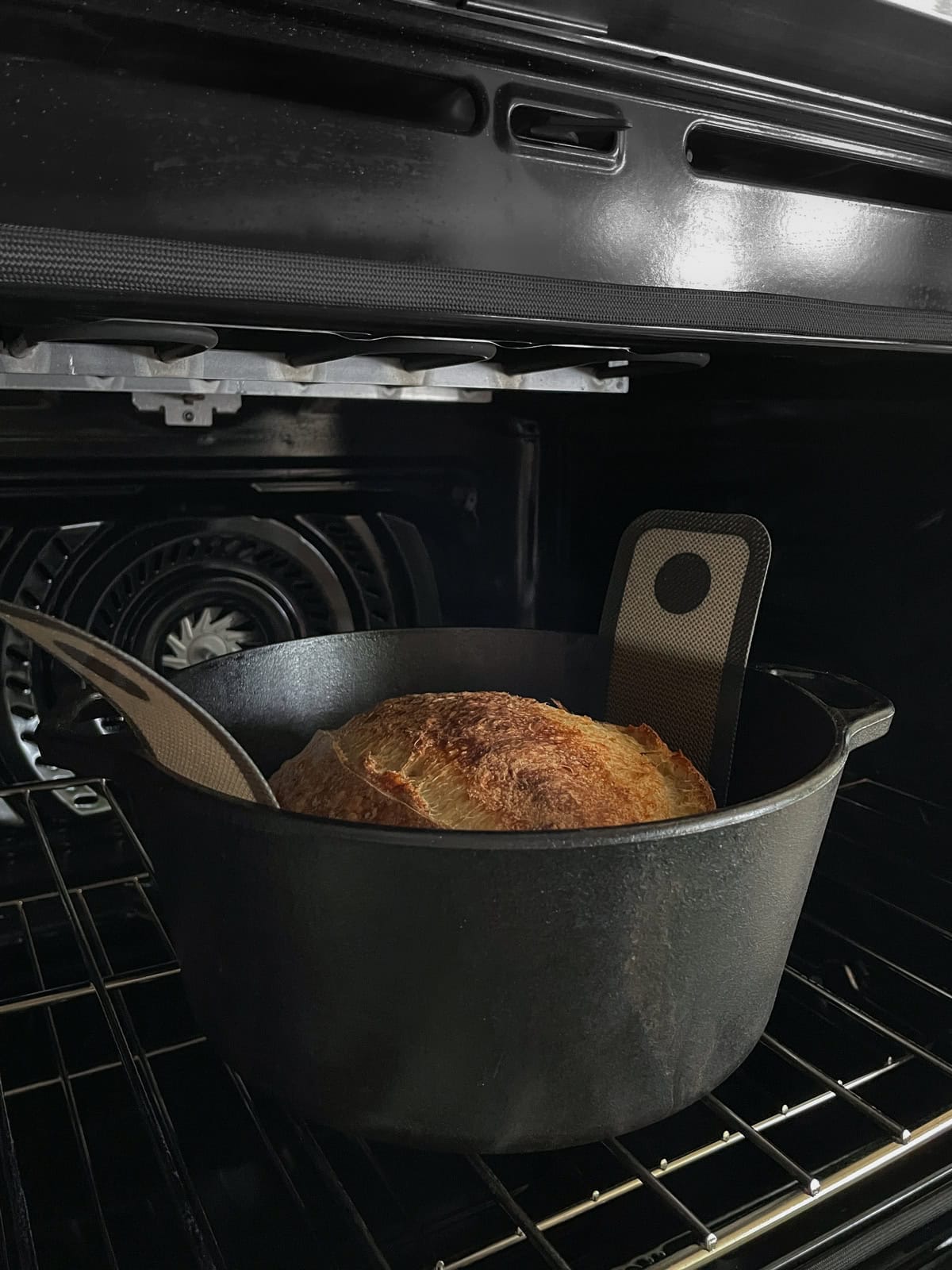
Are silicone bread slings safe?
Yes, certified food-grade silicone slings that are rated for high baking temperatures are generally safe, reusable, and convenient tools for baking sourdough.
They also make it easier to transfer dough into a hot Dutch oven without burning yourself or deflating the loaf, making them a practical alternative to parchment paper.
The key is quality and temperature rating. Most everyday silicone bakeware is only rated for 425-450°F, while sourdough is often baked at 450-500°F, so standard silicone may not always be suitable.
That is why it is important to choose a high-temperature, LFGB or platinum-cured silicone product rated for around 500°F, and to avoid low-grade or damaged silicone.
How to use a silicone bread sling
A silicone bread sling makes transferring your dough in and out of a hot Dutch oven simple and safe. Here is how to use one, step by step:
- Preheat your Dutch oven. Heat your Dutch oven (with the lid on) as your recipe directs, usually around 450 to 500°F. You only preheat the pot, not the sling. The silicone sling stays out of the oven until you are ready to bake, then it goes in cold, holding your dough.
- Place your proofed dough on the sling. Turn your dough out of the banneton directly onto the center of the silicone sling, seam side down (or as your recipe calls for).
- Score the dough. Using a sharp blade or bread lame, score the top of the dough while it sits on the sling. The sling gives you a stable surface to score on.
- Lower it into the Dutch oven. Using oven mitts, carefully remove your preheated Dutch oven and take off the lid (it will be extremely hot). Then, with the mitts on, grab the sling's handles and lower the dough straight into the pot. The sling lines the pot, so there is no need for extra parchment.
- Bake as usual. Cover and bake according to your recipe. The silicone sling stays in the pot with the dough throughout the bake.
- Lift the loaf out. When baking is done, put on oven mitts. Remember that the Dutch oven and its handles are extremely hot. Carefully lift or steady the pot as needed, then use the sling's handles to lift the finished loaf straight out and onto a cooling rack. The sling saves your fingers from the hot dough, but always protect your hands from the pot itself with mitts.
Once your loaf has cooled, wash the sling with warm soapy water, and it is ready for your next bake. A good silicone sling can be reused hundreds of times, which makes it a more sustainable choice than single-use parchment paper.
How to choose a bread baking sling
When buying a silicone bread sling or mold, choose one that is 100% food-grade, FDA-approved, and BPA-free. Avoid low-cost silicone products that don't clearly state these standards, as they may contain fillers or coatings that aren't safe for high-heat baking. If it is not specified on the product page, check with the manufacturer.
Also look for platinum-cured silicone, which is more stable and higher quality than peroxide-cured silicone. It better withstands baking temperatures, while lower-grade silicone may degrade or release unwanted compounds at high heat.
Since sourdough often bakes at 450-500°F, always check the sling's maximum temperature rating to make sure it matches your baking needs.
Use a simple quality check to pinch and twist the silicone. If white streaks appear, it likely contains fillers and is of a lower grade. Pure, high-quality silicone retains its color when flexed.
How to prepare your silicone bakeware
Before using a new silicone sling, wash it thoroughly with soap or dishwashing liquid, rinse it well, and allow it to air dry. Avoid using a kitchen towel to prevent fabric particles from sticking to it.
Some newly bought silicone items may have a plastic-like smell, which can be easily removed. Preheat the oven to 392°F (200°C) and heat the silicone bread sling for 1 hour. Now, it is ready to use for baking.
The best silicone bread slings on the market
I have researched a range of well-known silicone bakeware brands to see whether they offer bread slings that can handle the high temperatures needed for sourdough baking.
I specifically looked at brands such as FLEXIPAN® by Guy Demarle, DeBuyer, Silikomart, Pavoni, and Silpat, checking their product ranges and temperature ratings.
While many of these brands make high-quality silicone bakeware that can withstand high heat (often in the 500°F-572°F / 260°C-300°C range), I couldn't find any true silicone bread slings designed for sourdough baking at these temperatures.
Most products are geared toward general baking, not the specific demands of baking bread in a Dutch oven.
From what I could verify, the only product specifically marketed for this purpose is the BreadMat™, made from LFGB-certified, platinum-grade silicone and rated to 500°F (260°C).
Can you use silicone trivets for sourdough baking? No, they are not suitable alternatives. They are designed to protect countertops from hot cookware, not to be used inside an oven at high baking temperatures.
If your goal is to prevent the bottom of your loaf from over-browning, the most practical options I found are the BreadMat™ or an 8-9-inch Silpat silicone baking mat, both designed for high-heat oven use.
How to clean silicone bakeware
To keep your silicone bakeware in good condition, soak it gently in hot, soapy water after each use. To prevent micro-scratches, gently clean silicone items by hand. Avoid using abrasive scrubbing sponges.
Rinse them with fresh running water and let them air dry. Avoid wiping them with a towel to keep fabric particles from sticking.
Can you put silicone bakeware in the dishwasher? It depends on the quality of the silicone. Check the manufacturer's instructions to see if your bakeware is dishwasher-safe.
How to store it
Store silicone bakeware in a dry, dark place at room temperature, away from sunlight.
FAQ
Can a silicone bread sling go in the oven? Yes. Food-grade silicone slings are oven-safe up to their rated temperature, usually around 425 to 450°F, and some higher. Always check your specific sling's maximum temperature before baking, and choose one rated for the heat your recipe calls for.
What temperature can a silicone bread sling handle? Most quality silicone slings are rated between 425 and 450°F, though some withstand higher temperatures. Since sourdough often bakes at 450 to 500°F, make sure your sling is rated for that temperature.
Can you bake sourdough in silicone molds? You can, but silicone molds and silicone slings are different tools. A sling is a flat sheet with handles that lines your Dutch oven and helps you lift the dough, which still bakes in the hot pot. A mold (like a loaf-shaped silicone pan) shapes the dough as it bakes, but silicone molds don't retain and radiate heat the way a metal pan or Dutch oven does, so you may get a paler, softer crust and less oven spring.
Do you still need parchment paper with a silicone sling? No. That is one of the main benefits: the sling replaces parchment, lines your Dutch oven, and gives you handles to lift the loaf. It is reusable, reducing waste compared to single-use parchment.
Is silicone better than parchment paper for sourdough? It depends on your priorities. A silicone sling is reusable, more sustainable, and provides sturdy handles for lifting the dough. However, it does have a temperature limit. Parchment paper can handle similar high temperatures and is very convenient to use, but it's disposable and creates more waste over time.
Why does my silicone bread sling have a bad smell? A strong or plastic-like smell usually comes from low-quality silicone or poor maintenance. Thoroughly washing the silicone bread sling with warm, soapy water often removes the odor. High-quality silicone should not smell during baking.
Can you cut or trim a silicone bread sling? Silicone bakeware that contains a fiberglass layer should never be cut or trimmed. Altering its shape can damage the material and may expose or release fiberglass particles into food. For safety, always use silicone bread slings exactly as they are designed, without any modifications.
Let's talk sourdough
Have you tried using a silicone bread sling for sourdough? What did you love (or not love) about it? Share your experience in the comments below.
Ready to keep learning?
Precise measurements are essential in sourdough baking. Learn why a reliable baker's scale is one of the most important tools you can own.