
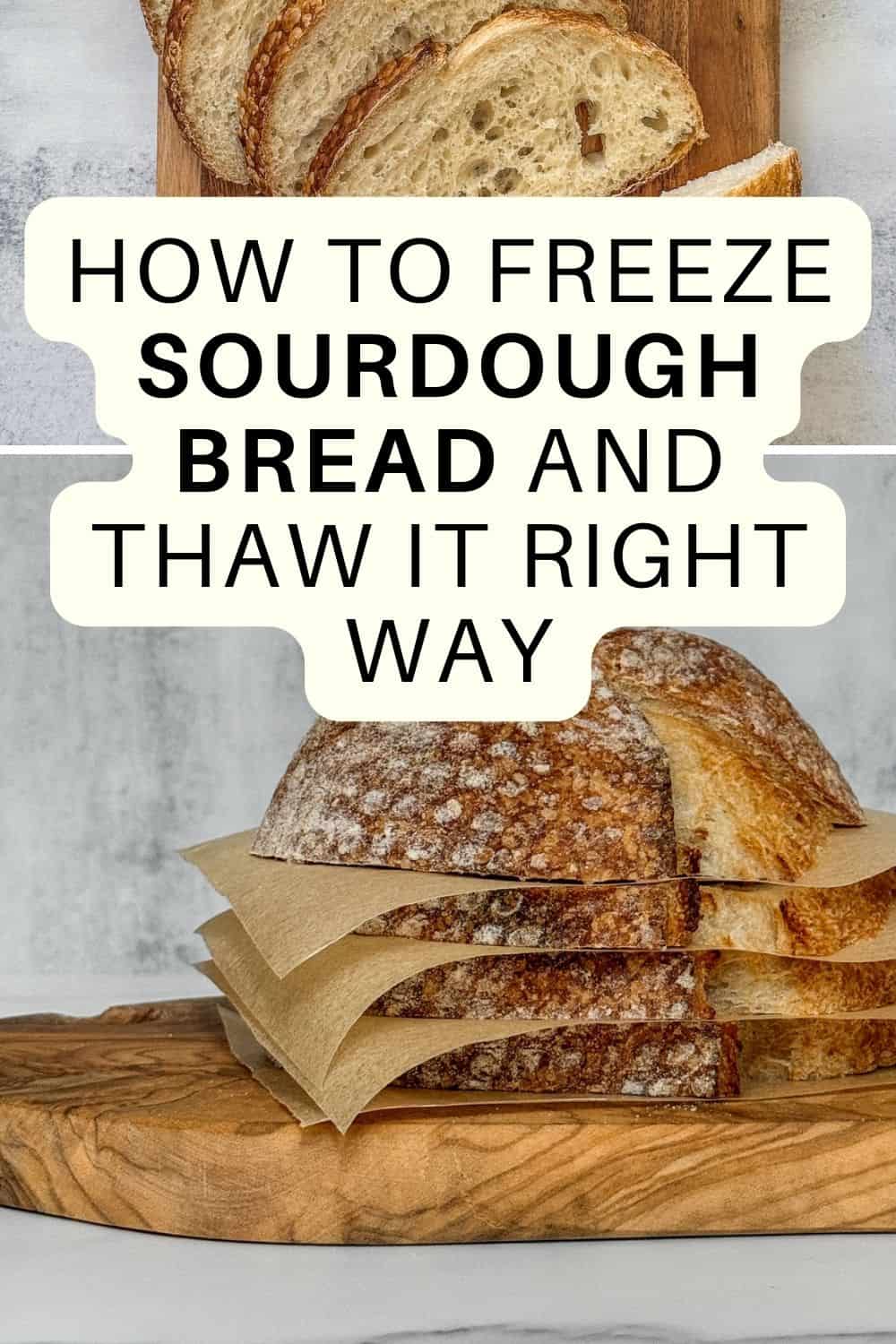
Learn how to freeze sourdough bread to keep it fresh longer and avoid wasting extra loaves. This method is especially helpful if you live in a small household or bake multiple loaves at once.
In addition to freezing baked bread, you can freeze sourdough starter. I'm currently testing whether sourdough dough can be frozen directly in a banneton and baked later.
I can also confirm that parbaking sourdough bread works well if you want to bake it later.
Can you freeze sourdough bread?
Yes, you can freeze a whole loaf or individual slices. Freezing an entire loaf prolongs its shelf life, which is perfect if you want to save some for later or have it ready for when guests visit.
On the other hand, freezing individual slices is handy when you just need one piece at a time, like for quick snacks or sandwiches.
When you freeze bread, it stays fresh, but remember that thawed bread may not taste quite the same as freshly baked bread.
How long does sourdough bread last?
If stored properly, sourdough bread stays fresh in the freezer for 1-2 months. While it is still safe to eat after 2 months, the quality declines, especially the crust.
If you freeze sliced sourdough, individual slices will stay fresh for about 1 to 2 weeks.
Vacuum sealing is a great option for longer storage. By removing the air and preventing freezer burn, it can keep your sourdough fresh for up to six months. According to FoodSaver, it can even last up to three years.
The best way to freeze bread
When freezing sourdough bread, there are two main options: freezer bags or vacuum sealing.
Freezer bags are easy to use: you place the bread inside and seal it. However, they don't remove air, so bread in freezer bags won't stay fresh as long, usually just 1 to 2 months.
For most medium to large sourdough loaves, a standard 1-gallon freezer bag works well. For very large or artisan-style loaves, an extra-large 2-gallon freezer bag is a better fit.
Vacuum sealing removes air from the bag, helping prevent freezer burn. When stored this way, sourdough stays fresh for up to 6 months, and sometimes longer.
How to freeze sourdough bread
Here is a simple way to freeze a whole loaf of sourdough:
- First, let your bread cool completely. This usually takes about 2 to 6 hours, but if you prefer, you can leave it on the counter overnight.
- Once cooled, wrap the loaf tightly in plastic wrap and aluminum foil. Then, place the wrapped loaf in a freezer bag or a freezer-safe container and label it. Once frozen, you can vacuum seal the loaf if desired.
- Pop it in the freezer, where it will stay fresh for 1 to 2 months (up to 6 months if vacuum sealed).
How to freeze sliced sourdough bread
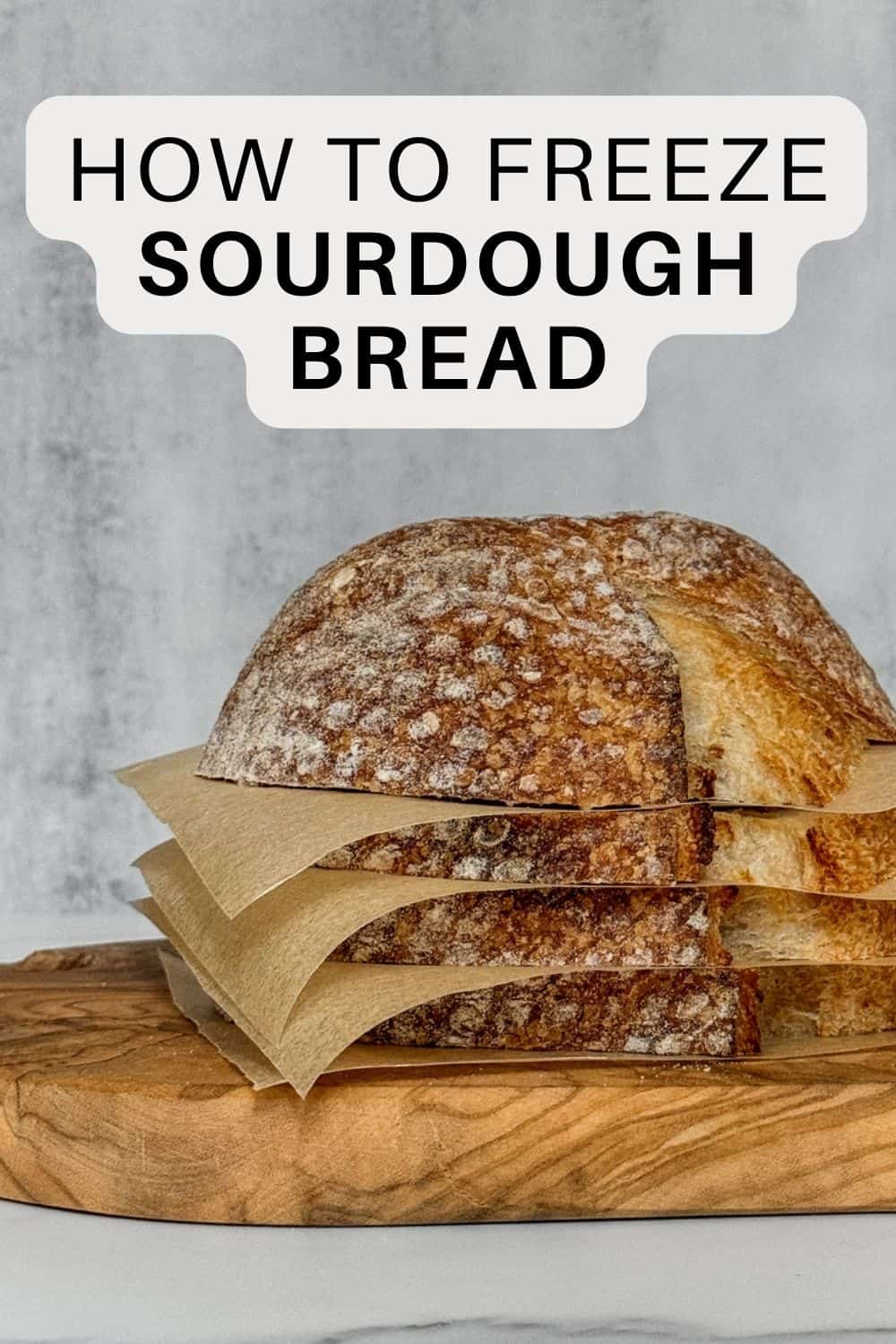
For best results, slice the bread before freezing so you can thaw only what you need. Here is how to freeze individual slices:
- First, let the bread cool completely. Again, this takes about 2 to 6 hours, or you can leave it overnight.
- Next, slice the bread with a serrated knife and lay the slices in a single layer on a baking sheet lined with parchment paper.
- Place the baking sheet in the freezer for about 30 minutes until the slices are frozen enough that they won't stick together.
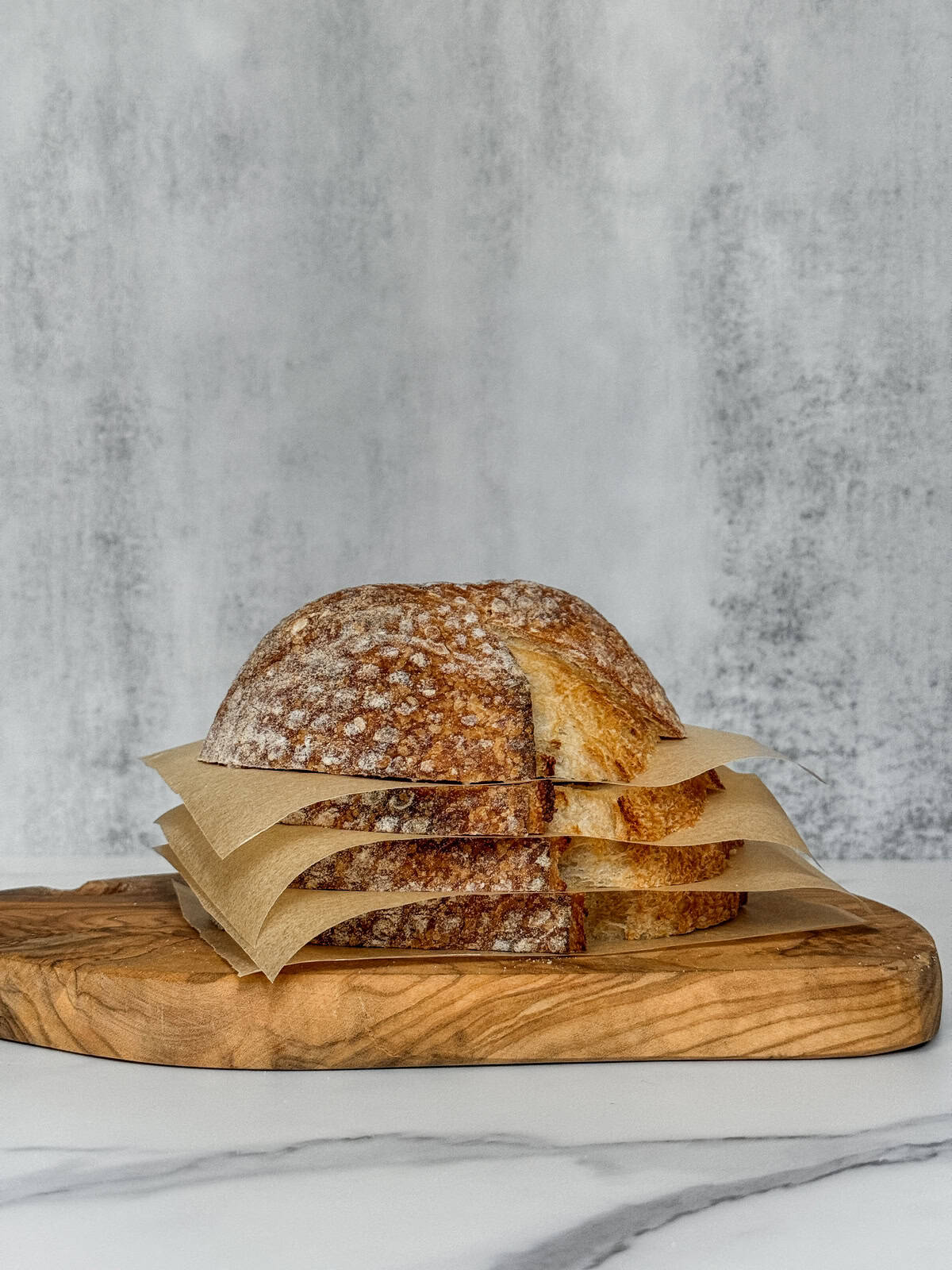
- After that, put the frozen slices in a Ziploc freezer bag or a freezer-safe container, label it, and return it to the freezer. The bread slices will stay fresh for 1 to 2 weeks. You can place parchment paper between the slices before sealing them in the freezer bag.
How to vacuum-seal sourdough bread
Vacuum sealing sourdough bread is one of the best ways to keep it fresh, but it is important to avoid crushing the bread when removing the air from the bag. Here are some tips to vacuum-seal your bread.
- First, allow the sourdough to cool completely and freeze it.
- Once frozen, use a vacuum sealer, but don't remove all the air; seal the bag after 2-3 seconds.
If you fully vacuum-seal it, the bread may get crushed when you thaw it, unless you break the vacuum before thawing.
If your vacuum sealer has a manual seal function, use it to stop the process before the bread crushes. Some models also feature a pulse function that lets you control how much air is removed, helping prevent crushing.
Many bakers use vacuum sealers for sourdough bread, and these are the models they recommend (I haven't tested them myself):
- Nesco: Reliable with adjustable pressure to prevent crushing.
- Anova: Precision sealing with a pulse function to control air removal.
- FoodSaver: Popular and easy to use, with a "gentle" setting for bread.
- NutriChef: Budget-friendly, simple, and perfect for beginners.
How to thaw and refresh sourdough bread
Whole loaf: Take it out of the freezer and leave it wrapped in the fridge or on the counter for a few hours. This slow thawing helps keep the bread moist and prevents it from becoming dry or losing its crispy crust.
To refresh the loaf, quickly run it under water. Then, place it directly on the oven rack in a preheated oven at 350°F (176°C) for 15 to 20 minutes.
Individual slices: You do not need to thaw them before using them. Simply place the frozen slices straight into a toaster or oven. This quick method warms up the bread and makes it crispy again, just like freshly baked.
FAQ
No, freezing doesn't ruin sourdough bread when done properly. Wrapping it well helps prevent freezer burn and moisture loss. When thawed correctly, frozen sourdough tastes very close to fresh.
Freezing sliced sourdough is usually the better option because you can thaw only what you need, reducing waste. That said, whole loaves can also be frozen if you plan to use them soon after thawing.
Yes, sourdough dough can be frozen, though the results depend on fermentation and handling. Some bakers freeze shaped dough in a banneton and bake it later, which is an interesting method to experiment with.
Let's talk sourdough
Do you have any vacuum sealing tips? If you have used a vacuum sealer for bread, share your experience in the comments.
Ready to keep learning?
Now that you know how to freeze sourdough bread, learn how to parbake sourdough to do most of the baking ahead of time and finish the loaf whenever you are ready.