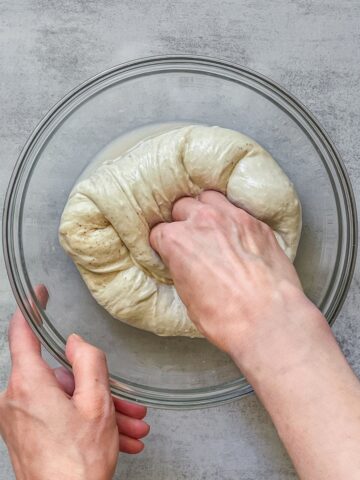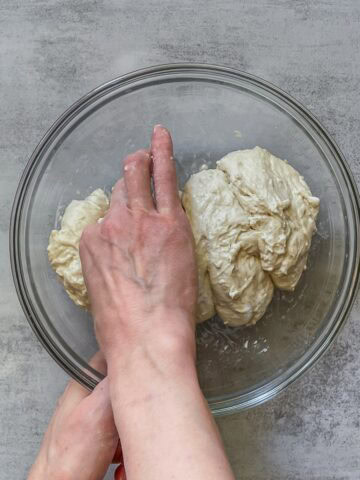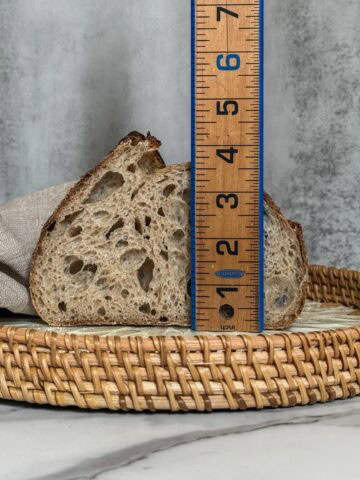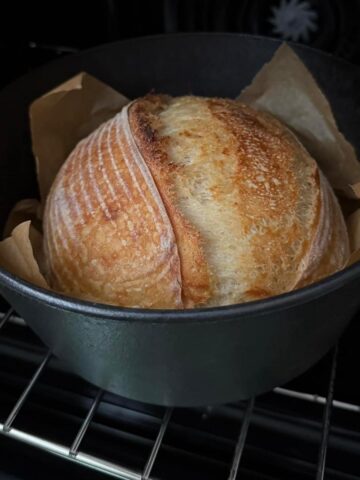

Learn how to make multiple loaves at once, whether it is for sharing with friends, stocking up, or just because you love to bake.
The secret is getting the levain (active starter) amount right, adjusting bulk fermentation, optimizing fridge space, and mastering baking more than one loaf in your home oven.
If you wonder how many loaves you can bake in a home oven at once, the answer is anywhere from one to 24. How? Just stick with me.
In this guide, I will tell you everything you need to know to bake sourdough bread in batches. And don't forget, my sourdough calculator is ready to help you create the perfect formula for your batch baking.
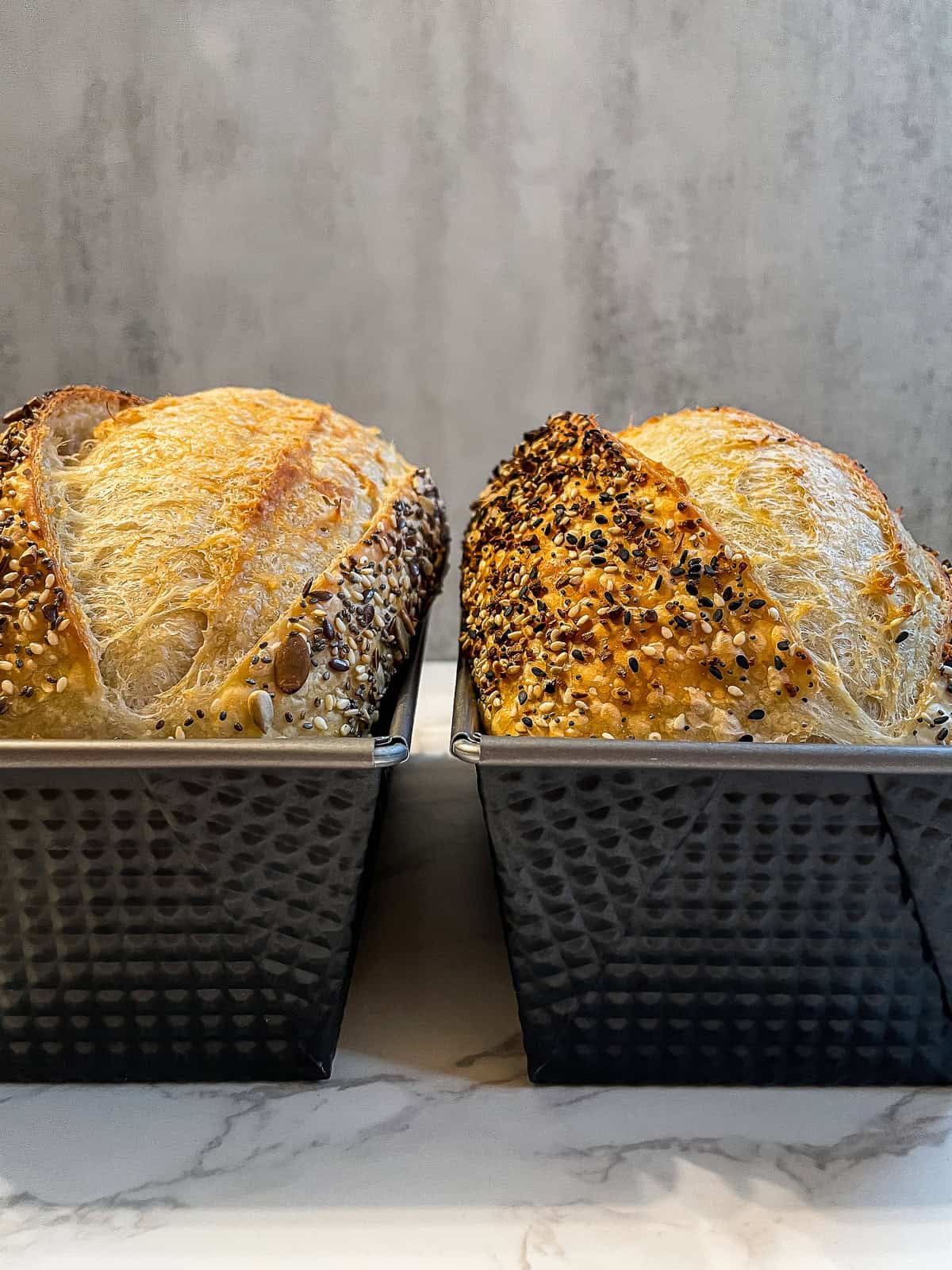
Why make more than one sourdough loaf?
Everyone is busy nowadays. Baking two, four, or even more loaves doesn't take much more effort than baking just one. The baking timeline stays the same, with only a bit more time needed for dividing and shaping the larger mass of dough.
In general, baking multiple loaves at once is a great way to save time, electricity, and make the most of your baking sessions. It is perfect for feeding a crowd, preparing for the week ahead, stocking up, or simply getting ahead with your baking.
What you will need before you start
- Sourdough starter container: Opt for a Cambro plastic container with a lid. Avoid glass jars. They're prone to breaking, and losing your starter is the last thing you want.
- Large mixing bowl or container: Choose a spacious bowl or a food-safe polycarbonate container with a lid. Mixing larger batches of dough is much easier with ample space. You can also use multiple smaller containers.
- Baker's scale: A reliable scale is key for accurate measurements and dividing the dough into loaves. The best baker's scale on the market is My Weigh KD-8000.
- Proofing baskets: Have enough bannetons or suitable alternatives like bowls with clean towels.
- Baking pans: Depending on your preference and setup, use Dutch ovens, enamel roasting pans, loaf pans, or baking stones.
- Cold-proofing capacity: Make sure you have enough room in your refrigerator to hold all shaped doughs during their final proof.
Adjusting your sourdough starter amount
When baking multiple loaves, you need to adjust the amount of active starter (levain) accordingly. If you are following my master sourdough bread recipe, you will need 100g of active starter per loaf.
So, if you plan to bake more than one loaf, simply scale your sourdough bread recipe. Multiply the amount of starter needed by the number of loaves you plan to make.
Here is a quick guide:
- One loaf: 100g of active starter (levain)
- Two loaves: 200g of active starter (levain)
- Four loaves: 400g of active starter (levain)
Tip: Always prepare a bit more active starter (around 10% extra) than needed, as some will be lost during container transfer. My sourdough calculator can help you determine the exact amounts for your batch.
Bulk fermentation adjustments
Sourdough bulk fermentation for larger batches is different from that of a single loaf. Here are some tweaks to make:
- Use a larger container: Use a larger container. This will help you avoid overcrowding and make it easier to fold the dough.
- Watch dough temperature: Larger batches generate more heat, accelerating fermentation. Keep an eye on the dough temperature and percentage rise to avoid over-proofing. You may need to shorten bulk fermentation.
- Aliquot jar method: If you use the aliquot jar method to track bulk fermentation, place the jar inside the larger container to ensure both have the same temperature conditions.
Making room in your fridge
When cold proofing bread dough, refrigerator space becomes super important. You will need enough space for bannetons or proofing basket alternatives.
You can't stack them most of the time, and round baskets or bowls take up more space than oval ones.
Consider these two tips:
- Use a digital fridge thermometer: Aim for a temperature of 39°F (4°C). Remember that different fridge areas, including shelves and spots on the same shelf, can vary in temperature. I use this refrigerator thermometer and love it.
- Optimize space: These stackable shelves help accommodate more loaves. If you bake frequently, you may even want to invest in a second fridge.
Setting your home oven for multiple loaves
To bake multiple loaves at once, plan to maximize your oven space. Here is how you can set up your home oven.
Use multiple baking pans
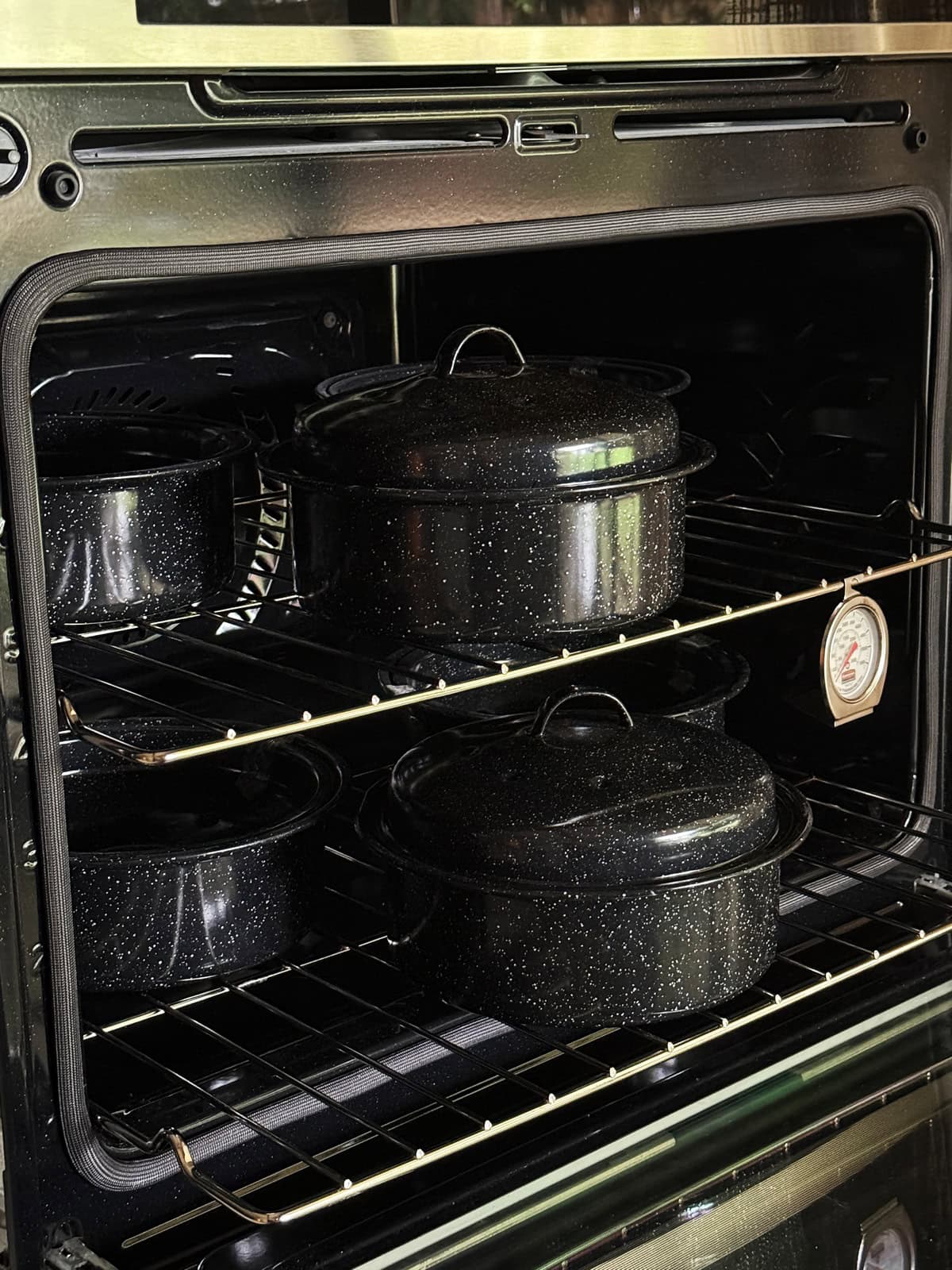
To fit multiple loaves in your oven, use multiple baking pans such as Dutch ovens or enamel roasting pans.
You can fit two 4.5-quart Dutch ovens side by side on a single oven rack. Granite Ware 3 lb round roasting pans or 13-inch oval roasters allow for baking two to four per rack and four to eight loaves at once.
Another option is baking sourdough bread in loaf pans. This method saves space and is ideal for batch baking. Depending on your oven size, you can fit up to six loaf pans on a single rack.
If you have a large-capacity oven, like those from Samsung or Frigidaire, you might fit up to 12 pans. A double oven setup can handle as many as 24 loaves in one bake.
Whichever pans you use, make sure there is enough space between them so heat circulates evenly and each loaf bakes properly.

Rotate loaves between oven racks
If your oven has more than one rack, use one or both to bake more bread at once. Most home ovens only fit two Dutch ovens or roasting pans at a time, even if you have two racks. So, how do you bake four or more loaves?
Start baking two loaves in covered pans (Dutch ovens or roasting pans) on the lower rack. After about 20 minutes, take the pans out with oven mitts, remove the lids, and gently transfer the loaves onto a baking sheet. Then slide the sheet onto the top rack and let the bread finish baking.

At the same time, you can load the next two loaves into the now-empty pans and start baking them on the lower rack. This method works well if you use the same oven temperature for both parts of baking (with steam and without).

To keep your bread from burning and make sure it bakes evenly, always leave enough space around the pans and rotate them if needed. And don't forget to use one of the tricks to prevent the bottoms from burning.
3. Use a baking stone or steel
To bake multiple loaves, you can use an "open bake" method. First, place a baking stone or steel on the middle rack of your oven. Then, put an empty steam pan on the bottom shelf.
Preheat the oven well so the stone stays hot. Once your dough is in the oven on the stone, carefully pour hot water into the steam pan to create steam and bake.
This method is just like baking sourdough without a Dutch oven. Depending on your oven size, you can fit anywhere from two to four artisan loaves on stone or steel.
Baking multiple loaves at the right temperature
When baking in batches, the baking temperature and time remain the same. Here are a few adjustments you may need:
- Preheat the oven properly: Make sure the oven reaches the recommended temperature (for sourdough between 450°F (232°C) and 500°F (260°C) before baking. I always use this oven thermometer to double-check before each bake.
- Bake in batches if needed: If your oven can't fit all the loaves at once, bake in batches. If this happens, maintain the oven temperature. Make sure to close the oven door quickly to reduce heat loss.
- Rotate the loaves: For even baking, rotate the loaves halfway through the baking time.
Monitoring the baking process
What else? Monitor the progress closely to make sure everything is baking evenly.
- Observe crust color: When baking multiple loaves, the color usually varies between each. For a darker, crispier crust, leave the loaves in the oven for a few extra minutes.
- Check internal temperature: Your bread is fully baked when the inside reaches between 200°F (93°C) and 210°F (99°C). Use a digital probe thermometer to check the internal temperature of each loaf.
Adjusting for oven size
If you have a smaller oven, you will need to make a few adjustments. Try using smaller baking pans to create mini loaves. Check out my tips on how to make small-batch sourdough bread, but be careful not to overcrowd the oven, as that can lead to uneven baking. If needed, plan to bake in two or more batches.
To see how many pans you can fit, practice placing them in the cold oven. Shift them around, adjust the racks, and don't forget to leave space for the steam pan. If you use Dutch ovens, double-check that the lids fit without bumping the oven walls.
If you are going with the "open bake" method, make sure there is enough space between the racks or heating elements so your bread can rise without getting squished.
Storing multiple loaves of sourdough
So, you have baked two, four, or maybe even more loaves. Your kitchen smells amazing, and you are stocked with bread for the week. Now what?
It is important to plan your storage to keep your sourdough fresh. Keep a loaf or two at room temperature for daily use, and store the rest in a way that preserves its flavor and texture.
Read my guide on storing sourdough bread. You will learn the best methods, what to avoid, and how to refresh your loaves when you are ready to enjoy them.
Let's talk sourdough
Have you ever made two or more loaves at once? If you have any tips or suggestions, share them in the comments below.
What's next?
If you are ready to take the next step, learn how to sell sourdough bread and start a micro bakery.