
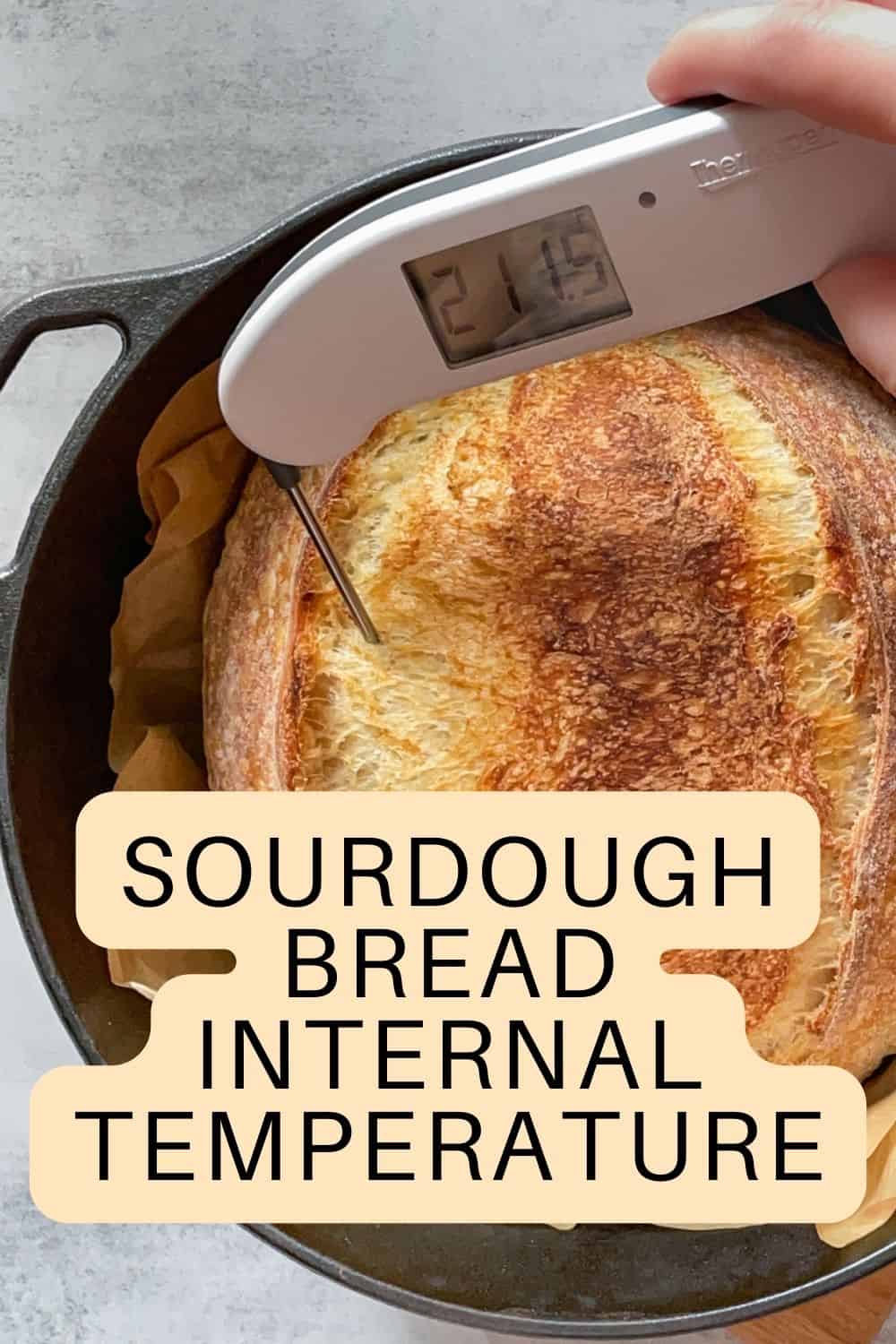
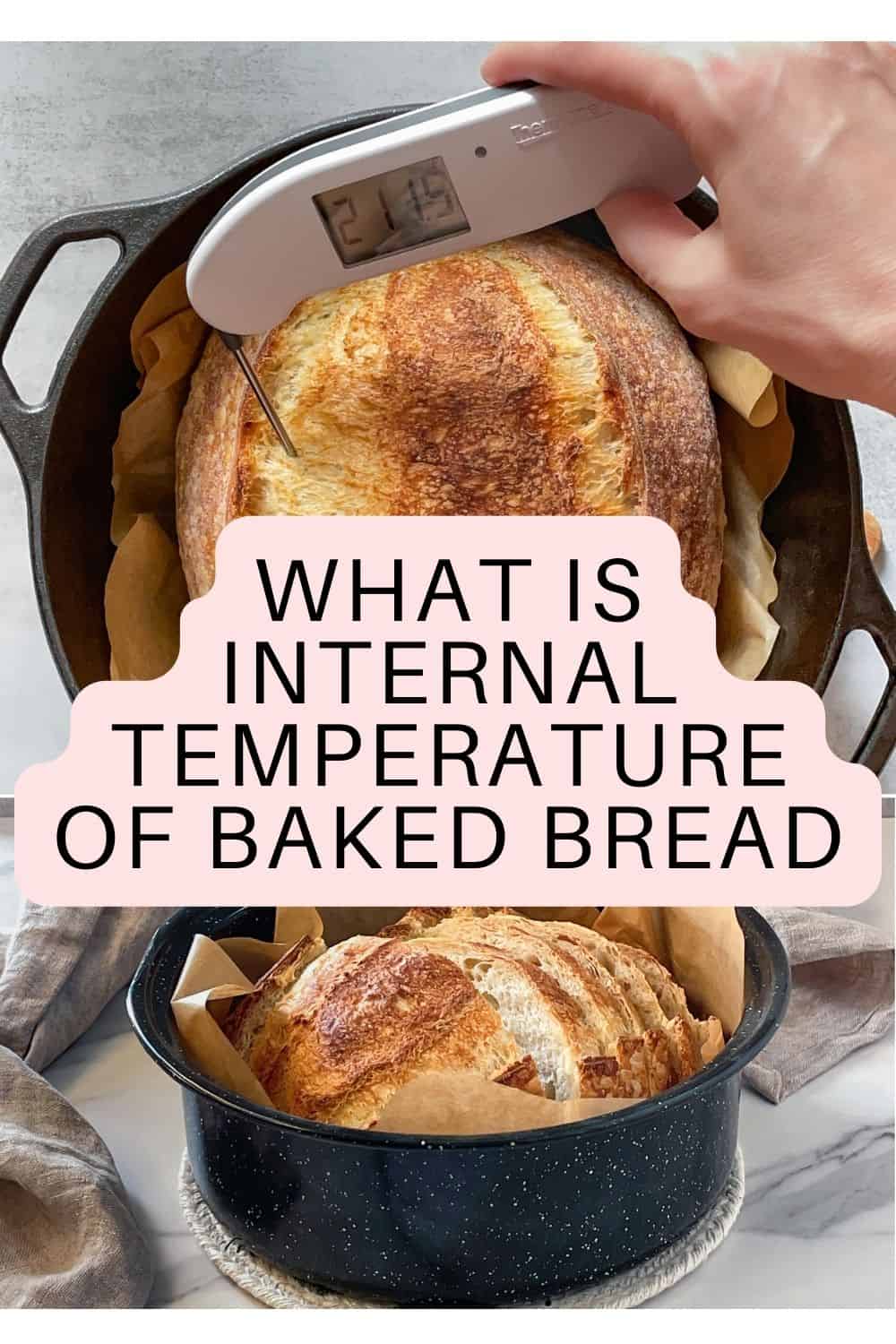
The internal temperature of bread is one of the most important things to check when baking sourdough. It should typically be between 200°F and 210°F (93°C and 99°C). I usually aim for 207°F (97°C).
If you are wondering how to tell when your bread is truly done, checking the internal temperature is still the most reliable method.
What is the internal temperature of bread?
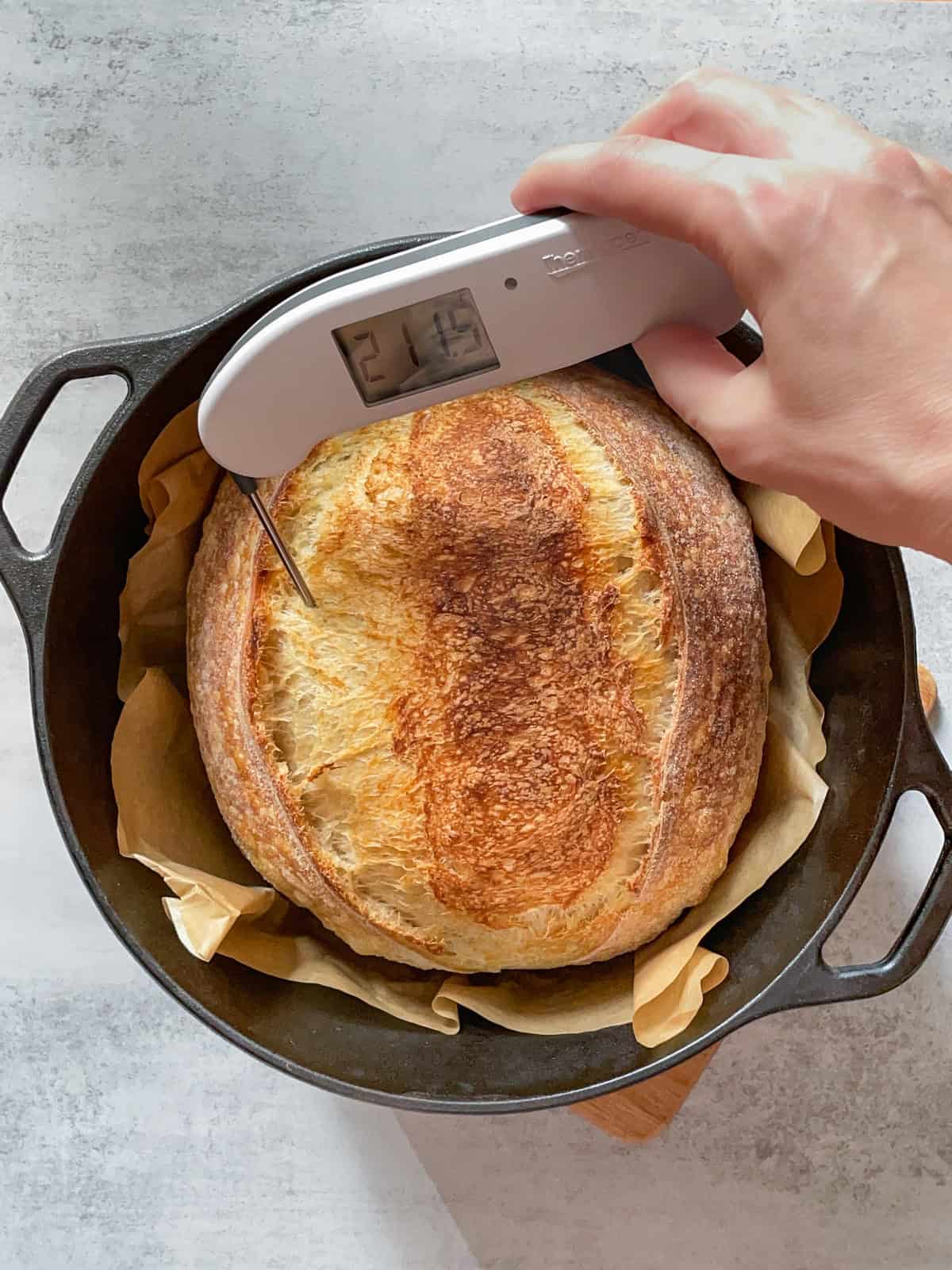
The internal temperature of bread is the temperature right in the center of the loaf once it is fully baked.
According to baking guidelines, the internal temperature of baked sourdough bread should be between 200°F and 210°F (93°C and 99°C).
A good rule of thumb is that once your thermometer hits 207°F (97°C), you can feel confident your bread is fully baked.
Here is something good to know. Baking your bread longer won't raise its temperature past 210-211°F (99°C).
That is because moisture in the dough prevents it from hitting the boiling point of water, which is 212°F (100°C). So even if you leave your loaf in the oven a bit longer, it won't overbake.
Crust color vs. internal temperature
There is an ongoing debate in the bread world: Should you trust the crust color or the internal temperature to know when your bread is ready?
Some bakers think a deep, golden crust is a sign of doneness. Others find the probe thermometer much more reassuring. So, what is more accurate?
According to Bakerpedia, the final 15% of baking (what they call the "bake out zone" on the temperature curve) doesn't change the temperature much. Your bread reaches its peak internal temperature before it is fully baked.
This tells us something really helpful: the inside of bread is already "fully baked" by the end of the baking time. This idea is that it is difficult to overcook the interior while waiting for the crust to brown.
I love how Karyn Lynn Newman, author of Sourdough by Science, says, "It is very hard to burn bread if you are checking on it every 2-5 minutes once the internal temperature reaches 207°F (97°C)."
So, you can absolutely let the crust deepen in color without worrying about overbaking the crumb. The bread's moisture will keep it from drying out.
Bread internal temperature: To check or not to check
If you are new to sourdough baking, I recommend using a digital probe thermometer. It takes the guesswork out and is one of those small tools that give you a big boost in confidence.
If you love a lightly golden crust, the thermometer is your best friend. But if you love bold, dark crusts, you might trust your instincts without checking the internal temperature.
Advice I love comes from Maggie Glezer, author of Artisan Baking:
My advice to new bakers is to bake the bread until you think it's done, then add 5 more minutes!
And the last tip for those making multiple loaves, maybe for a farmer's market or bakery setup. Be sure to check the internal temperature of each loaf. It is a small step that guarantees quality and consistency, loaf after loaf.
And if you ever want to grow with sourdough, check out how to sell sourdough bread from home.
Other signs your bread is baked
Checking the internal temperature is super helpful, but over time, you will start to notice other clues that tell you your sourdough bread is done (or not quite there yet).
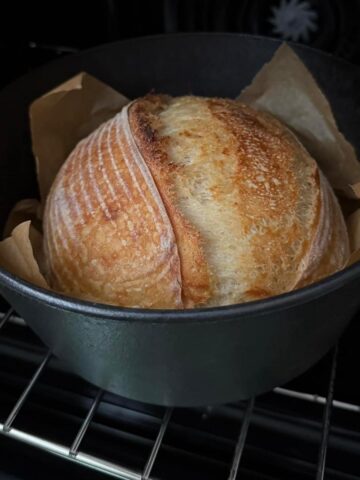
- Crust color: A deep golden or brown crust indicates flavor and doneness. That rich color comes from the Maillard reaction.
- Hollow sound: Tap the bottom. If it sounds hollow, that's a good sign it's baked through.
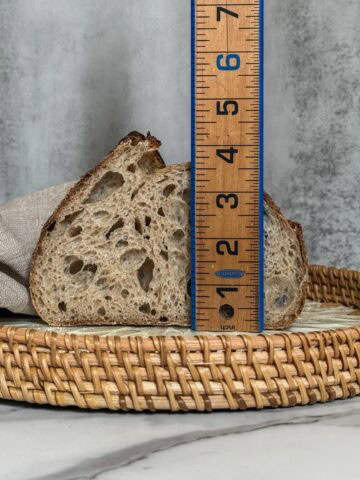
- Nice rise and shape: Your loaf should feel light for its size and have a lovely rise, called oven spring. A well-shaped loaf means your shaping and proofing were spot on. If you still wonder what a perfect sourdough loaf looks like, check out my post.
- Smell: If your kitchen smells like a bakery, you are doing something right. My neighbors always know when I'm baking bread. Well, it is hard to miss that warm, toasty aroma.
Let's talk sourdough
Do you stick a thermometer into every loaf as I do, or are you more of a crust-color kind of baker? Drop your thoughts in the comments.
Ready to keep learning?
Finally, before making your very first sourdough loaf, learn about sourdough bread ingredients and how to choose the best ones for your baking.