
Everyone has their own idea of what perfect sourdough bread looks and tastes like, but some features make a loaf truly stand out. While your sourdough journey will be unique, setting personal goals for your baking is important.
What makes up a perfect sourdough bread
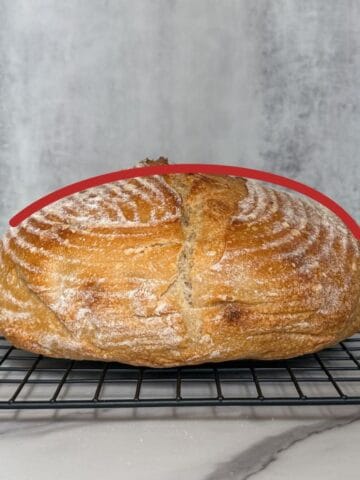
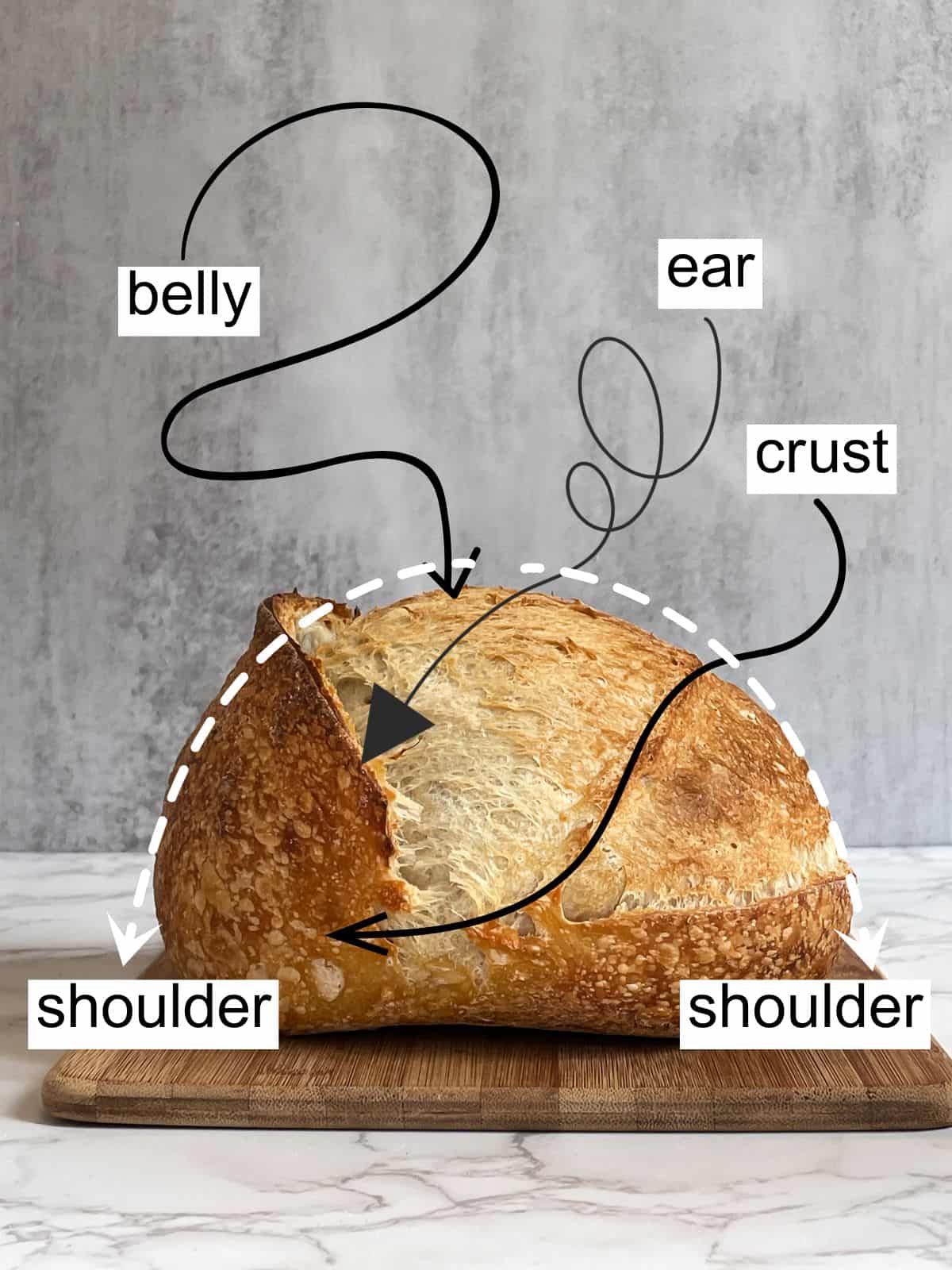
The appearance of your bread reveals a great deal about its quality. A perfect sourdough loaf has tall, rounded "shoulders" and a great oven spring when it bakes.
The scoring should create a curved ear, indicating that the dough underwent perfect fermentation, shaping, and scoring.
If the bread has a triangle shape or looks flat instead, it is a sign that the dough didn't ferment properly, probably because it was under- or over-proofed, or the starter wasn't strong enough.
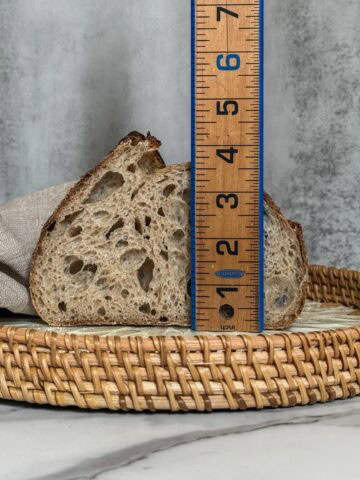
When you cut the bread, you should see what is called a "bunny profile." This means the ear resembles bunny ears, and the loaf's curved belly resembles the bunny's back.
Anatomy of a sourdough loaf
Each sourdough loaf has features that help you read your baked bread like a map. Once you understand your loaf's anatomy and learn how to read the crumb, you will start seeing not just what went right or wrong, but how to make the next one even better.
Here is a look at the key "body parts" of a baked sourdough bread:
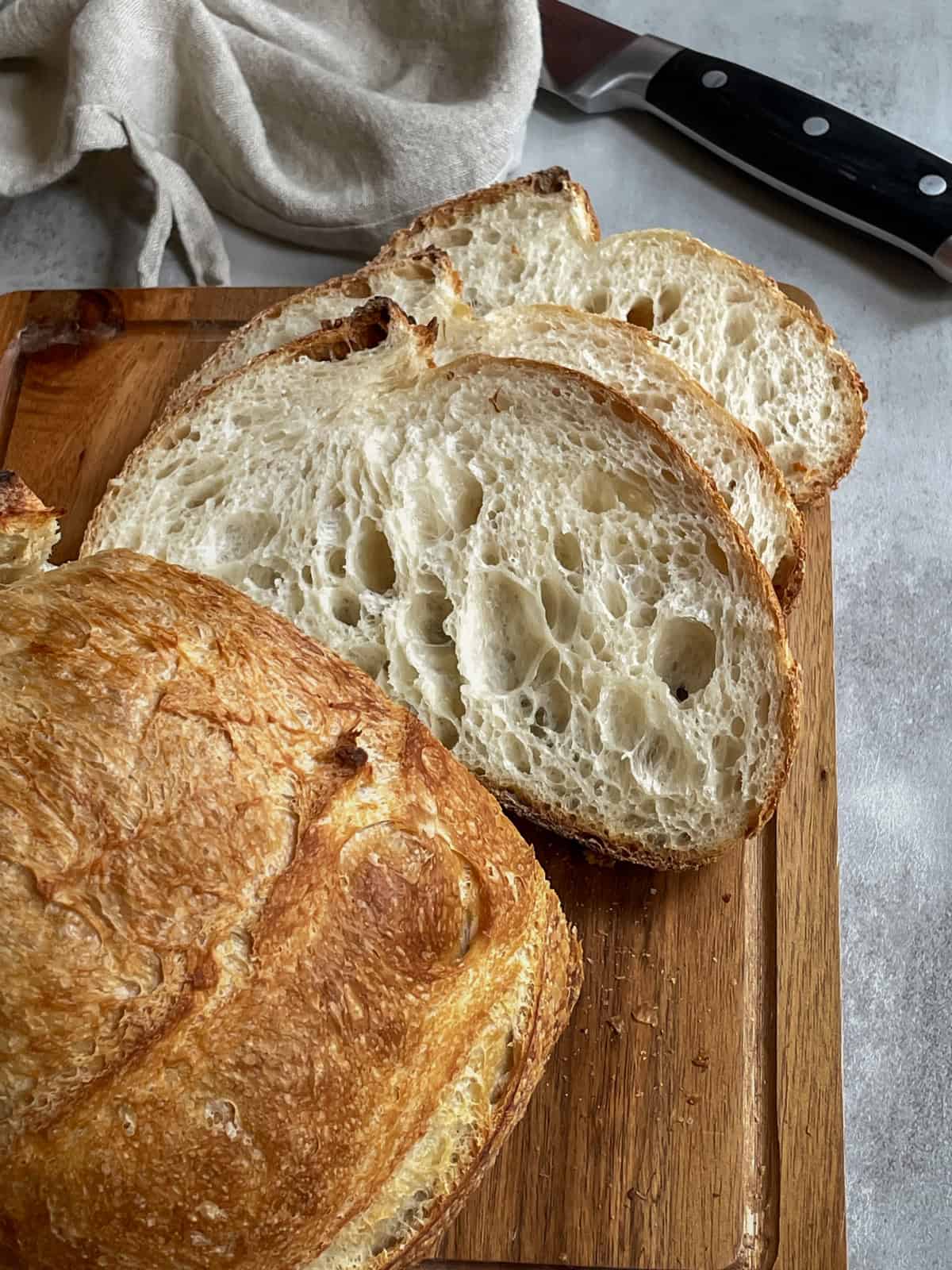
Crust - The outer skin of the loaf. A perfect sourdough crust should be deep golden brown, crisp, and evenly caramelized, which shows the Maillard reaction has worked perfectly. It adds texture and flavor, protects the soft inside, and keeps the bread's shape. If the crust looks pale or has uneven brown spots, it indicates fermentation problems.
Ear - The raised flap along the score line, created by a precise cut and strong oven spring, is called the sourdough ear. It is a sign of good shaping, tension, and fermentation, and, shortly, something most bakers aim for.
Belly - The rounded underside of the loaf. This part rises, expands, and rests against the baking surface. It should be smooth and round, with a tall, pronounced ear that makes the loaf look even more appealing.
Crumb - The inside of the bread. The crumb should be light and airy, with evenly spaced holes (alveoli) from top to bottom and end to end. It is a combination of dough hydration, proofing, and shaping.
Sourdough taste and flavor
Taste - The tangy taste of sourdough is one of its signature traits, but it should not be overly sour. A combination of factors, like your starter, bulk fermentation, and cold proofing, allows you to adjust the flavor to your liking, whether you want your sourdough less sour or more tangy and pronounced.
Flavor - The flavor of sourdough bread depends on many things: the water and flour used to make the bread, the starter feeding ratio and starter hydration, bulk fermentation, and final proofing.
However, beware of under-fermented sourdough. It is a common reason behind loaves that lack the desired depth of flavor and result in an unwanted gummy texture.
Mastering sourdough at home
Making the perfect sourdough loaf takes patience and practice. On this website, you will find all the steps to help you along the way, from creating a sourdough starter to achieving a crumb you will be proud of.
Even professional bakers make mistakes because numerous factors affect the final result. The key is to keep learning from those mistakes. As Tom Cucuzza said, "Every loaf is a lesson. Every mistake is edible."
Some people say that as long as bread tastes good, its appearance doesn't matter. While taste is definitely important, I think appearance matters too. From its appearance on the table to how the sourdough is sliced, the presentation adds to the overall experience.
Your journey with sourdough will be unlike anyone else's. This website provides a solid starting point, but it is up to you to take what you learn and make it your own. Experiment, enjoy the process, and make your dream of perfect sourdough bread a reality.
Let's stalk sourdough
What is your baking goal? Are you striving for a specific texture, flavor, or something else? Share your thoughts and experience in the comments below.
Ready to keep learning?
Curious how artisanal sourdough compares to store-bought bread? Check out true sourdough vs commercial bread to understand the differences.