
Quick Summary: Cold proofing (also called cold retard) means letting your shaped dough finish its final rise slowly in the fridge, usually for 8 to 16 hours, though it can go up to 48-72 hours. It deepens the sour flavor, improves texture, and makes the dough easier to score. It isn't strictly required, you can proof at room temperature instead, but most bakers prefer the flavor and convenience of a cold proof.
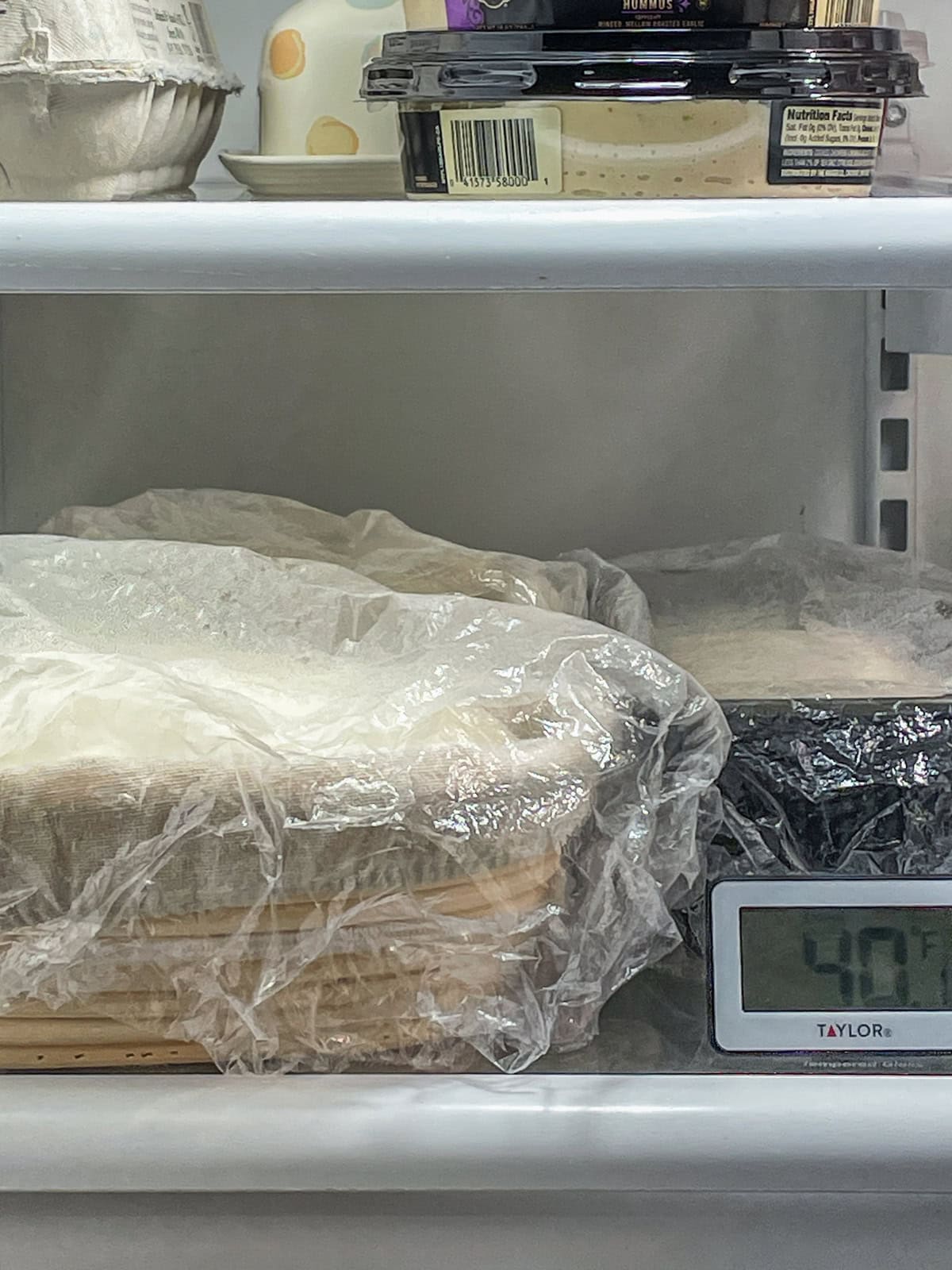
What is cold proofing?
During a cold proof, the cold slows the yeast down while the bacteria keep working, producing the lactic and acetic acids that give sourdough its tang.
Fermentation doesn't stop in the fridge: the dough keeps fermenting actively until it cools to around 39°F (4°C), then continues more and more slowly from there. This is why dough that has already over-fermented won't be "saved" by the fridge, it keeps proofing as it cools.
That slow, even fermentation is what develops the flavor and makes the dough easier to handle. (Wondering whether to cover dough during the cold proof? Here is what to know.)
Benefits of cold proofing sourdough
Cold proofing takes time (8-16 hours or longer), but it yields tastier, healthier, and better-textured sourdough.
One of the biggest advantages of cold proofing is how it helps develop the tangy flavor that sourdough is famous for. The cold temperature slows down the yeast and encourages bacteria to produce acids, mainly lactic acid.
The longer the dough stays in the fridge, the more acids are produced, making the sourdough taste more sour.
Cold proofing also has nutritional benefits for sourdough. The slow fermentation helps break down phytates, which can block your body's ability to absorb important minerals.
A recent French study found that sourdough fermentation supports gluten digestion, improves blood sugar levels, and enhances gut health. However, more research is needed to confirm whether sourdough helps control blood sugar by lowering the glycemic index.
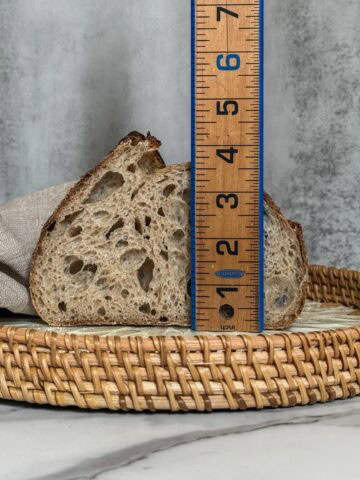
Besides improving the flavor and nutrition, cold proofing helps with the bread's texture. The cold fermentation gives the bread a chewier texture, a thicker crust, and a soft, custardy crumb that tastes amazing.
It also makes the dough easier to shape and score, allowing you to make more intricate designs on the bread. Plus, cold proofing improves oven spring, helping the bread rise more during baking.
Finally, cold proofing is a wise way to always have fresh bread on the table. By mixing several batches of dough over the weekend, you can bake fresh sourdough throughout the week, saving time and effort.
Do you have to cold proof sourdough?
It isn't strictly necessary to proof sourdough in the fridge. Whether to use the fridge or the countertop is up to you (for the full picture, see my guide to sourdough proofing.)
To compare the two methods, bake two loaves using the same recipe: one with cold proofing and one baked the same day.
This will help you see how each proofing method affects the bread's flavor and texture, so you can choose what works for you.
When it comes to flavor, it is all about personal preference. Taste is subjective, so what one person loves, another might not enjoy as much.
The flavor is also affected by factors such as your kitchen's specific conditions, the type of flour used, and the time of year. Experiment with both methods to find your own sourdough style that suits your taste.
How long should you cold proof sourdough?
Most sourdough cold proofs for 8 to 16 hours, which suits a typical overnight schedule. You can go longer, up to 24, 48, or even 72 hours, for a tangier flavor and more convenience, as long as the dough completed its bulk fermentation first.
- 8-12 hours: mild tang, reliable for beginners
- 12-24 hours: deeper flavor, the sweet spot for many bakers
- 24-72 hours: most sour, best for flexible scheduling
The longer the cold proof, the more sour and the easier to score, but if the dough was already fully proofed/fermented before the fridge, a very long cold proof can overproof it.
FAQ
Do you have to cold proof sourdough? No. Cold proofing is optional. You can proof at room temperature and bake the same day. Many bakers choose to cold proof because it develops more flavor, makes scoring easier, and offers more flexibility in their baking schedule.
How long can sourdough stay in the fridge?
Shaped dough can cold proof for up to 48-72 hours. Beyond that, it risks overproofing and losing structure. For most loaves, 8-24 hours is ideal.
Can you cold proof too long?
Yes. If the dough was fully fermented before going in the fridge, a very long cold proof can overproof it, leaving it slack and hard to score. Watch the dough, not just the clock.
Let's talk sourdough
How do you usually proof your sourdough, in the fridge or on the countertop? Share your experience in the comments.
Ready to keep learning?
Before your bread goes into the oven, it is time to score. Check out my sourdough scoring guide to give your loaves beautiful patterns and proper oven spring.