

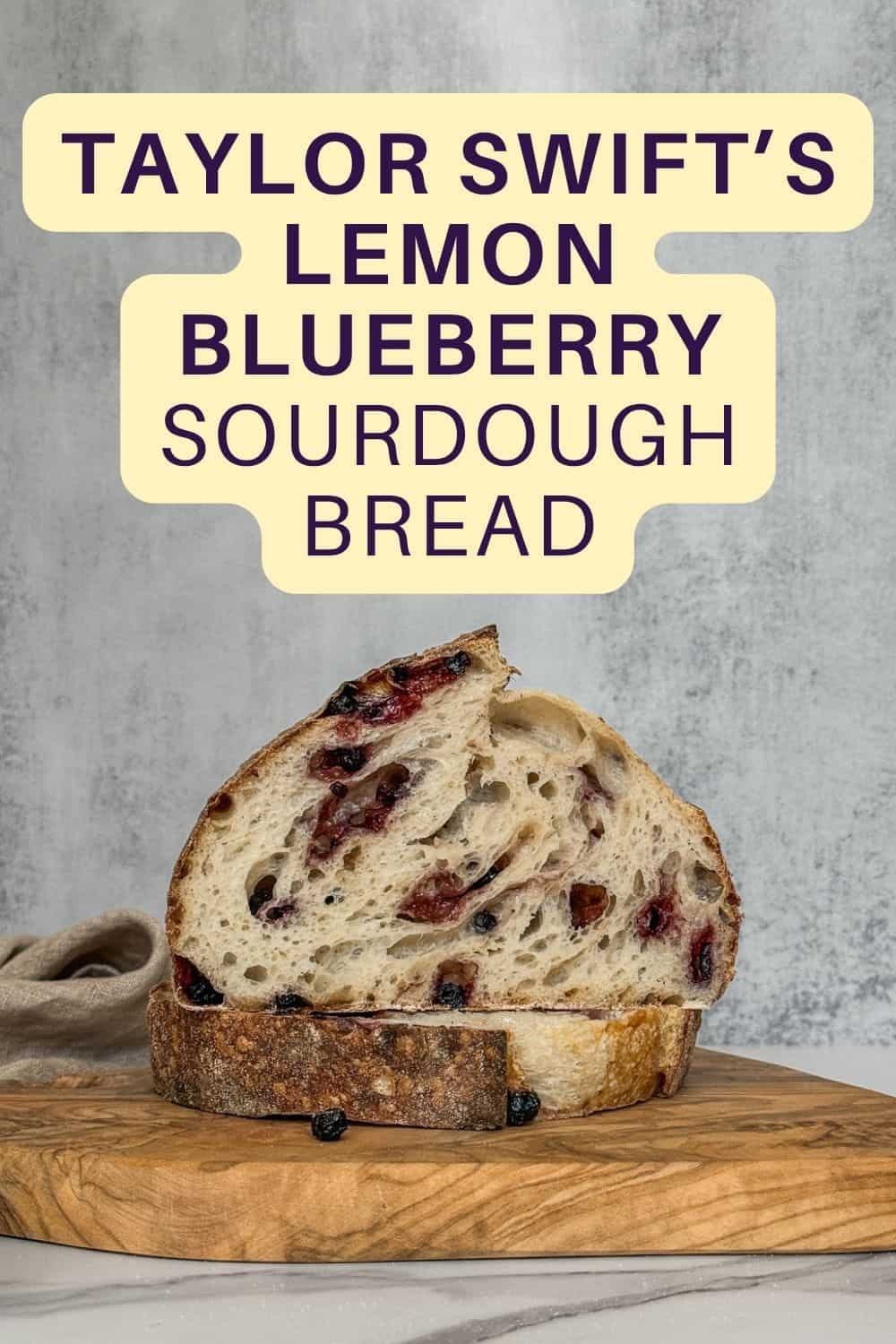
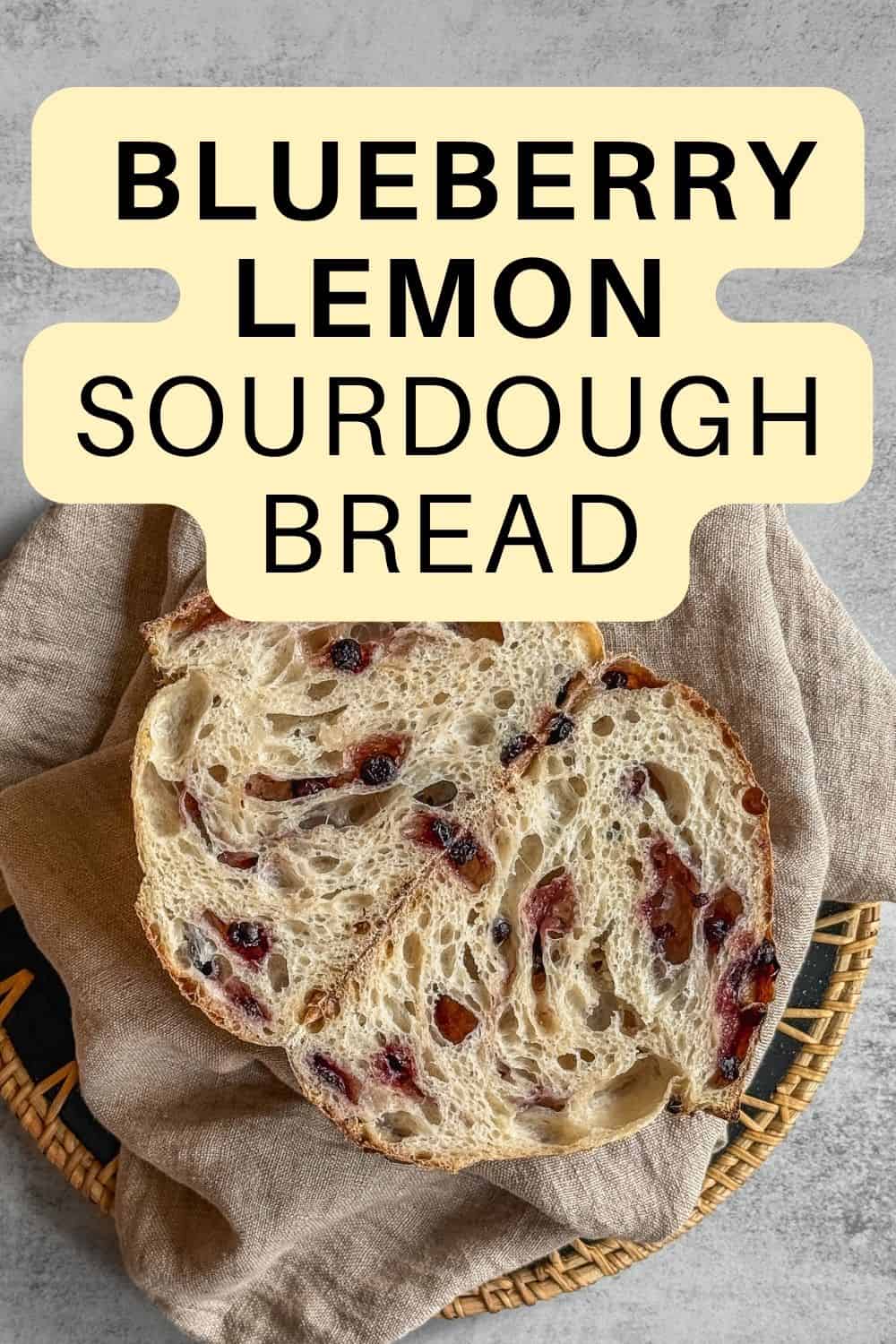
If you love the tangy taste of sourdough paired with bright, fruity flavors, you will love Taylor Swift's lemon blueberry sourdough bread. This loaf is perfect for a sunny weekend breakfast, gifting, or as a brunch centerpiece.
To make this sourdough, you need some experience adding inclusions to sourdough and using lamination to evenly distribute ingredients throughout the dough.
If you are new to sourdough baking, start with my Beginner's Sourdough Guide. To learn how to make your own starter, follow my Beginner Sourdough Starter recipe. Then, before trying this recipe, practice the basic techniques in my Beginner's Sourdough Bread recipe.
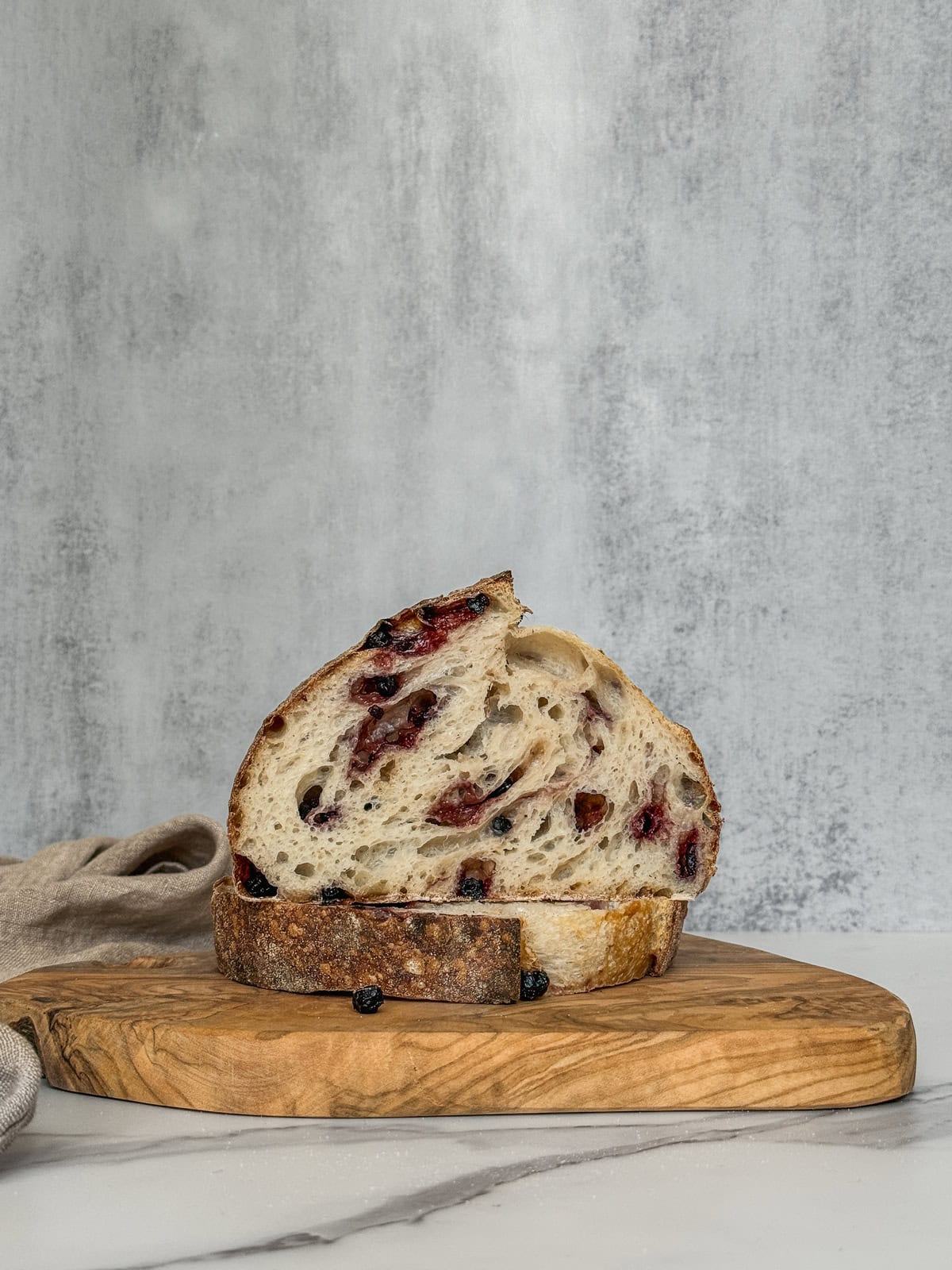
Why Taylor Swift loves lemon blueberry sourdough
Fans often wonder, "What bread does Taylor Swift bake?" The answer: she is famously obsessed with sourdough, especially flavors like lemon blueberry.
On the New Heights podcast, she shared that sourdough baking has "taken over [her] life," and fans quickly went wild online, sharing recipes and speculating about her favorite loaves.
Her lemon blueberry sourdough is a standout, with its tangy flavor, bright citrus, and sweet blueberries. Travis Kelce specifically said his favorite of her loaves so far is a blueberry sourdough, which helped fuel even more fan interest in that flavor profile.
And it doesn't stop there. She is also known to experiment with other fun flavors, including cinnamon swirl, cinnamon raisin, and even funfetti sourdough.
Taylor Swift lemon blueberry sourdough bread
Fans who analyze her bread photos believe her loaves are made with fresh blueberries and lemon. Still, this easy version uses dried blueberries and dried lemon peel to recreate her signature flavor in a beginner-friendly recipe.
Fresh blueberries add moisture to the dough, and during baking, the berries tend to burst and discolor the bread. Fresh lemon zest also contributes moisture and contains oils that slightly relax the gluten, affecting bulk fermentation.
In her original loaf, Taylor might include a touch of lemon juice. While too much lemon juice slows fermentation, a small amount enhances flavor without affecting the rise.
It is unclear whether she includes sugar or honey, which would make it more of a breakfast sourdough loaf than a traditional rustic sourdough.
Using dried fruit helps maintain consistent dough hydration and predictable bulk fermentation, making this version easier to make at home.
Ingredients
- Flour: I'm using King Arthur bread flour. You can replace it with Kirkland all-purpose flour or a combination of both.
- Water: Opt for good-quality water.
- Levain (active starter at peak): Use 100% hydration sourdough starter at peak activity.
- Salt: Use fine sea salt. Avoid iodized table salt.
- Whole dried wild blueberries: I'm using the ones from Trader Joe's (do not confuse them with freeze-dried blueberries).
- Fresh lemon zest: Finely grate the zest to distribute it throughout the dough evenly.
- Lemon juice: Use a small amount to bring the citrus flavor without affecting bulk fermentation.
Recipe substitutions & variations
- Fresh blueberries: Use 50-60 g fresh blueberries. If the dough feels slack, try reducing hydration. Fold fresh blueberries in later, or gently laminate your sourdough to avoid bursting and discoloration.
- Dried lemon peel: Replace fresh lemon zest with it. Use about 2 teaspoons for a brighter, more pronounced lemon aroma.
- Mixed citrus & berries: Try adding orange zest and a handful of dried cranberries.
- Small loaves: Use this combo to bake sourdough mini loaves for gifting.
Final bread formula
| Ingredient | Baker's Percentage | Weight |
|---|---|---|
| Bread flour | 100% | 300g |
| Water | 75% | 225g |
| Levain/Active starter, 100% hydration | 20% | 60g |
| Salt | 2% | 6g |
| Blueberries (dried or fresh) | 18% | 54g |
| Fresh lemon zest | 1% | 3g |
| Lemon juice | 1.5% | 5g |
- Total dough weight is 653g. If you need to adjust the bread formula for your own loaf, use baker's percentages or my sourdough calculator.
- My kitchen temperature is 73°F (23°C), with a humidity level of 40%
- Bulk fermentation: 7 hours to 7 hours 30 minutes with a 40-45% increase in dough size.
- Proofing time: 14 hours cold-proof in the fridge
- Bake in a conventional oven at 450°F (232°C) with the lid on for 20 minutes; without the lid, 15-17 minutes.
Tools & Equipment
For all the tools and equipment I use, check out my Essential Sourdough Tools & Equipment guide. It covers everything you need to bake sourdough bread successfully.
How to make lemon blueberry sourdough bread
1. Autolyse
Mix water, lemon juice, and flour until a shaggy dough forms. Cover and rest 30 minutes. This rest allows flour to hydrate and gluten to begin forming naturally (see my blog post on sourdough autolyse).
2. Add levain
Add the levain (active sourdough starter at peak activity) and salt, and mix using one of the bread dough mixing techniques. Cover the dough and let it rest for 30 minutes. Once you add levain (active sourdough starter), bulk fermentation starts.
4. Bulk fermentation
With wet hands, perform two sets of stretch and folds followed by one set of coil folds, with a 30-minute rest between each set.
After the set of coil folds, let the dough rest for 30 minutes. Then, gently laminate the dough and scatter blueberries and fresh lemon zest over it. Fold carefully to avoid crushing them. If using fresh blueberries, toss the blueberries lightly in flour first.
After lamination, let the dough continue bulk fermentation and monitor its rise closely.
Note: I allowed the dough to rise about 45% at 73°F (23°C). Your target rise will vary depending on your kitchen temperature. Warmer conditions will speed up bulk fermentation, while cooler environments will slow it down.
Bulk fermentation is complete when small bubbles appear on the surface and along the sides of the dough, the edges look slightly domed, and the dough gently wobbles when you shake the bowl.
5. Preshape and shape
Lightly flour your table, preshape the dough into a round, and let it rest for 10-15 minutes. When making one loaf, you can skip preshaping. Then shape the dough into a batard and place it seam side up in a prepared 8-inch oval banneton (see my guide to shaping bread dough).
6. Proof
Cover the banneton with a clean towel or a disposable plastic cap, or place it in a reusable plastic bag. Refrigerate overnight for 8-14 hours or longer.
7. Bake the loaf
Preheat the oven to 500°F (260°C) with a Dutch oven inside for 30 minutes. Flip the dough onto parchment paper, score the top, transfer it into the hot Dutch oven, and cover.
Reduce the oven temperature to 450°F (232°C) and bake covered for 20 minutes. 20 minutes covered, then 15-17 minutes uncovered until deep golden brown.
If you want to bake using the open-bake method, read my blog post on baking sourdough without a Dutch oven.
Once baked, remove the bread from the Dutch oven and cool on a wire rack for at least 2 hours before slicing.
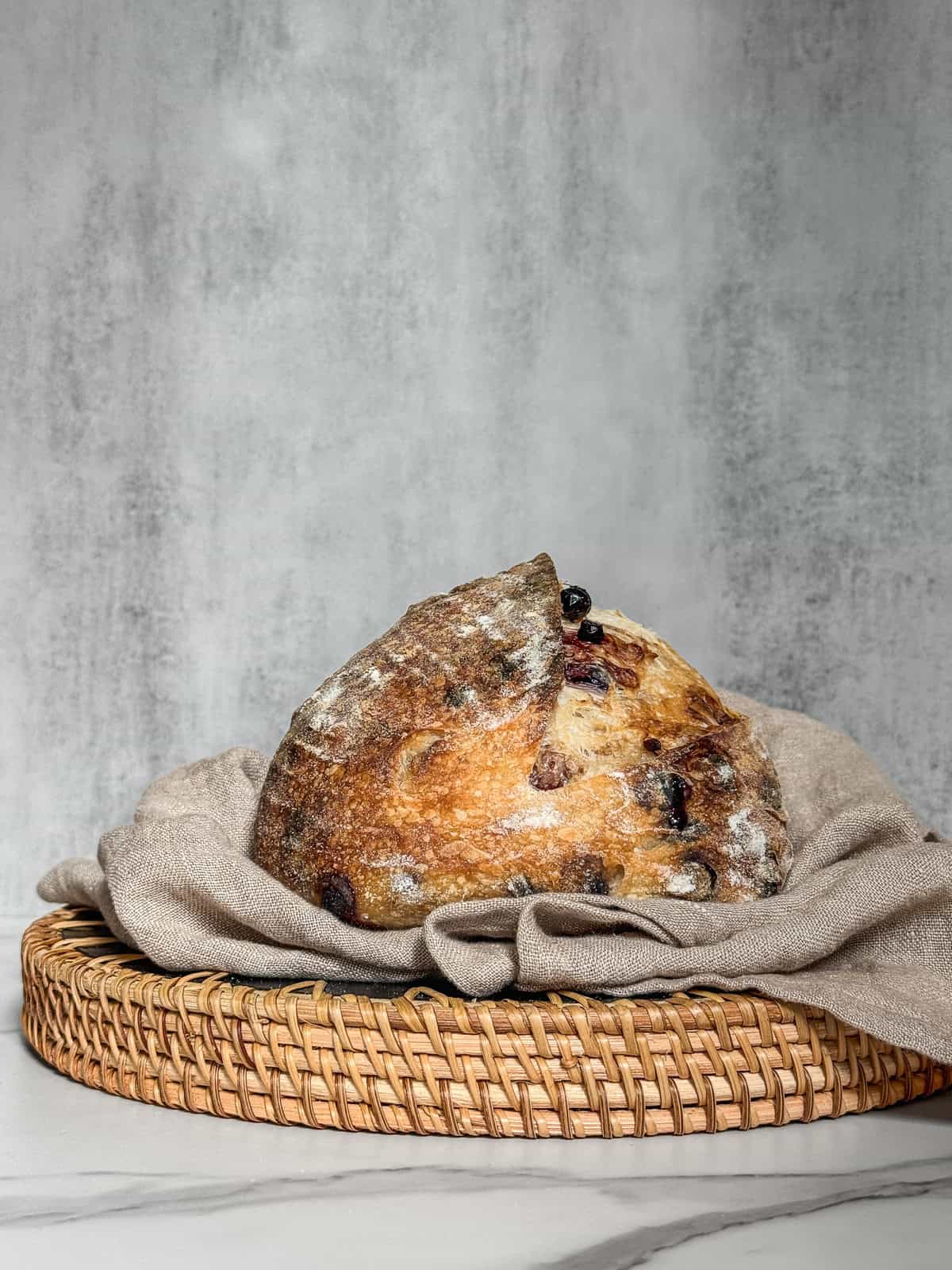
Bulk fermentation expectations
Dried blueberries, fresh lemon zest, and a teaspoon of lemon juice slightly affect bulk fermentation in lemon blueberry sourdough.
Dried blueberries don't add extra water, so dough hydration remains predictable, and bulk fermentation proceeds normally.
Fresh lemon zest and lemon juice add a small amount of oil and acidity, slightly relax the gluten, and make the dough feel a bit softer, but they don't noticeably slow the rise.
If you use fresh blueberries instead of dried, their extra moisture increases dough hydration, making the dough stickier. Bulk fermentation becomes less predictable, so you will need to handle the dough gently as the berries may bleed, leaving streaks in the crumb. The dough may rise faster initially, leading to overfermentation.
Expert tips
- Use dried or fresh blueberries strategically: Dried blueberries are easier to work with and won't change dough hydration. Fold them in during stretch and folds or lamination. If using fresh blueberries, add them during lamination to prevent bursting and uneven coloring.
- Adjust dough hydration: This recipe is 75% hydration with dried fruit. If you use fresh blueberries, slightly reduce the water to keep the dough manageable.
- Watch bulk fermentation: Dough with fruit or citrus may rise less visibly, but it can still be ready to shape.
- Safety tip: Always use oven mitts or silicone gloves to handle hot pans.
- Check for doneness: Your bread is fully baked when the internal temperature reaches 205-210°F (96-99°C). I usually aim for 207°F (97°C) or higher. Use a digital probe thermometer to check.
How to serve it
This blueberry lemon sourdough bread is delicious on its own or served with a variety of toppings and dishes.
Spread it with homemade mascarpone and a drizzle of honey, lemon curd, or cream cheese. It also pairs well with broccoli cheddar soup, butternut squash soup, or carrot soup.
For a full meal, enjoy it with roast chicken or turkey, a fresh herb-crusted goat cheese or feta salad, or simply with grilled white fish.
PrintRecipe
Lemon Blueberry Sourdough Bread
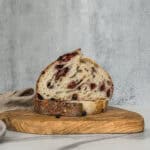
This lemon blueberry sourdough bread combines tangy sourdough with bright lemon flavor and sweet blueberries. This easy loaf has a soft, airy crumb and a refreshing fruity aroma, perfect for breakfast, brunch, or gifting.
- Prep Time: 20 hours, 40 minutes
- Cook Time: 40 minutes
- Total Time: 21 hours, 20 minutes
- Yield: 1 loaf 1x
- Category: Sourdough Recipes
- Method: Baking
- Cuisine: American
Ingredients
For the levain (an active starter):
- 22 g sourdough starter
- 22 g bread flour
- 22 g water
For the bread dough:
- 300 g bread flour (I use King Arthur organic bread flour)
- 225 g water (75% hydration)
- 60 g levain (active starter at peak)
- 6 g fine sea salt (I use Redmond ancient fine sea salt)
Flavor additions:
- 55 g dried wild blueberries (or fresh blueberries)
- 4 g (2 teaspoons) fresh lemon zest (zest from about half a lemon)
- 5 g (1 teaspoon) lemon juice
10 g white rice flour (for dusting)
Instructions
- Autolyse: Mix water, lemon juice, and flour until a shaggy dough forms. Cover and rest 30 minutes.
- Add levain and salt: Add the levain (active sourdough starter at peak activity) and salt, and mix using one of the bread dough mixing techniques. Cover the dough and let it rest for 30 minutes. Once you add levain (active sourdough starter), bulk fermentation starts.
- Fold the dough: With wet hands, perform two sets of stretch and folds followed by one set of coil folds, with a 30-minute rest between each set. After coil folds, let the dough rest for 30 minutes. Then, gently laminate the dough and scatter blueberries and fresh lemon zest over it. Fold carefully to avoid crushing them.
- Continue bulk fermentation: After lamination, let the dough continue bulk fermentation and monitor its rise closely. Bulk fermentation is complete when small bubbles appear on the surface and along the sides of the dough, the edges look slightly domed, and the dough gently wobbles when you shake the bowl.
- Preshape and shape: Lightly flour your table, preshape the dough into a round, and let it rest for 10-15 minutes. When making one loaf, you can skip preshaping. Then shape the dough into a batard and place it seam side up in a prepared 8-inch oval banneton.
- Proof: Cover the banneton with a clean towel or a disposable plastic cap, or place it in a reusable plastic bag. Refrigerate overnight for 8-14 hours or longer.
- Bake the loaf: Preheat the oven to 500°F (260°C) with a Dutch oven inside for 30 minutes. Flip the dough onto parchment paper, score the top, transfer it into the hot Dutch oven, and cover. Reduce the oven temperature to 450°F (232°C) and bake covered for 20 minutes. 20 minutes covered, then 15-17 minutes uncovered until deep golden brown. Once baked, remove the bread from the Dutch oven and cool on a wire rack for at least 2 hours before slicing.
Notes
- Use dried or fresh blueberries: Dried blueberries are easier to work with and won't change dough hydration. Fold them in during stretch and folds or lamination. If using fresh blueberries, toss them lightly in flour first, then add them during lamination to prevent bursting and uneven coloring.
- Adjust dough hydration: This recipe is 75% hydration with dried fruit. If you use fresh blueberries, slightly reduce the water to keep the dough manageable.
- Watch bulk fermentation: Dough with fruit or citrus may rise less visibly, but it can still be ready to shape.
- Safety tip: Always use oven mitts or silicone gloves to handle hot pans.
- Check for doneness: Your bread is fully baked when the internal temperature reaches 205-210°F (96-99°C). I usually aim for 207°F (97°C) or higher. Use a digital probe thermometer to check.
- Storage and freezing: Store sourdough bread at room temperature for 3-5 days. Freeze for up to 3 months. Thaw at room temperature. Freeze individual slices for up to 1-2 weeks, a whole loaf for 1-2 months.
- Want to create a custom formula for your loaf? Try my sourdough calculator.
- Need help getting started? Check out my beginner's sourdough bread guide to learn sourdough basics first.
- Note: Nutritional information does not include the white rice flour used for dusting.
Nutrition
- Calories: 1369
- Sugar: 36.9g
- Sodium: 2341mg
- Fat: 4.7g
- Saturated Fat: 0.6g
- Carbohydrates: 296.3g
- Fiber: 17.3g
- Protein: 35.6g
- Cholesterol: 0mg