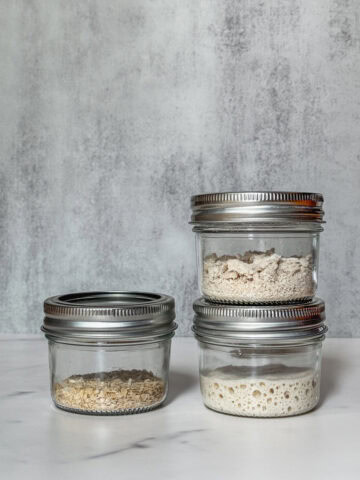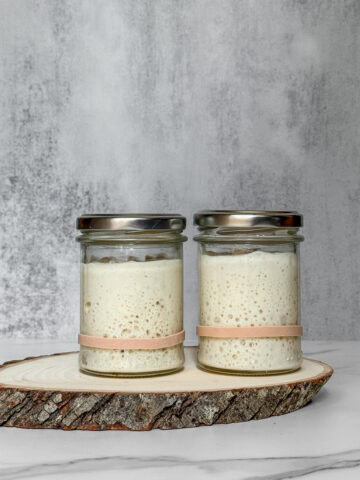

If you ask, "Can I freeze my sourdough starter?" The answer is yes. Freezing your starter is a smart way to preserve it long-term.
It guarantees you have a backup of the sourdough culture, especially in unexpected situations like accidentally breaking your jar or forgetting the starter in the back of the fridge for too long.
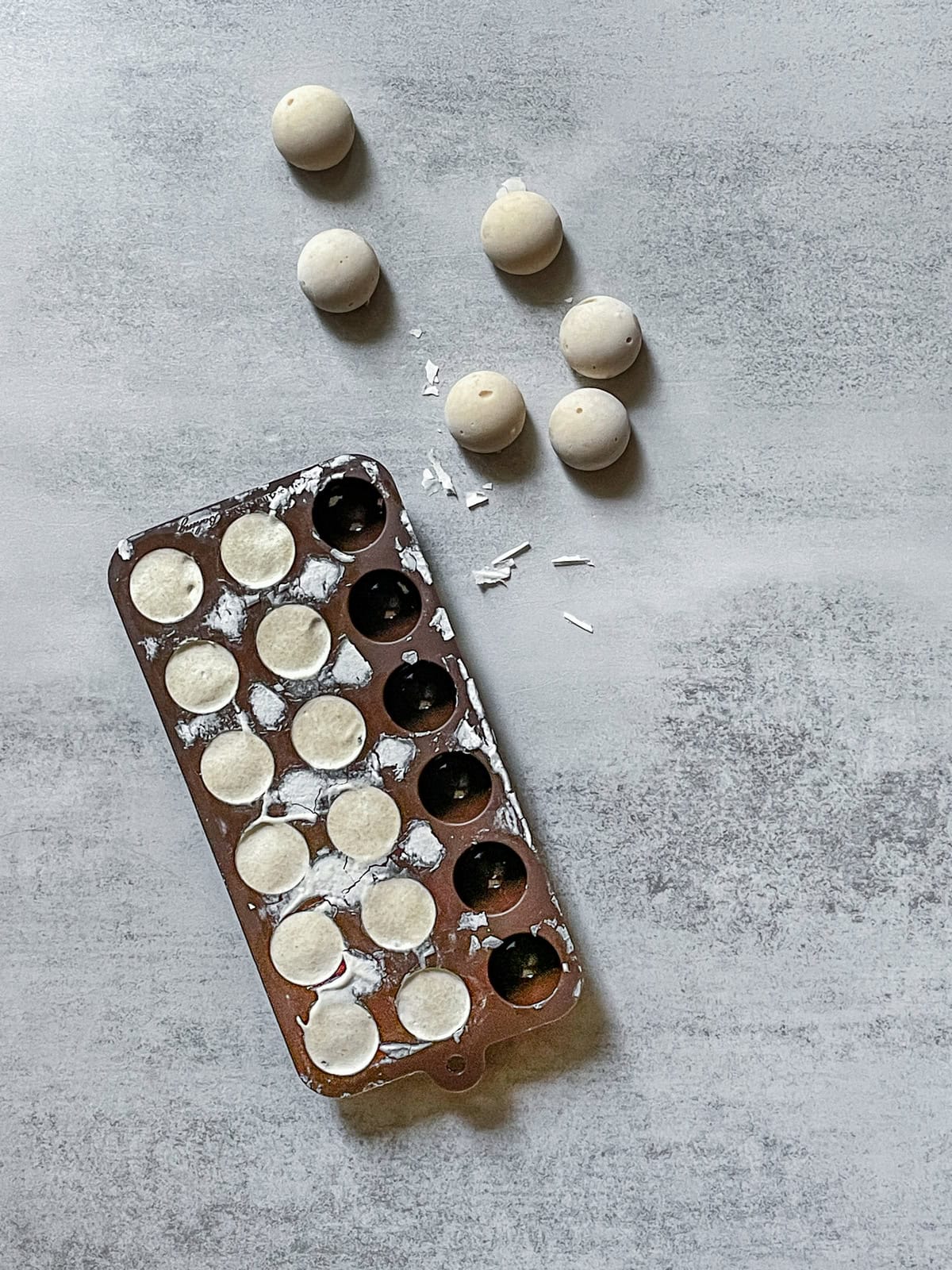
Freezing gives you peace of mind and makes sourdough baking more convenient. It serves as a strong backup plan, keeping your sourdough journey stress-free.
How to freeze sourdough starter
Be sure to freeze an established sourdough starter at least 4 weeks old, preferably 3-4 months old or older.
Start by feeding your sourdough starter as you normally would, following your regular feeding ratio. Wait until it reaches its peak or is close to it.
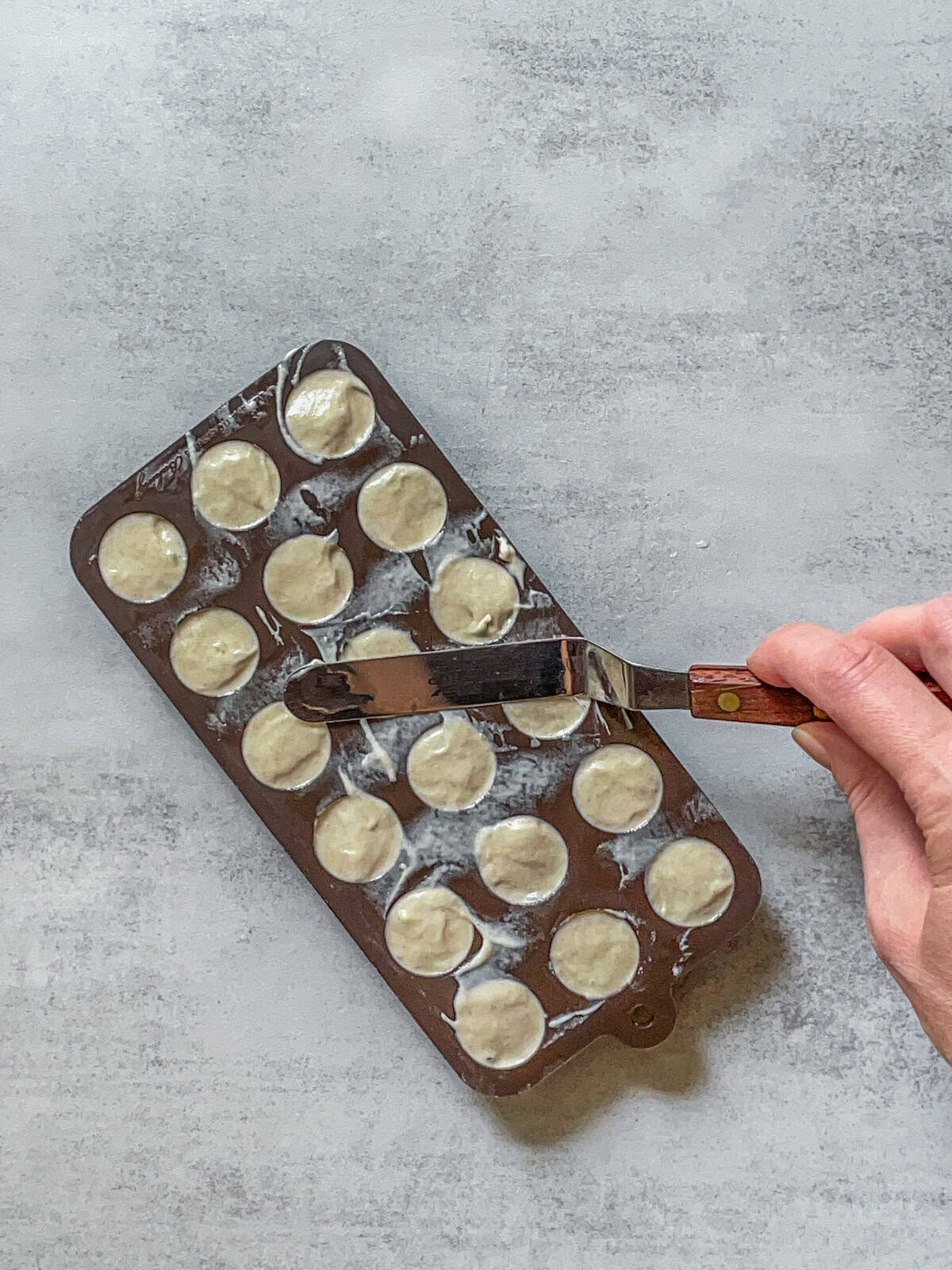
Spoon your starter into a food-grade, freezer-friendly silicone mold (I'm using a truffle mold).
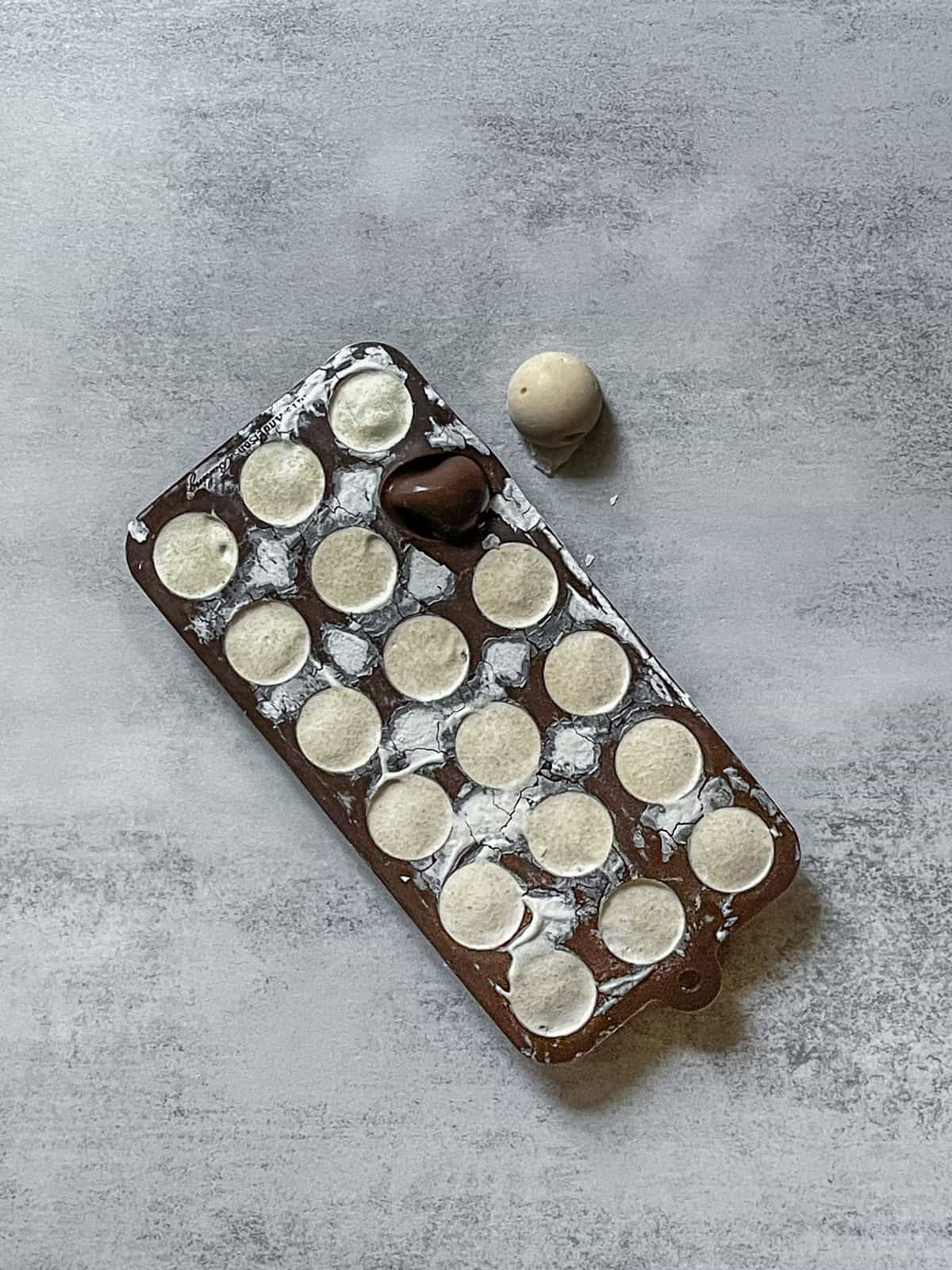
Place the mold in the freezer for 3-5 hours or until the starter is frozen solid. Once frozen, transfer the "sourdough cups" into a freezer-safe bag.
You can also use food-grade silicone freezer cups or muffin tins. Each cup should hold about 10-50 grams of starter. This portion size is ideal because it allows you to feed the starter later at a 1:1:1 ratio without wasting flour.
Be sure to label the bag with the date so you know how long it has been stored. Frozen sourdough starter can last up to 12 months in the freezer.
Another option is to take 10g of your active starter, mix it with 50g of flour and 25g of water, and knead it into a "dough ball." Wrap it in plastic film and aluminum foil, then freeze it.
How to thaw and reactivate frozen starter
When ready to use your frozen starter, put one frozen cup in a clean jar. Cover it loosely with a lid and let it thaw in the fridge for one day.
After that, move it to room temperature. This helps wake up your starter gently without shocking it by going straight from the refrigerator to the counter.
After it has thawed, weigh the starter. Feed it with an equal amount of flour and water, measured by weight. For example, if you have 20 grams of thawed starter, mix it with 20 grams of flour and 20 grams of water.
Cover the jar loosely and keep it in a warm spot for about 12 hours. To track its growth, place a rubber band around the jar at the level of the starter.
After 12 hours, discard all but 20 grams of the starter and feed it again using your preferred feeding ratio. Repeat this feeding process for a few days until your starter becomes active and bubbly.
To reactivate the frozen "dough ball," defrost it at room temperature for 2 hours, then place it in a bowl with 100g of warm water and let it soak for 1 hour. Once soaked, add 100g of strong white bread flour and stir well. After it peaks, continue with regular feedings.
Alternative ways to preserve your starter
Freezing is a great option for storing your sourdough starter for up to 12 months, but drying it is another excellent method.
Drying your starter has advantages. It is highly resilient, lasts several years, and does not rely on electricity for storage. Unlike a frozen starter, a dried starter only needs rehydration when you are ready to use it.
Which is better: freezing or drying?
Freezing and drying sourdough starter each has its benefits. The choice depends on what works best for you.
Freezing is simple and convenient, while drying offers more flexibility. For example, the dried starter is easy to transport. It can be mailed to friends or packed in your luggage if you travel by plane.
Let's talk sourdough
Have you ever tried freezing your sourdough starter, or are you curious to see how it works? Share your experience or your questions below.
Ready to keep learning?
For everyday baking convenience, learn if you can use sourdough starter straight from the fridge without extra waiting.