
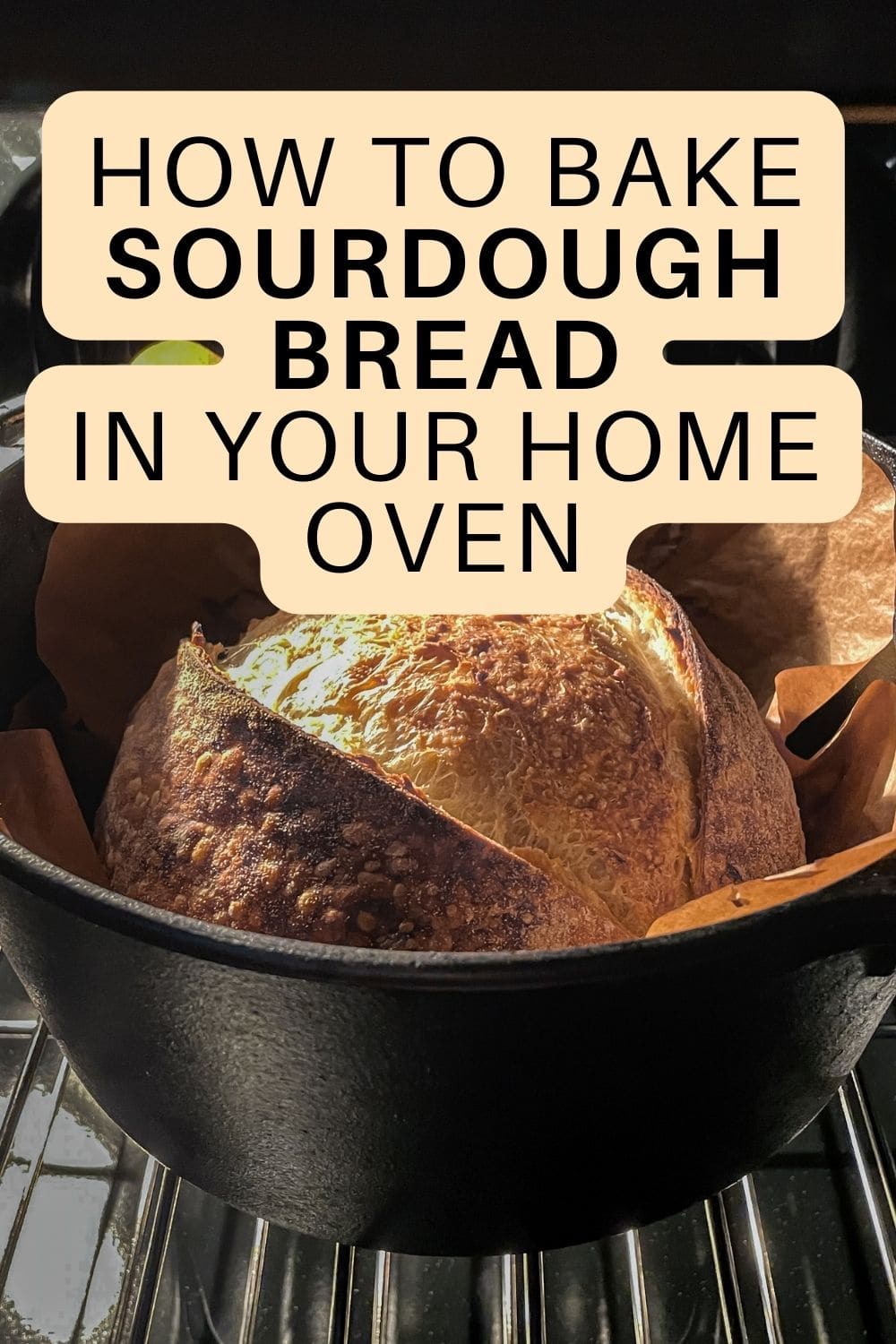
Master sourdough bread baking using various steam setups, from a Dutch oven to alternatives and the "open bake" method. Learn how each method can affect the unique texture and flavor of your bread.
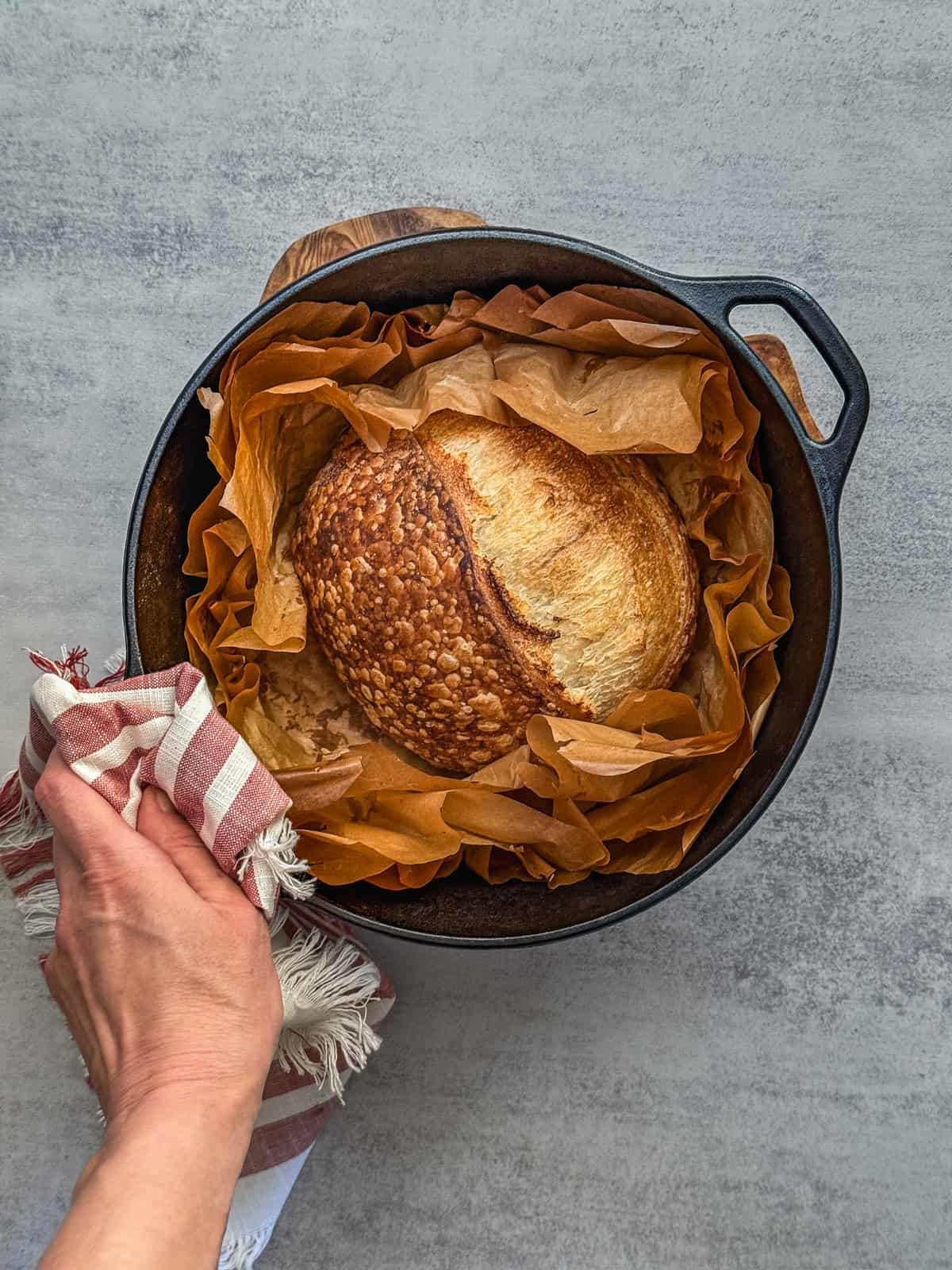
Sourdough bread baking stages
Baking sourdough bread has two main phases: using steam and baking without steam.
1. Steaming phase
The first stage of baking sourdough bread, which lasts approximately 20-25 minutes, is all about generating steam. Steam is super important because it keeps the dough moist and allows the bread to expand before the crust forms.
This helps the loaf rise nicely (known as "oven spring") and allows the scoring cuts to open up evenly, making the bread look great.
2. Baking phase
The baking phase follows the steam phase and lasts approximately 15-30 minutes after the steam is removed. During this time, the oven heat helps the crust turn a rich brown and become crispy, while the inside of the bread finishes baking.
Removing the steam allows the Maillard reaction to occur, which gives the crust its characteristic color, flavor, and aroma.
Essential tools for sourdough baking
Before you begin, make sure you have these tools on hand:
- Oven thermometer: I always use one to make sure my oven's temperature is accurate.
- Dutch oven or alternative: Lodge Cast Iron is my favorite tool for trapping steam and getting that beautiful crust.
- Baking stone, steel, or baking sheet: I use these when baking open loaves. A steel is my go-to for even heat.
- Long oven mitts: I use these silicone oven gloves, which make handling hot pans and lids safe.
- Timer or a set of times to stay on track, especially during those crucial baking minutes.
- Probe thermometer to check the internal temperature of bread.
- Pizza peel (optional): I use it to transfer the dough onto a hot surface when open baking.
- Water mister (optional) to mist the loaf and the oven for extra steam. I like using either a water mister or an electric sprayer.
How to create steam in your home oven
In professional bakeries, steam is created using special systems or steam jets. At home, though, there are three ways you can create steam:
- Baking with a covered baker or Dutch oven
- Using an inverted pot or an alternative to a Dutch oven
- Adding steam with a steam pot or "open bake" method
Dutch oven baking
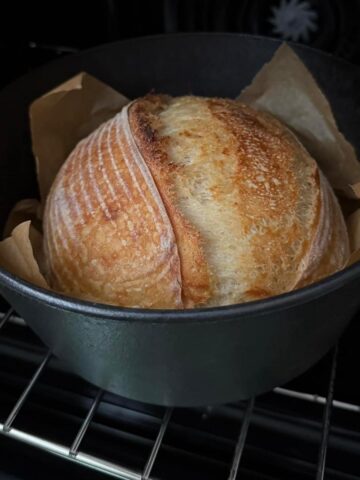
This method uses a covered baking vessel, such as a Dutch oven, a Ganite Ware roaster, a ceramic bread cloche, or a casserole dish, to trap the steam from the dough during baking.
Here is how to set up a Dutch oven for baking:
- Preheat the Dutch oven: Place it on the oven rack, preheat to 500°F (260°C), and heat for 30-60 minutes.
Pro tip: Preheating enamel-coated Dutch ovens is not recommended, so be careful or contact the manufacturer. Never preheat Granite Ware roasters and glass dishes.
- Transfer the dough: Carefully remove the hot Dutch oven from the oven. Use oven mitts to avoid burns. Place the dough into the pot, holding the parchment paper at the corners.
- Cover and bake: Cover the Dutch oven and return it to the oven. Bake with the lid on for the first 20 minutes to trap steam. Follow the recipe to see if the oven temperature should be lowered.
- Remove the lid: After the initial bake, use oven mitts to remove the lid so the crust can deepen in color and become crisp. Be careful of the steam! Bake for another 15-20 minutes or until the desired crust color is achieved. Follow the recipe to see if the oven temperature needs to be adjusted.
If desired, you can bake sourdough in a cold Dutch oven and start in a cold oven.
Baking with a Dutch oven alternative
This method is called "using an inverted pot" or "cloche-style baking." It involves placing the dough on a preheated baking surface, such as a pizza stone or a steel, then covering it with an upside-down deep roasting pan, Brod & Taylor baking shell, a simple metal mixing bowl, or another large container.
This creates a mini oven around the bread, trapping the steam like a Dutch oven. To keep the steam inside, make sure there are no gaps around the edges of the cover.
Here is a Dutch oven alternative baking setup:
- Preheat the baking stone: Place the baking stone, steel, or a baking sheet in the oven and preheat it to 500°F (260°C) for 30-60 minutes.
- Transfer the dough: Using a pizza peel, slide the scored loaf placed on parchment paper onto a hot baking stone.
- Cover and bake: Mist the dough with water and place a cover over the loaf to create steam. Bake with the cover on for the first 20 minutes. Follow the recipe to see if the oven temperature should be lowered.
- Remove the cover: After the initial bake, use oven mitts to remove the cover so the crust can deepen in color and become crisp. Be careful of the steam! Bake for another 15-20 minutes or until the desired crust color is achieved. Follow the recipe to see if the oven temperature needs to be adjusted.
How to open bake sourdough bread
The open bake method is a way to bake sourdough bread without a Dutch oven. It exposes the bread directly to the oven's heat, unlike the covered environment of a Dutch oven.
This method uses a baking stone or steel, which works like the floor of a professional oven. It also uses a steam pan, such as a cast-iron pan or roasting pan, to add the moisture needed for baking.
Here is a simple open baking setup:
- Preheat the baking stone: Place the baking stone, steel, or baking sheet on the middle rack of the oven, and an empty stainless steel heatproof pan (steam pan) on the lower rack. Preheat the oven to 500°F (260°C) and let it preheat for 30-60 minutes.
- Transfer the dough: Using a pizza peel, slide the scored loaf placed on parchment paper onto a hot baking stone.
- Create steam and bake: Boil water in a kettle. Pour 350 ml (about 1-2 cups) of hot water into a hot pan and close the oven door. Bake for the first 20 minutes. Follow the recipe to see if the oven temperature should be lowered.
- Remove the steam pan: After the initial bake, use oven mitts to remove the steam pan with the remaining water. Be careful of the steam! Bake for another 15-20 minutes or until the desired crust color is achieved. Follow the recipe to see if the oven temperature needs to be adjusted.
Other baking methods
Besides the traditional Dutch oven and open-baking methods, a few alternative techniques can also yield great results.
- One popular method is the double loaf pan technique, which creates a great crust and texture while allowing you to bake multiple loaves at once in your home oven.
- Another option is combining the Dutch oven method with finishing the baking on an oven rack. After the first 20 minutes of steaming, transfer the loaf from the Dutch oven to a rack to achieve a perfect crust color, but be cautious not to burn it.
- Lastly, during hot summer days, you can bake sourdough in a slow cooker (also known as a crockpot), so you don't need to use your home oven.
How to tell when bread is done baking
Here are a few ways to know if sourdough bread is fully baked:
- The crust should be evenly colored, anywhere from light brown to dark brown.
- When checked with a probe thermometer, the internal temperature should read 205°F (96°C) or higher.
- Tapping the bottom of the loaf should produce a hollow sound.
- When you press the loaf, it should spring back and maintain its shape (sourdough squish test).
Top tips for baking sourdough
- Check the oven temperature: Use an oven thermometer to make sure your oven is at the correct temperature and that heat is distributed evenly.
- Be cautious with steam: Steam can cause burns, so take extra care when using a Dutch oven or adding water to create steam. Always open the oven door or lid slowly, making sure to move the steam away from your face.
- Wear oven mitts and safety goggles: Always use heat-resistant oven mitts when handling hot baking surfaces, such as Dutch ovens or baking stones. Also, wear safety goggles to protect your eyes from steam bursts.
- Handle hot equipment safely: Use strong oven mitts when lifting hot equipment, and never place hot items on surfaces that cannot withstand the heat, such as the oven door glass or stovetop.
- Protect the oven window: When adding hot water to a steam pan, be careful not to splash it onto the oven window. You can place a thick towel over the glass to protect it from damage.
- Preheat your oven properly: Always fully preheat your oven and baking surfaces, but avoid preheating enamel-coated Dutch ovens, glass dishes, or Granite Ware roasters. If you are unsure, check the manufacturer's instructions.
- Manage steam effectively: Add hot water to a cast-iron pan or baking tray to create steam. Do not use ice cubes, as they can lower the oven temperature. Also, keep the oven door closed during the steam phase.
- Spray the loaf: For extra steam, spray your loaf after scoring it.
- Use a timer: Set one for each stage of baking, especially when moving from steaming to baking in a Dutch oven.
- Rotate for even baking: Since some ovens heat unevenly, rotating your loaf halfway through baking can help it bake more evenly and develop a better crust.
- Watch the crust color: Keep an eye on the loaf towards the end of baking. According to Karyn Lynne Newman, "It is very hard to burn the bread if you check on it every 2-5 minutes once the internal temperature reaches 207°F (97°C)."
- Check if your bread is done: Use a probe thermometer to check if the loaf is fully baked. The internal temperature should be 205°F (96°C) or higher.
Let's talk sourdough
Have you tried different steam setups for baking sourdough? Which method works best for you? Share your experience in the comments.
Ready to keep learning?
Now is the time to learn the secrets of baking sourdough in a Dutch oven to achieve an extra-crispy crust and evenly baked loaves at home.