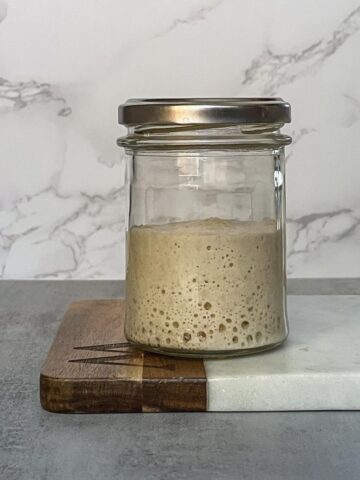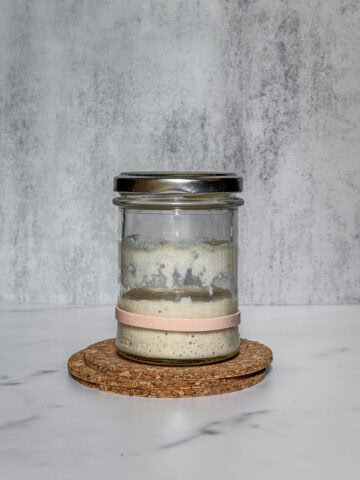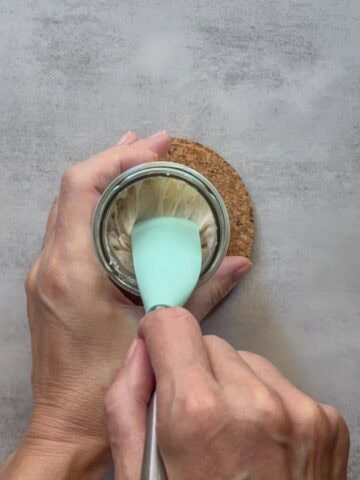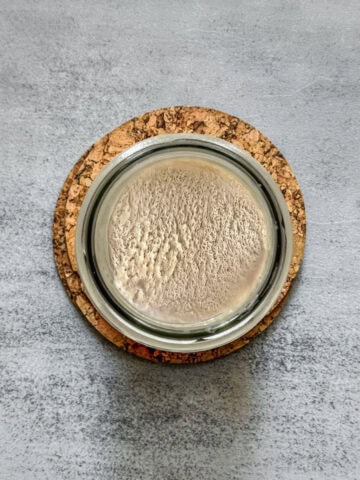

The secret to a thriving sourdough starter and perfectly fermented bread dough lies in understanding how temperature affects sourdough activity.
Learn how to control and adapt to temperature changes to keep your starter healthy and active and your dough fermenting properly, year-round.
How temperatures affect sourdough starter
Temperature affects how quickly your starter rises, the flavor it develops, and the balance of microbes living in it. Your starter is a living mix of wild yeasts and lactic acid bacteria (LAB), and each type prefers different temperatures.
Wild yeasts are responsible for making your dough rise by producing carbon dioxide. They work best between 75 and 82°F (24 and 28°C). At these temperatures, yeast multiplies quickly, helping the starter double in size.
Below 70°F (21°C), yeast slows down, and the starter rises more slowly. Above 85-90°F (29-32°C), yeast behaves unpredictably, which affects rise and flavor.
LAB give sourdough its tangy flavor and complexity. There are two main kinds: homofermentative and heterofermentative.
Homofermentative LAB, like Lactobacillus plantarum, mainly make lactic acid, which gives a mild, pleasant tang. They grow best at 75-85°F (24-29°C).
Heterofermentative LAB, such as Lactobacillus brevis and Lactobacillus sanfranciscensis, produce both lactic and acetic acids, which create a sharper, more complex flavor. These bacteria grow better at cooler temperatures, around 65-75°F (18-24°C), which helps develop more tang and improve shelf life.
But the balance between yeast and LAB determines how your sourdough tastes and rises. Warmer starters rise faster and usually have a milder flavor, while cooler starters ferment more slowly and become tangier.
You can play with the temperature and guide your starter to produce the flavor and rise you want.
Remember that extreme temperatures can harm or even kill your starter. For example, prolonged exposure to temperatures above 120°F (49°C) can damage the starter, and yeast will die at 140°F (60°C) or higher.
How temperature affects bread dough
Warmer temperatures increase the dough temperature and speed up bulk fermentation. Bread dough ferments faster, increasing the risk of overproofed sourdough.
Cooler dough ferments more slowly, which extends fermentation and helps make sourdough more sour as flavors develop.
Even small temperature changes in your kitchen, ingredients, or fridge affect dough rise and flavor. That is why you should keep an eye on those temperature changes.
Best thermometers for sourdough baking
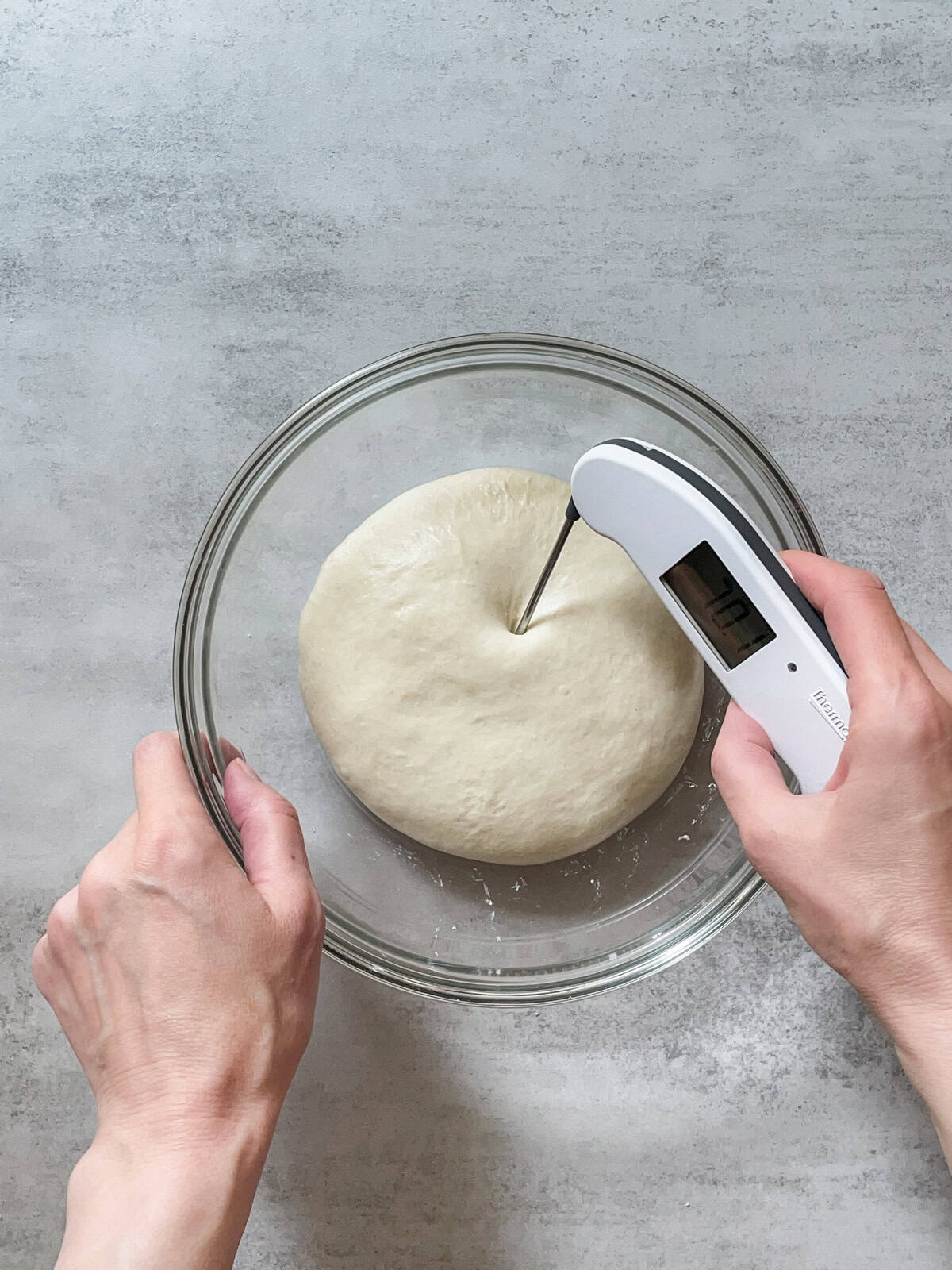
To stay in control of fermentation, you need a few thermometers to measure water, dough, and room temperature. A digital probe thermometer is ideal for checking the temperature of mixing water and dough.
I personally use a couple of probe thermometers, including a simple, budget-friendly one from Amazon and a higher-end Thermoworks model. The Thermapen One is probably the most reliable and fastest of them all.
I also have a kitchen thermometer with a built-in hygrometer to monitor my kitchen's temperature and humidity.
Optimize water temperature
The temperature of the water you use to feed your starter and mix bread dough is important. For everyday feeding, use room-temperature water.
In colder weather, use slightly warm water for feeding your starter to encourage healthy activity. In warmer months, use cooler water to slow fermentation and prevent the starter from becoming overly acidic.
This same idea applies when mixing bread dough, where bakers aim for a specific Desired Dough Temperature (DDT).
DDT is the target temperature of your dough after mixing, and it helps keep fermentation on schedule. Because flour and room temperature change with the seasons, you can adjust your water temperature to reach your DDT.
As a result, you can control how your dough ferments and develops by measuring and adjusting your water temperature,
Adapt to seasonal and environmental changes
Sourdough baking is all about adapting to the environment. Seasonal changes greatly affect how your starter and dough behave.
In summer, higher temperatures speed up fermentation. This may cause your starter to become weak and acidic if it ferments too fast.
To control, keep your starter in a cooler spot in your home, away from direct sunlight and heat sources. Read more about how to maintain a sourdough starter in hot weather.
The same applies to bulk fermentation. Warm temperatures tend to shorten bulk fermentation, sometimes causing the dough to overferment.
To slow bulk fermentation down, use cooler water, reduce the amount of starter, or bulk ferment in a slightly cooler part of your kitchen. These small adjustments help protect dough strength, flavor, and overall loaf quality.
In winter, cooler temperatures slow down both your starter and dough fermentation. Your starter takes longer to reach its peak, and the bulk fermentation stretches out, sometimes making it hard to judge when the dough is ready for shaping.
To keep fermentation on track, try using slightly warmer water when feeding your starter or mixing your dough to bring it closer to the desired dough temperature (DDT).
Consider buying Brod & Taylor Sourdough Home for your starter and a proofing box for bread dough. Also, use a warmer part of your kitchen to maintain consistent conditions.
These small adjustments help your starter stay active and make it easier to judge when the bulk fermentation is done.
Best tips for a cold kitchen
If your kitchen is cold, here are a few ways to help you with sourdough baking:
- Warm water for feedings: When feeding sourdough starter, use slightly warmer water than usual to help maintain its temperature and encourage fermentation.
- Temperature regulation: Place your starter in a warmer spot in your kitchen, away from drafts or cold surfaces. Consider using an insulated container or wrapping your starter in a towel or blanket. Read more about how to keep sourdough starter warm. To help control bulk fermentation, try using the Brod & Taylor proofing box.
- Patience and observation: Be patient with your starter during colder weather, as it takes longer to reach its peak. Adjust feeding ratios as needed.
Best tips for a hot kitchen
In a hot kitchen, you will need to take steps to prevent your starter and dough from overheating:
- Use cooler water: When feeding your starter, use water cooler than usual to balance the heat in the environment. Also, use cooler water to mix bread dough. To calculate, use the water temperature calculator.
- Temperature control: Place your starter in a cooler area of the kitchen, away from direct sunlight or heat sources. Consider using a cooler spot or a temperature-controlled environment, for example, Brod & Taylor Sourdough Home. Choose a basement to ferment the dough if possible.
- Increase the feeding ratio and frequency in hotter conditions. Adjust the feeding schedule accordingly, possibly feeding the starter more frequently to maintain its balance. Read about how to store sourdough starter.
- Quicker fermentation and monitoring: Be aware of the faster fermentation in a hot kitchen. Keep a close eye on your starter, since it reaches peak activity sooner than expected. Watch bulk fermentation closely, checking the dough temperature every 30-40 minutes and adjusting the target rise.
FAQ
Does sourdough starter need light?
No, sourdough starter doesn't need light to grow or stay active. What is most important is a stable, warm temperature, not light. You can keep your starter on the counter, in a cabinet, or even in the oven with the light off.
Does boiling water kill yeast?
Yes, boiling water kills yeast and beneficial bacteria instantly. Water at or near 212°F (100°C) will destroy the microorganisms your starter needs to live. Always use room-temperature or lukewarm water (about 75-85°F) when feeding your starter to keep it healthy.
Let's talk sourdough
Which season challenges your starter more, summer or winter? How do you manage the temperature changes that affect its activity? Please share your experience in the comments below.
Ready to keep learning?
Once you understand temperature control at home, you may wonder how to manage it on the go. Learn how to travel with sourdough starter while keeping it healthy and active.