
As a beginner, you don't usually realize how important it is to manage an acidic sourdough starter until you notice issues with your baked bread. Even then, many bakers blame bulk fermentation rather than considering that their starter may be weak.
Every sourdough baker faces a "sluggish" starter at least once. It is not rare for a strong starter to lose its leavening power to raise the bread. One reason can be a weak, acidic starter.
In this guide, I will help you recognize the signs of an acidic starter and show you how to strengthen and fix it before it is too late.
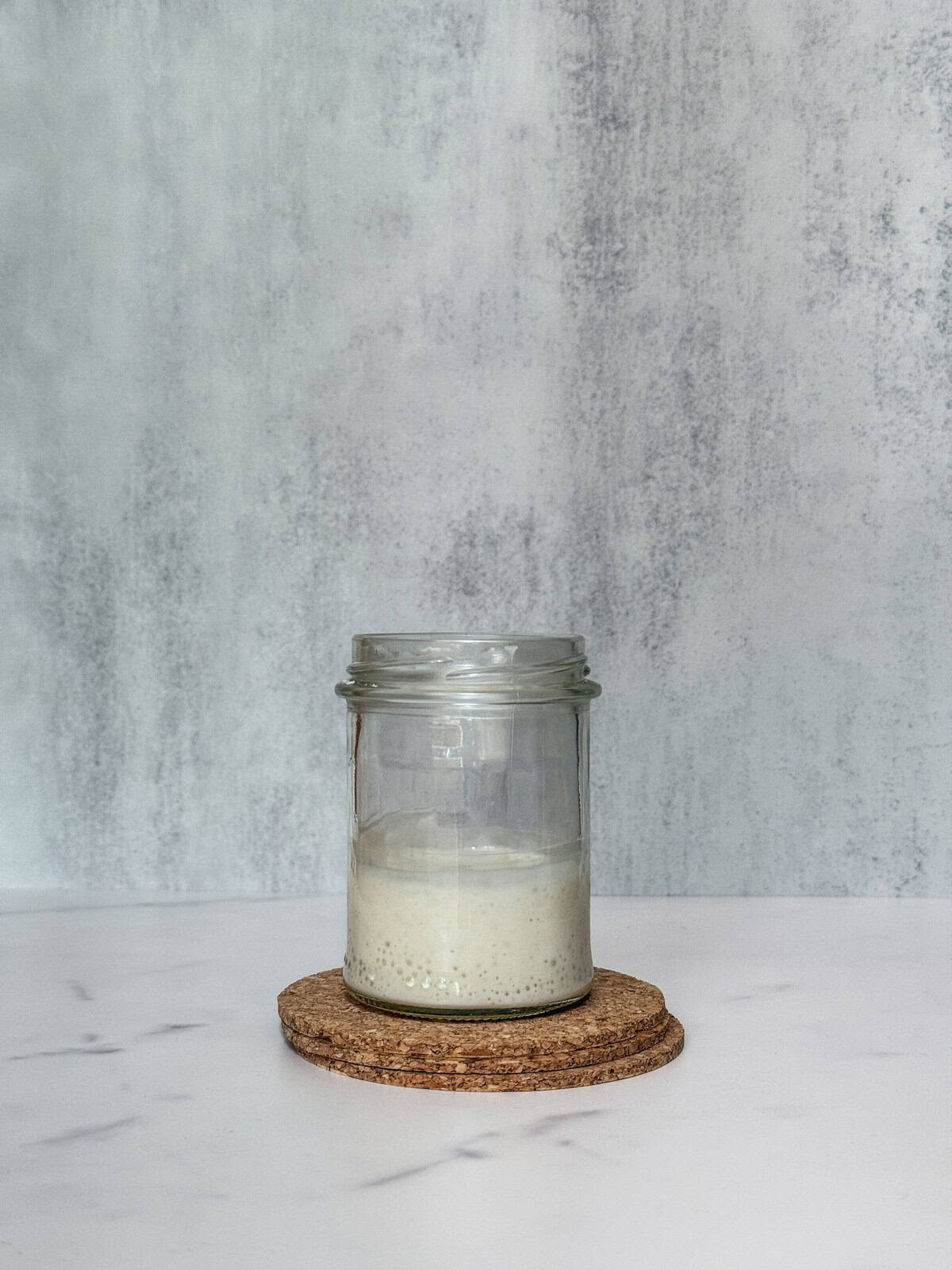
What is a weak, acidic starter?
A weak, acidic sourdough starter is characterized by an imbalance between wild yeast and lactic acid bacteria (LAB), producing excessive lactic and acetic acids.
This affects the fermentation process and the starter's leavening abilities, resulting in failing to rise sourdough bread
Here are the primary indicators of a weak, acidic starter:
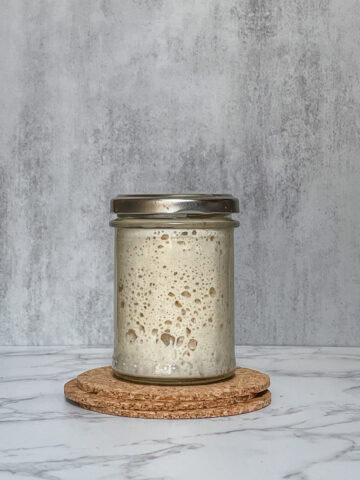
- It takes more than 8-12 hours to double in size at 74°F (23°C).
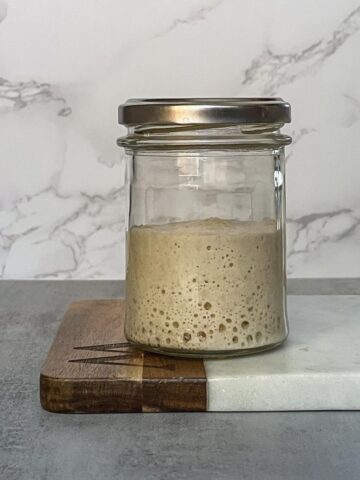
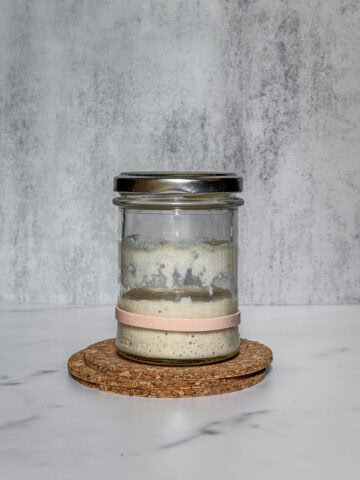
- It looks thin and runny, with small bubbles.
- It collapses quickly after reaching the peak of the sourdough starter (a narrow peak window).
- It smells like vinegar, acetone, or even nail polish remover.
- It has trouble leavening bread, leaving you with a dense, gummy loaf.
- If you measure its pH, it falls in the low range of 3.7-3.8, while the normal range is 4.1-4.2.
What happens when your starter becomes acidic?
Your sourdough starter is a mix of wild yeast and bacteria. Yeast produces carbon dioxide, which helps bread rise, while lactic acid bacteria (LAB) mainly produce lactic and acetic acids, giving sourdough a tangy flavor.
Although carbon dioxide doesn't affect LAB's life cycle, high acid levels affect yeast. Acids limit yeast reproduction, reducing the yeast population. This consequently decreases carbon dioxide production, resulting in less bread rising.
High acids → fewer yeast → less CO₂ → flatter bread.
Why is your starter acidic?
Several things throw off the balance of your starter and cause it to become acidic:
- Underfeeding your starter. If you feed your starter a small amount, like a 1:1:1 ratio, once a day, it doesn't get enough fresh food to stay healthy. Your starter ends up constantly starving.
- High temperatures. Warm conditions accelerate microbial activity, including yeast and lactic acid bacteria, as well as acid production. Avoid keeping your starter at very high temperatures (above 85°F/29 °C). Note: while moderately warm conditions (75-80°F/24-27°C) favor yeast activity and reduce sourness, regular feedings are still essential.
- Neglecting your starter. If you leave your starter in the fridge for a long time without feeding it (one to two months), acids build up, and a layer of liquid (called hooch) may form on top.
How to fix an acidic sourdough starter
Here are two methods to reduce the acidity in your starter:
- Using a high feeding ratio
- Using peak-to-peak feeding
1. A high feeding ratio
This method involves feeding your starter with a single substantial feeding. The recommended ratio ranges from 1:5:5 to 1:10:10. Here is how to do this:
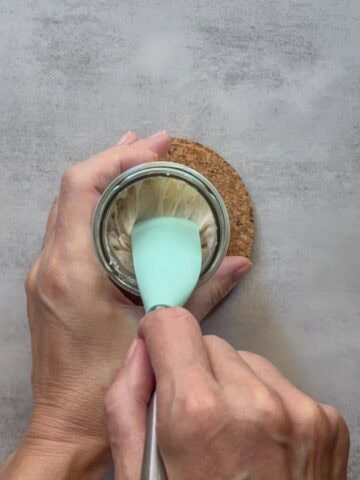
- Discard all but 5-10 grams of your starter.
- Feed it at a 1:5:5 ratio (e.g., 5 grams of starter, 25 grams of flour, and 25 grams of water).
- Wait for the starter to peak, which may take 8-12 hours or more. It is important to wait for the peak before discarding and refeeding the starter.
- If it still smells acidic, repeat this process.
- In warmer weather, try a 1:10:10 ratio to further reduce acidity.
- If the issue persists, consider transitioning to peak-to-peak feeding.
2. Peak-to-peak feeding
This method involves feeding your starter only when it has reached its peak, rather than on a fixed schedule. Here is how to do this:
- Start by feeding 5 grams of starter with 10 grams of flour and 10 grams of water (a 1:2:2 ratio). In the summer months, consider using a higher ratio, such as 1:3:3.
- Let it rise to its peak or surpass it before feeding it again.
- When the starter peaks, discard all but 5g of it and feed it with 10g of flour and 10g of water.
- Repeat this cycle 3 to 5 times over a few days until the starter becomes stronger and less acidic.
How to prevent an acidic, weak sourdough starter
If you feed your starter enough food daily, or even twice a day, the chance that it will turn acidic is low, but it is still possible. Here are the best tips to prevent an acidic, weak sourdough starter.
1. Maintain a consistent feeding schedule
Feed your starter regularly to make sure it always has fresh flour to consume. When storing at room temperature, feed it once or twice a day. If refrigerated, feed it at least once a week. Avoid letting it go unfed for too long, as prolonged starvation leads to acid buildup.
2. Use the "right" feeding ratio
A low feeding ratio, like 1:1:1 once a day, keeps your starter constantly hungry, allowing acids to accumulate. It also means that each feeding carries over a higher acid load from the previous cycle.
Adjust your starter feeding ratio, and also use a kitchen scale for precise starter ingredient measurements.
3. Choose the "right" flour
The flour you use affects how quickly your starter produces acid. Whole-wheat and rye flours absorb more water and provide extra nutrients, which help create a stronger, more active starter.
However, because these flours ferment faster, especially rye, they can also accelerate acid production. This happens especially if the starter is left too long between feedings or kept at warm temperatures.
To prevent your starter from becoming overly acidic, use these flours carefully. Opt for unbleached white flour rather than whole-grain flours. You can use small amounts to strengthen the starter, but this approach doesn't prevent the starter from becoming acidic.
4. Keep consistent temperature conditions
Warm temperatures speed up acid production, so try to keep your starter in a stable environment with moderate temperatures around 72-75°F (22-24°C). If your kitchen temperature fluctuates, think of investing in a proofer, Brod & Taylor Sourdough Home, or another starter-friendly heat source.
5. Monitor the starter's signs
Check the starter's texture, smell, and rise regularly. The earlier you notice the first signs of excessive acidity, such as a sharp, vinegary smell or a watery consistency, the easier it is to prevent it from becoming a bigger problem later.
6. Store your starter properly
How you store your starter also makes a big difference in its acidity. Starters kept at room temperature tend to become more acidic over time, especially if they aren't fed regularly.
Storing your starter in the refrigerator reduces the risk of acid buildup because cooler temperatures slow down microbial activity.
However, acidity can still develop over a longer period (1 to 2 months) if the starter is left unfed in the fridge. So, it is important to feed your starter regularly (once per week) to maintain its strength and balance.
Let's talk sourdough
Has your starter ever developed a sharp, tangy smell that worries you? If so, how did you handle it? Please comment below.
Ready to keep learning?
Not sure if your starter is healthy or past its prime? Learn the signs to tell if your sourdough starter is bad before it affects your bread.