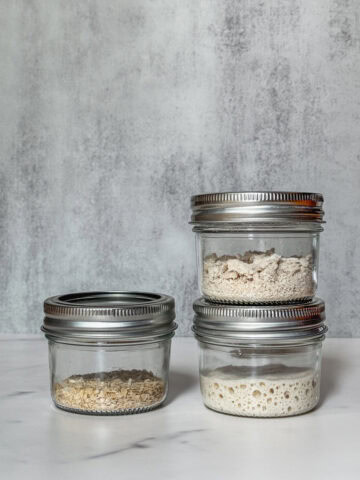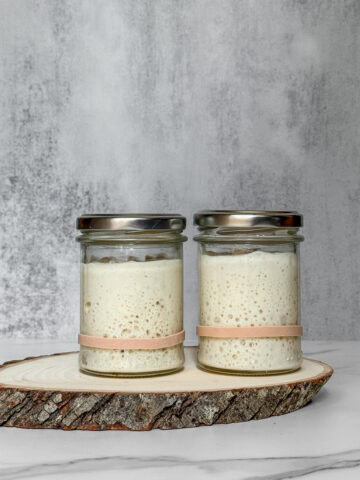

If you are wondering how to keep sourdough starter warm and thriving during the colder months, it is completely possible. All you need is a little creativity to create a warm, cozy spot for your starter.
At a Glance
- Best for: Beginner sourdough bakers who struggle with slow or inactive starters in cool kitchens.
- What you'll learn: How temperature affects fermentation, simple ways to keep a sourdough starter warm, and how to maintain steady activity year-round.
- Skill level: Beginner
- Time commitment: About 5-10 minutes to set up a warm spot, plus ongoing passive maintenance during fermentation and feedings.
- Key techniques: Temperature control for fermentation, using warm environments (oven light, microwave, proofing box), and adjusting feeding schedules for cooler conditions.
- Optional steps: Use a proofing box or heating pad for more consistent warmth, or adjust feeding ratios to better suit seasonal changes.
- Main takeaway: Keeping your starter warm helps it stay active, predictable, and strong, especially in cooler kitchens or during winter months.
- Next step: Feed your starter in a consistently warm environment and use it at peak activity in a Beginner's Sourdough Bread Recipe.
Jump to:
The ideal temperature for a sourdough starter
Although your sourdough starter can grow in many room-temperature environments, the optimal range for it to thrive is 75-78°F (24-25.5°C); some say up to 82°F (28°C).
Wild yeasts thrive best around 75-82°F (24-28°C). In this range, they ferment sugars efficiently, producing the carbon dioxide that helps your dough rise.
Lactic acid bacteria (LAB) are more temperature-sensitive and tend to flourish between 70-90°F (21-32°C), but they produce different acids depending on the temperature:
- Warmer temperatures (78-82°F / 25.5-28°C): Favor lactic acid, creating a milder, yogurt-like acidity and faster fermentation.
- Cooler temperatures (70-75°F / 21-24°C): Encourage greater acetic acid production, giving the starter a sharper, tangier profile.
All this means that in the 75-78°F (24-25.5°C) range, you strike the perfect balance for both yeast and LAB to work harmoniously.
But be careful with the high temperatures. If it rises above 140°F (60°C), it will kill the yeast in your starter, leaving it unusable.
My starter stays strong and active at 75°F (25.5°C) in the Brod & Taylor Sourdough Home. While building levain, I don't always provide extra warmth, but when I want it to grow faster or reach its peak quickly, I use some of the methods below.
How to create a warm place in a cold house
If your home tends to be chilly, especially during winter, here are some practical ways to keep your sourdough starter warm:
1. Feed your starter with warm water
One of the simplest tricks is to feed your starter warm water at around 98-104°F (37-40°C). This gives it a temporary boost to start growing, but you will still need other methods to keep it warm.
2. Use a warm water bath
Fill a bowl with warm water (about 122°F or 50°C) and place the starter jar in it. The water will gently warm the starter, but you will need to change the water regularly as it cools.
3. Keep your starter in the oven with the light on
An oven with the light on creates a great warm spot for your starter. The small amount of heat from the light bulb raises the temperature just enough.
Use an oven thermometer to make sure the temperature stays between 75 and 82°F (24 and 28°C). If your oven has a proofing setting, double-check that it is not too warm for your starter.
Be sure to leave a note on the oven to prevent anyone from accidentally preheating it and cooking your starter.
4. Use a microwave with a mug of hot water
Heat a mug of water in your microwave for 1-2 minutes, then place your starter inside with the door slightly open.
5. Try a seeding heat mat
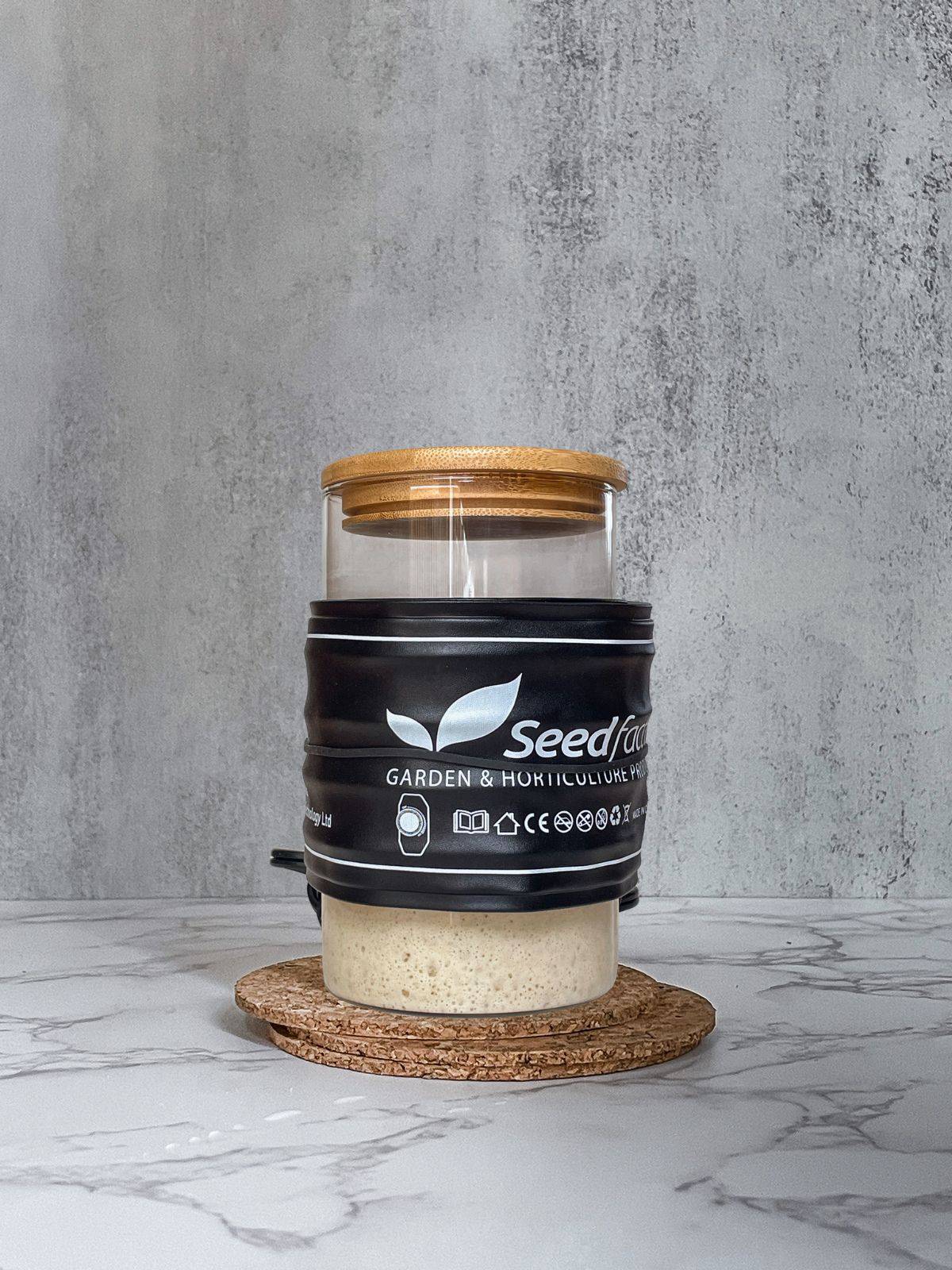
Seed-heating mats are designed to help plants grow, but they work just as well for sourdough starters. Some mats even have temperature controls, making them an easy and reliable option.
If there is no temperature control, place your sourdough jar on a heating mat on the lowest setting, or wrap the seed mat or heating pad around it.
6. Use a yogurt maker or Instant Pot
Both offer consistent warmth and temperature control. Use the yogurt setting on an Instant Pot or a yogurt maker for convenience.
7. Use a proofing box
Store-bought proofing boxes, like the Brod & Taylor folding proofer, are designed for sourdough care (starter and bread dough) and maintain a consistent temperature. If you enjoy DIY projects, you can try building your own proofing box using a heating pad or other creative tools.
8. Try temperature-control units
The Goldie from Sourhouse or the Sourdough Home from Brod & Taylor are great options for maintaining the ideal temperature range, especially if your kitchen is consistently cold.
Goldie is equipped with a warming pad and maintains the sourdough starter's temperature between 75 and 82°F (24 and 28°C).
Brod & Taylor Sourdough Home maintains a temperature range of approximately 41-122°F (5-50°C) by switching to warm or cool modes as needed.
A sourdough starter warmer mat is another affordable way to keep your starter at a steady temperature (in the 70-100°F range). These mats provide gentle, consistent warmth, perfect for boosting fermentation in cooler kitchens.
9. DIY warm spots around the house
Sometimes, the best solutions are right at home. Here are some unexpected places to keep your starter warm:
- Near an electric kettle that stays warm after use.
- On top of a warm stove, on top of the fridge, or in a cabinet near the oven after baking.
- Wrapped in a microwaved kitchen towel for quick warmth.
- A handmade cozy sleeve or a scarf around your jar.
- A folded tea towel or a pot holder on the counter (under the jar) to insulate it and keep it warm.
An easy way I use to help my levain grow faster is by heating a kitchen towel in the microwave for about 11-12 seconds. Then, I wrap it around my starter to keep it warm. I repeat this process a few times until the levain is ready for baking.
Let's talk sourdough
How do you care for your sourdough starter during the winter months? Do you have any tips and tricks? Please share your experience in the comments below.
Ready to keep learning?
Warmth is great, but too much can be tricky. Explore a few tips for maintaining a sourdough starter in hot weather without over-fermenting it.