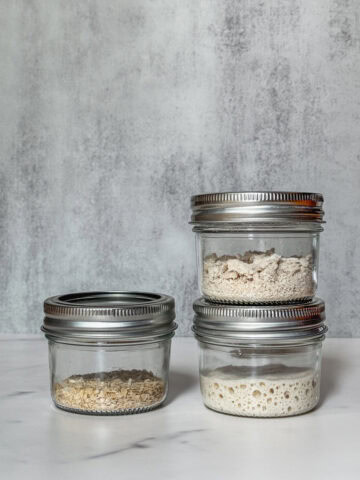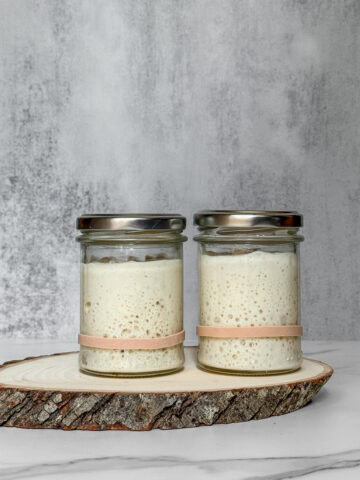

Baking sourdough bread in the summer is tricky. The heat and humidity make it harder to manage your sourdough starter, bulk fermentation, and even the baking process itself.
Learn how to maintain sourdough starter during the hot summer months. When As you try the tips below, make sure to change one thing at a time and observe how your starter responds to each change.
This way, you can discover what works best and fine-tune your routine for optimal results.
How to care for your sourdough starter in summer
1. Check the temperature
Use a digital thermometer (with a humidity meter) to keep track of the room temperature where you store your starter.
Find a cool, stable spot away from sunlight and heat sources, such as ovens or appliances. If it is too warm, place your starter in a cooler or an insulated bag with ice packs to prevent it from overheating.
2. Choose the right container
Opt for a sourdough starter jar that allows your starter to breathe, for example, a glass jar with a loosely fitted lid. Don't use airtight containers, as they trap moisture and heat.
3. Use cold water
Use refrigerated or ice-cold water to feed your starter. This helps control the fermentation.
4. Stick to a feeding schedule
In summer, increase the frequency of starter feedings. If it stays on the counter, feed it twice daily to keep it active and healthy.
5. Increase the feeding ratio
In warmer months, give your starter more flour and water to balance its fast fermentation. For example, if you usually use a 1:2:2 ratio (starter:flour:water), switch to a 1:4:4 ratio or higher and feed it twice a day. Read more about sourdough starter feeding ratios.
6. Use less starter
To reduce waste, use only 4-5 grams of starter for each feeding. This keeps your starter active without needing to throw away as much flour. Learn about the no-discard starter maintenance method.
7. Adjust the consistency
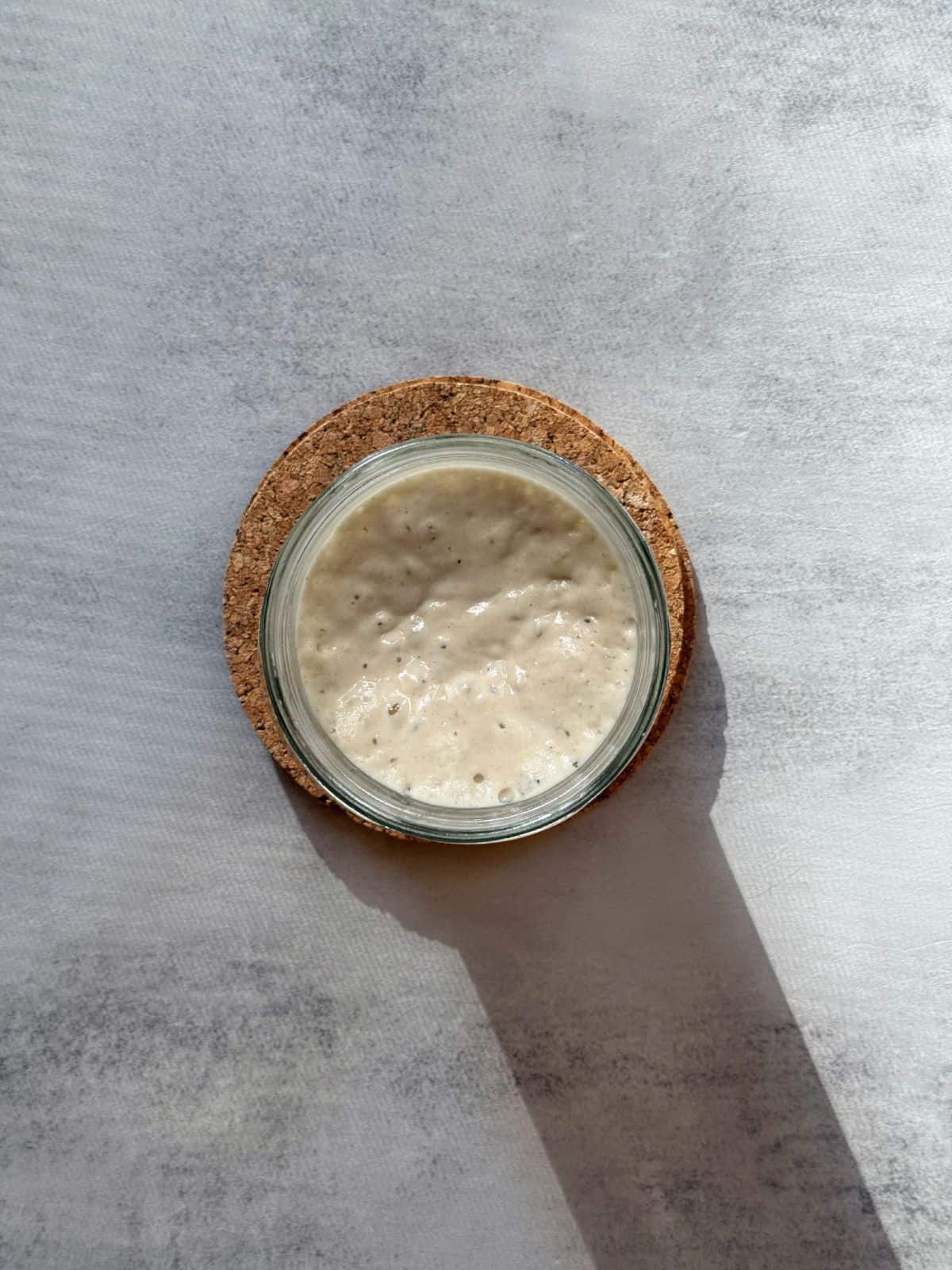
Runny sourdough starter is another issue during the hot summer months. Aim for consistency like thick pancake batter. Try to make a stiff sourdough starter by using more flour than water. You can adjust the dough hydration later when baking.
8. Store the starter in the fridge
If you bake only once or twice a week, consider storing your starter in the fridge and feeding it less often. This will slow fermentation and reduce the need for daily maintenance.
9. Avoid whole-grain flour
Whole-grain flour can make your starter more acidic in summer. Stick to white bread flour for better results.
10. Give a big feed occasionally
To prevent acid buildup, give your starter a large feeding at least once a month. Use a ratio like 1:10:10 (starter:flour:water). If your starter becomes too acidic, learn how to manage a weak, acidic starter.
11. Have a backup starter
Always keep a small portion of your starter (aka discard in this case) in a separate container or dehydrate sourdough starter as a backup. This way, if your "mother" starter has trouble in the heat, you will have a spare ready to go.
12. Add a little salt
Incorporate 0.5-2% salt into the total flour to decrease the starter fermentation. Salt also acts as a natural inhibitor, balancing yeast and bacterial activity.
If you are interested, you can also learn about the Monheim (Monheimer) Salzsauer process, a traditional German method of adding salt to the starter, commonly used for rye and rye-wheat breads. Watch a video about how to control your sourdough's acidity.
13. Use temperature-controlled units
The temperature-controlled units are great options for maintaining the ideal temperature range during cold winter or hot summer months.
The Goldie from Sourhouse comes with a warming pad and keeps your sourdough starter comfortably between 75 and 82°F (24-28°C).
The Brod & Taylor Sourdough Home offers a wider temperature range of 41-122°F (5-50°C), allowing you to switch between warm and cool modes as needed.
14. Monitor your starter with a pH meter
If you consider yourself a bit of a sourdough geek, you may want to invest in a pH meter, a handy tool for tracking your starter's acidity. Based on peer‑reviewed studies, the ideal pH for a healthy, active starter is around 3.5-4.1 (some sources narrow this range to 3.7-4.1).
If the pH of your starter is consistently above 4.3-4.5, it signals that acid production hasn't fully developed, or that your LAB (lactic acid bacteria) community is less dominant. It's not necessarily unhealthy, but it is less "mature" in sourdough terms.
In this case, consider that your LAB may need more time, feeding, or a different regimen to build acidity.
If your pH is below 3.5 and stays there, your starter is very acidic, which eventually slows yeast activity and affects dough rise.
Let's talk sourdough
Now it is your turn. Have you ever dealt with a sluggish starter during the summer months? If so, how did you handle it? Share your experience in the comments.
Ready to keep learning?
Once your starter is thriving, you might need more for bigger bakes. Learn how to scale up sourdough starter safely and efficiently.