
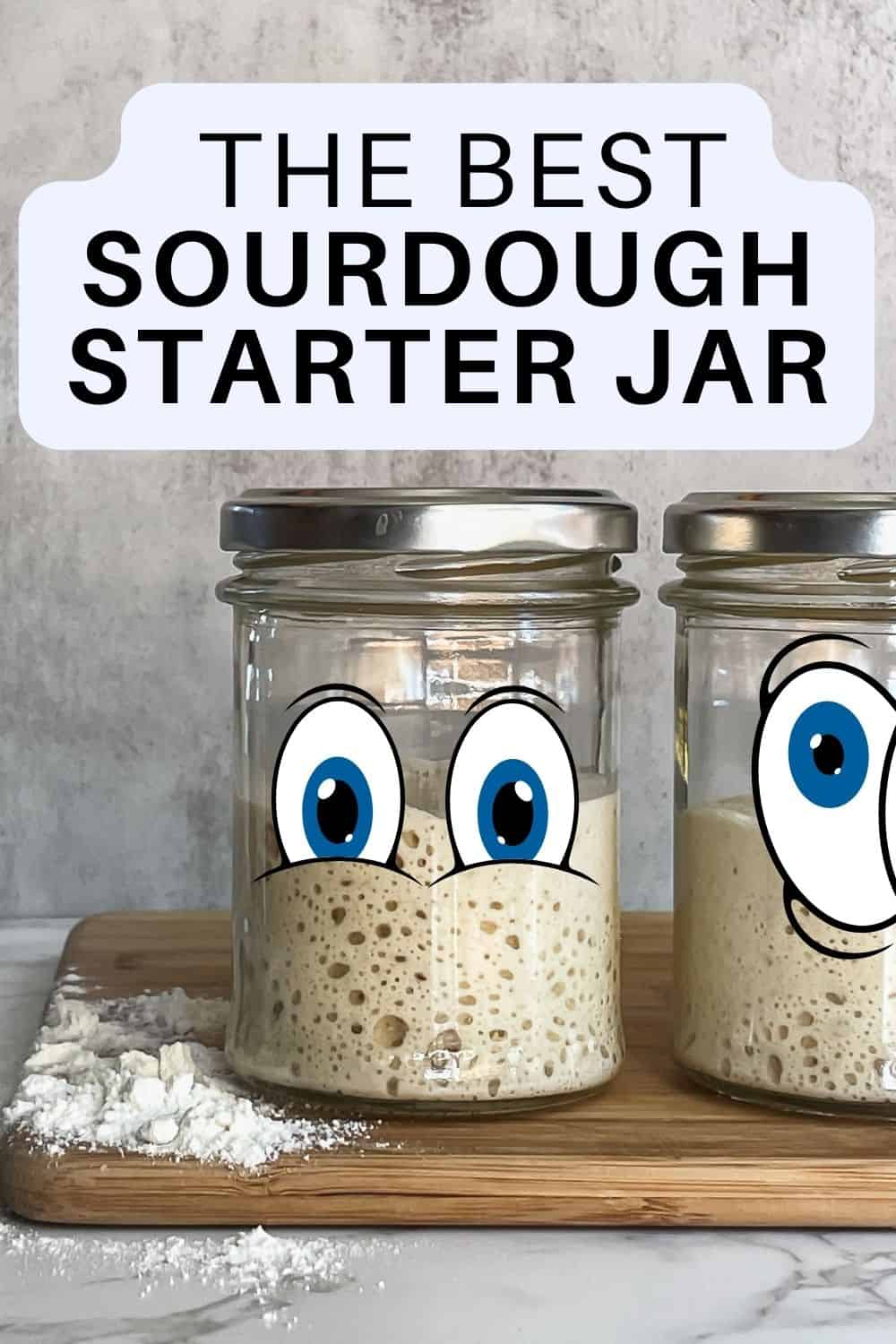
Choosing the best jar for your sourdough starter is like finding the perfect partner for your baking journey. The starter container should make feeding and caring for your starter simple, and it should also be easy to clean.
I also share my favorite sourdough starter jar and explain why it works so well for consistent results.
If you are just getting started, you can learn how to make a sourdough starter from scratch, or where to buy sourdough starter if you prefer to skip the first steps. Also, read how to feed your starter properly so it stays healthy, active, and ready to bake that perfect sourdough bread.
What is the best sourdough starter jar?
When choosing a starter jar, think about these things:
- Ease of use: Your jar should be simple to discard, mix, scrape, and clean. A dishwasher-safe jar is a big plus.
- Size and stability: Opt for a sturdy, well-sized jar that is large enough to handle the starter's growth without spilling over.
- Shape and access: A jar with a wide mouth and straight sides (no shoulders) is best. This design makes it easy to see how much the starter grows.
- Material and lid: Look for glass or BPA-free plastic. The lid should close loosely or tightly, depending on your needs.
- Budget-friendly options: Repurposing jars, like those from preserves or pickles, works well and can save money.
Sourdough starter jars to choose from
Here are some popular jar options, along with their pros and cons:
- ¾-liter 743 Weck glass jar
- Pros: Very strong and simple design
- Cons: More expensive than other options
- 32 oz. Ball Mason jar
- Pros: Good size for sourdough starter
- Cons: Tight seal makes it hard to open and close; lids can rust quickly
- Special sourdough starter kit
- Pros: Comes with a container marked to track starter growth and a jar spatula
- Cons: Expensive and may be harder to find than mason jars
- Ceramic or stoneware crocks
- Pros: Eco-friendly, large capacity, and looks great in the kitchen
- Cons: Heavy and can crack if dropped
- Recycled jars (e.g., preserves, pickle jars, Talenti gelato jars, deli containers, peanut butter jars)
- Pros: Cost-effective and easy to find
- Cons: Make sure plastic jars are food-safe and BPA-free
Choose the right size sourdough starter container
When you choose a jar for your sourdough starter, make sure it is tall enough for the starter to rise without spreading at the bottom. The jar should give it space to rise upward.
The jar should be about three to four times the size of your starter. Here is a quick guide to help:
| Starter/Levain Weight | Starter Jar Volume |
| up to 70g | ⅕ liter |
| 70-150g | ¾ liter |
| 150-250g | about 4 liters or 4 quarts |
| 250-400g | about 4 liters or 4 quarts |
| 400-1000g | about 2 liters, or 2 quarts |
| 1000g and more | about 4 liters or 4 quart |
How to clean your sourdough container
Cleaning sourdough mess isn't always easy, especially when it comes to the sourdough starter jar. Bits of starter dry up on the sides and bottom, and grooves in the jar make it difficult to clean.
Here is how to clean your jar:
- When feeding the starter, don't touch the rim of the jar. Once the starter dries, it is difficult to clean these areas.
- Use a flexible jar spatula to scrape down the sides of the jar to keep it clean and make the starter's growth easier to see.
- After feeding, wipe the rim of the jar with a wet kitchen towel (or paper towel) and cover it loosely with a lid.
- When cleaning the jar, use the spatula to scrape out any leftover starter and throw it in the trash. Don't pour the starter down the drain to avoid clogging.
- Wipe the spatula and jar with a paper towel, then discard the paper towel along with the starter bits.
- Soak the jar in cold water. Cold water helps dissolve the flour without making it sticky or clumpy, unlike hot water.
- After soaking, wash the jar with warm, soapy water, rinse with hot water, and let it air dry.
Emily Buehler, author of Bread Science, suggests rinsing your glass jar with a baking soda solution, then hot water to remove any soap residue that could affect the live cultures.
If needed, you can run the jar through the dishwasher for a deeper clean, but try not to do it often. Dishwashing detergent residue may harm your starter. There is no need to sterilize the jar.
Should you cover or not cover your sourdough starter?
When storing your starter on the counter, cover the jar loosely with a lid to let gases escape. For refrigeration, seal the lid tightly. Avoid using fabrics like cheesecloth or paper towels, as they dry out the starter, resulting in a crusty layer on top.
Top tips
- Use a dedicated jar: Pick a jar just for your sourdough starter, or even better, have two. This keeps your starter safe from mixing with other foods and prevents you from accidentally using the jar for something else.
- Keep it clean: Clean your jar regularly to avoid leftover bits of starter building up. You don't have to clean it every time you feed your starter, but doing so once in a while helps keep it fresh.
- Choose the right spoon: Use a wooden or plastic spoon, such as silicone. According to some, metal spoons can react with the sourdough's acidity and alter its flavor, even though many bakers use them.
- Use a glass jar: The glass jar is non-reactive, meaning it will not mess with your starter. Plus, they are super easy to clean. However, accidents can happen, so always keep a backup starter in case you drop your jar and break it.
- Pick a wide-mouth jar: A wide mouth makes stirring and feeding your starter much easier.
- Mark your starter's growth: Wrap a rubber band around your jar to mark where the starter begins to rise. This makes it easy to see how much it has grown. Lately, I have also started writing the feeding time and feeding ratio directly on the lid or side of the jar using a washable marker.
- Choose the right lid: Use a slightly loose lid to let gases escape as the starter rises. Weck canning jars or a Mason jar's ring without the center seal work well. Remove the silicone inlay or rubber insert from the lid to allow gases to escape. For wire Bail jars, remove the rubber gasket. Alternatively, you can use a screw-top lid that can be fitted loosely or tightly.
Just between us
Through trial and error, I have learned that the best jar for sourdough starter depends on your baking habits. Durable glass jars, practical recycled options, or even fancy jars can all work. Just make sure they fit your needs.
I found that the Ball Mason jar and the Weck molded glass jar are perfect for making levain. However, for daily maintenance, those jars feel too big.
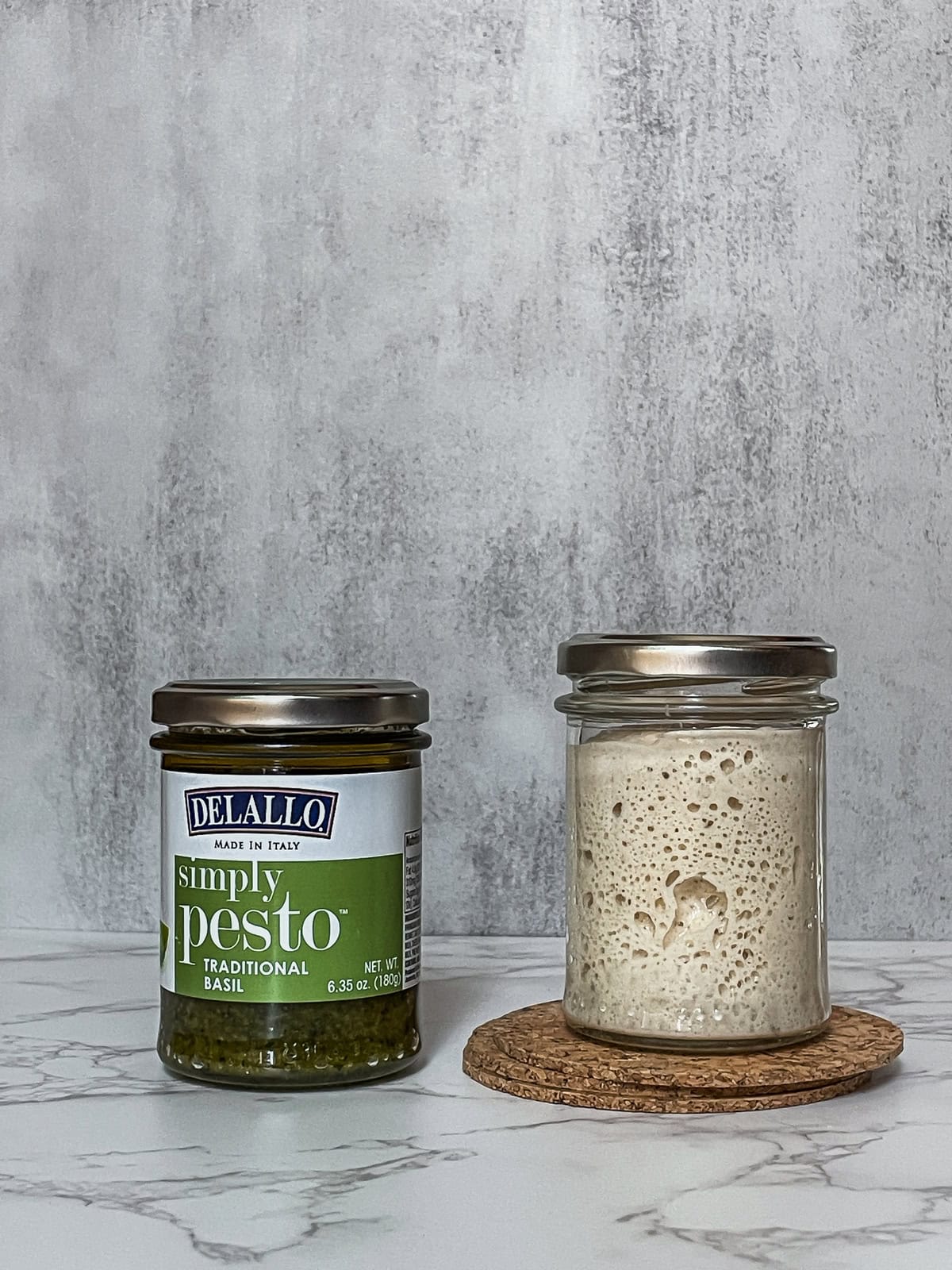
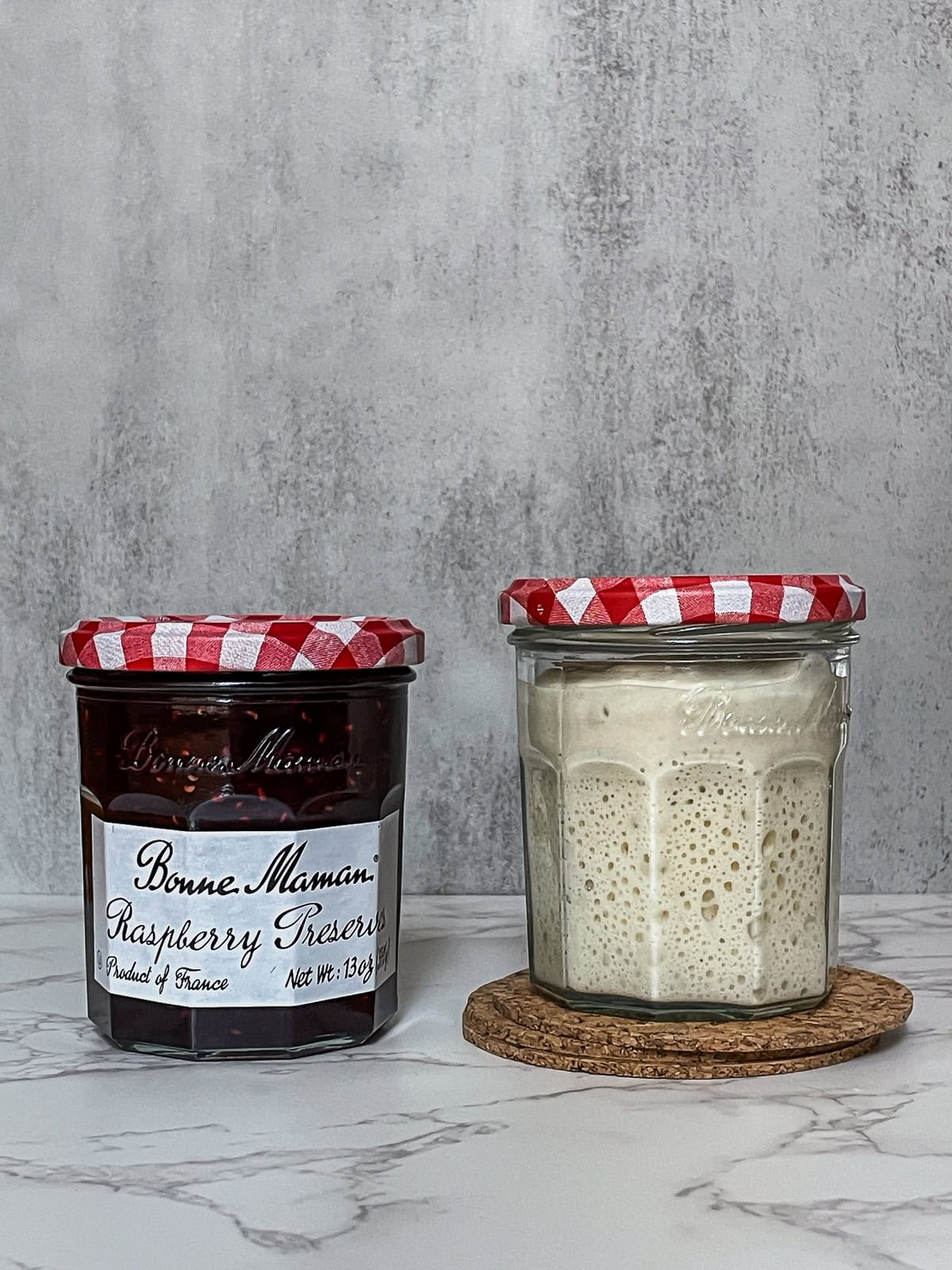
I prefer using repurposed Simply Pesto and Bonne Maman preserve jars. I keep a few on hand for my sourdough starter and discard.
In my opinion, the Simply Pesto jar is ideal for maintaining a starter. It makes my starter extra bubbly, more than any other sourdough jar I have tried.
It is probably a combination of factors, like the jar's diameter, height, and a lid that fits loosely on top. Who knows, maybe that loose-fitting lid allows just the right amount of gas to escape, creating a microenvironment that promotes stronger fermentation.
I often use a Bonne Maman jar to build levain for one loaf of bread. It is the perfect size for 35 grams of starter, fed at a 1:1:1 ratio with 35 grams of flour and 35 grams of water. Another good option is a 145 ml Weck molded glass jar.
I use a 1-2 gallon glass jar or a 2- 6 quart Cambro container for baking multiple loaves of sourdough.
Once again, start simple. A small jar from your pantry might be all you need to begin your sourdough journey.
And if you decide to try my favorite sourdough starter jar, I will share the most delicious recipe with you!
Let's talk sourdough
What kind of jar or container do you use for your sourdough starter? Have you found one that works better than others? Share your experience in the comments.
Ready to keep learning?
With the perfect jar ready, the next step is to store it. Learn the best ways to store sourdough starter for daily use, vacations, or long-term care.