
Quick Summary: Kahm yeast is a harmless white-to-beige (sometimes brownish) film that forms on a sourdough starter exposed to air, usually after too long between feedings. It is safe and is not mold, but it gives the starter an off, cheesy smell and flavor.
To deal with it: scrape off the film, take 2 to 5g of healthy starter from the bottom of the jar, and give it a big feed in a clean jar. Because the off-flavor is hard to remove, many bakers simply start fresh from a dehydrated backup.
What is kahm yeast?
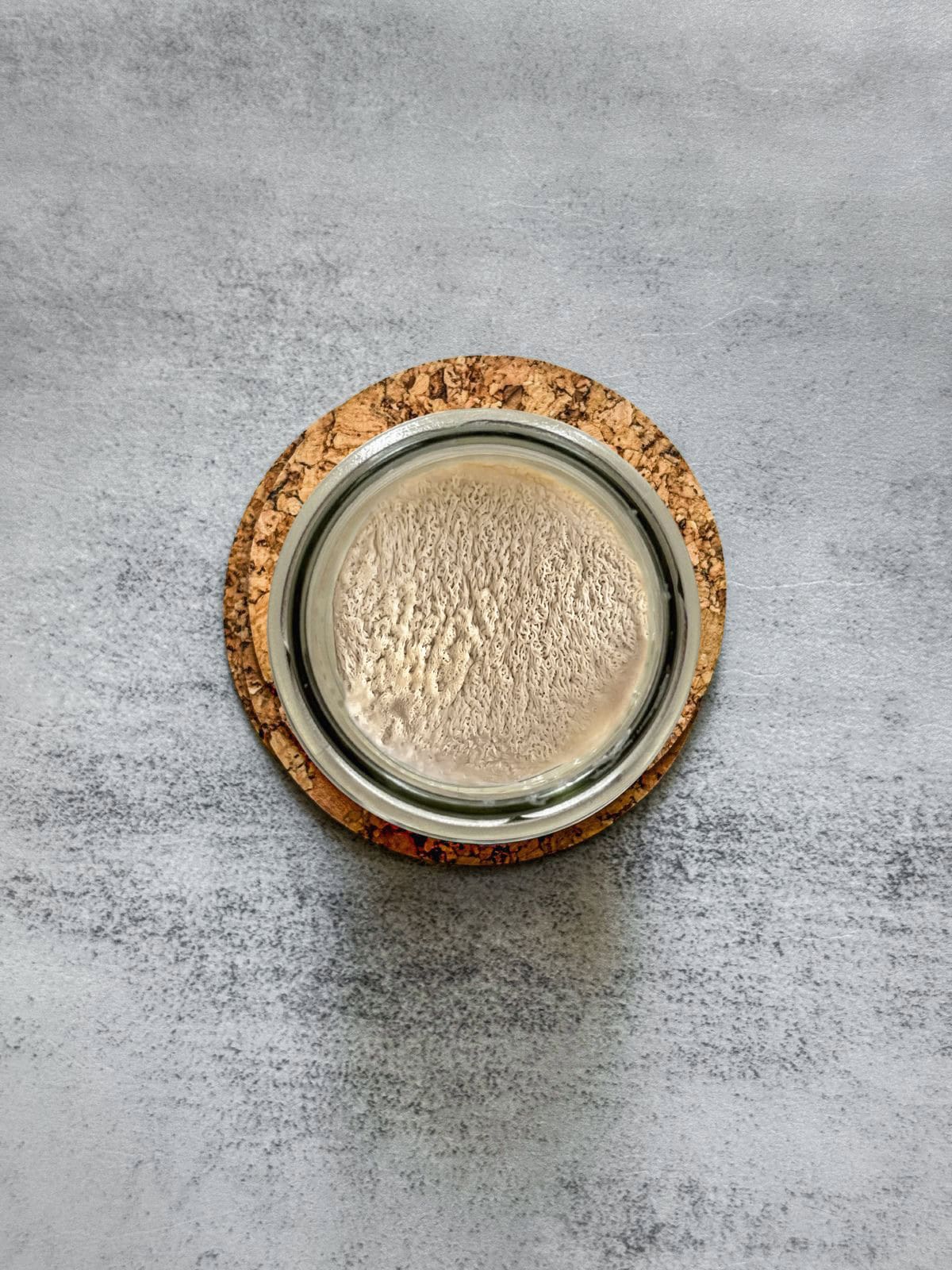
Kahm yeast is a harmless wild yeast that appears as a thin, white-to-beige, sometimes brown, film on the surface of fermenting foods, including sourdough starters. This yeast thrives in oxygen-rich environments and is often a sign that the starter has been exposed to air for extended periods.
Is kahm yeast harmful?
Even though kahm yeast makes your starter look odd, it is not dangerous. While it is safe, it affects the flavor and aroma of your sourdough starter, often giving it an unusual or "cheesy" smell.
Why does kahm yeast appear on a starter?
There are a few factors that can cause the growth of kahm yeast in your sourdough starter:
- Extended periods between feedings: If you neglect your starter for prolonged periods without regular feedings, it creates an environment that helps kahm yeast growth. A healthy, well-fed starter naturally maintains a balance that keeps harmful bacteria and yeasts, including kahm yeast, in check. But if it is left unfed for too long, that balance is disrupted, allowing kahm yeast to take over.
- Inadequate sealing: If you store your sourdough starter in the fridge in a jar without the lid tightly secured, it is exposed to excess oxygen, which promotes kahm yeast growth.
- Contaminated equipment: Using unclean utensils or jars can introduce unwanted microorganisms, including kahm yeast. Reusing the same sourdough starter jar for multiple feedings also increases the chances of kahm yeast developing.
- Cross-contamination from other fermented foods: If your starter comes into contact with other fermented foods that already contain kahm yeast, it can transfer and start growing on your starter.
How to tell kahm yeast apart from other issues
Kahm yeast is often confused with mold, hooch, or bacterial contamination, but they are not the same, and only some are safe. Use this table to tell kahm yeast apart from the other three at a glance.
| Issue | Looks like | Color | Safe? | What to do |
| Kahm yeast | Thin, flat film | White to beige/brown | Yes (off-flavor) | Scrape, big-feed from the bottom, or restart |
| Mold | Fuzzy, raised patches | Green, blue, or black | No | Discard the starter |
| Hooch | Liquid layer on top | Clear to dark | Yes (hungry starter) | Pour off or stir in, then feed |
| Serratia (bacteria) | Streaks | Pink or orange | No | Discard the starter |
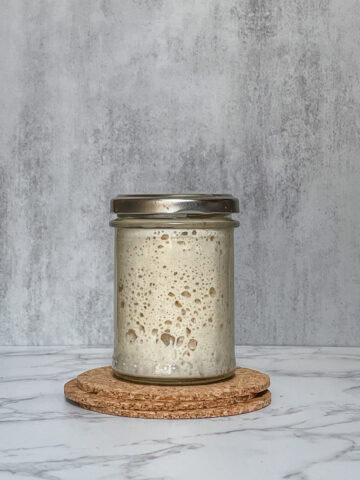
The photos below show what each one actually looks like, since color and texture are easier to judge by eye than by description.
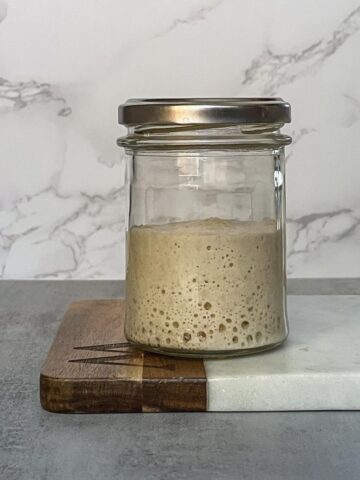
Kahm yeast forms a thin, white-to-brown film. While it signals that the starter needs better care, it is not harmful like mold.
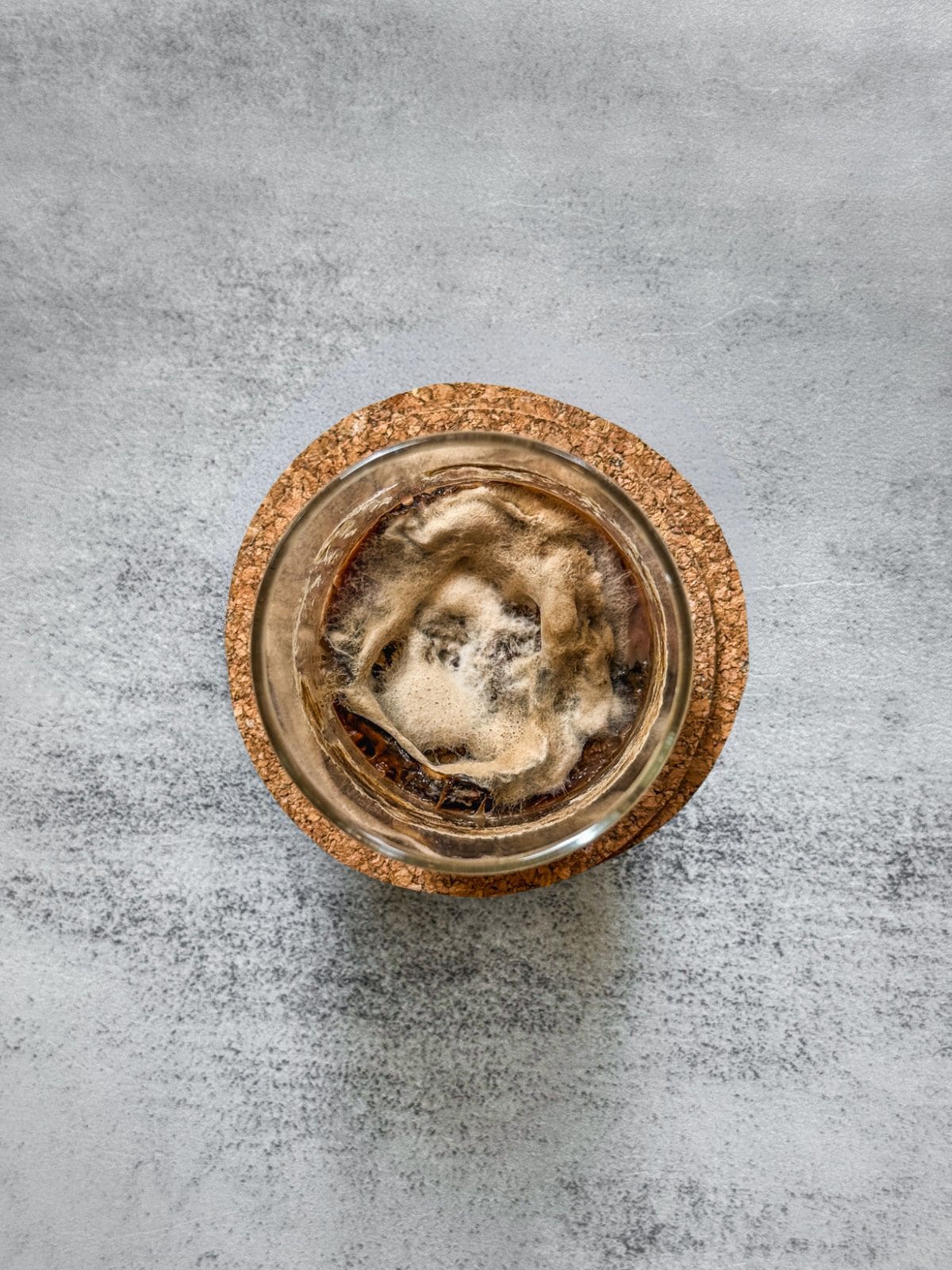
Mold appears fuzzy and can be green, blue, or black. You cannot use such a starter and should throw it away.
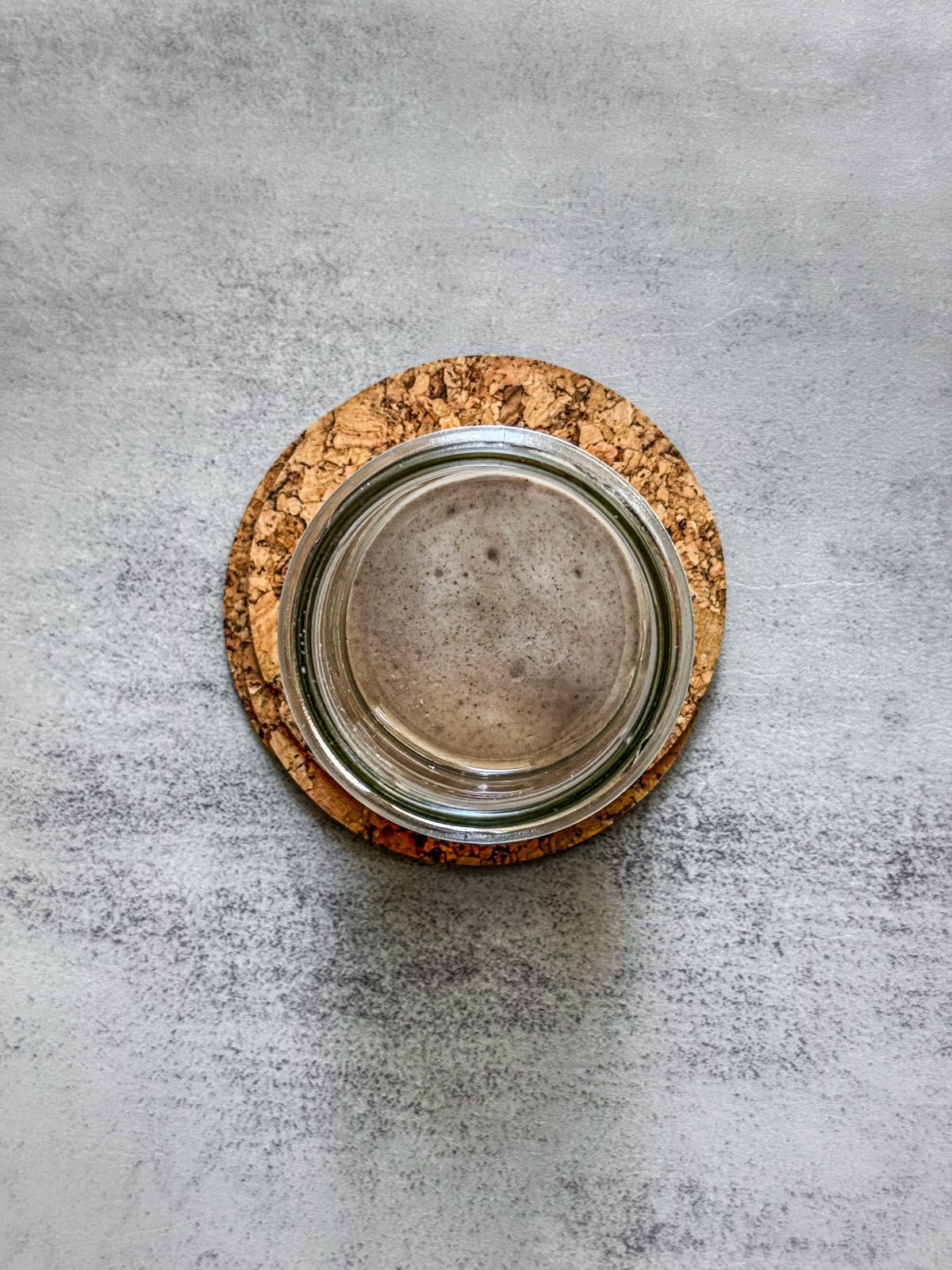
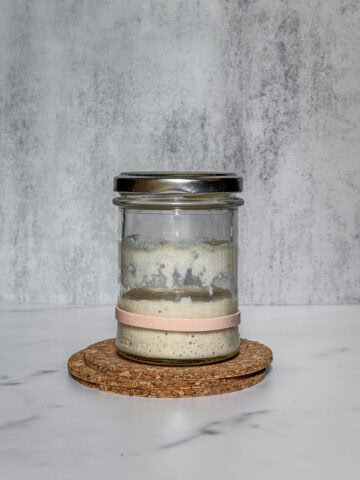
Hooch is a liquid that forms when your starter is hungry. It usually appears on top of the starter and can be mixed back in after feeding.
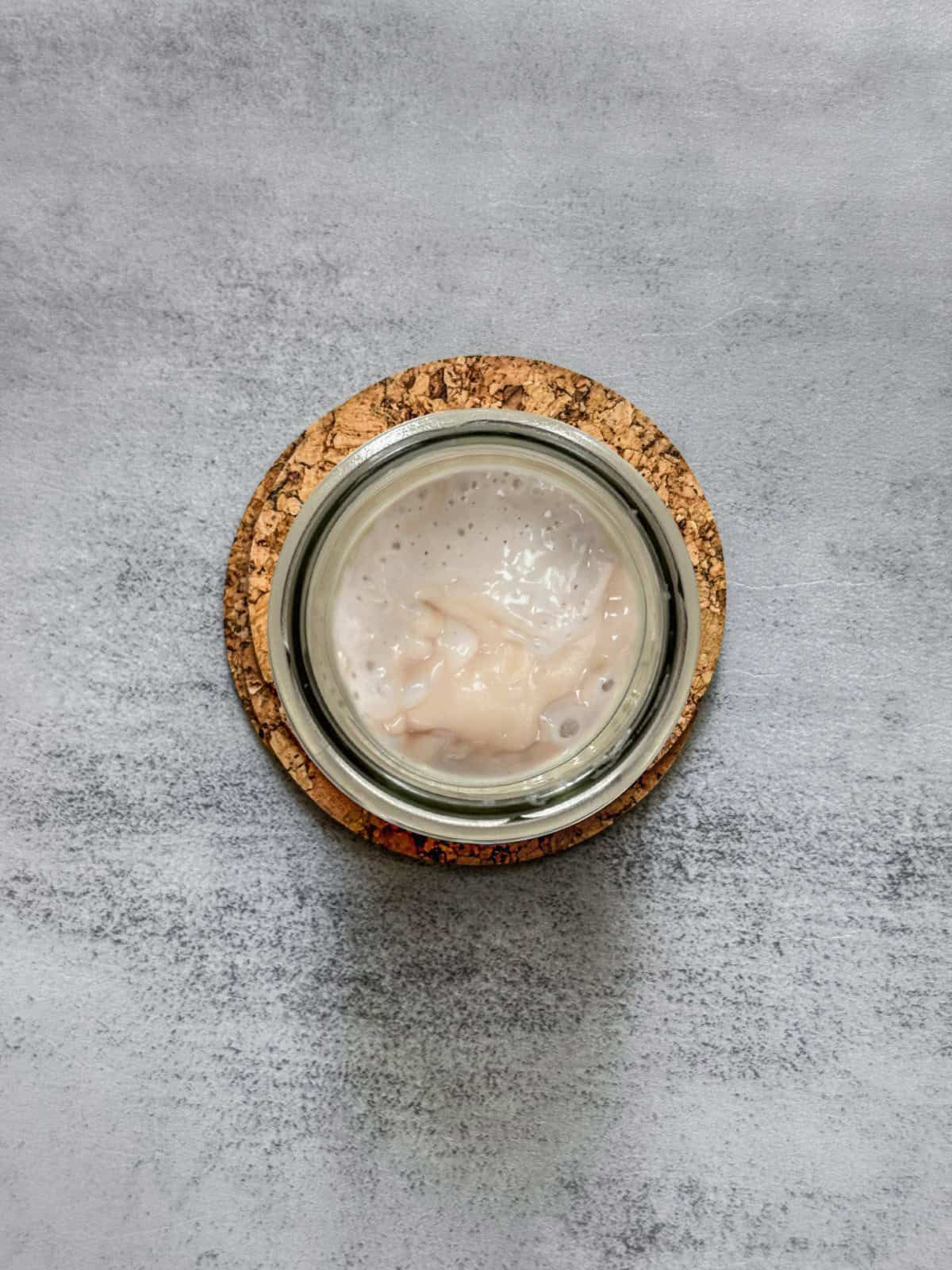
Harmful bacteria like Serratia marcescens form pink or orange streaks, which is a sign of severe contamination. Discard this starter.
How do you get rid of kahm yeast on a sourdough starter?
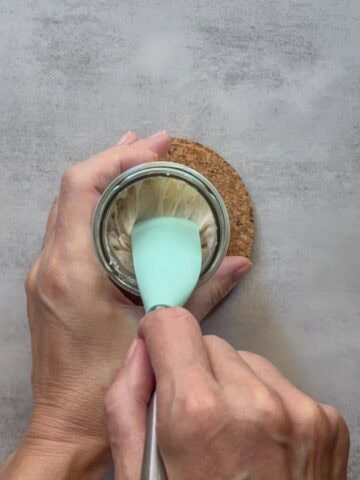
To get rid of kahm yeast, scrape the film off the surface, then rescue the healthy starter underneath: take 2 to 5g from the bottom of the jar, move it to a clean jar, and give it a big feed of 75 to 100g flour and water.
A few things to keep in mind as you do this. Scraping alone often isn't enough, because kahm yeast may already be present throughout the starter, not just on top. That is why you rescue a small amount from the very bottom rather than reusing the whole jar.
That rescued starter will reactivate and peak in about 24 hours at 86°F (28°C), though it takes longer at room temperature.
Always wash and sanitize the old jar, and use a fresh, clean jar for each feed. This is one of the best ways to keep kahm yeast from returning.
While kahm yeast is safe, the off-flavor is hard to remove, so many bakers, myself included, discard the affected starter and follow a beginner sourdough starter recipe to start fresh.
If you sell sourdough bread, it is especially not worth the risk. That is why it is always a good idea to have a backup. Dehydrate sourdough starter so you can reactivate it if something goes wrong.

How to prevent kahm yeast
Here are some tips to avoid kahm yeast on your sourdough starter:
- Feed regularly: Feed your starter consistently to keep it active and balanced. Learn more about feeding sourdough starter.
- Use clean equipment: Always use clean utensils and jars when handling your starter. While some bakers reuse the same jar, using a fresh, clean jar for each feeding is a better way to avoid unwanted bacteria, mold, and kahm yeast.
- Store your starter properly: Keep it in a tightly sealed container to limit exposure to air when storing in the fridge. Learn more about how to store sourdough starter.
- Watch out for cross-contamination: If you have other fermented foods in your kitchen, like sauerkraut, kombucha, or other cultures, kahm yeast can transfer from them to your starter. Try to keep different fermented foods separate and avoid sharing utensils.
FAQ
Can you still use a starter that had kahm yeast? Yes, it is safe to bake with once you have scraped the film and refreshed the starter with clean feeds. The catch is flavor: the off, cheesy taste can carry into your bread, which is why many bakers restart instead.
What does kahm yeast smell like? Often unpleasant, sometimes described as cheesy, musty, or slightly like acetone. A healthy starter should smell pleasantly sour, tangy, or yeasty, so a strange smell alongside a surface film is a kahm clue.
Can kahm yeast turn into mold? No, they are different organisms, and kahm yeast won't become mold. But a neglected starter can grow both, so it is worth addressing kahm promptly before other problems set in.
Will the kahm yeast go away on its own? Not really. It won't clear up without action. Scraping the film and returning to consistent feeds in a clean jar can restore balance, but if the off-flavor lingers, starting fresh is usually easier.
Does kahm yeast mean my starter is ruined? Usually not. Kahm yeast is a care issue, and most starters recover with a clean jar and regular feeding. Only fuzzy mold or pink/orange streaks mean you must throw it out.
Let's talk sourdough
Have you ever seen kahm yeast on your starter? How did you handle it? Share your experiences in the comments.
Ready to keep learning?
Whether it is runny, acidic, or covered in kahm yeast, most starters can be saved. Learn how to revive sourdough starter and get back to baking strong, healthy loaves.
Want starter help before problems start? Join the free email series.