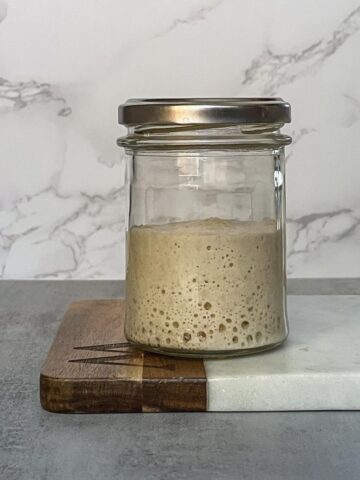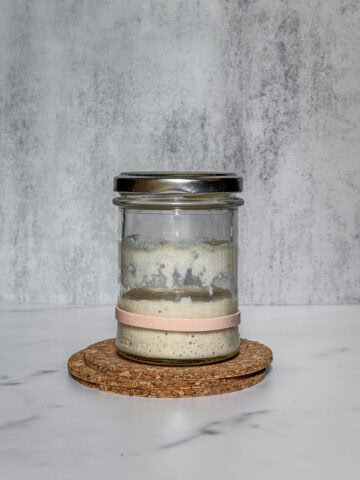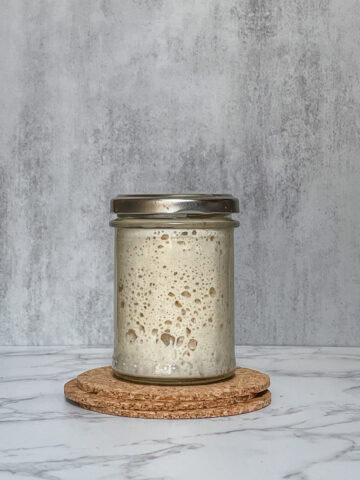

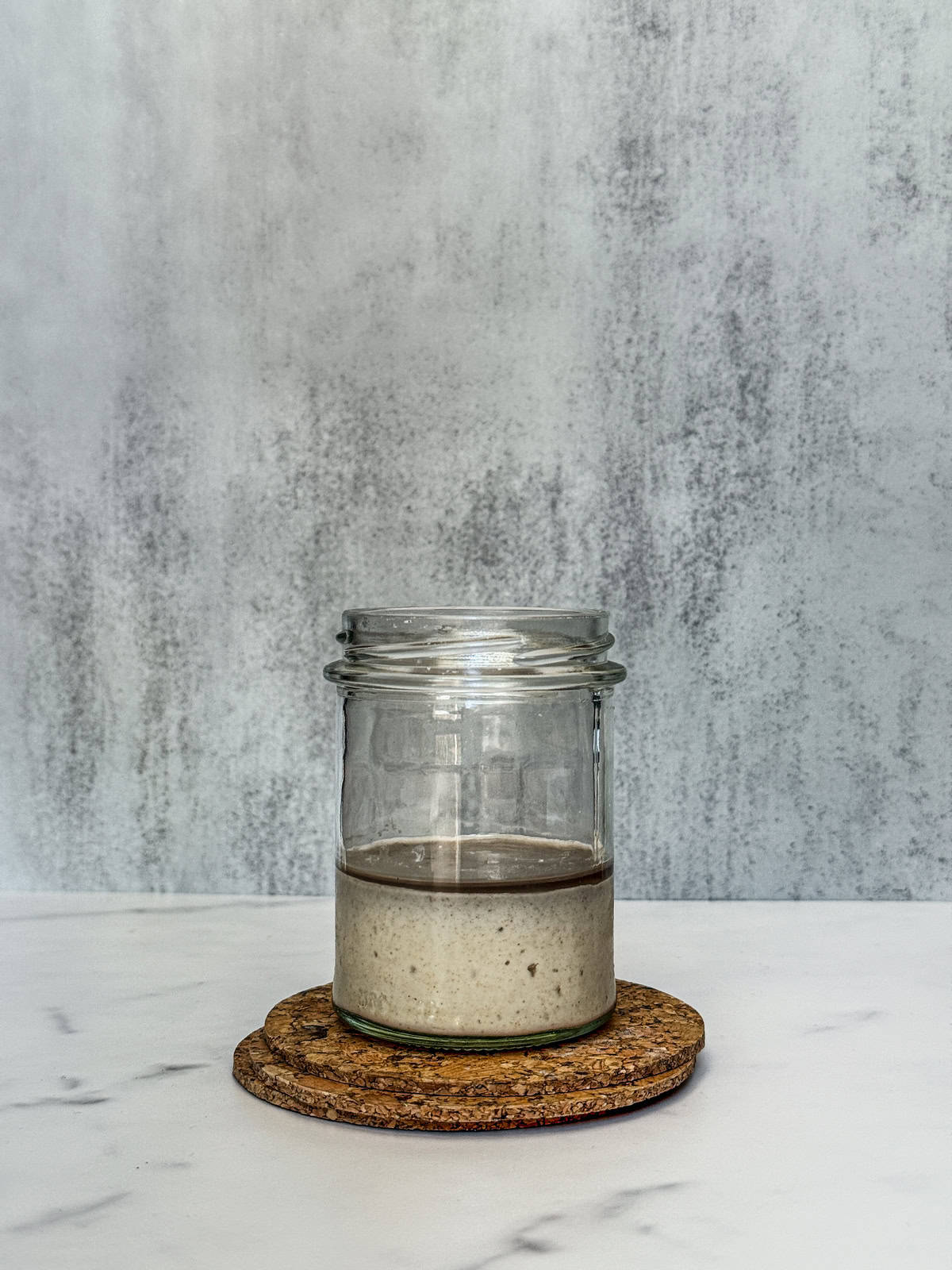
It is common for beginners to notice a liquid layer on top of their sourdough starter and wonder what it means. This is called sourdough starter hooch, also known as sourdough starter liquid.
Hooch is harmless and actually serves as the first signal that your starter needs some attention. With the proper routine, your starter will stay lively and ready to bake delicious bread.
What is sourdough starter hooch?
Sourdough hooch is a clear liquid on top of your starter, separating it into a watery layer and a thicker portion. It is made of alcohol and is a natural byproduct of the fermentation process.
When your sourdough starter creates a hooch, it means the yeast and bacteria in it have run out of food and need to be fed. In other words, your starter is hungry!
Why your starter has hooch
Hooch forms when your sourdough starter is hungry, which usually happens if you didn't feed it enough or neglected it for too long.
It results in an acidic starter when lactic acid bacteria (LAB) outcompete the yeast. As the acidity rises, yeast activity slows, producing less carbon dioxide and leaving the starter weaker.
A runny sourdough starter is usually the first signal that something is going wrong. Acids break down the gluten structure, so your starter becomes thin, watery, stringy, and rises less after feedings.
If the starter remains acidic for too long or goes unfed, the next step is forming a layer of gray or brown liquid on top called hooch.
Hooch is a combination of alcohol from stressed yeast and acids from bacteria. This means your starter is hungry and carrying a high acid load.
Essentially, the process follows a chain reaction: Underfeeding → High acidity → Runny starter → Hooch formation.
How sourdough hooch forms
Sourdough hooch starts to form after a few days without feeding. At first, it looks like a clear liquid on top, but sometimes, it appears underneath or in the middle of the starter. Over time, the hooch turns brown, black, or even purple.
It usually smells like alcohol, vinegar, or nail polish remover, noticeable but not overpowering.
Here is how your sourdough starter changes depending on how long it has been neglected:
- After one month: You may see a thin, clear-to-amber layer of hooch. Stir it back in and feed your starter.
- After more than a month: The hooch darkens. Stir it back in or pour it off before feeding the starter.
- After 3-12 months: Hooch turns black, and the starter may develop a dark gray skin. Remove the skin, stir or pour off the hooch, and feed.
- After over a year: The starter may dry out completely. Add water first, then flour, and feed it for several days to revive it.
Should you pour off the hooch or stir it in?
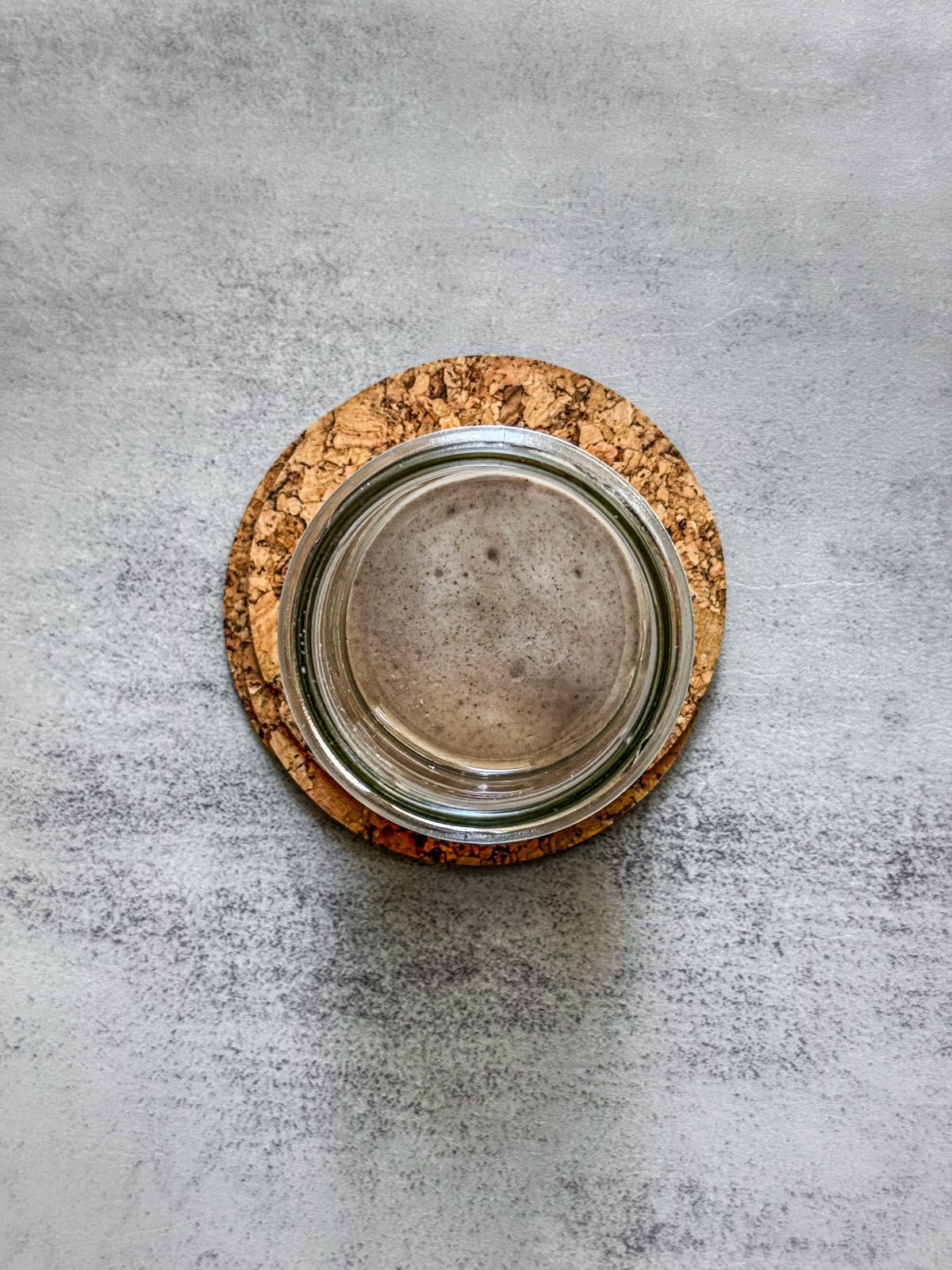
It is up to you. If you stir the hooch back into the starter, it will add more liquid and could give your bread a tangier flavor. This is one way to make sourdough more sour.
If you pour it off, remember that it changes the starter hydration, so you will need to adjust for that when feeding it.
The only time you should always pour off the hooch is if it has turned very dark after being stored in the fridge for a long time. In most cases, mixing the hooch back in and feeding your starter will work fine.
How to revive a starter with hooch
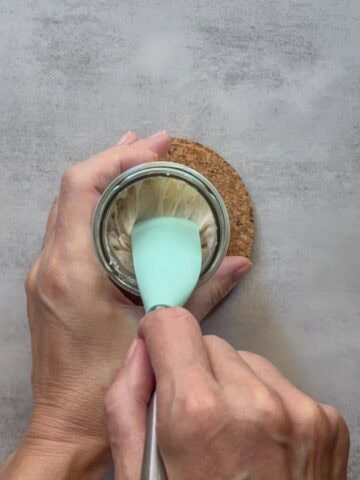
If your starter has hooch, it simply means it is hungry. You can stir the hooch back in and feed the starter equal parts flour and water by weight, aiming for 100% hydration.
If you prefer to pour off the hooch, measure the liquid in milliliters and add the same amount to your feeding water to replace the lost volume.
A healthy starter should become bubbly and double in size within 6 to 8 hours. To bring it back to life, feed it peak-to-peak or give it a generous feed using a 1:5:5 ratio or higher.
If, after several feedings, your starter still shows no activity and has a strong, unpleasant smell, it may be beyond saving. Discard it.
When to toss a starter with hooch
You only need to toss your starter if you see mold. Mold means it is no longer safe to use, so start over and make a new sourdough starter.
How to prevent sourdough hooch
If you keep seeing hooch on top of your starter, try to make a few adjustments.
Start by looking at your starter feeding ratios and schedule. If you currently feed your starter once a day at a 1:1:1 ratio, try feeding it twice a day at 1:2:2 or 1:3:3.
If you prefer feeding once a day, increase the ratio to 1:5:5. Some starters need even higher ratios, especially in warm weather. For example, a 1:8:8 ratio once a day may work better in summer, while 1:5:5 is fine in winter.
Every starter is unique, and factors like room temperature and flour type affect how often and how much you should feed it. Observe your starter's behavior to keep it balanced.
Another option is converting your 100% hydration starter into a stiffer starter. You can feed a stiffer starter less often and store it in the fridge without developing hooch as quickly.
Finally, try to keep your starter in a cooler, stable environment on the counter. Invest in the Brod & Taylor Sourdough Home to help maintain a consistent temperature around 64-70°F (18-21°C). This can help prevent excessive acid buildup and hooch formation.
Let's talk sourdough
Have you ever noticed a layer of liquid on your starter or smelled a tangy, unusual aroma and wondered what was happening? Share your experience in the comments.
Ready to keep learning?
Occasionally, your starter develops a more serious problem: mold. Learn how to identify moldy sourdough starter and when to start over.