
A moldy sourdough starter is certainly discouraging, but it is an issue many bakers face at some point. Mold thrives in warm, humid conditions, which makes your starter vulnerable without proper care.
In this article, we will learn what mold is, how it affects your starter, and how to prevent and address it.
What is mold?
Mold is a type of fungus, not bacteria, as some may think. It appears as fuzzy spots or velvety patches, often in colors like green, black, or white.
A moldy sourdough starter, a type of bad sourdough starter, shows the same kind of growth you have probably seen on old bread or fruit.
In a sourdough starter, mold can happen when:
- You skip feedings and let the starter sit for some time without fresh flour and water. In other words, it is when the starter is neglected.
- You use unfiltered or contaminated water containing unwanted microorganisms.
- The flour you use already has mold spores from improper storage.
- Your sourdough starter jar or utensils aren't completely clean, giving mold a place to start growing.
Once mold appears, the starter is no longer safe to use. The best approach is to discard the starter and start a new sourdough starter using clean tools and fresh ingredients.
Mold on sourdough starter
If you notice fuzzy patches or discoloration, it indicates that the starter has become contaminated. This is especially concerning if you see black mold, which is more serious and typically grows in damp, non-food environments.
At the first sign of mold, discard the starter and begin a new one. Avoid any advice that suggests scraping off the mold and continuing to use the starter. Mold spores can spread unseen, posing a risk to your health.
This is also why you should dehydrate your sourdough starter, as a backup. If your starter becomes moldy, you can rehydrate a dried starter within 5 days or create a completely new starter from scratch.
Real-life examples of moldy sourdough starters
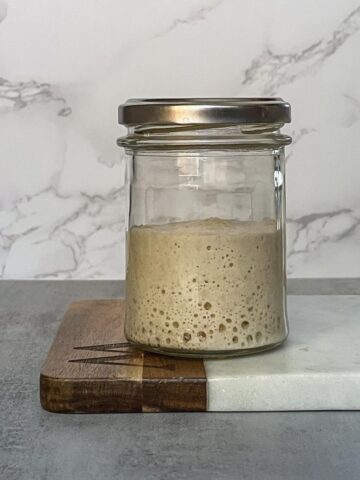
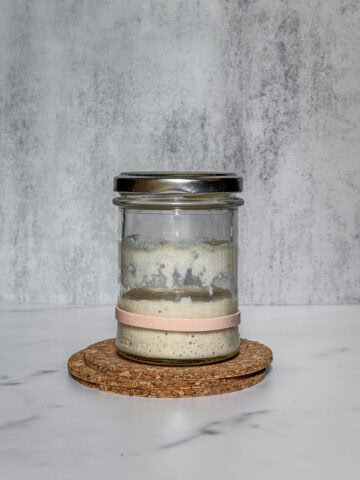
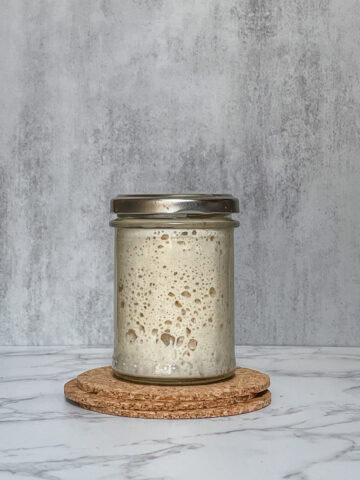
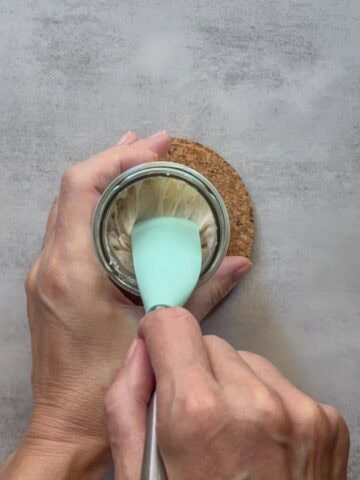
These pictures show real examples of moldy sourdough starters. I split my sourdough starter into several jars and intentionally neglected them.
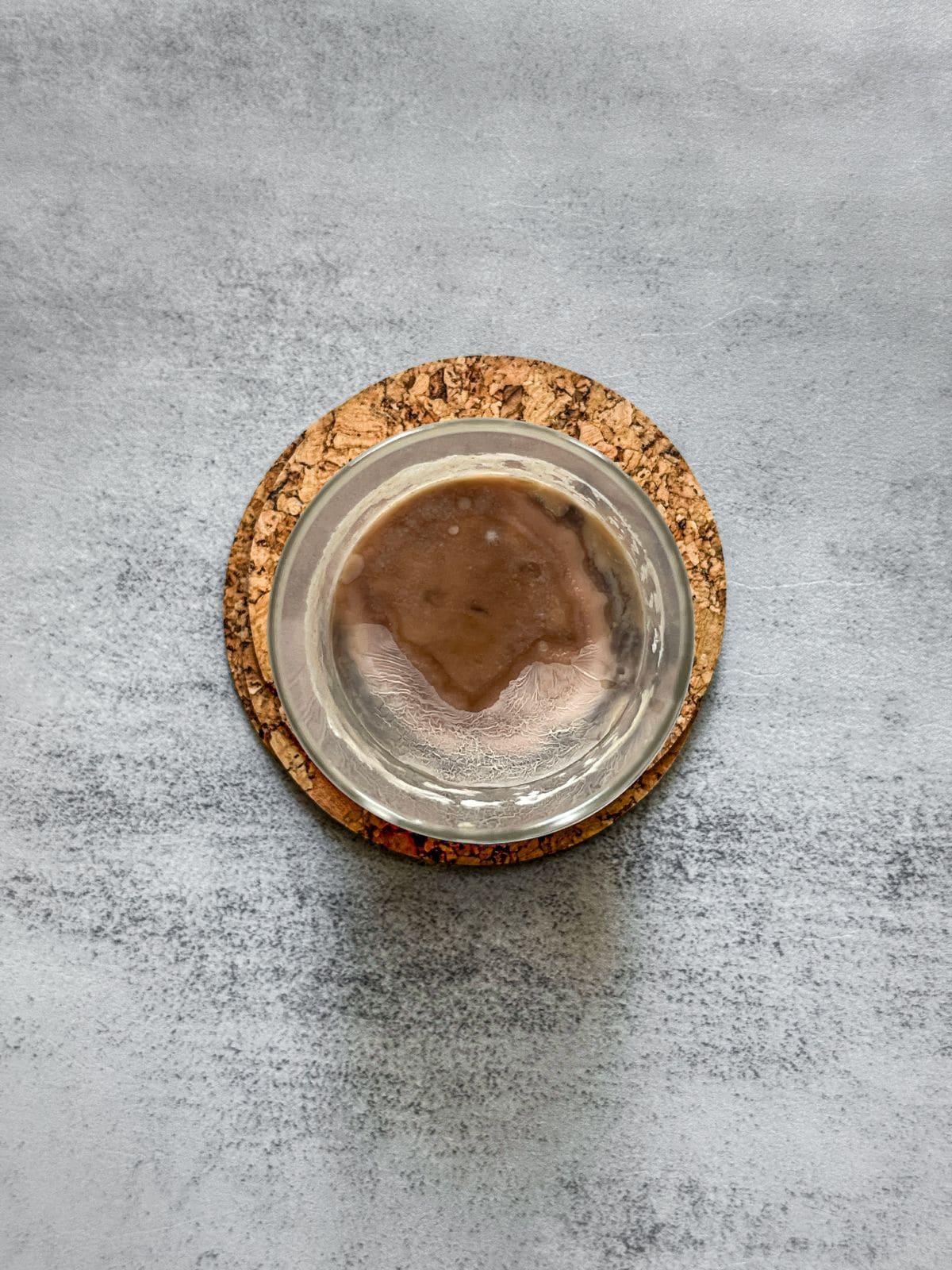
A discolored sourdough starter with a single velvety patch of mold on its surface.
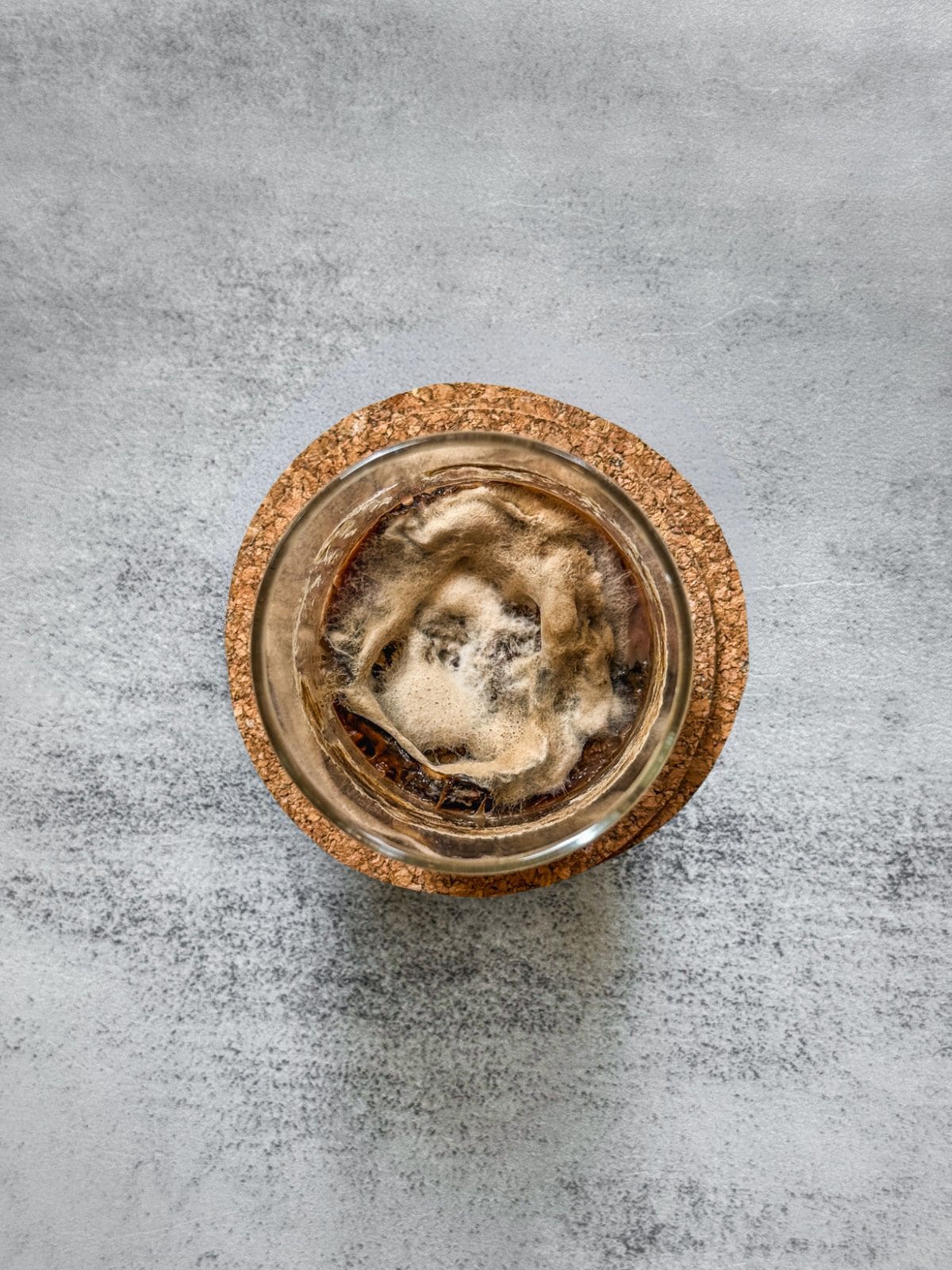
A sourdough starter showing obvious mold, with fuzzy, raised, velvety patches covering the top. It was left unattended on the counter for roughly a month.
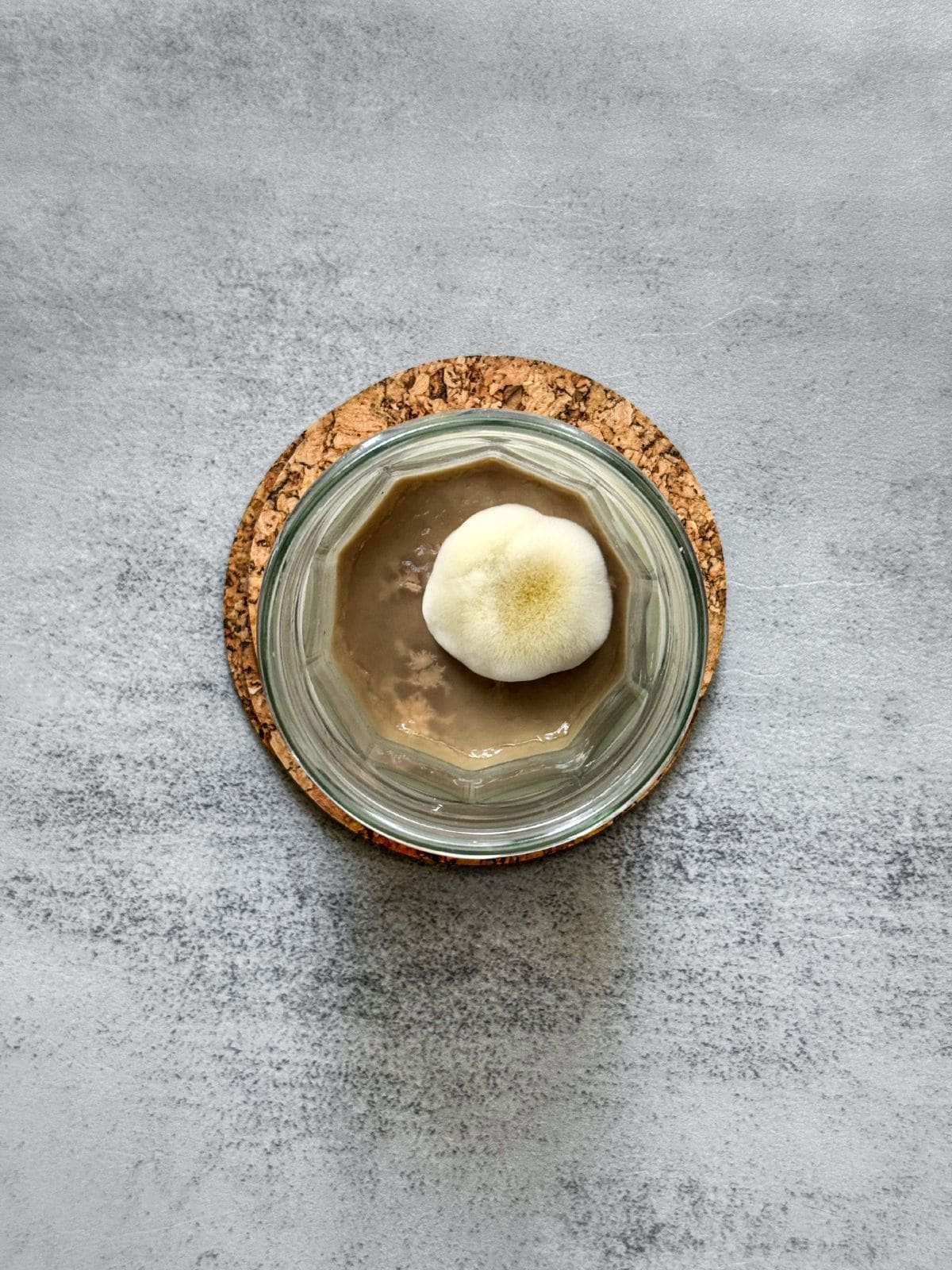
A contaminated, moldy, sourdough starter with white fuzzy growth on the surface.
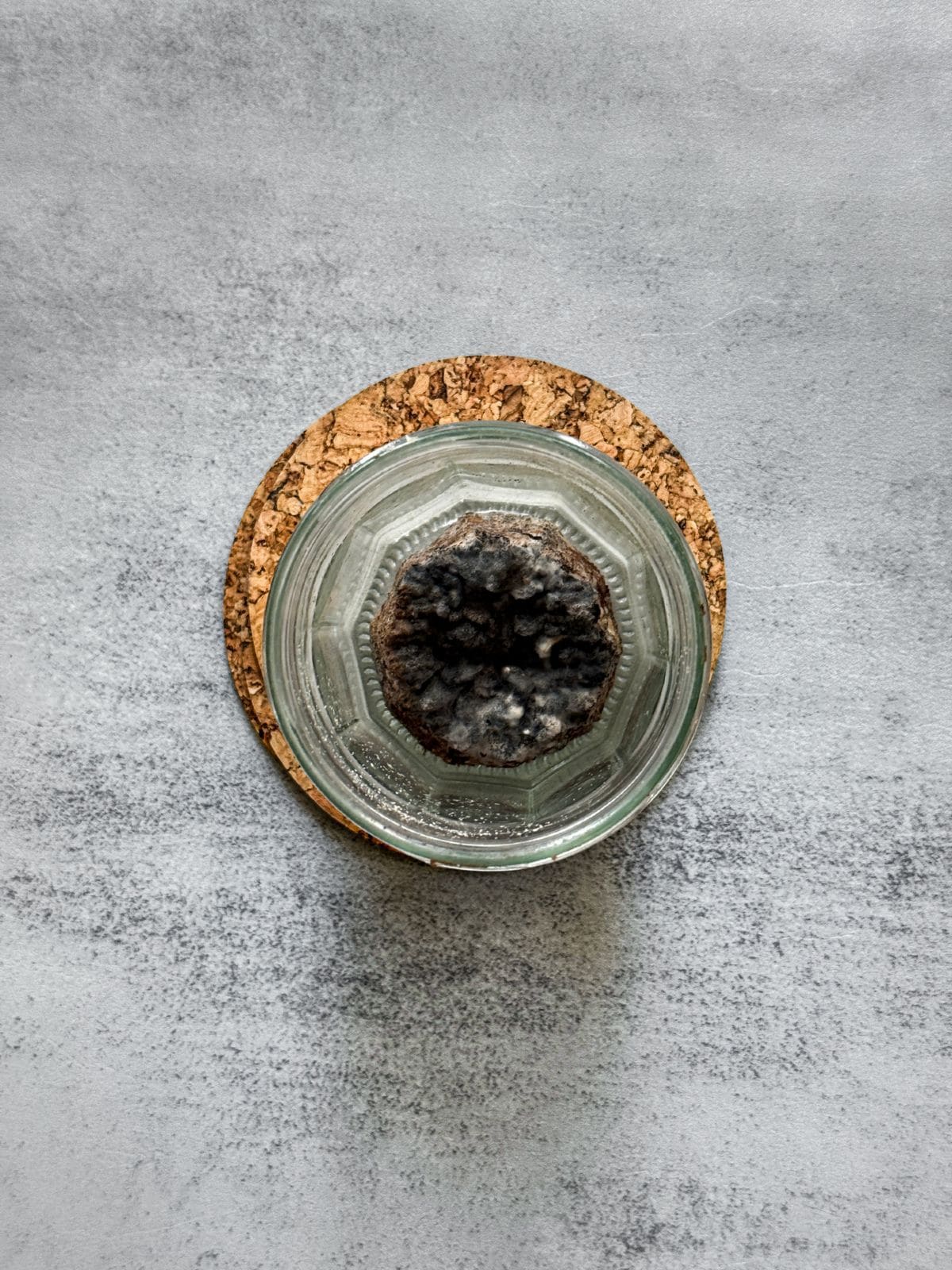
Black mold contamination on a neglected sourdough starter.
How to prevent sourdough starter mold
- Feed your starter regularly: Follow a feeding schedule that works for your starter. This will keep it healthy and active. Use unbleached flour and filtered water to minimize contaminants. Learn more about feeding sourdough starter.
- Check your flour: Make sure it is fresh and stored in a cool, dry place. Flour can absorb moisture and develop mold spores over time, especially in humid environments. Avoid using old or improperly stored flour, as it increases the risk of contamination in your starter.
- Maintain cleanliness: Always clean starter jars, utensils, and work surfaces thoroughly. A clean environment is key to avoiding mold. I always wash my hands before feeding my starter and avoid reusing the same jar repeatedly without washing it first.
- Control temperature: Keep your starter at a stable, moderate temperature, ideally around 72-75°F (22-24°C). Think of investing in the Brod & Taylor Sourogh Home, which maintains a constant temperature. Extreme heat or humidity can encourage mold growth.
- Act quickly: If you notice early signs of mold, such as fuzzy patches or discoloration, discard the starter immediately to prevent further problems.
Mold vs. hooch
Sometimes, bakers confuse mold with hooch, but they are very different signs in your sourdough starter.
Mold appears as fuzzy or velvety patches on the surface and can vary in color from green to black, white, and even pink. It is a clear sign that the starter has been contaminated or spoiled and must be discarded.
Sourdough hooch, on the other hand, is a liquid layer that forms on top of the starter when it hasn't been fed regularly. It appears as a dark or grayish liquid, sometimes giving the impression of a stain or shadow, but it is not fuzzy.
Hooch is harmless and means your starter is hungry. Stir it back in or pour it off, then feed your starter to revive it.
Mold vs. Kahm yeast
While both mold and kahm yeast can appear on sourdough starters, their visual characteristics and health risks differ.
Mold is a type of fungus that can grow on the surface of the starter and is typically fuzzy, often indicating spoilage.
On the other hand, kahm yeast is a type of wild yeast that forms a thin, white, or cream-brownish colored layer on the surface of fermented foods, such as kombucha, sauerkraut, and sourdough starter.
Mold is considered harmful and requires discarding the entire starter. Kahm yeast, a natural byproduct of fermentation, can be safely skimmed off without harming the starter.
If your sourdough starter is affected by kahm yeast, follow the steps to revive it.
Pink streaks in sourdough starter
Redish to pink streaks on the surface of a sourdough starter are a sign of bacterial infection, often caused by Serratia marcescens. These bacteria indicate that the starter has spoiled.
Unlike mold, it doesn't form fuzzy or velvety growth. Instead, it looks like a smooth, wet, or slightly slimy layer. The color can range from pale to bright orange-red and even darker red, depending on oxygen exposure and colony density.
S. marcescens grows well when exposed to air, such as in an uncovered starter jar, creating its bright reddish-orange color. In a closed container with little or no oxygen, it can still survive, but the color may be paler or even colorless.
If you see any signs of S. marcescens contamination, discard the starter and start fresh.
Let's talk sourdough
Have you ever been concerned about discoloration in your sourdough starter? If so, how did you deal with it? Please comment below.
Ready to keep learning?
Not all surface growths are dangerous. Discover what kahm yeast is, how it differs from mold, and how to keep your starter safe.