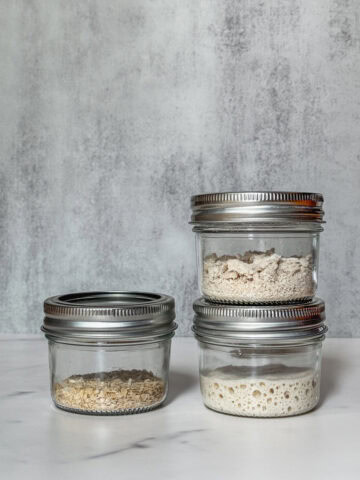

Traveling with a sourdough starter by car, boat, or plane is an exciting way to keep baking bread wherever you are. Even with challenges like following TSA rules or keeping your starter happy on the road, it is rewarding to enjoy fresh, homemade bread while on vacation.

Can you travel with a sourdough starter?
The short answer is yes, you can. Sourdough starters, whether wet or dried, are travel-ready. But flying with a starter may require extra preparation to meet airline and TSA guidelines.
For example, a sourdough starter (even the stiff one) is considered a liquid food, so amounts over 3.4 ounces must be checked in luggage. If you stick to the limit of a few grams, like 10, you can carry a small amount in your bag, ready to use when you land.
For international flights, check with your airline and the destination country's rules about bringing food. Some countries have restrictions, so it is important to be sure before you pack.
If you drive a car or travel by boat, things become simpler. Keep your starter in a cool, shaded spot and avoid heat or direct sunlight exposure.
Can you bring a loaf of bread on an airplane?
Not only can you bring a sourdough starter, but you can also bring a loaf of bread on a plane in checked or carry-on luggage (I have done it myself!).
According to TSA regulatory standards, solid foods like bread are completely fine to take with you, so you can enjoy your sourdough wherever you go.
How to prepare your starter for the journey
If you plan to bring a 100% hydration sourdough starter, feed it a few hours before your trip. Use equal amounts of starter, water, and flour (a 1:1:1 ratio).
Cover your starter loosely and let it rise on the counter for a couple of hours. Watch it closely so it doesn't reach its peak and risk overflowing during travel.
When it is ready to pack, secure the lid tightly and place the jar in a zip-lock bag to prevent spills. Once you arrive, resume feeding it as usual.
Another option is to travel with a dried starter. A dehydrated sourdough starter is lightweight, easy to pack, and doesn't require constant care. Store it in a sealed bag or container and reactivate it when ready to bake.
How to travel through airport security
When flying, educate yourself on the TSA rules about food items. Starters under 3.4 ounces are allowed as carry-ons, while larger amounts must go in checked luggage.
If traveling internationally, research the destination's import rules for food to make sure your starter can accompany you. Be ready to explain what a sourdough starter is if customs officers ask (and yes, they ask!).
To be extra careful, it is a good idea to pack your dehydrated starter in your checked luggage. There have even been cases where customs officers inspected the powder from a dehydrated starter.
How to take care of your starter on the road
If your trip lasts less than 24 hours, you will likely not need to feed your starter. For longer journeys, consider taking a dried starter instead.
Before traveling, you can feed your starter with less water than usual to create a thicker consistency (think stiff starter). This will slow down fermentation activity during your trip and help it last longer without attention.
Use a smaller sourdough starter jar to make it easier to carry and handle while traveling, but be sure the jar has room for the starter to grow.
How to bake bread away from home
It can be tricky to bake sourdough bread while traveling, especially when you need to adjust your usual process. But you can still bake sourdough without a Dutch oven. Try using a baking sheet with an upside-down metal bowl as a simple substitute.
Fortunately, many Airbnbs have a portable oven, and some bakers even manage to bake bread in a toaster oven.
Keep in mind that local flour and water can affect your starter. It may take a few days to adapt, so it would be a wise decision to bring your usual flour to keep things consistent.
It is also a good idea to pack a portable kitchen scale, like this handy pocket gram scale that measures up to 500 grams.
Once you are back home
After your trip, your sourdough starter might need a little more care to regain its full strength. Discard some of it and return to your regular feeding routine.
Give it a warm, stable environment and regular feedings until it doubles in size, is bubbly and active, and smells tangy. If your starter seems sluggish, use one of the starter-strengthening techniques to boost its activity.
I highly recommend keeping a backup starter at home. You can store a small amount of starter in the fridge or dry some to keep as a spare.
Let's talk sourdough
Have you ever traveled with sourdough starter or bread dough, yes, even while folding it (I have seen it happen!)? Or have you baked bread while on vacation? Please share your experience in the comments.
Ready to keep learning?
If traveling means leaving your starter behind, it is important to plan ahead. Learn how to keep sourdough starter alive while on vacation with simple, low-maintenance methods.