
This post addresses the most common questions about sourdough bulk fermentation, helping you understand this important step in sourdough bread baking.
1. What is sourdough bulk fermentation?
Sourdough bulk fermentation, often referred to as the "first rise," is when the sourdough develops its strength, texture, and flavor. This step starts when you mix the preferment (levain or active starter) into the dough and lasts until the dough is pre-shaped.
2. What role does bulk fermentation play in developing gluten structure?
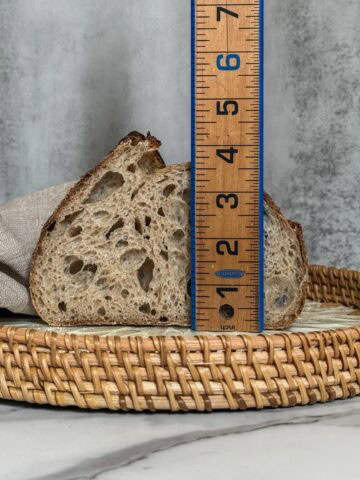
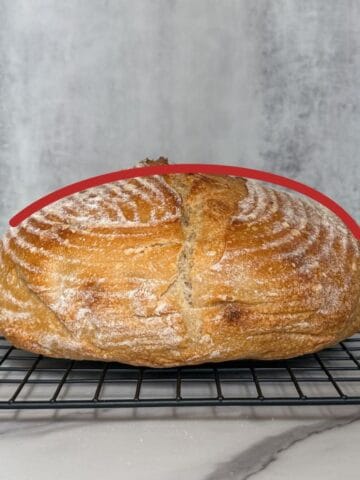
Gluten develops during hand mixing and through methods such as the Rubaud method and slap and fold techniques. Bulk fermentation continues to strengthen gluten and helps create gluten layers in sourdough. During this time, stretch and folds and coil folds add layers to the gluten matrix, which is responsible for creating a tall loaf.
3. How long should the bulk fermentation phase last?
The length of bulk fermentation varies significantly based on several factors, the main of which is dough temperature. Typically, the process can range from 3.5 to 16 hours, with dough temperatures maintained between 50°F and 90°F (10-32°C).
4. What affects the length of bulk fermentation?
A few key things can change how long bulk fermentation takes:
- Dough temperature: Warmer dough ferments faster, while cooler dough takes more time.
- Room temperature: The warmer your kitchen, the faster the dough ferments.
- Sourdough starter activity: A healthy, active starter ferments the dough more quickly than a weak starter.
- Salt content: Less salt speeds up fermentation, while more salt slows it down.
- Hydration level: Higher-hydration dough ferments faster than low-hydration dough.
- Type of flour: Whole grain flour often speeds up fermentation compared to bread flour, but it might create a weaker "windowpane" effect.
5. How does temperature affect bulk fermentation?
Temperature is one of the most important parts of bulk fermentation. Warmer temperatures accelerate fermentation by activating yeast. Cold temperatures slow down the process, giving the dough more time to ferment.
6. How does dough hydration impact bulk fermentation?
A high-hydration dough ferments faster because the increased moisture facilitates the activity of yeast and bacteria. This type of dough often yields bread with a light, airy texture and large holes, but it can be tricky to handle because it is stickier.
On the other hand, a low-hydration dough ferments more slowly. It is easier to work with and shape, but the bread may have a denser texture (see my guide on high vs low sourdough hydration).
7. How does flour affect the rise during bulk fermentation?
Tom Cucuzza's "Two-Factor Method" for sourdough bulk fermentation is based on bread flour with a protein content of 12.5%.
- If you use a lower-protein flour, such as an all-purpose flour with 11.5% protein, the dough may not rise as much as it would with a higher-protein flour. To compensate, lower the target rise by 5-10%.
- If you use bread flour with a protein content higher than 12.5%, the dough will rise more, so increase the target rise by 5-10%.
- Whole wheat flour behaves differently; the percentage rise may vary.
8. What is autolyse?
Autolyse is a technique used before bulk fermentation. It is when you mix flour and water, let it rest for 30-60 minutes, or longer.
9. What is fermetolyse?
Fermentolyse is another technique that involves mixing levain (active sourdough starter), flour, and water, and letting it ferment for 30 minutes or less. This means that bulk fermentation starts right away (see my guide on autolyse vs. fermentolyse).
10. Can I skip autolyse (fermentolyse)?
Yes, you can skip autolyse (fermentolyse). If your sourdough starter is highly active and you use a sufficient amount of the starter (20% or more) in your dough, you can mix all the ingredients and begin bulk fermentation right away. You can also skip these steps if you are short on time and need to mix everything quickly.
11. Should I cover my dough during bulk fermentation?
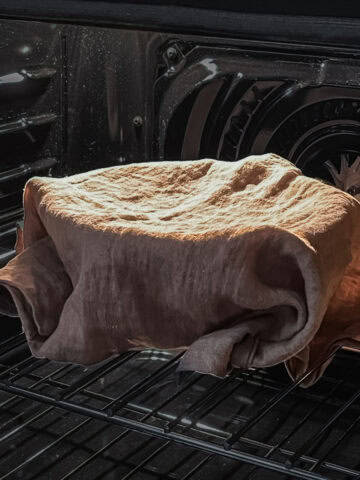
Yes, it is important to cover your dough with a lid, a clean kitchen towel, or plastic wrap. This keeps the surface from drying out and forming tough skin.
12. When should I measure dough temperature during bulk fermentation?
You should check the dough temperature after every stretch and fold or coil fold. Continue measuring it every 30-60 minutes for the rest of the bulk fermentation.
13. What should I do if the dough temperature changes during bulk fermentation?
If the dough temperature changes, adjust the target dough rise based on the ending dough temperature. Calculate the average temperature throughout bulk fermentation for dough fermented at 80°F (27°C) or higher.
14. What is the difference between stretch and folds and coil folds?
Stretch and folds and coil folds are two different ways to strengthen the dough and add gluten layers during bulk fermentation.
Stretch and folds are stronger and more forceful compared to coil folds. They are about stretching the dough rather than folding it. Coil folds are a more gentle technique that folds the dough rather than stretching it (see my guide on coil folds vs. stretch and folds).
15. How many stretch and folds should I do?
Recipes call for 4-6 sets of stretch and folds, with four being the most common. Usually, this means doing two sets of stretch and folds and two coil folds during bulk fermentation.
16. How often should I stretch and fold bread dough?
During bulk fermentation, you should stretch and fold the dough every 30 to 45 minutes. At the end of bulk fermentation, let the dough rise, untouched, for at least 2 hours.
17. How gently should I stretch and fold?
At the start of bulk fermentation, stretch and fold more firmly. As you go, use gentler coil folds.
For example, if you do four rounds of folds, do two stretch and folds, then two coil folds. If you do five rounds, complete three sets of stretch and folds, followed by two sets of coil folds.
18. How many layers are created during bulk fermentation?
Stretch and folds create four new layers of dough each time, while coil folds add eight new layers. If you do two rounds of stretch and folds and two rounds of coil folds, you will create 24 new layers of dough during bulk fermentation.
The dough forms layers, which are easily visible when you cut and divide the dough into multiple loaves.
19. Why is my dough not rising during bulk fermentation?
If your dough is not rising, check the dough temperature. Dough ferments best at a temperature between 75°F and 80°F (24°C to 27°C). If it is too cold, try placing the dough in a warmer spot or using a seedling mat to keep it warm.
Additionally, it may be related to the health and activity of your sourdough starter, as well as its readiness for use. Sometimes, a new or weak starter can prevent the dough from rising. If you suspect your starter might be the issue, check out sourdough starter problems and how to fix them.
Pay attention to your recipe, especially sourdough bread ingredients. For example, the type of flour, the quality of water, and the amount of salt can all affect how your dough rises. A higher salt percentage can slow the fermentation process.
Finally, think about how you mix and handle the dough. Overmixing or performing too many stretch and folds can weaken the gluten, which may prevent the dough from rising properly.
20. Can I bulk ferment sourdough overnight in the refrigerator?
Yes, you can, but it is not always the best option. The cold temperature of the fridge slows down the fermentation process. According to the School of Sourdough, if the dough is kept at a temperature below 5°C (41°F), it can take approximately 40 hours to ferment.
Using the fridge for bulk fermentation can be helpful if you need extra time, such as leaving the dough overnight while at school or while busy during the day. Put the dough in the fridge after stretching and folding it. Some refrigerate it after just one fold, and it still turns out fine.
Taking the dough out of the fridge will take a couple more hours to return to room temperature and finish fermenting, but this usually won't affect the final bread. However, do not leave the dough in the fridge for more than 18 hours, as it will become weaker and harder to handle, which can affect its rise.
21. Should the dough have a specific temperature by the end of bulk fermentation?
The goal is not to achieve a specific dough temperature by the end of bulk fermentation. Instead, aim to maintain a consistent dough temperature throughout the process.
22. How can I tell when the bulk fermentation has finished?
To know if bulk fermentation is done, look for these signs:
- The dough should have grown in size.
- The surface should appear bubbly and slightly domed, showing active fermentation.
- When you touch the surface with a finger, the dough should feel smooth and not sticky.
- If you perform the windowpane test, the dough should stretch thin without tearing, indicating well-developed gluten.
23. Is it possible to over-ferment sourdough during the bulk fermentation?
Yes, you can over-ferment sourdough. If the dough is left to ferment for too long, it can become sticky and hard to handle. The gluten structure might break down, causing the dough to collapse and the bread to lose volume and develop a dense texture.
24. How do I manage bulk fermentation in a humid environment?
In a humid environment, bulk fermentation occurs more quickly than usual, which may cause the dough to overproof. To control this, use less starter to slow down the fermentation. Additionally, fermenting the dough in a cooler location slows the process, giving you more control over its development.
25. How can I adjust bulk fermentation for a more sour flavor?
To make sourdough more sour, let the dough ferment longer at a cooler temperature. A longer fermentation allows more acids to develop, which gives the bread its sour taste.
16. How do I adjust bulk fermentation for high altitudes?
At higher altitudes, fermentation occurs faster due to lower atmospheric pressure and reduced oxygen levels. To slow it down, use less starter in your recipe. You can also place the dough in a cooler spot to help control bulk fermentation and prevent over-fermentation.
27. Can I add ingredients like seeds or nuts?
Yes, you can add seeds or nuts during bulk fermentation, but it is best to do so after the dough has been mixed and the gluten has developed. Adding them too early can make the dough harder to manage.
28. How can I add inclusions to bread dough?
After the stretch and fold sessions, you can add inclusions such as herbs, spices, garlic, cheese, nuts, or dried fruits. Sprinkle the add-ins over the dough and fold it over a few times to incorporate them.
Alternatively, you can use a technique called lamination, in which you evenly distribute the inclusions in the dough during the final handling step, replacing the last fold.
Be cautious with the amount you add, as some ingredients can impact how the dough hydrates and ferments.
29. When should I pre-shape my dough?
You should pre-shape the dough right after bulk fermentation is finished. Pre-shaping is an intermediate step before the bench rest and final shaping. It helps organize the dough, making it easier to handle and shape into the desired form.
30. What is the difference between bulk fermentation and final proofing?
Bulk fermentation and final proofing are two distinct steps in bread making, but they are both integral to sourdough fermentation. Bulk fermentation develops the dough's internal structure; final proofing refines its shape and enhances its flavor.
Bulk fermentation, or the first rise, occurs after the dough is mixed. During this stage, the gluten continues to strengthen and builds layers. It is more about structural development compared to final proofing.
Final proofing, or the second rise, happens after you shape the dough. This stage allows the dough to settle into its final shape while developing its flavor.
Let's talk sourdough
If you have questions about bulk fermentation, let's discuss them in the comments.
Ready to keep learning?
One question that often arises is whether you should cover sourdough during proofing. Discover when covering helps, when it doesn't matter, and when leaving the dough uncovered can work just fine.