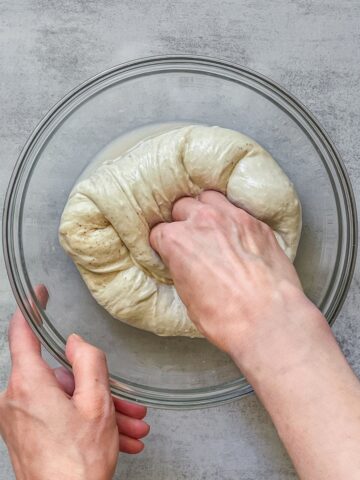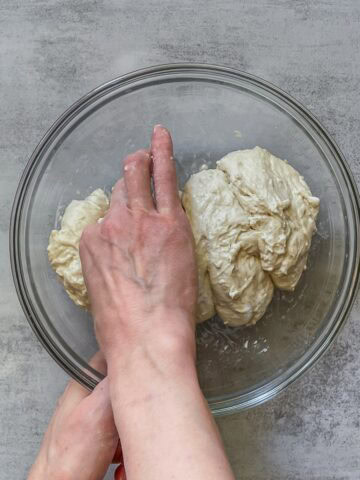

Understanding the difference between high and low hydration in sourdough is important. The right hydration affects gluten development, dough rise, and the baking process. These factors determine the texture, flavor, and structure of your sourdough.
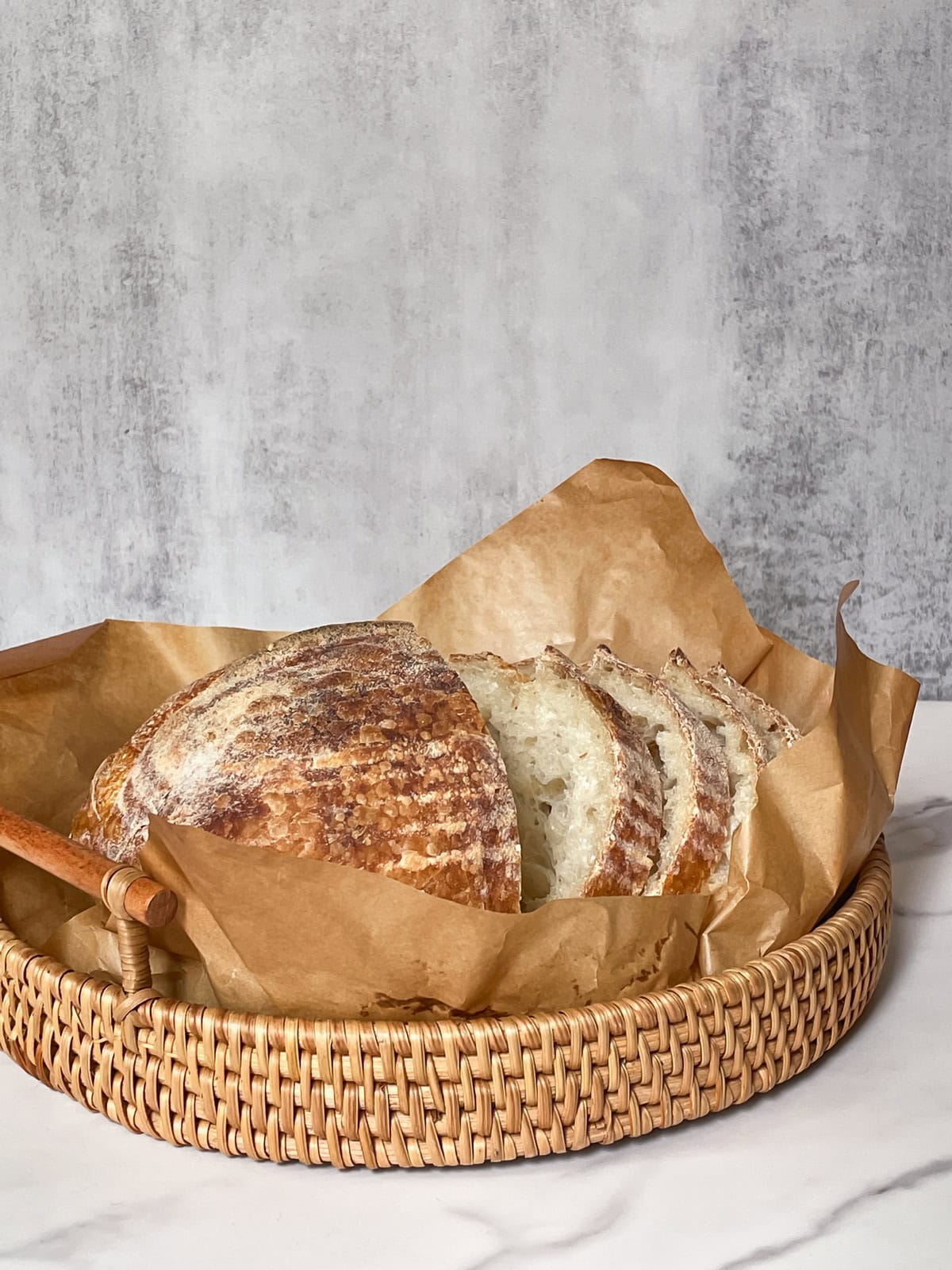
What is high-hydration sourdough?
High-hydration sourdough typically contains over 80% water, though some bakers consider anything above 75% high hydration.
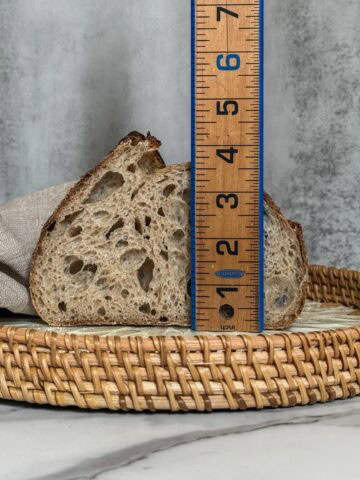
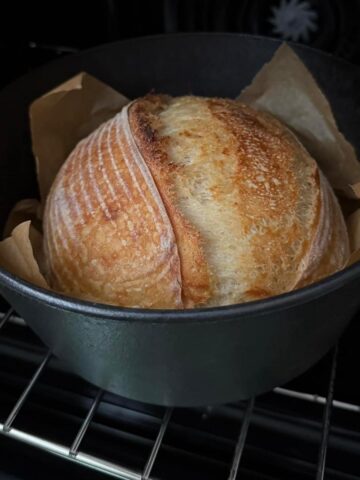
This type of dough creates bread with a light, airy crumb and a crisp crust, but it also comes with a few challenges, especially for beginners.
Pros of high-hydration dough:
- Soft, airy crumb: Perfect for open-crumb lovers.
- Crispier crust: Thanks to the higher moisture level.
- Enhanced flavor: The long fermentation and high water content help develop a deeper flavor.
- Easier to mix: Especially when incorporating inclusions like nuts, seeds, cheese, or dried fruit.
Cons of high-hydration dough:
- Slower gluten development: May require longer mixing or advanced techniques, such as the Rubaud method.
- Sticky and harder to handle: Can make pre-shaping and shaping more difficult, especially for beginners.
- Faster fermentation: It ferments more quickly than expected, especially when baking multiple loaves.
- Longer bake time: More water means the bread takes longer to cook through.
- Spoils faster: Stays soft longer, but can go bad more quickly if not stored properly.
What is low-hydration sourdough?
Low-hydration sourdough usually contains less than 65% water, though some bakers consider anything under 70% low hydration.
Pros of low-hydration dough
- Easier to handle: The dough is less sticky and holds its shape well, making it ideal for beginners.
- Slower fermentation: This gives you more time to shape and work with the dough.
- Gluten develops faster: This dough strengthens quickly, meaning you may not need as many stretch-and-folds.
- Bakes faster: With less water to evaporate, your bread needs less time in the oven.
- More sour flavor: The slower fermentation results in a tangier loaf.
Cons of low-hydration dough
- Denser crumb: The bread may not be as open or airy as higher-hydration loaves.
- Thicker crust: Some find it a bit tougher compared to high-hydration bread.
- Dries out faster: Because of its lower moisture content, proper storage is important to maintain freshness.
- More effort to mix by hand: The stiff dough is harder to mix without a spiral mixer.
The role of flour in hydration
The type of flour you use in sourdough baking can affect dough hydration. Whole grain and bread flours usually require more water than all-purpose flour.
For example, if you use all-purpose flour instead of bread flour, you will need to decrease the dough hydration compared to the bread flour recipe.
Water absorption can vary even among different brands of the same flour type. For instance, Cairnspring Mills bread flour needs 5% more hydration than King Arthur bread flour.
Which hydration level is right for you?
Choosing between high and low-hydration sourdough depends on your experience level and baking goals.
High-hydration dough is sticky and more challenging to work with, but it rewards you with a light, airy crumb and rich, complex flavors.
On the other hand, low-hydration dough is easier to handle, making it a good choice for beginners. It produces denser bread with a simpler flavor.
Start with a Beginner's Sourdough Bread recipe that has a hydration level of 68%. Once you feel comfortable, increase the water percentage by 1-2% with the next batch to see how the dough changes. Eventually, work up to 75% hydration in my Master Sourdough Bread recipe.
If you feel uncomfortable working with the higher-hydration dough, switch back to low-hydration dough. There is nothing wrong with doing that.
When mixing different types of flour, start with lower hydration and add water gradually until the dough feels right.
Keep a sourdough baking log and write down any changes you make to the recipe. Put the notes about how the dough feels, how it bakes, and what the crumb and crust look like.
Let's talk sourdough
What is your go-to hydration level when baking sourdough? Share your experience in the comments below.
What's next?
After mastering hydration, learn the aliquot jar method to track your dough's bulk fermentation with precision.