
In this article, you will learn the difference between commercial yeast and sourdough starter and find out if you can use them interchangeably. Finally, you will understand which option suits your baking goals.
If you want to make your own sourdough starter from scratch, I have a beginner-friendly starter recipe that takes about 7-10 days to create.
What are yeast and sourdough starter?
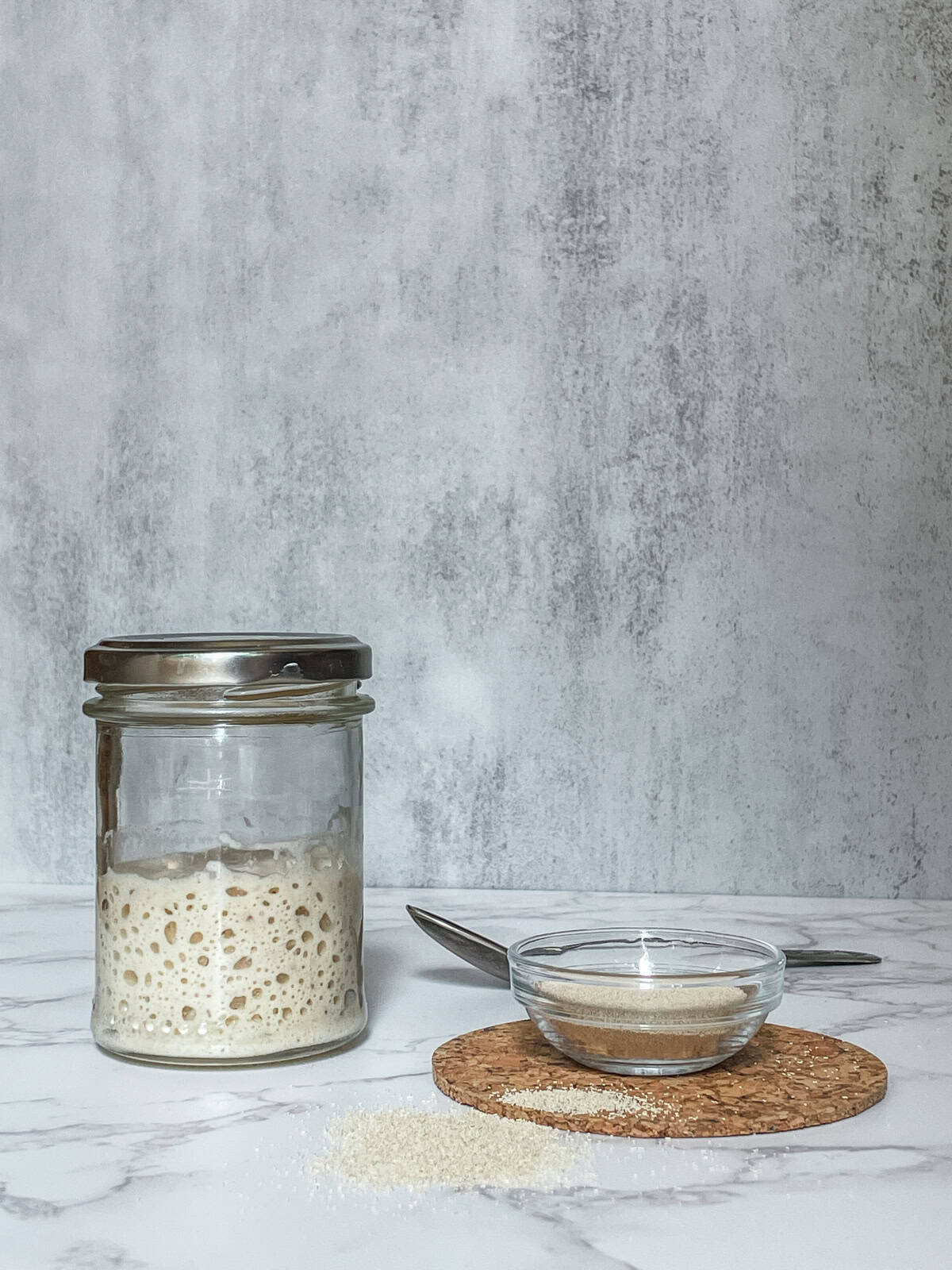
Yeast and sourdough starter are both key ingredients in baking, but they have unique properties and roles.
Yeast is a single strain of Saccharomyces cerevisiae that is produced commercially. It comes in forms like instant, active dry, and fresh yeast. Yeast works quickly and consistently, making it a dependable choice for bread baking.
Sourdough starter is a mixture of wild yeast and bacteria. It contains around 20 wild yeast species, such as Saccharomyces and Candida, and more than 50 species of lactic acid bacteria, mostly Lactobacillus. While it works more slowly and is less predictable than commercial yeast, it adds unique flavors and textures to bread.
What's the difference between sourdough starter and yeast?
When deciding between yeast and sourdough starter, there are a few key differences.
Yeast works quickly and is very convenient, while sourdough requires more patience and time. But sourdough bread rewards you with deeper flavor and a more complex texture.
Yeast is consistent and predictable for beginners, whereas sourdough depends on temperature and feeding ratios, which are more challenging.
In terms of flavor, bread made with yeast has a simple, straightforward taste, while sourdough develops a rich, tangy flavor thanks to its longer fermentation.
There is no right or wrong answer. It all depends on what you prioritize. If you are short on time, yeast is a great option. If you are for bold flavors and a connection to ancient baking methods, choose a sourdough starter to bake your bread.
What are the benefits of commercial yeast and sourdough starter?
Each has its own benefits, and your choice depends on your baking goals.
Yeast works fast and reliably, making it perfect for quick bread recipes. Its consistency makes it a great option for beginners or busy bakers.
The sourdough starter takes longer to rise but creates bread with a tangy, complex flavor. It also improves the texture and is a better option for people with gluten sensitivities.
Your decision comes down to whether you value speed or flavor more. Yeast saves time, while sourdough offers rich, time-honored flavor.
Yeast water vs. sourdough starter
Yeast water and sourdough starter are natural leavening methods, but they work in slightly different ways.
Yeast water is made by fermenting fruit, vegetables, or herbs in water to capture wild yeast from the environment. This liquid yeast is used to leaven bread.
A sourdough starter is a mixture of flour and water that naturally captures wild yeast and lactic acid bacteria (LAB) from the flour and the surrounding environment. The bacteria produce acids that give sourdough its characteristic tang and cause the dough to rise.
In short, yeast water mainly relies on yeast for rising, while a sourdough starter also brings flavor, texture, and natural acidity to your bread. Both are natural, but sourdough starter typically gives more complexity and resilience to your loaves.
Can you substitute sourdough starter for yeast?
You can convert a yeasted recipe into a sourdough recipe and vice versa, but it requires some adjustments. Here is a simple guideline:
- For every packet of instant yeast (5-7 grams), use 100 grams of active sourdough starter.
- When adapting the recipe, you must also account for the extra flour and liquid in the starter.
Read more about how to substitute sourdough starter for yeast.
Can you combine yeast and sourdough starter?
Yes, you can. Combining yeast and sourdough starter in one recipe offers the best of both worlds.
You get the quick rise of yeast along with the tangy flavor and complexity of sourdough. This is especially useful when you want to experiment with bread textures or create something unique.
Does sourdough bread have yeast?
Yes, but not the commercial kind you buy in a packet. Sourdough bread gets its natural yeast from a starter, a mixture of flour and water that has been fermented over time.
Wild yeast from the environment and lactic acid bacteria work together in the starter to leaven the bread.
Unlike store-bought yeast, wild yeast in sourdough is slower and less predictable, which is why sourdough requires longer fermentation times. This slower process gives your loaf its sourdough flavor.
Can you bake sourdough with yeast?
Technically, yes. Some commercial regulations in Europe allow a very small amount of baker's yeast in sourdough bread. For example, the French Décret Pain 93-1074 permits adding yeast during the final phase of kneading, but only up to 0.2% of the flour weight (ABIM, 2019).
However, traditional sourdough purists argue that true sourdough bread should rely solely on wild yeast and lactic acid bacteria from the starter. Adding commercial yeast changes the character of the bread, speeds up fermentation, and reduces the tangy depth that true sourdough is known for.
So while regulations may allow a tiny amount, real sourdough baking doesn't use commercial yeast.
FAQ
Can I use instant yeast to help my starter?
Some bakers add a tiny amount of yeast to young or slow starters for a boost, but this is not considered authentic sourdough.
Is sourdough harder to make than regular yeast bread?
Sourdough requires more patience and attention, but once you understand feeding schedules and fermentation times, it is very manageable.
Which is easier for beginners, yeast or sourdough starter?
Yeast is generally easier because it is fast and predictable. A sourdough starter takes more attention, regular feeding, and patience, but it develops a richer, tangier flavor over time.
Let's talk sourdough
Do you prefer the tangy flavor of sourdough or the simplicity of yeast bread? Please let us know in the comments.
Ready to keep learning?
Once you understand the distinction, you can start swapping yeast in recipes. Learn how to replace yeast with sourdough starter for naturally leavened bakes.