
Quick Summary: If you don't have a Dutch oven, you can bake sourdough in an enamel roaster, a cast iron skillet with a lid, a Pyrex casserole dish, two stacked loaf pans, a clay baker, or on a baking stone covered with a metal bowl.
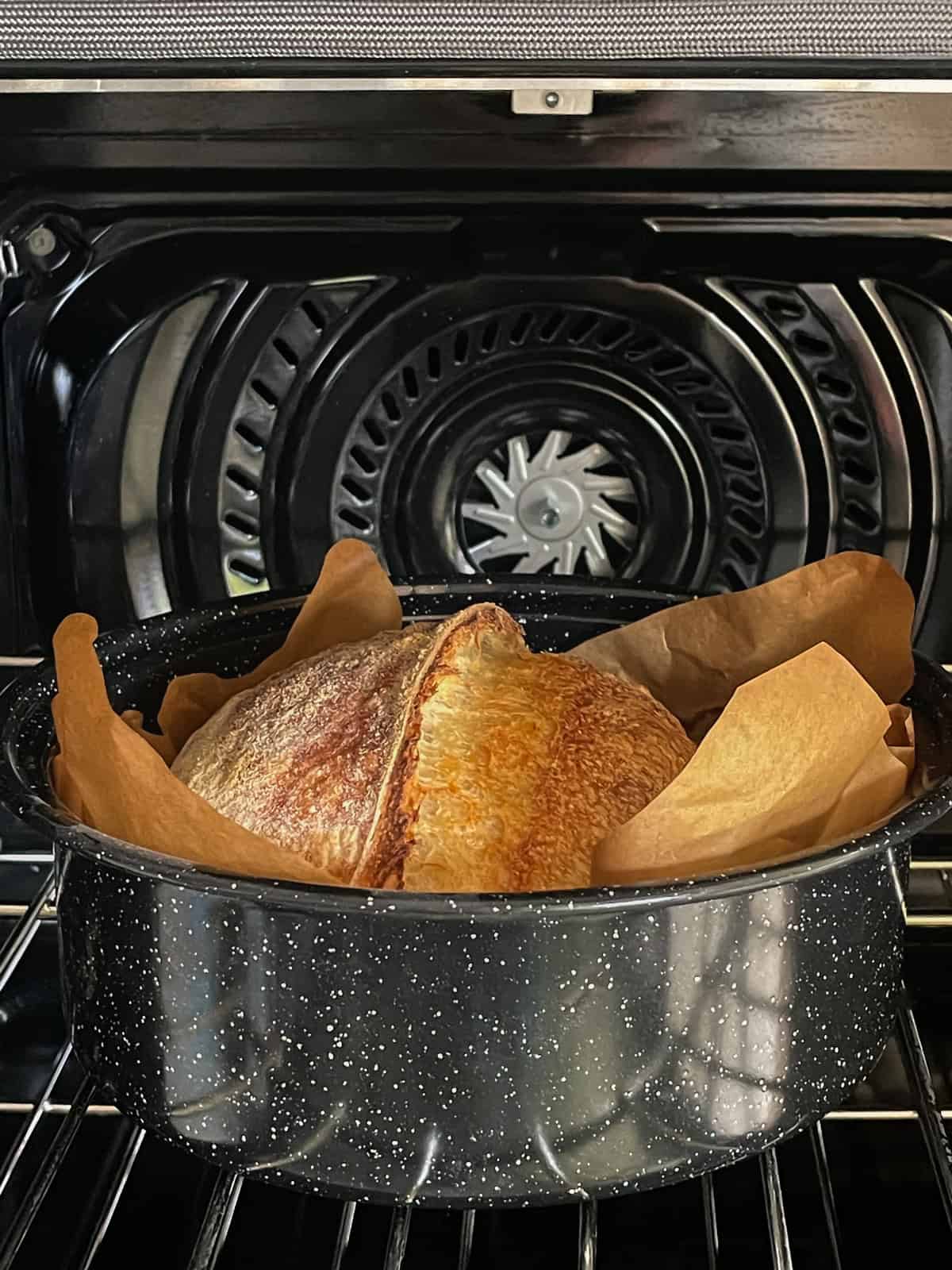
The key is trapping steam around the dough for the first part of baking, then uncovering it to crisp the crust. An enamel roaster with a lid is the closest and easiest substitute.
What is a Dutch oven?
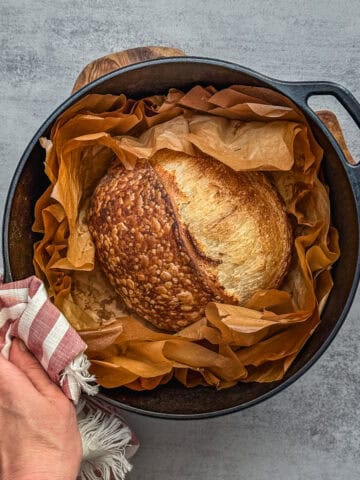
A Dutch oven is a heavy, lidded pot, typically made of cast iron, used for cooking and baking. It retains heat and steam well, making it ideal for slow cooking, braising, and baking bread, including sourdough.
With a capacity ranging from 14 oz. to 10 quarts, it can be used on the stovetop or in the oven, offering versatility in your cooking and baking.
Why use Dutch oven alternatives?
There are many reasons why you might choose an alternative to a Dutch oven when baking sourdough bread:
- Cost: Dutch ovens are often expensive, so alternatives like baking stones or roasting pans may be more budget-friendly.
- Weight: Dutch ovens are heavy, which may not be ideal for everyone. Lighter tools, such as clay bakers or loaf pans, might be easier to handle.
- Size: Some alternatives let you bake larger loaves or multiple loaves at once, especially if you want to scale up your baking.
- Versatility: Tools like baking stones can be used for more than just bread, providing you with additional options in the kitchen.
- Availability: If you don't have a Dutch oven, you can use tools you already own, such as a cast-iron skillet or a roasting pan.
- Experimentation: Trying different tools can create new textures and flavors in your bread.
Dutch oven substitutes
What can you use instead of a Dutch oven for bread baking? Here are 9 options:
| Alternative | How it traps steam | Preheat? | Best for |
| Enamel roaster (lidded) | Lid traps steam like a Dutch oven | No | The closest substitute; oval/large loaves |
| Pyrex casserole (borosilicate) | Lid traps steam; use a cold start | No (cold start) | Beginners; no preheating |
| Cast iron skillet + lid | Lid traps steam | Yes, 500°F for 25-30 min | Even heat |
| Baking stone/steel + metal bowl | Cover the dough with a bowl | Yes (stone) | Crisp base if you own a stone |
| Pizza stone + water pan | Steam from a water pan below | Yes | If you have a pizza stone |
| Two stacked loaf pans | Top pan traps steam | No | Sandwich and Pullman loaves |
| Clay baker (Römertopf) | Clay holds steam | Per maker | Crunchy crust |
| Slow cooker | Traps steam at low heat | No | Summer / no-oven baking |
| Aluminum foil pot + lid | Some steam (weakest) | No | Cheap, disposable backup |
Expert Tips
- Always check the temperature limits for your pans to make sure they handle heat between 450-500°F (232-260°C). Do not heat an empty, enameled Dutch oven to high temperatures.
- Preheat cast-iron pans and skillets to 500°F (260°C) for about 25-30 minutes before baking. There is no need to preheat the roasters or loaf pans (see my guide to baking sourdough in a loaf pan).
- For Pyrex glass, try the "cold start" method: place the dough in a room-temperature dish, then place the dish in the oven and turn on the oven (see my guide on cold-bake sourdough).
FAQ
Can you bake sourdough without a Dutch oven? Yes. Any oven-safe vessel that traps steam works, or you can bake on a tray and create steam with a water pan. The Dutch oven isn't essential. Trapped steam is what matters.
What is the best Dutch oven alternative? An enamel roaster with a lid, whether a round roasting pan or an oval roaster, is the closest substitute and the easiest to use. For a no-preheat option, a borosilicate Pyrex dish with the cold-start method is great for beginners.
How do you create steam without a Dutch oven? Cover the dough with a lid or an inverted metal bowl to trap its own steam, or bake on a stone and add a stainless steel pan of hot water (with or without lava rocks) to the oven for the first 20 minutes.
Can you bake sourdough in a glass dish? Yes, in a borosilicate Pyrex casserole dish with a lid. Use the cold-start method (start in a cold oven) rather than preheating, since sudden heat can crack glass.
Let's talk sourdough
If you have used one of these Dutch oven alternatives, how did it compare to your previous sourdough bakes? Share your experience in the comments below.
Ready to keep learning?
Good parchment paper makes handling and transferring dough easier. Learn how to choose the best parchment paper for sourdough, since not all parchment papers withstand high baking temperatures.