
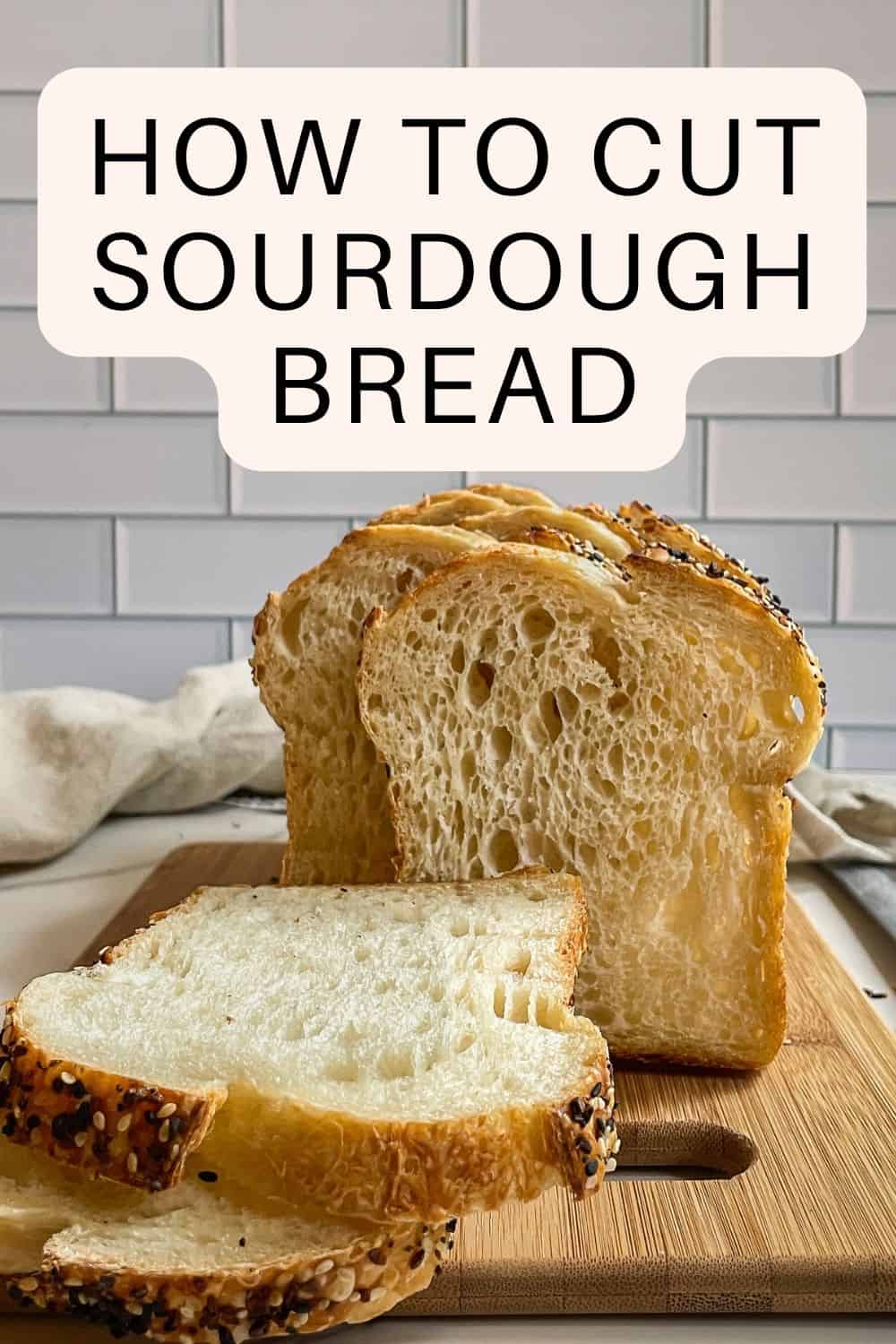
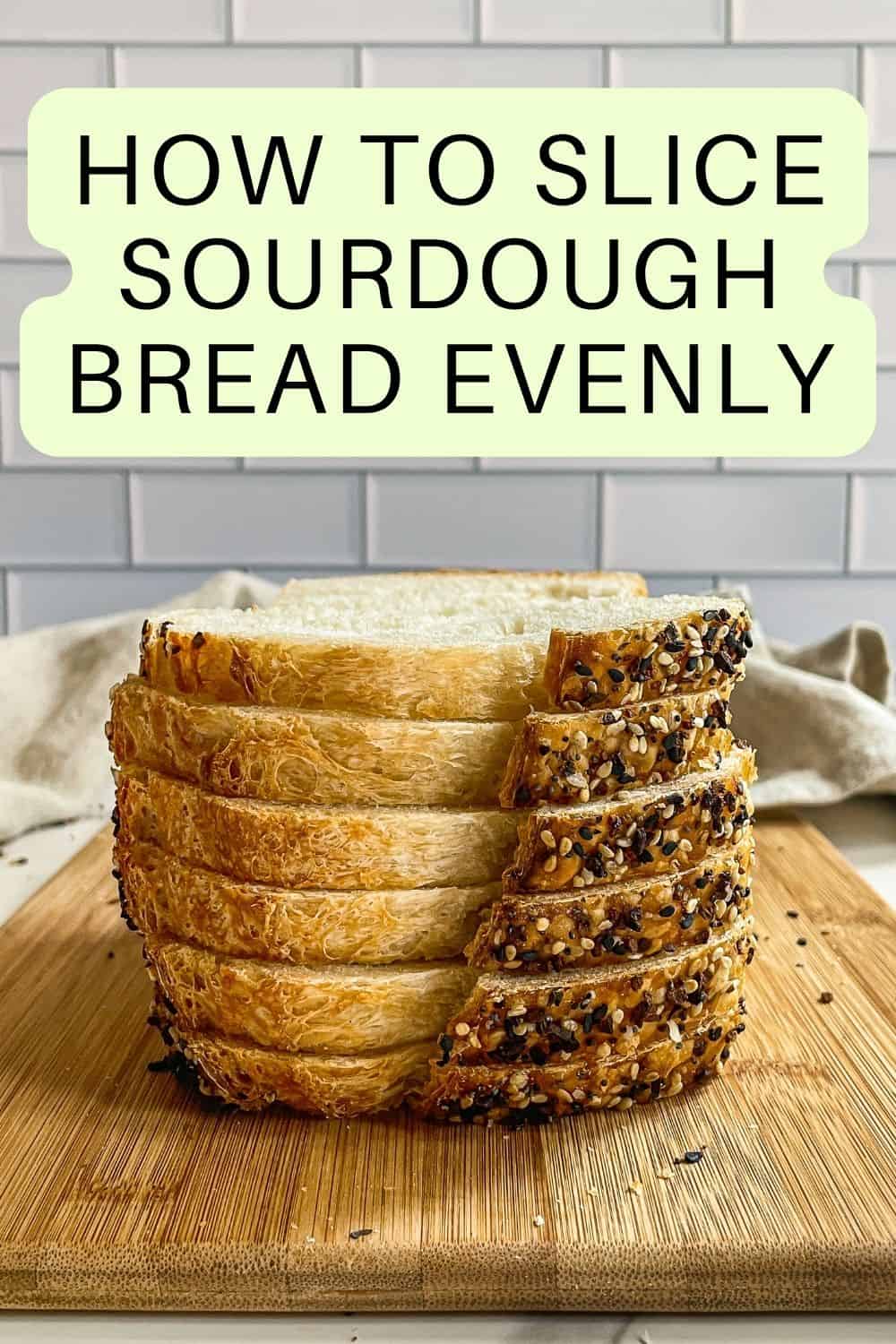
In this article, I will show you how to cut sourdough bread (boule, batard, and sandwich loaf) into beautiful, even pieces without squashing or ruining its structure.
You might laugh, but I am still learning to cut a loaf perfectly straight at a 90-degree angle to the cutting board. Whenever my husband slices the bread after me, he fixes the angle I left behind. It always makes us smile!
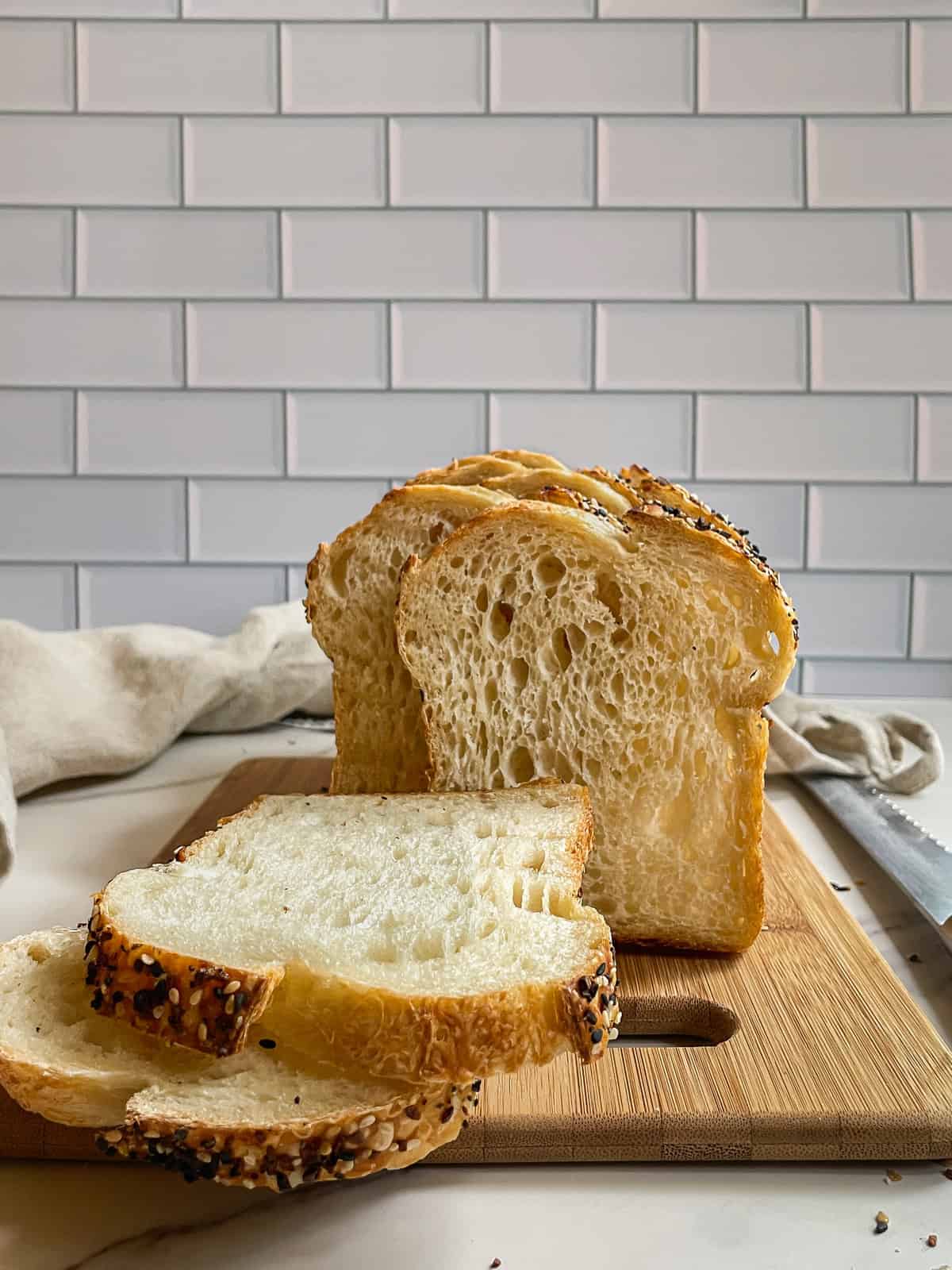
The best tip for slicing sourdough bread
First and foremost, before slicing, let your sourdough bread cool completely.
After baking, sourdough bread continues to change as it cools. Steam escapes, and moisture redistributes throughout the bread. As a result, the crust softens slightly, and the crumb sets, preventing a gummy texture in the sliced sourdough bread.
Cooling homemade bread is especially important for whole-grain or rye-flour bread, as it needs more time to set. I recommend waiting at least two hours before slicing sourdough bread made with wheat, longer if it is a high-hydration loaf.
Choose the right tools
A long, serrated knife is the best choice for cutting sourdough bread. Its saw-like edges make it easy to cut through the crust without squishing the soft, airy inside. Check out my guide if you need help finding the best bread knife.
Avoid using a regular chef's knife because its smooth blade can tear the crust and crush the crumb, leaving you with messy slices.
You will also need a sturdy cutting board. To keep it steady while slicing, place a damp towel under it to prevent it from slipping. It might seem like a small detail, but it makes cutting safer and easier.
How to cut a round loaf of bread (boule)
- Let the bread cool: Allow your boule to cool completely before slicing. Let it cool for at least two hours.
- Place the boule on the cutting board: Put the whole boule on a sturdy cutting board. To prevent the board from sliding, place a damp towel under it for stability.
- Cut the boule in half: Start by slicing it vertically in half. This gives you two bread halves.
- Position the half loaf: Take one half of the boule and place it flat side down on the cutting board.
- Start slicing from the short end: Begin slicing from the short end of the half loaf, using a gentle sawing motion to cut through the bread. Move the knife back and forth without pressing too hard.
- Cut even slices: Work your way through the half loaf, keeping your slices even.
- Repeat with the other half: Once you finish slicing the first half, repeat the same steps with the second half of the boule.
How to cut a sourdough batard
- Let the bread cool: Make sure the bread is completely cool before slicing. Aim for at least two hours of cooling time.
- Place the bread on the cutting board: Put the batard on a sturdy cutting board. Place a damp towel under the board to keep it stable while you slice, in case it slips.
- Start slicing from one end: Using a serrated knife, begin at one of the short ends of the batard. Use a gentle sawing motion, moving the knife back and forth like a saw. Do not press the down too hard.
- Cut even slices: Work through the batard, keeping each slice the same thickness.
- Continue until done: Slice through the loaf. If you want to save some of the bread for later, only cut what you plan to eat and leave the rest whole to keep it fresher.
How to cut a sourdough sandwich loaf
- Let the loaf cool: Allow your sourdough sandwich loaf to cool completely before slicing. Let it cool for at least two hours.
- Place the loaf on the cutting board: Lay the sandwich loaf flat on a cutting board. Place a damp towel underneath to keep it steady.
- Position the loaf: Stand it upright or lay it flat on its side. Lying it flat makes slicing easier for beginners, while standing it up helps you cut taller slices.
- Start slicing from one end: Begin at one end of the loaf, using a gentle sawing motion with the bread knife to cut through the bread. Move the knife back and forth without applying too much pressure.
- Cut even slices: As you work through the loaf, aim for slices of even thickness. For sandwiches, slices about ½ to ¾ inch thick work best.
- Slice the whole loaf or just what you need: If you plan to eat all the bread right away, slice the entire loaf. If not, only cut what you need and leave the rest whole to keep it fresher longer.
How to cut bread evenly
If using a bread knife feels daunting, I recommend trying the Zassenhaus manual bread slicer. With this tool, you control the thickness of each slice. It is simple to use and doesn't require electricity.
For extra support, especially when slicing by hand, I recommend using a bamboo bread slicer, which helps guide your knife and keeps slices more uniform. It is lightweight and great for maintaining straight cuts.
However, if you prefer a quicker and easier method, try using an electric bread knife or a food slicer (also known as a deli slicer). These tools make cutting through sourdough bread faster and provide nice, even slices, especially when dealing with thick crusts.
Let's talk sourdough
What is your go-to method for slicing sourdough? Share your favorite tools or slicing tips in the comments.
Ready to keep learning?
Now that you know how to cut sourdough bread properly, let's take a look at the essential sourdough tools that make baking easier from start to finish.