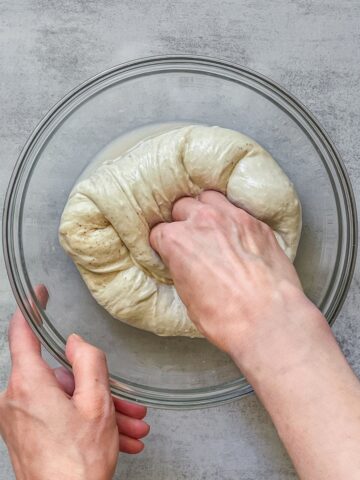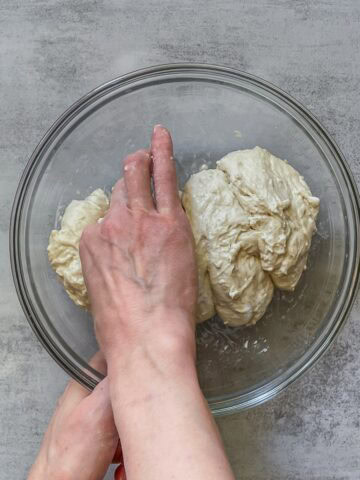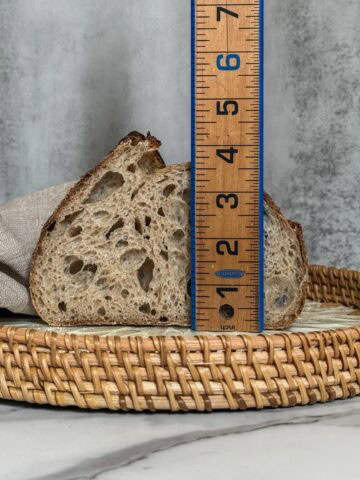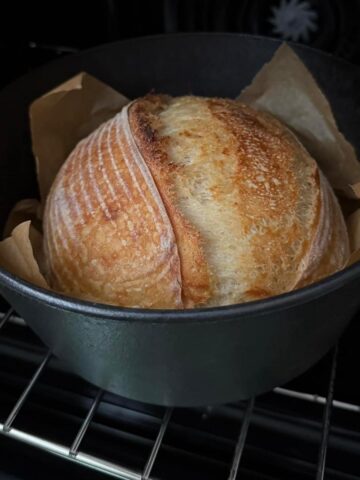

If you're new to sourdough, you may feel a little overwhelmed. I know I did. You may wonder how to choose a beginner sourdough bread recipe, especially with so many options online. Which one is right for you?
In this guide, I will explain how to choose your first sourdough bread recipe, something simple, solid, and perfect for learning. Once you understand the baker's math, you will be creating your own bread recipes like a pro.

Beginner sourdough bread recipe
As a beginner, you are always searching for the perfect sourdough bread recipe to finally succeed. You scroll through Facebook or Instagram threads asking, "Recipe, please!"
If you didn't know, the perfect beginner sourdough bread recipe does exist, and you don't have to search any longer.
Here is the beginner-friendly sourdough bread formula:
- 100% bread flour (at least 12% protein content)
- 68% water
- 20% levain (or active starter)
- 2% salt
All percentages are based on the flour weight, which is always considered 100%. Let's build your first sourdough bread recipe:
| Ingredient | Percentage | Weight |
|---|---|---|
| Bread flour | 100% | 500g |
| Water | 68% | 340g |
| Levain (active starter) | 20% | 100g |
| Salt | 2% | 10g |
But here's the real secret: making the perfect sourdough bread is not about the ingredients, but the technique.
Imagine two bakers working side by side. They use the same sourdough starter and ingredients, share the same kitchen, and even use the same recipe. The only difference is their knowledge and skills. In the end, their loaves will turn out completely different.
Think about your skill level
Let's talk about your skill level. If you are new to sourdough baking, stick with a simple recipe for plain sourdough bread. Don't jump into making a turkey-shaped loaf for Thanksgiving, especially if you have never made sourdough before.
Start small. Focus on recipes written for beginners. They'll teach you essential skills without overwhelming you with advanced techniques.
Pay attention to the ingredients
The bread recipe ingredients are important, so make sure the one you choose uses flour you are comfortable working with. Bread flour with at least 12% protein content is a great choice for beginners because it helps build a strong gluten network.
Use filtered or bottled water or tap water that doesn't have chlorine or chloramine. If you use tap water, let it sit uncovered overnight so the chlorine can evaporate. However, this doesn't remove chloramine as effectively as a carbon filter.
As for salt, use sea salt and avoid Iodized table salt. It can interfere with fermentation.
Some recipes call for whole wheat, rye, ancient flours like einkorn, and different inclusions. While these can add flavor and texture, start with a basic recipe that uses bread flour, filtered water, and sea salt. Once you feel confident, you can try more complex ingredients.
Start with low-hydration dough
Another important factor is the dough hydration level, which is the ratio of water to flour. For beginners, aim for a low to medium hydration level (around 65-70%). This will make the dough easier to handle and shape.
Don't try to make high-hydration doughs you see in Instagram posts. Those take practice. Start small and master the basics first.
Look for clear instructions
Choose a simple recipe. Look for clear, step-by-step instructions, preferably with photos or a video. If a recipe makes you feel confused or lost, skip it.
Sourdough bread recipes to avoid
Some recipes just aren't built for beginners. If a recipe gives you a fixed proofing time, skip it. Fermentation depends on your kitchen's temperature, and these are never the same from one baker to another.
Avoid recipes that require the dough to double during bulk fermentation and then be refrigerated overnight. The dough continues to proof in the fridge, and that can lead to overproofing.
Also, if the recipe doesn't mention the temperature of the ingredients or the room, it isn't beginner-friendly. As a beginner, you need a recipe that accounts for these factors to succeed in your own kitchen.
Start simple with a beginner sourdough recipe
Learning to bake sourdough bread is a journey, not a race. Start with a simple, beginner-friendly sourdough recipe with a 65-70% dough hydration.
Master the basics first, then experiment with hydration levels, different flours, and inclusions. But the basic formula? That always stays the same:
- 100% flour
- 65-100% water
- 1-30% levain (or active starter)
- 2-2.2% salt
Remember that your kitchen environment isn't exactly like the recipe creator's. Your starter is different in terms of ingredients and maintenance. Even flour from the same brand can vary depending on the mill.
Let's talk sourdough
So, have you baked your first sourdough loaf yet? Where did you find your first recipe? How did it go? I'd love to hear about it in the comments.