
Quick Summary: To use a banneton, first season it: lightly mist it with water, dust generously with rice flour, and let it dry. Before each use, flour it again (or its liner), then place your shaped dough seam-side up inside. Proof in the fridge or at room temperature, then turn the dough out onto parchment to bake.
Caring for it is simple: tap out the flour after baking, let it air dry, and store it with good airflow. Never soak it or use soap, and if you ever see mold, replace the basket.
Jump to:
- What is a banneton?
- How do you prepare a banneton for the first use?
- Do you need a liner for a banneton?
- How do you use a banneton, step by step?
- How do you clean a banneton?
- Can you clean mold out of a banneton?
- How do you store a banneton?
- What kind of flour should you use in a banneton?
- How do you stop dough from sticking to a banneton?
- FAQ
- Let's talk sourdough
- Ready to keep learning
- Comments
What is a banneton?
A banneton, also known as a proofing banneton basket, is an essential tool in sourdough baking designed to hold the shape of sourdough bread. Made from rattan or wood pulp, it features a spiral pattern that allows the dough to breathe during proofing.
Besides the different types of bannetons, they also come in various shapes, including round, oval, and rectangular, and sizes to suit your needs. Some have liners, but some do not.
Don't have a banneton yet? You can start with simple banneton alternatives, such as a bowl lined with a floured towel.
How do you prepare a banneton for the first use?
If you buy a rattan or wood pulp banneton with a liner or a special cloth covering its interior, you are ready to start. However, I recommend washing the liner separately from your regular laundry to make sure it is clean after purchase.
If you bought a rattan banneton without a liner or want your dough to have a spiral pattern, you need to season it first.
To season a rattan banneton, lightly spray it with water, making sure the surface is evenly damp. Then, dust it thoroughly with rice flour, making sure to cover all the crevices. Shake off any excess flour, then let the banneton air-dry at room temperature.
You only need to do this once, but for extra assurance, you can lightly flour it two more times without water. After this, you are all set.
To prepare a new wood pulp banneton, quickly brush it to remove any loose wood fibers. Next, heat your oven to 210-250°F (100-120°C), then turn it off. Place the banneton in the shut-down oven and use the leftover heat to treat it for a short time.
Once it cools, generously dust it inside with rice flour or potato starch to create a non-stick layer. If you like, you can use a liner for added protection and moisture control, but it is not necessary.
Do you need a liner for a banneton?
Whether to use a banneton liner is a personal choice. Some bakers prefer them because they offer a great non-stick surface, but even with a liner, dough can sometimes stick. Liners are also helpful when creating intricate designs while scoring sourdough.
After years of baking with and without liners, I personally prefer the no-liner method because a bare rattan banneton gives those beautiful spiral rings.
If you don't have a liner, you can make your own using a flour sack towel, cheesecloth, or even a baby muslin swaddle blanket cut into squares. Make sure to dust them with rice flour before use.
After each use, wash and air-dry the cloth separately in cold water, away from other laundry. I often use a small, portable washing machine for my banneton liners and baking towels because it saves water and prevents them from getting mixed with regular laundry.
Some bakers also prefer to shake out the flour and let their liners air-dry between uses, rather than washing them after every bake.
For a hassle-free option, try using disposable non-woven liners made of "food-grade healthy PP material." These liners do not need washing or flour dusting, making them a clean, budget-friendly choice.
How do you use a banneton, step by step?
- Flour it: Dust the banneton (or its liner) generously with rice flour, getting into the grooves.
- Add the dough: Place your shaped dough seam-side up in the banneton.
- Cover it: Dust the dough with rice flour if you are using a cloth liner. If you are using a plastic bag or leaving the dough uncovered, you do not need to sprinkle rice flour. For more on whether to cover dough during proofing, see my full guide.
- Proof: Let it rise in the fridge (cold proofing) or at room temperature.
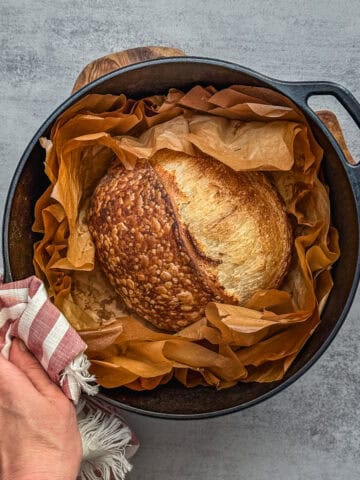
- Turn it out: Gently invert onto parchment. The dough should release cleanly. Score and bake.
If your dough sticks or won't release cleanly, see how to fix common banneton problems.
Using the right size banneton matters as much as using it correctly. Grab my free Banneton Size Chart to match your basket to your dough weight, oval, and round, at a glance.
How do you clean a banneton?
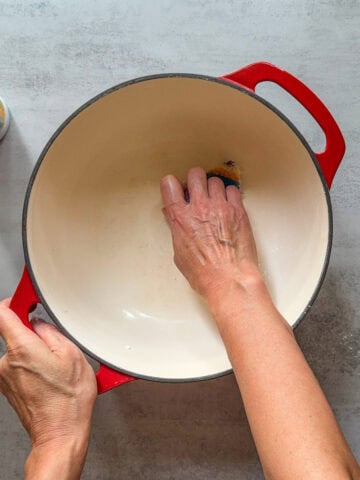
Once you are done proofing and ready to remove the dough from the banneton, gently tap it over a trash can to shake off any excess flour. If dried dough is stuck inside, use a bristle brush to clean the banneton. Let it air dry before storing it.
You do not need to clean the banneton of excess flour after every use. Just tap it and use a cleaning brush about once a month.
Never soak or use soap on your banneton, as this can damage the natural fibers. If you have stubborn, sticky dough residue, try using cold water (no soap). Then wipe the banneton with a kitchen towel and let it air-dry before storage.
Can you clean mold out of a banneton?
No. If you see mold on your banneton, throw it away. I know plenty of blogs suggest brushing it out or misting it with vinegar, but I sell bread under a Cottage Food permit, and this is one place I will not compromise.
Rattan is porous, and by the time mold is visible on the surface, its roots have already grown into the cane where no brush, vinegar, or sunshine can reach them. Every proof after that presses your dough against those spores.
A new rattan banneton costs less than a bag of good flour. Your bread, and anyone who eats it, is worth more than that. Replace the basket, and then set yourself up so it never happens again: dry it fully after every use and store it with good airflow, which I cover below.
How do you store a banneton?
Store bannetons in an area with good airflow to prevent moisture buildup, which can lead to mold. Never store them in plastic bags or stack them, as this can also cause mold growth.
If you notice mold, it is time to replace the banneton. Also, replace your banneton if the material unravels or gets damaged. With the proper care, your banneton can last for many years.
What kind of flour should you use in a banneton?
The flour you use in your banneton matters more than most beginners expect, and it is one of the biggest factors in whether your dough sticks.
Rice flour is the top pick for bannetons because it doesn't absorb moisture and gelatinize the way wheat flour does. Wheat flour tends to blend into the wet surface of the dough and turn pasty, which is exactly what makes the dough stick. Rice flour stays gritty and separate, creating a dry barrier between the dough and the basket.
You can also use a flour blend. Some bakers mix rice flour with a little all-purpose flour (for example, half and half). The wheat flour helps it cling to the basket while the rice flour provides the non-stick barrier. A blend can work well, though pure rice flour gives the most reliable release.
Fine semolina is another option. It is coarse and absorbs little moisture, so it also resists sticking. It gives the crust a slightly different texture.
You can also use potato starch as a good non-stick coating, especially for wood pulp bannetons.
But can you use only wheat flour? Plain all-purpose or bread flour on its own is the most likely to cause sticking, because it absorbs the dough's moisture and turns gluey. If wheat flour is all you have, use plenty and expect a higher chance of sticking.
Let me give you specific, page-by-page instructions for both, since you've now published (or are about to) the dedicated sticking post.
How do you stop dough from sticking to a banneton?
The single most important step is to dust your banneton generously with rice flour, not wheat flour. Rice flour doesn't absorb moisture the way wheat flour does, so it stays dry and creates a non-stick barrier between the dough and the basket.
Beyond that, well-developed, properly shaped dough that isn't overproofed will release far more cleanly.
If sticking is a recurring problem for you, I have written a full guide with every cause and fix: how to stop sourdough sticking to the banneton.
FAQ
How do you use a banneton for the first time? Before using a new banneton, season it to help prevent sticking. If it is made of rattan, lightly mist it with water, dust it generously with rice flour, and let it dry completely. For a wood pulp banneton, warm it briefly in a turned-off oven, then coat it with flour. This builds up a natural non-stick layer.
Do you flour a banneton every time? Yes, dust with rice flour before each use to prevent sticking, even a seasoned banneton. You don't need to wash it between uses, just tap out the flour.
Seam-side up or down in a banneton? Place the dough seam-side up in the banneton. When you turn it out before baking, the smooth side will be facing up, making it much easier to score.
Can you proof dough in a banneton at room temperature? Absolutely. A banneton is designed for the final proofing and can be used for both room-temperature proofing and overnight proofing in the refrigerator. Many bakers prefer a cold proof because it fits more easily into their schedule, develops more flavor, and usually makes scoring easier.
How long can you leave dough in a banneton? For cold proofing in the fridge, dough can rest in a banneton for 8-16 hours, up to 48 hours, depending on your dough and how much it has already fermented. At room temperature, final proofing is much shorter, usually 1-3 hours. Leaving dough too long, especially at room temperature, can lead to overproofing, so watch the dough, not just the time.
How do you get mold out of a banneton?
You don't, and I say that as a Cottage Food baker. Rattan is porous, so visible mold indicates the spores have already grown into the cane, beyond the reach of cleaning. Throw the banneton away and replace it. Prevent it next time by letting the basket air-dry completely after every use and storing it with good airflow, never in a plastic bag.
Can you wash a banneton with water?
Only as a last resort, and only cold water with no soap. Never soak it, because water weakens the natural fibers, and trapped moisture invites mold. For normal upkeep, tap out the excess flour after each bake and give it a monthly once-over with a stiff brush. If sticky residue will not brush out, wipe it with cold water, towel it off, and let it air-dry fully before it goes back on the shelf.
How long does a banneton last?
Years, if you keep it dry. Tap out the flour after each use, brush it monthly, never soak it, and store it where air circulates. Replace it when the cane starts to unravel, when it develops damage that snags your dough, or the moment you see mold.
Let's talk sourdough
Do you dust your banneton with flour or line it with a cloth? I'd love to hear what works for you.
Ready to keep learning
Not all bannetons are the same size. Use this banneton size guide to match the basket to your dough weight and loaf style.