
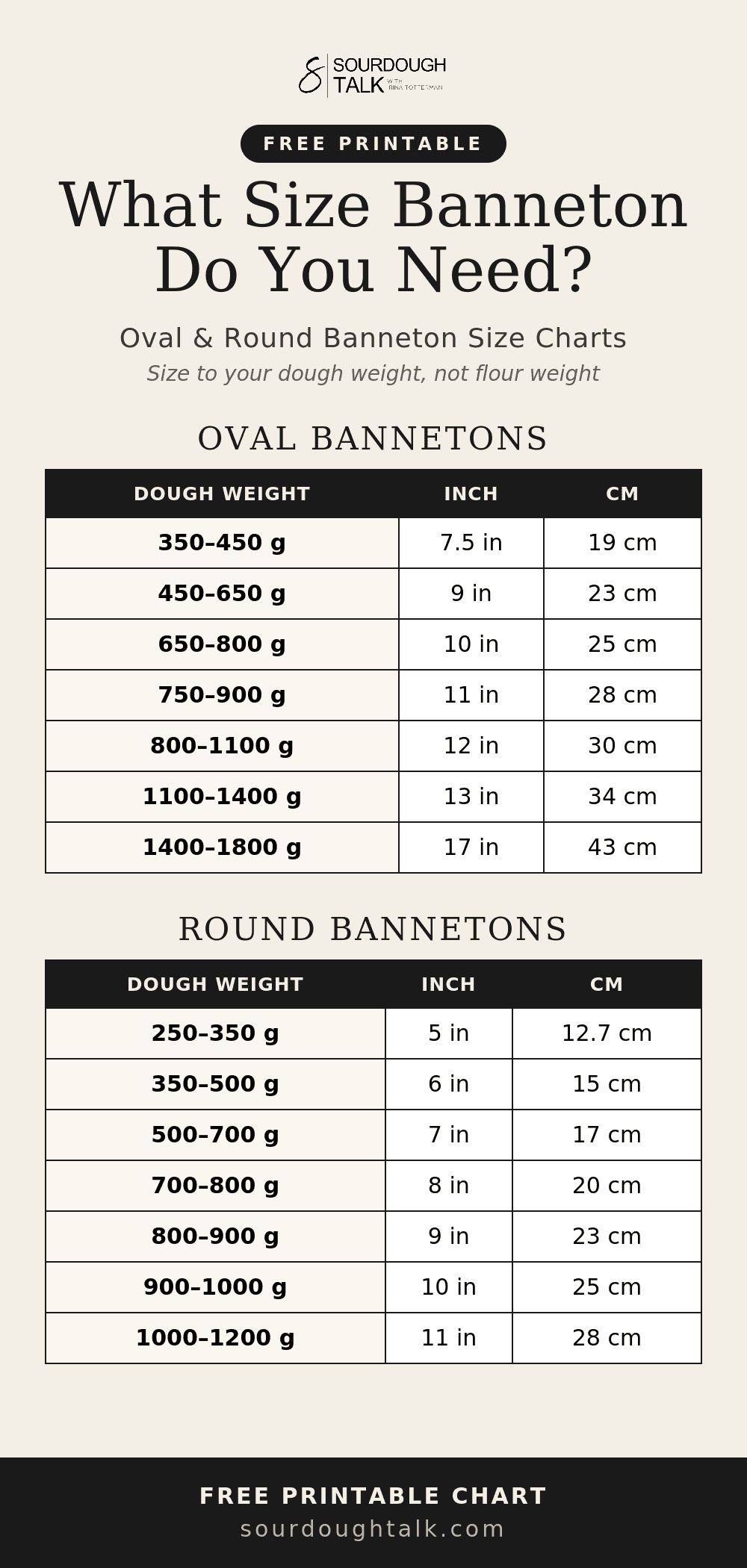
Quick Summary: Match your banneton to your dough weight, not your flour weight. A standard 950g loaf (a 500g-flour batch) fits a 9-10 inch (23-25 cm) round or about a 12 inch (30 cm) oval banneton.
The full charts below cover 250g to 1800g. And no, you don't strictly need a banneton to start. A bowl lined with a floured towel works fine (more on that below).
When selecting a banneton, consider both the types of bannetons available, round, oval, rectangular, or specialty shapes, and the banneton sizes that match your dough weight.
The right banneton size for bread dough
When selecting a banneton, you must consider the weight of the bread dough. If the size doesn't match, it will affect the final proofing.
The banneton shape is also important, whether round, oval, rectangular, or even heart-shaped. It will impact the final appearance of the sourdough when it is done baking.
Another key thing to consider is that your dough should fit inside the Dutch oven you plan to bake in.
Do you need a banneton, or will a bowl do?
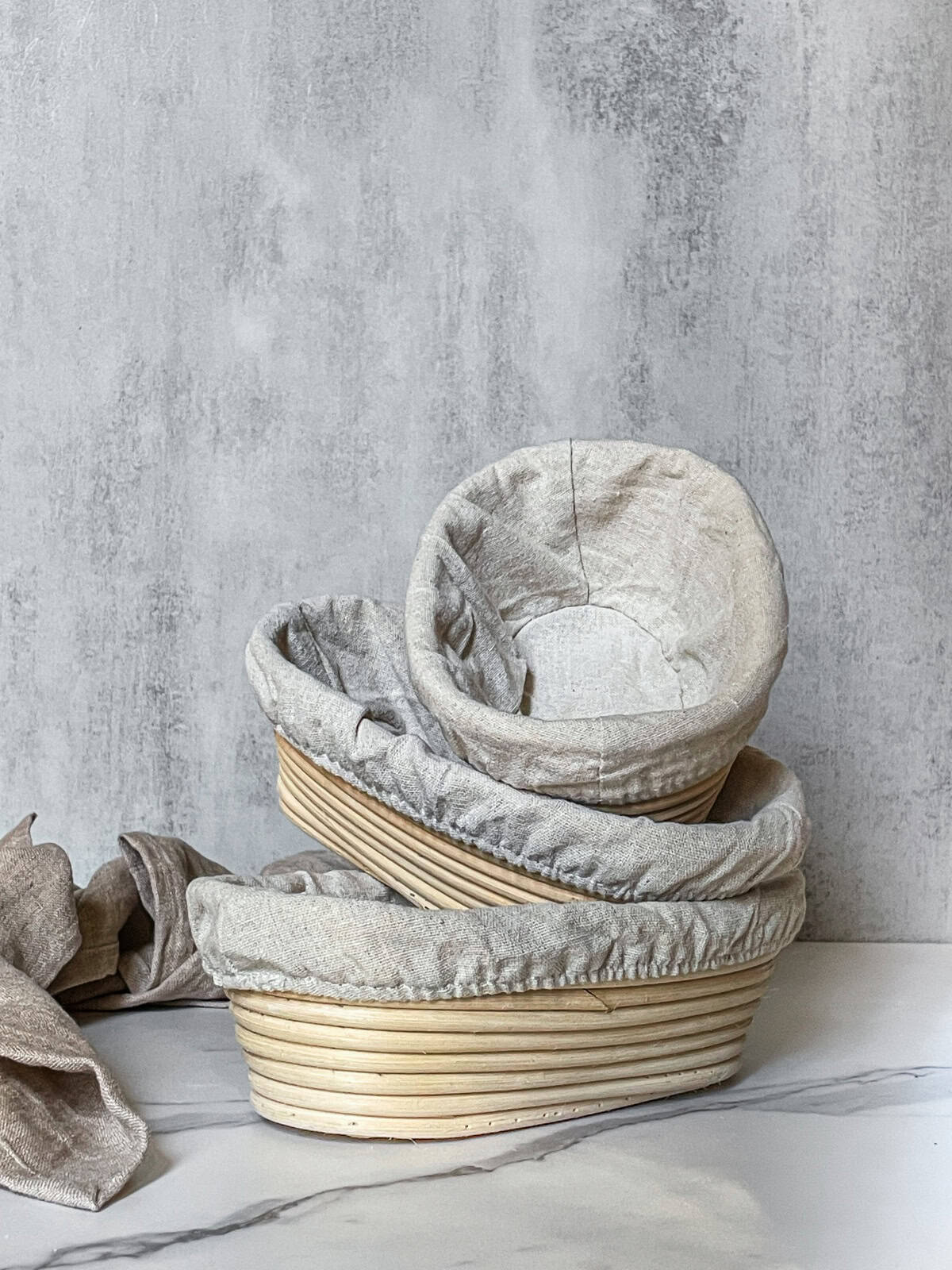
You don't need a banneton to bake great sourdough, especially for your first loaves. A bowl lined with a well-floured towel works very well.
A banneton mainly earns its place once you bake regularly, because it holds a cleaner shape and its rattan or cane wicks surface moisture for a crisper crust.
| Banneton | Bowl + floured towel | |
| Shape support | Holds a defined round or oval shape | Works, but the shape is softer |
| Moisture | Cane wicks surface moisture for a drier, crisper crust | Towel helps, but less effective |
| Look | Leaves the signature spiral rings | No rings unless you flour heavily |
| Cost | About $10–25 each | Free, you already own a bowl |
| Best for | Consistent shape, regular bakers | Beginners and occasional bakers |
The catch with a bowl is sticking: always line it with a clean towel dusted generously with rice flour, never proof against bare glass or ceramic. For other options, see my full guide to banneton alternatives.
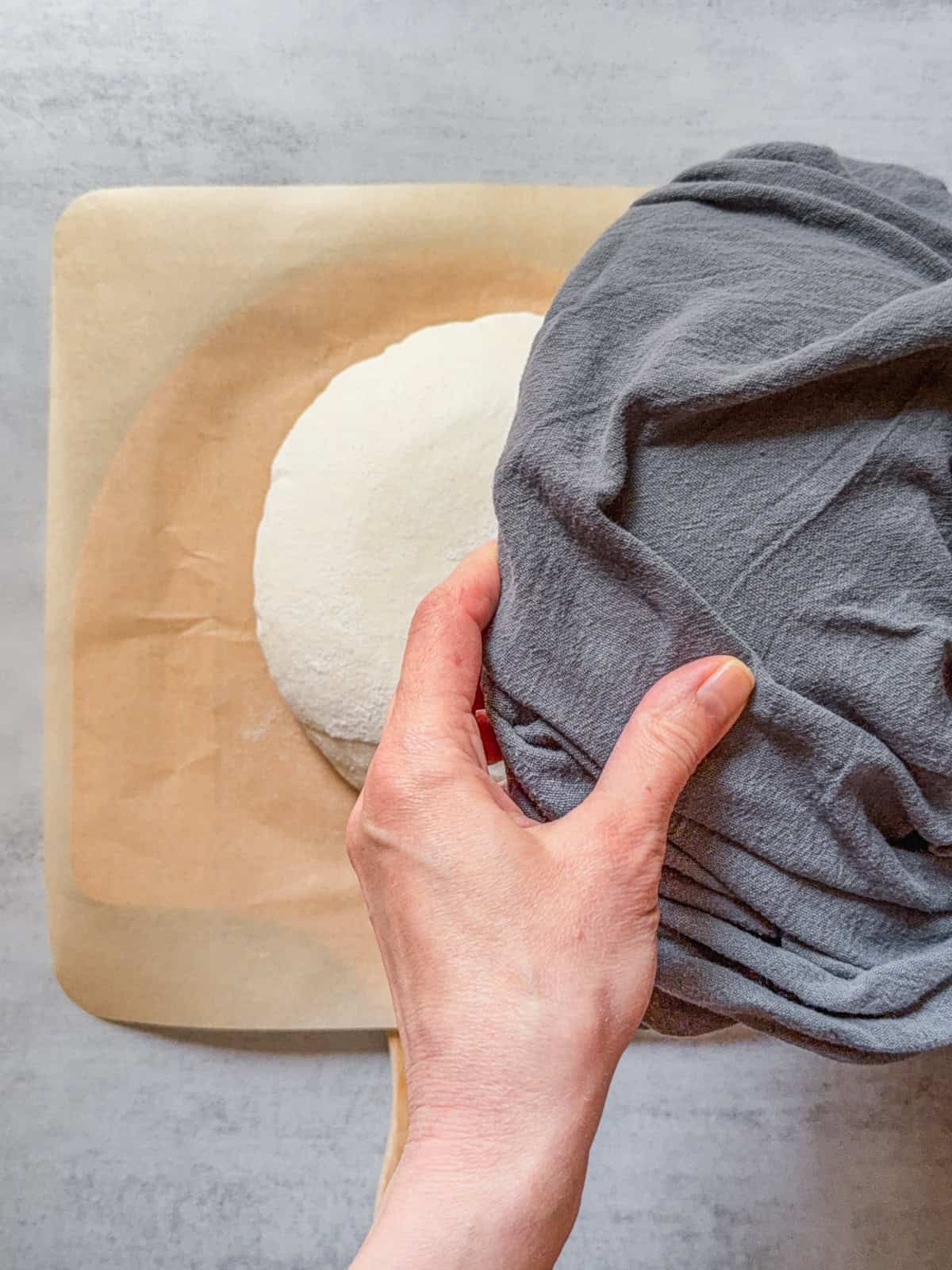
Banneton size guide
Here is a helpful guide for oval and round banneton baskets based on dough weight, not flour weight.
Oval banneton baskets size chart:
| Dough Weight | Banneton Size (Inch) | Banneton Size (Cm) |
| 350-450g | 7.5 inches | 19 cm |
| 450-650g | 9 inches | 23 cm |
| 650-800g | 10 inches | 25 cm |
| 750-900g | 11 inches | 28 cm |
| 800-1100g | 12 inches | 30 cm |
| 1100-1400g | 13 inches | 34 cm |
| 1400-1800g | 17 inches | 43 cm |
Round banneton baskets size chart:
| Dough Weight | Banneton Size (Inch) | Banneton Size (Cm) |
| 250-350g | 5 inches | 12.7 cm |
| 350-500g | 6 inches | 15 cm |
| 500-700g | 7 inches | 17 cm |
| 700-800g | 8 inches | 20 cm |
| 800-900g | 9 inches | 23 cm |
| 900-1000g | 10 inches | 25 cm |
| 1000-1200g | 11 inches | 28 cm |
You might also come across mini loaves, which are included in a "bread flight" box and typically weigh 250-350g.
Want these charts you can actually use in your workspace or baking binder?
Once you have picked your size, here is how to use a banneton the right way, from flouring it to turning out your dough.
How to find the right dough weight for your banneton
I once watched a video by Jack from Bake with Jack, where he showed how to calculate the perfect dough weight for a loaf tin. His method inspired me to adapt the same idea for a banneton.
Here's a simple way to figure out exactly how much dough fits your banneton perfectly.
Step 1: Measure your banneton's weight: Line your banneton with a plastic bag (or a disposable plastic liner) to keep it from leaking. Place it on a scale and note the weight.
Step 2: Weigh the water: Tare the scale to zero, then fill the banneton with water until it is just full without overflowing. Note the new weight. The number you get is your water weight.
Step 3: Find the coefficient: Bake a few loaves using this banneton for proofing until you find the dough weight that gives you the perfect shape, nice and full, but not spilling over. Now divide the water weight by that ideal dough weight. That number is your coefficient.
For example:
- Water weight: 1600 g
- Perfect dough weight: 950 g
- 1600 ÷ 950 = 1.68
Step 4: Use that number for other bannetons
If you have other bannetons from the same brand, you can now skip the guesswork. Just measure their water weight and divide by your coefficient to get the right dough weight.
Example:
- Water weight: 1500 g
- Coefficient: 1.68
- 1500 ÷ 1.68 = about 892 g of dough
Step 5: Adjust for flour type: If you bake with different flours, such as whole wheat or rye, the dough will feel denser. Therefore, you will need to find a separate coefficient for each flour type.
How to choose the right banneton for your Dutch Oven
Make sure your banneton is smaller than your Dutch oven so the air can circulate around the dough. This helps the bread bake evenly and prevents the dough from touching the sides of the Dutch oven.
Generally, a 9-10-inch banneton fits with a 5-6-quart Dutch oven. Larger sizes are often better than smaller ones.
If you plan to use a smaller Dutch oven to help with bread shape, you should first address issues related to gluten development and proofing. Properly proofed dough should not rely on the Dutch oven for additional rise and shape during baking.
So, you can easily bake your sourdough bread in the most common sizes with a 6-7 quart Dutch Oven. Alternatively, consider investing in the baker's dream, the Challenger bread pan, or, if you don't have a Dutch oven at all, one of these Dutch oven alternatives.
FAQ
What size oval (oblong) banneton do I need for 500g of flour? When using 500g of flour, the total dough weight will be around 855-1000g (not including extras like seeds). In this case, a 10-11-inch (25-28 cm) round or a 12-inch (30 cm) oval banneton is a good fit.
What size banneton do I need for a 1kg (1000g) loaf? A 1000g dough fits about a 10-11 inch (25-28 cm) round or a 12 inch (30 cm) oval banneton. Always size to dough weight, not flour weight.
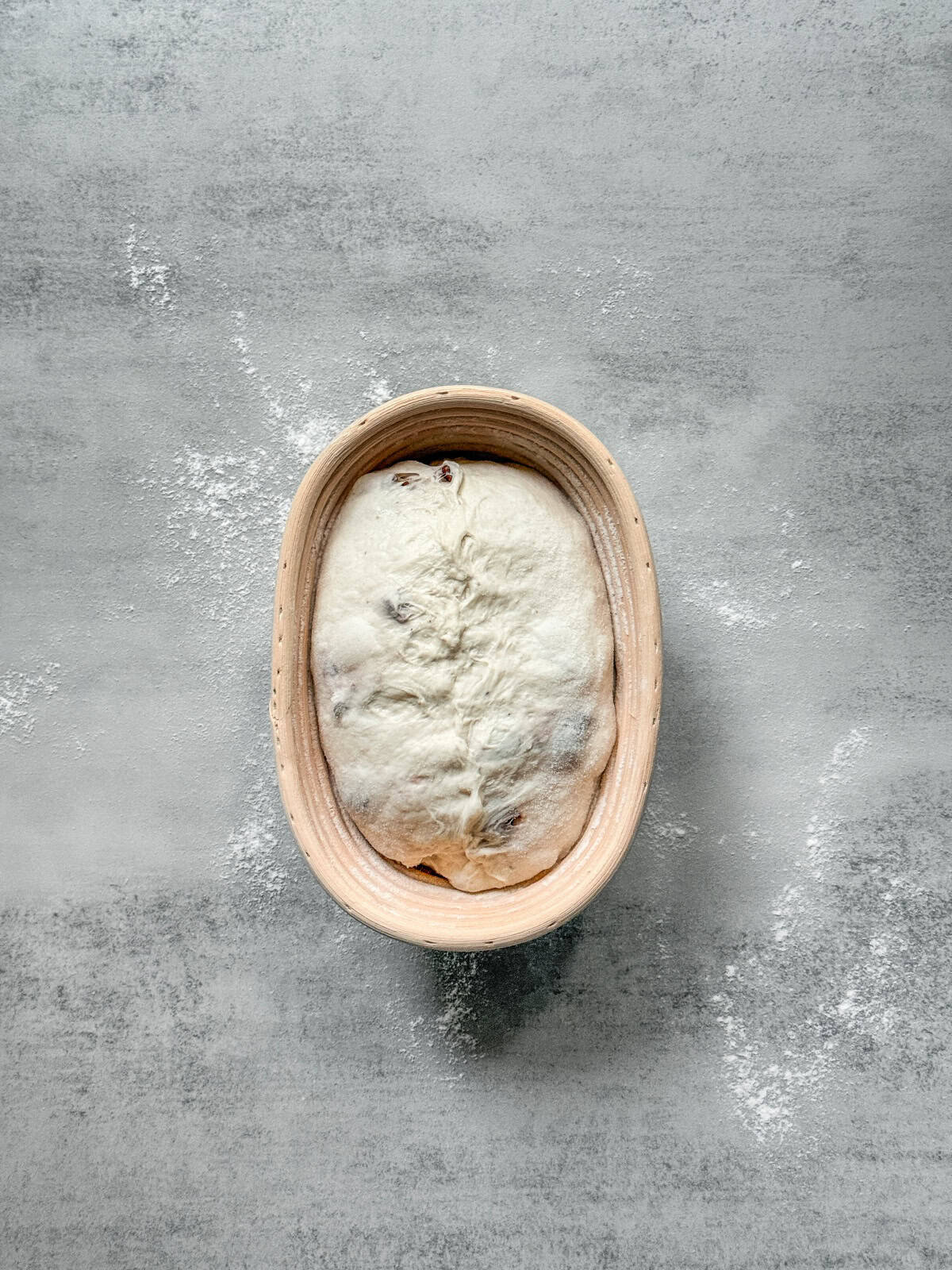
Should my dough fill the banneton to the rim? No. Your dough doesn't need to reach the very top. Leave a little space so it can expand slightly during final proofing without overflowing.
Is the banneton too small if my dough overflows? If your dough consistently overflows during proofing, the banneton is likely too small. If it happens only occasionally, it may be a sign of overproofed dough instead (see my guide on common banneton problems).
Do I need a banneton, or can I use a bowl? No, you don't need one to start. A bowl lined with a well-floured towel proofs dough just fine. A banneton mainly helps maintain a cleaner shape and wick moisture, resulting in a crisper crust, which matters more the more you bake.
Can I use a glass bowl instead of a banneton? Yes. A glass or ceramic bowl works as long as you line it with a clean towel dusted generously with rice flour. Proofing against bare glass will make the dough stick, so the floured liner is the important part.
Let's talk sourdough
What size banneton do you usually use for your loaves, and what dough weight fits? Share your experience in the comments below.
Ready to keep learning?
If you don't have a banneton yet, there are simple banneton alternatives you can use at home.
Want sizing and proofing tips as you go? Join the free email series.