

Check out the sourdough glossary, which explains 60 sourdough baking terms in a simple and fun way. While it may seem boring, it is an important part of sourdough baking, and I have made it easy to understand.
If you're going to make this recipe, make sure to follow this top tip!
At a Glance
- Best for: Beginner sourdough bakers who want to understand common terms and feel more confident following recipes
- What you'll learn: Clear definitions of essential sourdough vocabulary so you can read recipes without confusion and bake with more ease
- Skill level: Beginner
- Time commitment: 9-10 minutes to read and reference as needed while baking
- Key techniques: Understanding starter care, fermentation stages, hydration, autolyse, bulk fermentation, proofing, scoring, and discard use
- Optional steps: Deeper tracking of fermentation timing, adjusting hydration levels, and experimenting with levain builds
- Main takeaway: Knowing sourdough terminology makes the entire baking process less overwhelming and much more predictable
- Next step: Try applying these terms in practice with a Beginner's Sourdough Bread Recipe
Jump to:
Sourdough glossary
Still, you may wonder why you must learn all the sourdough terminology. The answer is simple: it helps you understand the recipes, take notes, and chat with sourdough enthusiasts.
If you are new to sourdough, do not worry if terms like Starter, Feeding Ratio, Discard, Autolyse, Fermentolyse, Bulk Fermentation, Stretch and Folds, or Second Rise sound confusing. These words were once new to me, too. For example, I used to think "BF" was short for "boyfriend," not Bulk Fermentation.
Sourdough basics
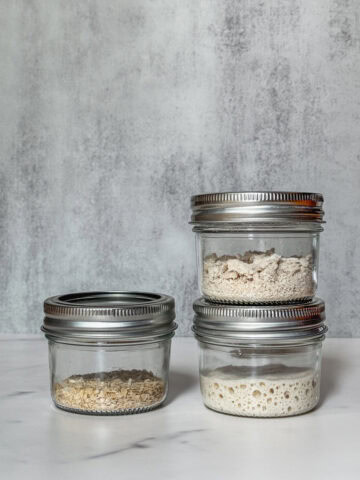
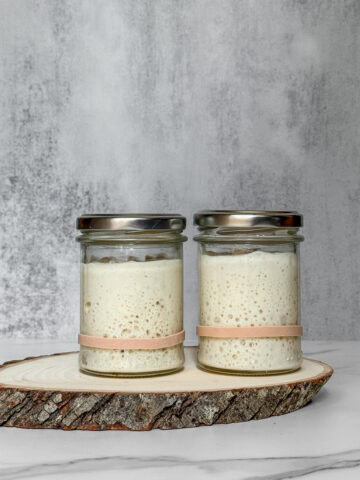
Your sourdough journey begins with a Sourdough Starter, a mixture of flour and water that captures Wild Yeast, a yeast naturally found on grains and in the air from the environment. It differs from Yeast, a tiny fungus that helps dough rise and is used in store-bought bread.
This Culture, a living community of yeast and bacteria, ferments over time, creating gases that make your bread rise naturally.
To keep your starter alive and active, you must follow a Feeding Schedule, a routine of adding fresh flour and water to keep the starter healthy.
During Fermentation, the process where yeast and bacteria break down sugars and produce gases, the yeast and bacteria work. They break down the flour's starches, producing Carbon Dioxide (CO2), a gas that forms bubbles and makes the dough rise.
Two important acids form during fermentation: Acetic Acid, a strong acid that gives sourdough a tangy flavor, and Lactic Acid, a milder acid that contributes to a balanced sourdough taste.
Lactic Acid Bacteria (Lactobacilli), often abbreviated as LAB, are beneficial bacteria that produce lactic acid and play a key role in sourdough fermentation. They work with wild yeast to develop flavor and texture.
Sometimes, you may notice a layer of liquid on top of your starter. This liquid is called Hooch, a byproduct of fermentation that forms when your starter is hungry, meaning it needs more food.
Depending on the recipe and your preference, you can choose the Starter Hydration, which is the ratio of water to flour in your starter. This affects how thick or runny the starter is.
A common Feeding Ratio, the proportion of starter, flour, and water added during feeding, is 1:1:1, meaning equal parts of starter, flour, and water. This must be adjusted depending on how active or thick you want your starter to be.
If you ever need to take a break from baking, you can dry out your starter to create a Dehydrated Starter, a dried version of a sourdough starter that can be stored long-term.
When you are ready to use it again, you can bring it back to life through Activation, the process of rehydrating and feeding a dehydrated starter with fresh flour and water.
To check if your starter is ready to bake, you can perform the Float Test. This simple test involves dropping a spoonful of starter into water. If it floats, it is ready to bake. See also: What is the Float test?
When feeding your starter, you need to remove some of it, which is called Sourdough Discard, the portion of the starter removed before feeding to prevent excessive growth. Instead of throwing it away, many bakers use it in recipes like pancakes, crackers, muffins, and other creative ways.
Sourdough ingredients
It is important to choose the right ingredients to feed your starter and make bread. Many bakers use All-Purpose Flour, a common type of flour with moderate protein content, because it is easy to find.
Others prefer Bread Flour, a high-protein flour that helps build strong Gluten, a protein that gives dough elasticity and strength.
Water is another essential ingredient, but it is important to consider its quality. Chlorine, a chemical often added to tap water, and Chloramine, a similar chemical used for water purification, can harm the wild yeast and lactic acid bacteria in your starter.
Many bakers use filtered or spring water to keep the starter strong and active. Also read: How to Choose Sourdough Bread Ingredients.
The amount of water you use in the dough compared to the amount of flour is called Dough Hydration. It affects how the dough feels, ferments, and the final texture of the baked bread.
Tools and equipment
To mix Sourdough, a wild yeast fermented dough, you will need a mixing bowl and a Danish Whisk, a tool with a handle and several wire loops. Many bakers use a Dough Scraper, a flexible plastic tool that helps scoop, fold, and clean dough from the mixing bowl.
It is also good to have a Bench Scraper, a flat tool with a handle for cutting and lifting dough. It also helps clean the work surface after working with dough.
Some bakers use a Proofing Box, a temperature-controlled container that keeps dough at the perfect temperature for rising, to maintain consistent conditions during dough rising.
There are different types, including the Banneton, a round or oval basket made of coiled rattan that gives the dough a decorative spiral pattern, and the Brotform, similar to a banneton, is often made from wood pulp.
To score bread dough, bakers use a Bread Lame, a sharp razor blade on a handle that makes cuts in dough. This tool lets you control how your bread expands in the oven and creates a decorative design.
When it is time to bake, many bakers use a Dutch Oven, a heavy, lidded pot that traps steam, helping sourdough develop a crispy crust.
If you cannot bake with a Dutch oven, a Baking Stone, a thick, heat-retaining surface that helps create an even bake, is a great alternative. To transfer dough onto the stone, you will need a Pizza Peel, a flat, paddle-like tool that slides dough into and out of the oven.
When baking, place your dough on the middle Oven Rack, a metal shelf inside the oven that affects how heat circulates around the bread, for an even bake.
To check if your bread is fully baked, use a Probe Thermometer, a device that measures the internal temperature of bread. Sourdough is ready when it reaches around 207-210°F (97-99°C) inside.
Sourdough baking techniques
In order to mix the dough, you will need Levain, which is an offshoot of your sourdough starter fed with fresh flour and water. Levain is one type of Preferment, which is any dough mixture that ferments before being added to the main dough.
Other types of preferment are Poolish, a wet preferment made with equal parts flour and water plus a small amount of commercial yeast, and Biga, a stiff preferment made with less water and used for a stronger dough structure.
The process of baking sourdough bread begins with Autolyse, which is when you mix flour and water together and let it sit for about 20-30 minutes before adding sourdough starter or salt.
Instead of autolyse, you may consider Fermentolyse, which involves adding the starter to the water and flour mixture. This phase allows the starter to begin working, starting the bulk fermentation process.
Bulk Fermentation (BF), or the First Rise, is a critical stage where the dough rises and develops flavor. Also read: The Bulk Fermentation Guide.
To help the dough build strength during this stage, you can use techniques like Stretch and Folds, which involve gently pulling the dough and folding it over itself, and Coil Folds, where the dough is lifted and folded into a coil shape. Also read: Sourdough Coil Fold vs Stretch and Fold.
These techniques help the dough build Elasticity, which means it can return to its original shape after stretching, and Extensibility, which means it can stretch without tearing.
To check if the dough has enough gluten development, you can perform the Windowpane Test. This involves gently pulling a piece of dough to see if it stretches thin without tearing, indicating good gluten structure.
Using a probe thermometer, you should measure the Dough Temperature, which is the internal temperature of the dough that affects the speed of bulk fermentation. Also read: Dough Temperature and Percentage Rise.
After bulk fermentation, it is time to pre-shape and shape the dough into a Batard (an oval shape) or Boule (a round shape), depending on the style of bread you want.
Following shaping, you will allow the dough to undergo Proofing or a Second Rise. This is when the dough rises a second time before baking, using one of two methods. Warm Proofing takes place at room temperature, while Cold Proofing, or Cold Retard, involves placing the dough in the fridge for a longer, slower rise, which improves the flavor.
Once the dough is proofed and ready to bake, it is time to Score it. This is done by making cuts on the surface of the dough with a sharp knife or razor blade. Scoring helps control where the bread expands during baking and gives it an attractive, rustic look.
Signs of perfect artisan bread
After baking Sourdough Artisan Bread, made using traditional techniques, simple ingredients, and long fermentation times to develop deep flavors and textures, let the loaf rest for at least 2 hours before slicing. Use a Wire Rack, which is a cooling rack for baked goods.
One of the most noticeable parts of a loaf is the Crust, which is the hard outer layer of the bread. A well-baked crust is crispy and golden brown due to the Maillard Reaction, where heat causes sugars and proteins in the dough to brown and create rich flavors.
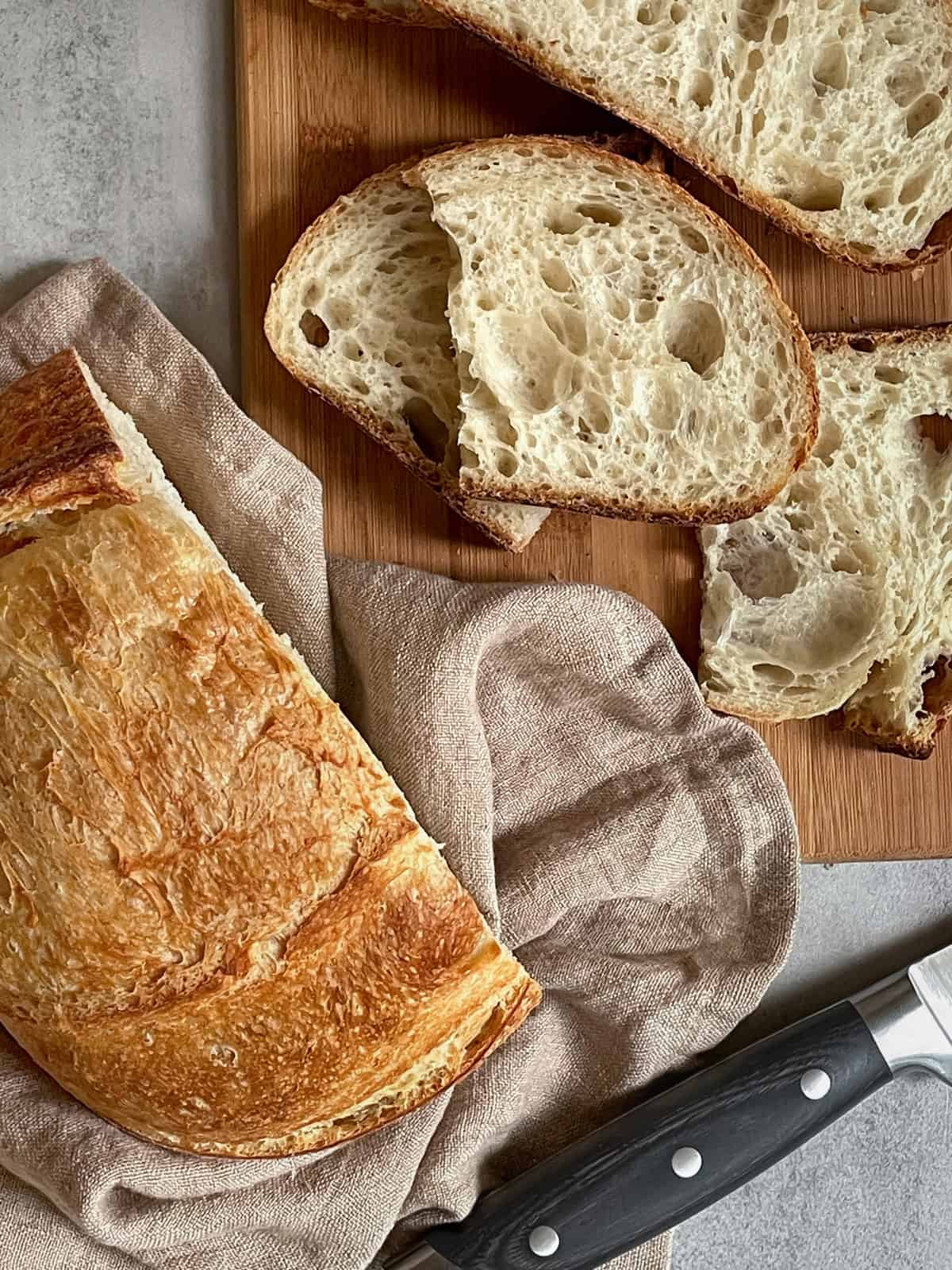
Inside the bread, you will find the Crumb, which refers to the texture of the bread's interior. Also read: What is a Perfect Sourdough Bread Loaf?
When sourdough is well-proofed, it often develops a Sourdough Belly, which is the slightly puffed-out part of the loaf. This happens due to Oven Spring, a rapid rise during the initial baking phase that gives your bread a tall, airy shape.
Another special feature of a well-baked sourdough loaf is the Sourdough Ear, which is the crispy, raised flap of crust that forms along the scored line on top of the bread. A good sourdough ear is a sign of proper fermentation, scoring, and baking technique.
Let's talk sourdough
Did you learn a new term today? Or is there a baking word you have heard but didn't see here? Drop it in the comments below.
What's next?
Let's start by making the sourdough starter from scratch.