
When you come across the term "percentage of prefermented flour" (PPF) in a recipe, it can be confusing. It is different from the preferment percentage, which can also be tricky to understand at first.
If you are new to baker's math, I recommend starting with the basics of baker's percentages in sourdough baking before diving deeper into this topic.
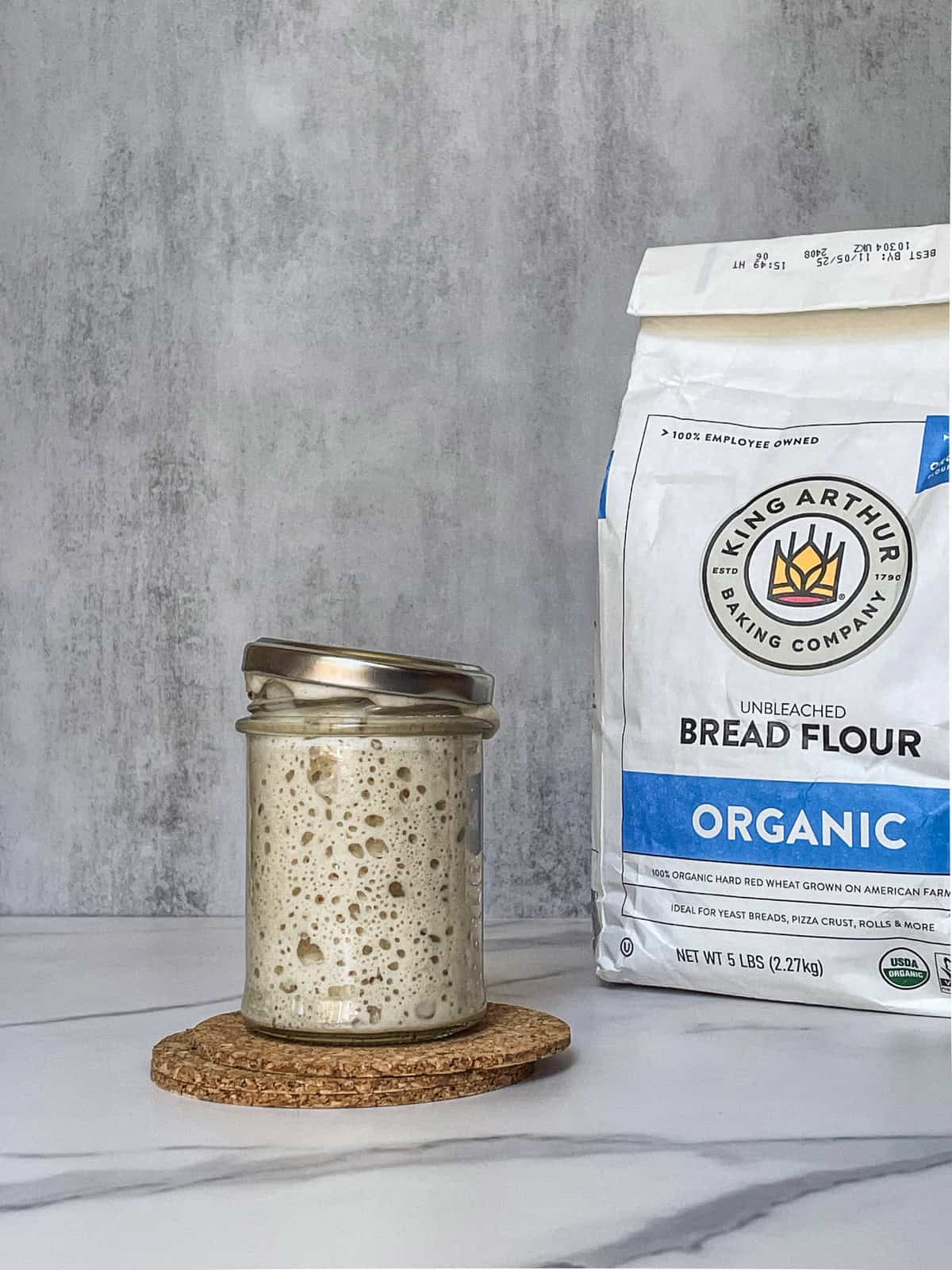
What is preferment in bread making?
A preferment is a portion of the dough prepared in advance and left to ferment before being mixed into the final dough. There are different types of preferments, such as levain, poolish, and biga. Each has its own hydration level and fermentation time.
Levain, an offshoot of the sourdough starter, gives the bread a tangy flavor. The poolish, which is wetter, helps create a light and airy texture. Biga, a firmer preferment, provides the bread with a traditional Italian flavor.
Percentage of prefermented flour vs. preferment percentage
The percentage of prefermented flour and the preferment percentage are related but different:
- The percentage of prefermented flour (PPF) indicates how much of the total flour in the entire dough recipe is used in the preferment. In classic sourdough recipes, the PPF is usually between 10% and 20%.
- Preferment percentage refers to the total weight of the preferment (including flour, water, and sometimes starter or yeast) compared to the total weight of flour in the recipe. This is typically between 5% and 25% in most sourdough recipes. Both my Beginner's Sourdough Bread and the Master Sourdough Bread recipes use 20% starter.
How to calculate the percentage of prefermented flour
To calculate the percentage of prefermented flour, take the weight of the flour in the preferment and divide it by the total amount of flour in the recipe. Then, multiply the result by 100.
Here is a formula to calculate the percentage of prefermented flour.
Percentage of Prefermented Flour = (Prermented Flour Weight ÷ Total Flour Weight) x 100
For example, if your recipe calls for 500g of total flour and you use 100g of flour in your levain, the PPF is:
(100 ÷ 500) x 100 = 20
This means that 20% of the total flour in your recipe is in the preferment (levain).
Example
Let's look at a bread recipe to see how this works in action:
- 500g Total flour
- 70% Hydration
- 10% Prefermented flour (100% hydration)
- 2% Salt
What does "10% prefermented flour (100% hydration)" mean? This means you take 10% of the total flour (500g) to make the levain. With 100% hydration, you mix equal amounts of flour and water to make the levain.
How much levain should you use? The amount depends on its strength, room temperature, etc. A good guideline is to use 20% inoculation.
A common way to write a bread recipe with preferment is using the Bread Baking Guide of America (BBGA) method. This method shows the original recipe and tells you how much flour and water to subtract to make the levain.
To calculate the amount of prefermented flour, use this formula:
Prefermented Flour Weight = (Percentage of Prefermented Flour ÷ 100) x Total Flour Weight
(10 ÷ 100) x 500 = 50g of flour for the preferment. Since it is 100% hydration, this means 50g of flour and 50g of water.
For starter maintenance, you will also need about 15g of starter. This starter amount is taken randomly and won't be included in the final dough. Before mixing the final dough, remove the same amount from the levain to continue starter maintenance.
Here is the preferment (10% pre-fermented flour at 100% hydration)
- 50g Flour
- 50g Water
- 15g Starter
70% Hydration translates into 350g of water. After using the preferment, the final dough recipe is adjusted:
- 500g flour - 50g (preferment flour) = 450g flour for the dough
- 350g water - 50g (preferment water) = 300g water for the dough
- 100g Preferment (levain)
- 10g Salt
The actual hydration is still 70%. This is why the BBGA method is useful, because it helps keep hydration accurate.
If you don't subtract the flour and water used for the preferment from the total flour and water in the recipe, you will get this final dough recipe:
- 500g flour + 50g from the preferment = 550g Total Flour
- 350g water + 50g from the preferment = 400g Water
- 10g Salt
In this case, the total flour would be 550g and the total water 400g. This results in an actual hydration of 72.7%, not 70% as the original recipe intended.
Understanding the percentage of prefermented flour
Once you get the hang of it, understanding the percentage of prefermented flour will become easier, just as learning sourdough hydration does.
You will recognize 5% as a low PPF, meaning the dough will rise slowly and take longer to ferment. On the other hand, a 25% PPF will indicate a high level, where you can expect the dough to rise quickly during bulk fermentation.
Let's talk sourdough
Have you ever seen sourdough recipes mentioning the percentage of prefermented flour and felt a bit confused? Please comment below.
Ready to keep learning?
Next, let's learn about the inoculation percentage, how much your starter contributes to better control of fermentation speed and the sourness of your bread.